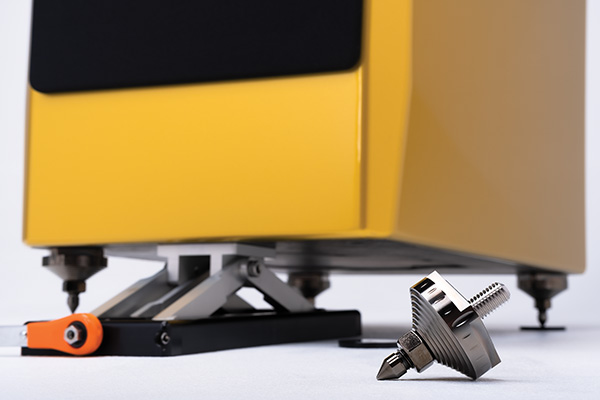
 First order of business was swapping out the casters the woofer cabinets had been shipped with and replacing them with the Acoustic Diode footers. First used in the Wilson Alexx V, these footers are conelike pieces assembled from stainless steel and a dollop of Wilson's newer V-material. Daryl Wilson explained to me, "There is coupling, and decoupling, designed into the Acoustic Diodes. Spikes are for coupling, to keep the cabinet from moving front to back, which causes blurring. The V-material is brilliant at decoupling: taking vibration, converting it to heat, ... just for damping."
We hadn't yet finalized the speakers' positions—and moving them is no easy thing with spikes that would punch a hole through the 1/3" thick piece of carpet on my listening room floor. Cue the slider set. These are large, flat, round metal discs offered as an accessory by Wilson that make it possible for very heavy cabinets with spikes to slide around on carpeting.
The pushing and shoving began, moving the Sasha Vs in small and large increments, forward and back, and side to side, in relation to measurements marked on the masking tape—all as Chris subjected himself (and me) to repeated playings of "So Do I" by Irish singer/songwriter Christy Moore, a founding member of Planxty. After each move, Chris sat in the listening chair and made notes, assigning numerical ratings on a form Wilson and its dealers use for this purpose, recording distances from walls and assigning ratings in seven categories: low-bass extension, upper-bass quality, soundstage & center focus, ambient bloom, harmonic balance, sense of dynamics, and flow.
First order of business was swapping out the casters the woofer cabinets had been shipped with and replacing them with the Acoustic Diode footers. First used in the Wilson Alexx V, these footers are conelike pieces assembled from stainless steel and a dollop of Wilson's newer V-material. Daryl Wilson explained to me, "There is coupling, and decoupling, designed into the Acoustic Diodes. Spikes are for coupling, to keep the cabinet from moving front to back, which causes blurring. The V-material is brilliant at decoupling: taking vibration, converting it to heat, ... just for damping."
We hadn't yet finalized the speakers' positions—and moving them is no easy thing with spikes that would punch a hole through the 1/3" thick piece of carpet on my listening room floor. Cue the slider set. These are large, flat, round metal discs offered as an accessory by Wilson that make it possible for very heavy cabinets with spikes to slide around on carpeting.
The pushing and shoving began, moving the Sasha Vs in small and large increments, forward and back, and side to side, in relation to measurements marked on the masking tape—all as Chris subjected himself (and me) to repeated playings of "So Do I" by Irish singer/songwriter Christy Moore, a founding member of Planxty. After each move, Chris sat in the listening chair and made notes, assigning numerical ratings on a form Wilson and its dealers use for this purpose, recording distances from walls and assigning ratings in seven categories: low-bass extension, upper-bass quality, soundstage & center focus, ambient bloom, harmonic balance, sense of dynamics, and flow.
 As things shook down, the sweetest spot for the Sasha Vs was about 16" farther toward the front wall—the wall behind the speakers—in relation to where the Sasha DAWs had been sitting, and 4" farther out on toward the sidewalls. Not a small tweak, in other words. I asked Daryl Wilson what might have changed; he commented, "The ability of the system to settle: better damping. The X-material in the woofer is thicker than it was in the Sasha DAW. The ability of the system to start and stop in the woofer region. When the system is more refined and quicker, you can put it closer to the walls. It is more tolerant of boundary issues."
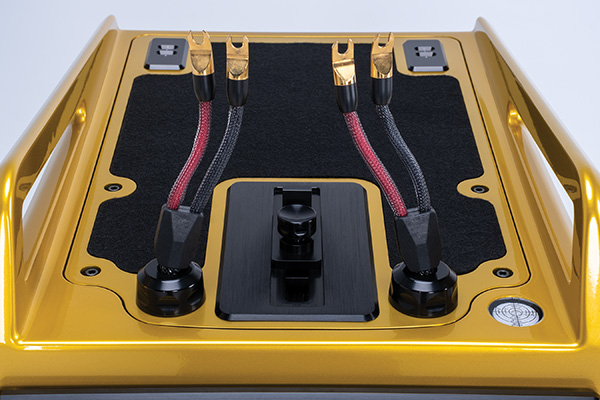
With final placement set, one more important adjustment was needed: leveling the cabinets. A new touch included in the design of the Sasha V is a small bubble level installed on the top of the woofer cabinet, visible with the upper modules in place. We adjusted the Acoustic Diode footers one at a time until the bubble levels were spot on. Why is this important? Because if the speakers aren't level, that throws off the precision of the time-alignment calibrations at the listening spot.
As things shook down, the sweetest spot for the Sasha Vs was about 16" farther toward the front wall—the wall behind the speakers—in relation to where the Sasha DAWs had been sitting, and 4" farther out on toward the sidewalls. Not a small tweak, in other words. I asked Daryl Wilson what might have changed; he commented, "The ability of the system to settle: better damping. The X-material in the woofer is thicker than it was in the Sasha DAW. The ability of the system to start and stop in the woofer region. When the system is more refined and quicker, you can put it closer to the walls. It is more tolerant of boundary issues."
With final placement set, one more important adjustment was needed: leveling the cabinets. A new touch included in the design of the Sasha V is a small bubble level installed on the top of the woofer cabinet, visible with the upper modules in place. We adjusted the Acoustic Diode footers one at a time until the bubble levels were spot on. Why is this important? Because if the speakers aren't level, that throws off the precision of the time-alignment calibrations at the listening spot.
 Music for all
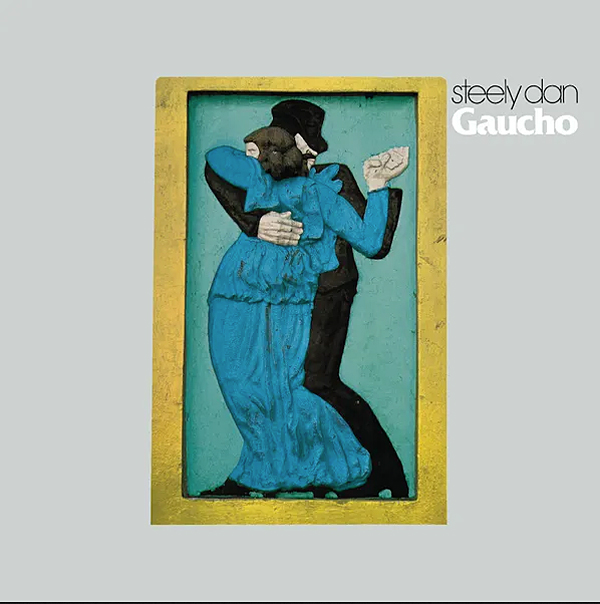
I think that a proper review should include listening examples from a variety of musical genres. The first recording I reached for checks the pop genre box: Steely Dan's Gaucho. Spinning my original LP (MCA 6102/37220), "Babylon Sisters" felt like I was being enveloped in a cloud of music, almost a sense of surround, from a stereo pair of speakers. When the chicks first hit the chorus, "Babylon sisters, shake it!," they exploded into the room. Huge width, spectacular dynamics. In order to carry out some basic A/B comparisons, I had stored the Sasha DAWs on the landing outside my listening room. Now my house was really looking like a hi-fi dealership! I swapped the Sasha DAWs back into the same position and compared. Through the DAWs there was a little less distinction between the Fender Rhodes Don Fagen plays and the electric bass doubling the part, most apparent at the top of the tune. In further listening, I've identified that sorting out musical parts one from another is one of its greatest talents. The DAWs exhibited slightly less sparkle and punch in the vocals than when heard from the Sasha Vs, perhaps a function of the new QuadraMag midrange? Next major genre: full-scale orchestral classical. I pulled out a recording I think I've seen at every single audio show and dealership: Reiner and the Chicago Symphony doing Stravinsky's Song of the Nightingale and Prokofieff's Lieutenant Kije Lieutenant Kijé (LP, Living Stereo LSC 2150). The Stravinsky, which opens the B-side, sounds scary. First I listened through the Sasha DAWs, then I swapped in the Sasha Vs. That opener was several notches more intense—the shriek Igor intended. After the initial outburst come some real deep drums, reproduced by the Sasha Vs with astounding, physical heft. Then Stravinsky grinds gears, and we hear some delicate, measured tremolo from the strings, floating like a butterfly, stinging like a bee! Lovely, tangible textures. Later in the piece, the almost Coplandesque soft, sustained, jazzy harmonies behind the solo trumpet were to die for.
 Are female jazz vocals one genre or two? It was time to stop classroom grading and start appreciating the Sasha Vs on their own merits. A longtime go-to for me and others is Ella Fitzgerald's definitive album Clap Hands, Here Comes Charlie!, from 1961. My LP copy is a fine, 200gm vinyl remaster from the late Classic Records (Verve V6-4053). The standout heartbreaker here has to be "Spring Can Really Hang You Up the Most." Listening to the Sasha Vs, I heard more subtle interplay between the softly mixed piano and the guitar than I've heard before. As for Ella, there was much velvet skin on the bone as she descended step by step from the first to the last statements of the refrain. When she lands on the word "most," she is in alto territory, an E-flat below middle C. Delicious!
Sure, I've got some hard rock. I had preordered the four-LP box set of the freshly remastered Who's Next (Polydor/UMC 35858531). The first LP is the original album, sequenced as it was released. The other three LPs contain a complete live performance by The Who at the San Francisco Civic Auditorium, on December 13, 1971. The live recording allowed me to continue playing my very own version of "Where's Waldo?" I was there for that show, presented by Bill Graham, but I had never heard any of it on record until now. Glyn Johns, who mixed the studio album, was on hand to record the live performance to 16-track tape using the Wally Heider remote truck.
Are female jazz vocals one genre or two? It was time to stop classroom grading and start appreciating the Sasha Vs on their own merits. A longtime go-to for me and others is Ella Fitzgerald's definitive album Clap Hands, Here Comes Charlie!, from 1961. My LP copy is a fine, 200gm vinyl remaster from the late Classic Records (Verve V6-4053). The standout heartbreaker here has to be "Spring Can Really Hang You Up the Most." Listening to the Sasha Vs, I heard more subtle interplay between the softly mixed piano and the guitar than I've heard before. As for Ella, there was much velvet skin on the bone as she descended step by step from the first to the last statements of the refrain. When she lands on the word "most," she is in alto territory, an E-flat below middle C. Delicious!
Sure, I've got some hard rock. I had preordered the four-LP box set of the freshly remastered Who's Next (Polydor/UMC 35858531). The first LP is the original album, sequenced as it was released. The other three LPs contain a complete live performance by The Who at the San Francisco Civic Auditorium, on December 13, 1971. The live recording allowed me to continue playing my very own version of "Where's Waldo?" I was there for that show, presented by Bill Graham, but I had never heard any of it on record until now. Glyn Johns, who mixed the studio album, was on hand to record the live performance to 16-track tape using the Wally Heider remote truck.
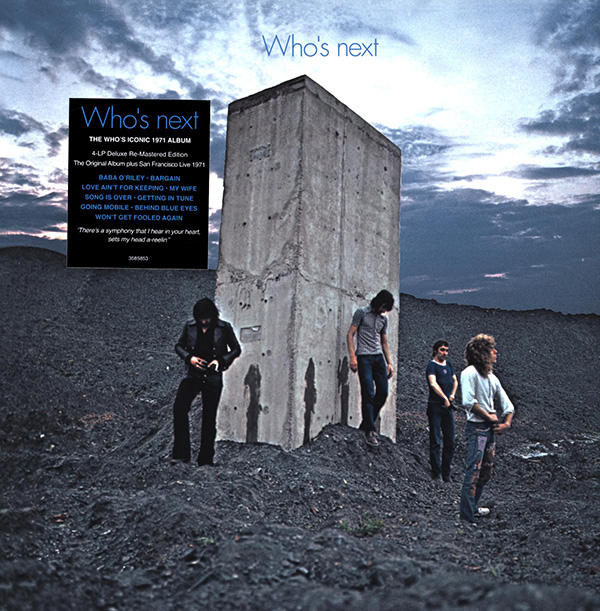 This is not some secondhand mixing board feed; the sound is powerful and clear. There's lots to enjoy here, but I got a particular kick out of "Baba O'Riley," as, instead of that shrill-sounding fiddle on the album, Roger Daltrey takes that part on the harmonica—and he can really blow.
 V for victory
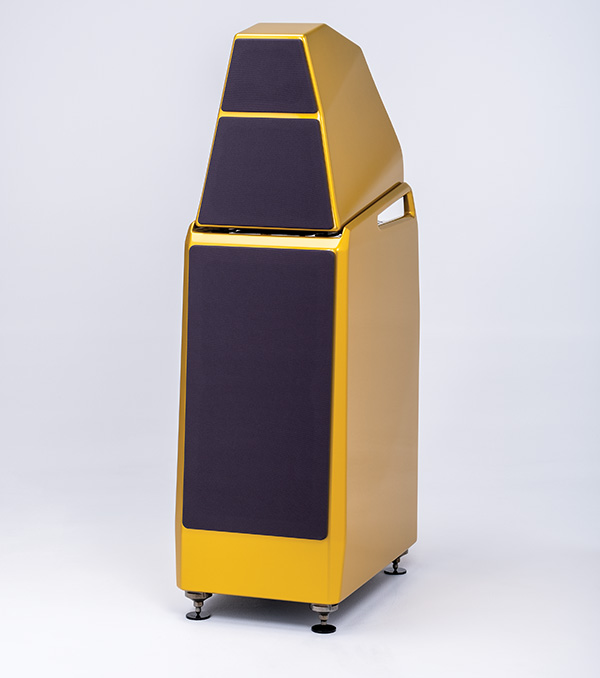
Wilson Audio, perhaps taking a cue from automobile manufacturers, offers the Wilson Audio Certified Authentic program, which provides an opportunity to purchase preowned and demo Wilson loudspeakers that have been thoroughly inspected and refreshed, in the field or, if necessary, at the Wilson factory in Provo, Utah; for details, contact the closest Wilson retailer. It's a great way to get into the Wilson sound for less than the cost of a new pair without trusting to luck with some "dealer" in Malaysia listed on Audiogon. Impressed by the cluster of new tonal qualities the Sasha V brings to the stable, I ended up changing horses, trading my Sasha DAWs in for the new Sasha V. Are there drawbacks? Horses for courses. If you simply must drive your loudspeakers with watts in the single digits, the Sasha Vs are not right for you: They need juice to sit up and show what they are capable of. Other loudspeakers are more forgiving of bad recordings. These are not omnidirectional—though with the right recordings they can achieve a similar feeling of immersion in the music. There's cost of course, and size and weight: Wilson does offer smaller, lighter models—the Yvette and SabrinaX among floorstanders. I have read many times about ascending cost curves in high-end audio, offering improvements at the margins, along with descriptions of "diminishing returns." But there's nothing diminishing in the enhancements offered by the Sasha V compared to its predecessor. Far from being marginal, they strike me as substantive and essential, expansive and ambitious. Daryl Wilson and his design and manufacturing team aren't just striving for excellence; they are achieving it in significant steps.