At least three premieres, a number of rooms with glorious sound, and reunions with old friends both human and electronic distinguished my romp through the hallways of Warsaw's PGE Narodowy on the first day of Audio Video 2025 in Warsaw. Compared to other days I've spent at shows in Chicago, Munich, Florida, and Seattle, it was a pretty fine day.
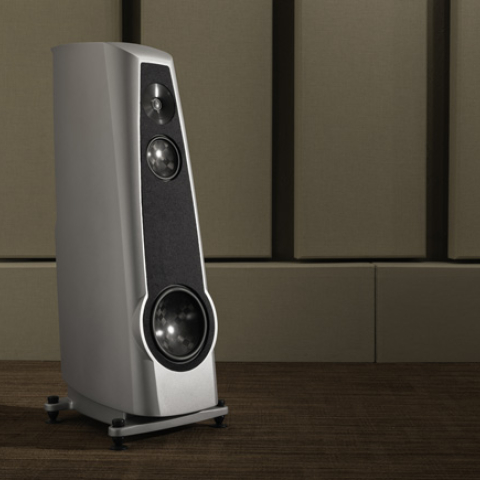
First up was Diapason's launch of its new two-way Didascal“a loudspeaker (59,000 euros + VAT). Dubbed a "cherished design in Italian history" by Alessandro Schiavi, President of Diapason Italia, it is said to incorporate classic knowledge of cabinetry and instrument building. The cabinet, designed by Paolo Tezzon, is composed of eight layers of solid wood, with an internal Baltic birch structure and aluminum exoskeleton claimed to eliminate all resonances. The Didasal “a has a specified bass extension to 35Hz at -6dB and is time aligned at a listening distance of 2m. Internal wiring is van den Hul. With 90dB efficiency and an 8 ohm nominal impedance, it is "easy to drive with all amplification," the company says.
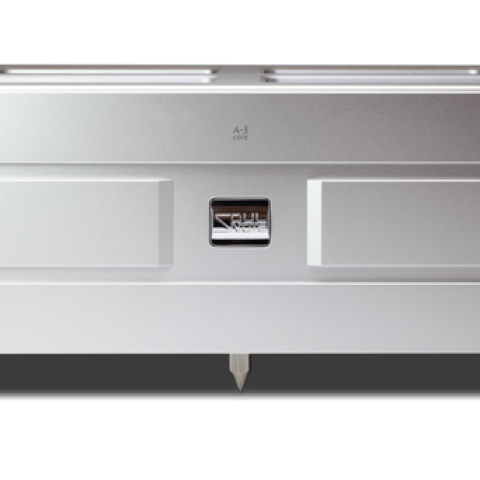
In a short listening session utilizing a Holborne Analog 3 turntable, Lumin server, and van den Hul electronics, bass was quite well articulated on Bonnie Raitt's "Baby Mine," a great demo track, here sounding solid and enjoyable. Other tracks by Frank Sinatra and Nat King Cole reminded me that certain audiophile standbys, like Italian traditions, never fade.
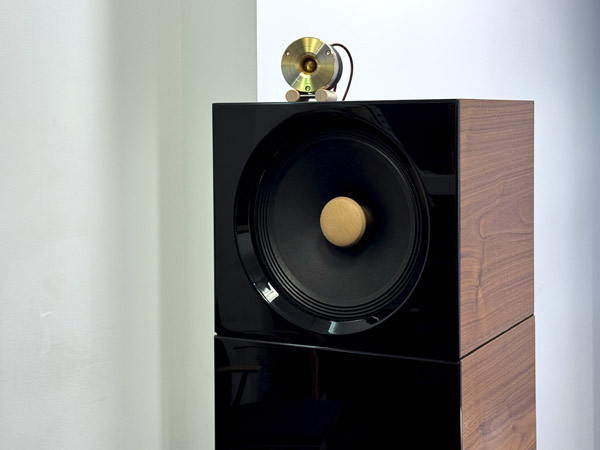 Closer Acoustics, a Polish speaker company with a US presence, joined with Elins Audio to showcase its Blocks modular speaker system. Audiophiles can customize the Blocks by choosing how many EMS France-sourced bass units they wish to stack, depending on room size and taste. Three is the maximum. Those bass drivers cut in at 125Hz; everything else handled by a midrange/tweeter that extends to 15kHz. The pair displayed included an optional Fostex supertweeter, said to extend treble up to 50kHz. The model shown was $11,300/pair plus the unknown (to this writer) price of the supertweeter
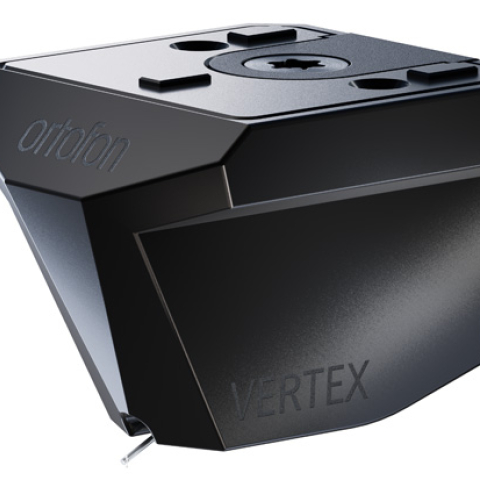
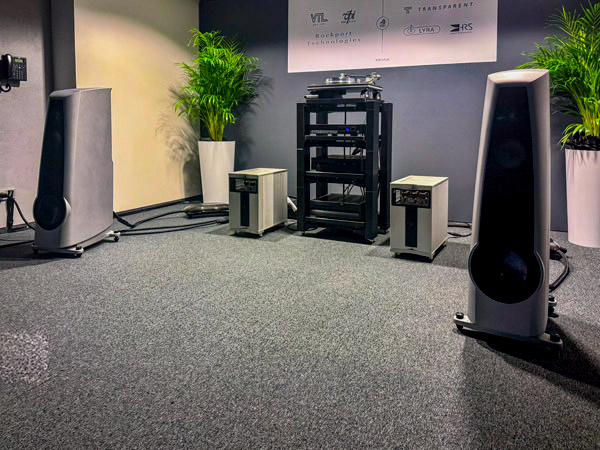
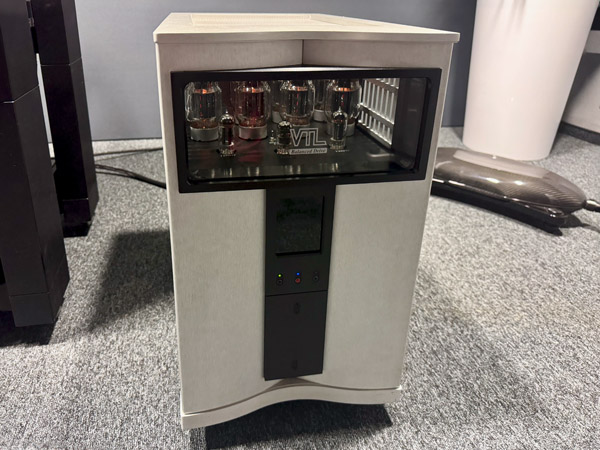 My best sounding room of Day 1, "an oasis of beauty and musicality," showcased the latest prototype of the forthcoming (January 2026?) VTL Lohengrin monoblocks ($100,000/pair). Informally dubbed the "mini-Siegfried," this attractive tube amplifier made glorious sound in the company of the VTL TP-6.5 Series II and 7.5 Series III preamplifiers, VPI Dragon turntable with Lyra Atlas Lambda λ cartridge, Rockport Technologies Lynx loudspeakers, HRS racks, and Transparent Audio cables.
 On "Voodoo," the title track from The Sonny Clark Memorial Quartet's eponymous LP, the sound was open, clear, timbrally true, and gloriously alive and transparent. It was the aural equivalent of a breath of fresh air. Drums and cymbals sound exactly right, and it was easy to hear and feel the texture of the drum head. The sound was gorgeous—pure pleasure.
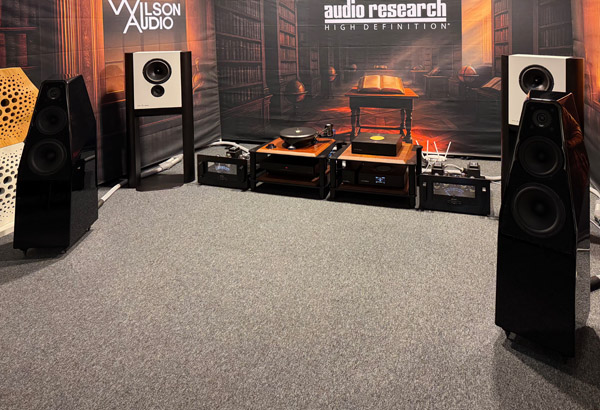 Three rooms tied for my second best sound of Day 1. The first I encountered combined Wilson Audio Sabrina V loudspeakers with a Grimm MU2 streamer/DAC/preamp and Audio Research Ref 160M MkII tubed monoblocks. With different capacitors and wiring than the original Ref 160Ms I reviewed some years back, which won Stereophile's Amplifier of the Year, these amps sounded wonderful. In one of the only classical listening sessions I heard and enjoyed at the Stadium, Grimm technical director Eelco Grimm cued up a delightful movement from Channel Classics' DSD recording of the Beethoven Complete Sonatas and Variations performed by Pieter Wispelwey and Dejan Lazić. The recording—the first Channel's Jared Sacks made with a Grimm converter—affirmed music's ability to transmit pure joy. Bravo.
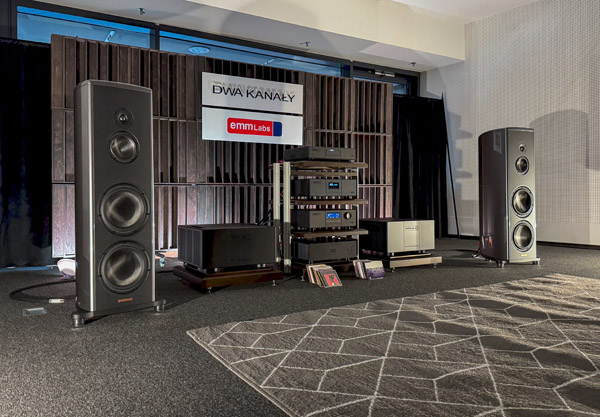 In my opinion, EMM Labs amplifiers are a sleeper pot of gold at the end of the audiophile rainbow. EMM's achievement in the amplification department is mighty and solid. A sure pairing with Magico S5 loudspeakers, EMM's DA2i DAC, TXi transport, PRE preamp, and MTRX2 V2 monoblock amplifiers sounded fabulous on "Duende" from the CD Black Light Syndrome by Bozzio Levin Stevens. Air was surprisingly excellent for CD, and midrange beauty, color, control, and speed were fabulous. I didn't expect CD to top high-rez streaming, but through the room's Pink Faun music server using Roon, it did. Look for forthcoming full length reviews of the EMM preamp and monoblocks, separately and combined.
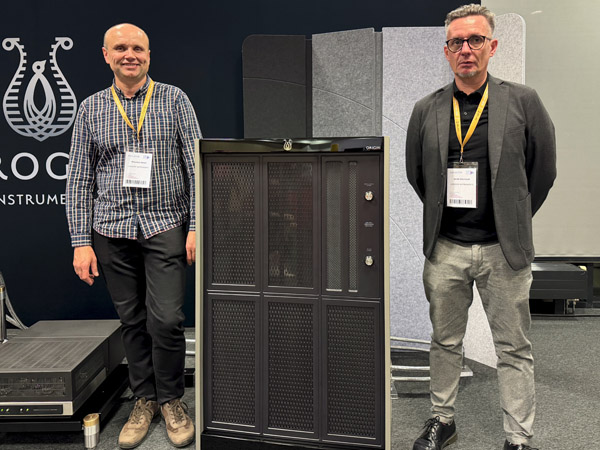 My third runner-up was another premiere, a world premiere at that: the Origin electrostatic loudspeaker from Lirogon Instruments of Poland. Although their choice to change tracks every 90 or 120 seconds without pause was frustrating, the sound was wonderful. A beautiful midrange, with lots of warmth, speed for days, and ideal balance distinguished sound of a system that began with an Everest Audio Labs music server feeding a Lampizator DAC and Sonic Frontiers Power 3 electronics. I have a strong feeling that once the right US and European distributors hear this loudspeaker, it's going to make waves. The more I listened, the happier I was.
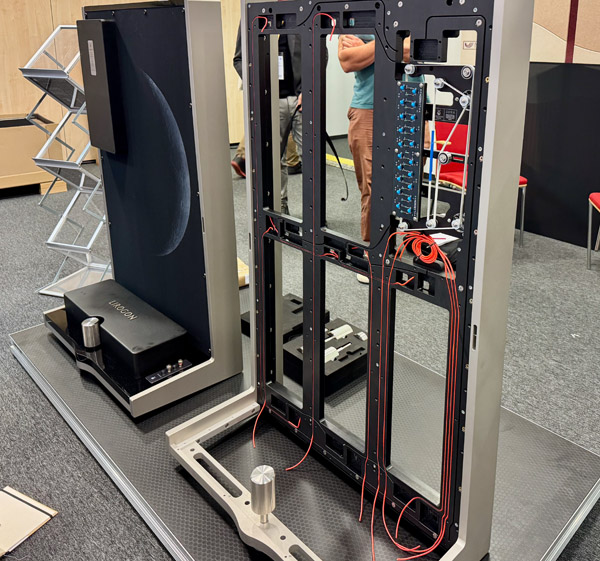 As best I can cobble from my English-as-a-second-language notes, the speaker has six electrostatic panels, four bass panels, a midrange panel, and a treble panel, with "mechanical correction technology" for "high level" and "brilliance." (You can adjust the treble response by 5dB by mechanically moving the treble panels' foil forward or back.) Five years in the making, the speaker extends down to 35Hz –3db, flat to 40Hz. Each panel is hand-tuned, and there is no crossover. These speakers are for big rooms: A listening distance of at least 3 meters is essential for musical cohesion. Measured at 3.2m, sensitivity is 85–86dB.
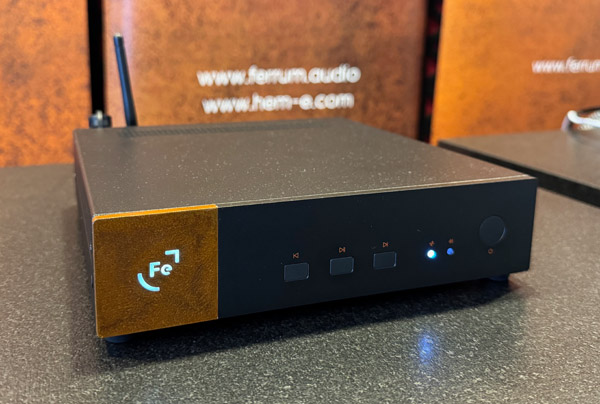 Another notable prerelease world premiere (due Q1 or Q2 2026) was Ferrum of Poland's diminutive Broen "network streaming transport." The Broen will be the streamer companion to Ferrum's Wandla DAC. It contains the proprietary Serce digital-to-digital module. Its streaming input facilitates both Ethernet and SFP optical. The Broen uses Volumio streaming software, and, like the Hypsos DAC, is upgradable with the Ferrum Hypsos power supply.
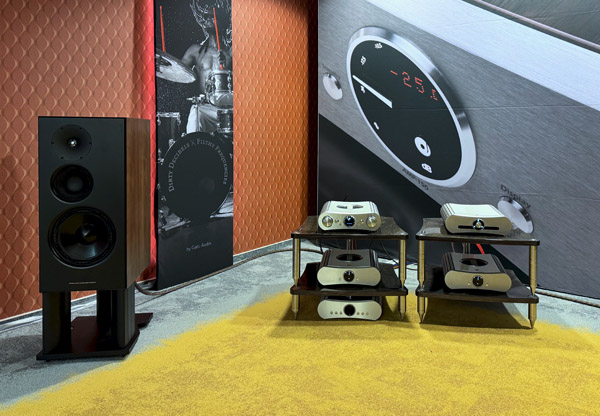 Gato of Copenhagen paired its electronics with a speaker (€10,000)from its Copenhangen Loudspeaker Corporation subsidiary. All the drivers used in the three-way speaker are by Purifi. Consequently, Gato claims, the speaker has "super low distortion." In the nearfield, on "Fever" with Ray Charles and Natalie Cole, the sound was huge, exciting, and clear. Gato is launching direct distribution in the US with logistical support from Emotiva; Gato distributes Emotiva in Europe.
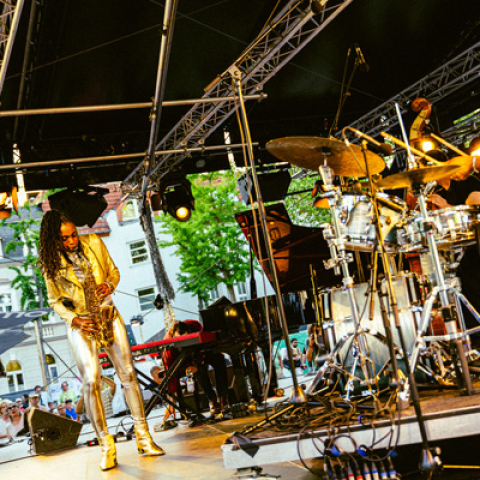
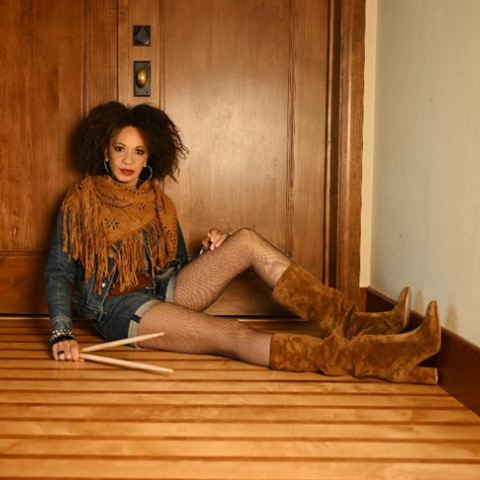
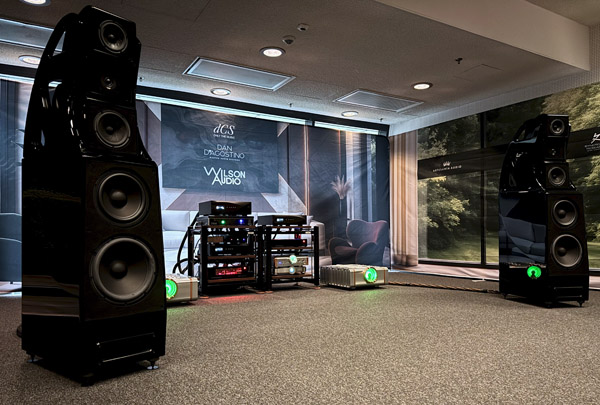
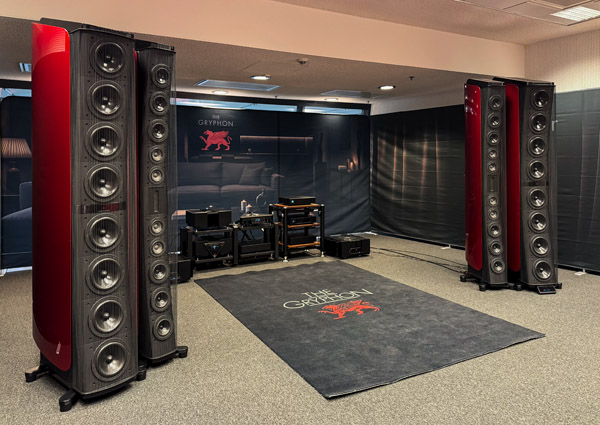 Two more systems—an all-Gryphon system (Kodo statement loudspeakers, Antileon Revelation monloblocks, Commander preamp, and Ethos CD/DAC) and the familiar pairing of Wilson Alexx V with dCS Vivaldi and D'Agostino Relentless 800 monoblocks and Momentum C2 preamp—delivered huge, exciting, vivid images. Camille Thurman's "The Night Has a Thousand Skies" proved a perfect demo track for a Gryphon system that got everything right.
Closer Acoustics, a Polish speaker company with a US presence, joined with Elins Audio to showcase its Blocks modular speaker system. Audiophiles can customize the Blocks by choosing how many EMS France-sourced bass units they wish to stack, depending on room size and taste. Three is the maximum. Those bass drivers cut in at 125Hz; everything else handled by a midrange/tweeter that extends to 15kHz. The pair displayed included an optional Fostex supertweeter, said to extend treble up to 50kHz. The model shown was $11,300/pair plus the unknown (to this writer) price of the supertweeter
My best sounding room of Day 1, "an oasis of beauty and musicality," showcased the latest prototype of the forthcoming (January 2026?) VTL Lohengrin monoblocks ($100,000/pair). Informally dubbed the "mini-Siegfried," this attractive tube amplifier made glorious sound in the company of the VTL TP-6.5 Series II and 7.5 Series III preamplifiers, VPI Dragon turntable with Lyra Atlas Lambda λ cartridge, Rockport Technologies Lynx loudspeakers, HRS racks, and Transparent Audio cables.
On "Voodoo," the title track from The Sonny Clark Memorial Quartet's eponymous LP, the sound was open, clear, timbrally true, and gloriously alive and transparent. It was the aural equivalent of a breath of fresh air. Drums and cymbals sound exactly right, and it was easy to hear and feel the texture of the drum head. The sound was gorgeous—pure pleasure.
Three rooms tied for my second best sound of Day 1. The first I encountered combined Wilson Audio Sabrina V loudspeakers with a Grimm MU2 streamer/DAC/preamp and Audio Research Ref 160M MkII tubed monoblocks. With different capacitors and wiring than the original Ref 160Ms I reviewed some years back, which won Stereophile's Amplifier of the Year, these amps sounded wonderful. In one of the only classical listening sessions I heard and enjoyed at the Stadium, Grimm technical director Eelco Grimm cued up a delightful movement from Channel Classics' DSD recording of the Beethoven Complete Sonatas and Variations performed by Pieter Wispelwey and Dejan Lazić. The recording—the first Channel's Jared Sacks made with a Grimm converter—affirmed music's ability to transmit pure joy. Bravo.
In my opinion, EMM Labs amplifiers are a sleeper pot of gold at the end of the audiophile rainbow. EMM's achievement in the amplification department is mighty and solid. A sure pairing with Magico S5 loudspeakers, EMM's DA2i DAC, TXi transport, PRE preamp, and MTRX2 V2 monoblock amplifiers sounded fabulous on "Duende" from the CD Black Light Syndrome by Bozzio Levin Stevens. Air was surprisingly excellent for CD, and midrange beauty, color, control, and speed were fabulous. I didn't expect CD to top high-rez streaming, but through the room's Pink Faun music server using Roon, it did. Look for forthcoming full length reviews of the EMM preamp and monoblocks, separately and combined.
My third runner-up was another premiere, a world premiere at that: the Origin electrostatic loudspeaker from Lirogon Instruments of Poland. Although their choice to change tracks every 90 or 120 seconds without pause was frustrating, the sound was wonderful. A beautiful midrange, with lots of warmth, speed for days, and ideal balance distinguished sound of a system that began with an Everest Audio Labs music server feeding a Lampizator DAC and Sonic Frontiers Power 3 electronics. I have a strong feeling that once the right US and European distributors hear this loudspeaker, it's going to make waves. The more I listened, the happier I was.
As best I can cobble from my English-as-a-second-language notes, the speaker has six electrostatic panels, four bass panels, a midrange panel, and a treble panel, with "mechanical correction technology" for "high level" and "brilliance." (You can adjust the treble response by 5dB by mechanically moving the treble panels' foil forward or back.) Five years in the making, the speaker extends down to 35Hz –3db, flat to 40Hz. Each panel is hand-tuned, and there is no crossover. These speakers are for big rooms: A listening distance of at least 3 meters is essential for musical cohesion. Measured at 3.2m, sensitivity is 85–86dB.
Another notable prerelease world premiere (due Q1 or Q2 2026) was Ferrum of Poland's diminutive Broen "network streaming transport." The Broen will be the streamer companion to Ferrum's Wandla DAC. It contains the proprietary Serce digital-to-digital module. Its streaming input facilitates both Ethernet and SFP optical. The Broen uses Volumio streaming software, and, like the Hypsos DAC, is upgradable with the Ferrum Hypsos power supply.
Gato of Copenhagen paired its electronics with a speaker (€10,000)from its Copenhangen Loudspeaker Corporation subsidiary. All the drivers used in the three-way speaker are by Purifi. Consequently, Gato claims, the speaker has "super low distortion." In the nearfield, on "Fever" with Ray Charles and Natalie Cole, the sound was huge, exciting, and clear. Gato is launching direct distribution in the US with logistical support from Emotiva; Gato distributes Emotiva in Europe.
Two more systems—an all-Gryphon system (Kodo statement loudspeakers, Antileon Revelation monloblocks, Commander preamp, and Ethos CD/DAC) and the familiar pairing of Wilson Alexx V with dCS Vivaldi and D'Agostino Relentless 800 monoblocks and Momentum C2 preamp—delivered huge, exciting, vivid images. Camille Thurman's "The Night Has a Thousand Skies" proved a perfect demo track for a Gryphon system that got everything right.