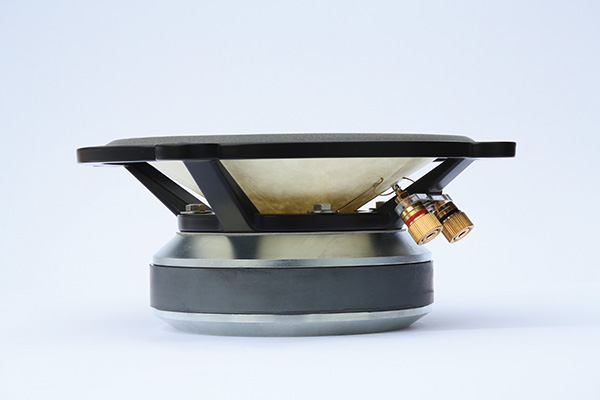
Side view of the 8" Voxativ AC-1.9 full-range driver.
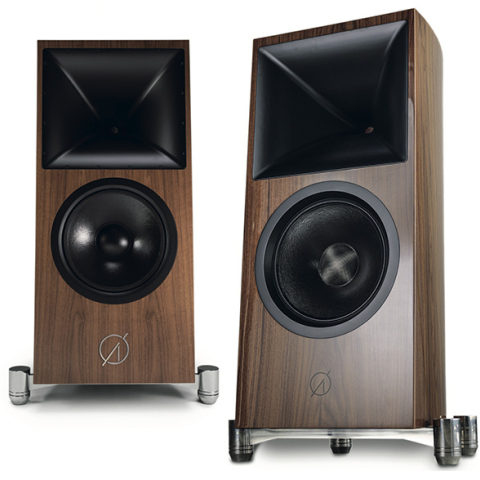
"Most of the horn's throat is filled with two different kinds of acoustically absorbent material," Art wrote about the original Ampeggio. "One such blanket, in fact, covers the rear of the throat and almost—but not quite—makes contact with the rear of the magnet once the driver is tightened into place."
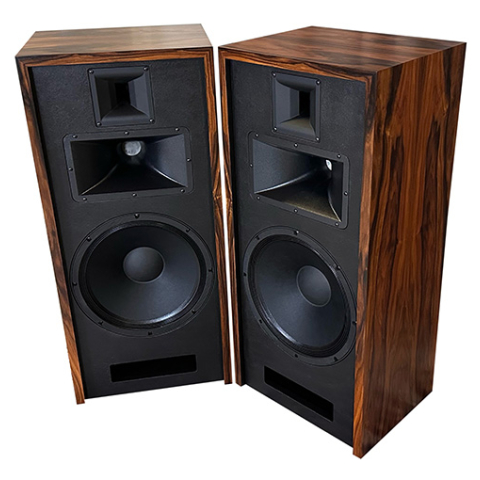
This has changed with the 2024. "There is not much internal damping in the speaker," Adler wrote about the Ampeggio 2024. "Only some small wool directly behind the driver to add damping to eliminate higher frequencies, because if you let them go through the horn, that adds coloration. The horn itself doesn't need any damping."
The cabinet is said to be "AST-optimized"—the quote is from the website—which means that Voxativ has applied a proprietary algorithm, which is said to be related to radar-absorbing structures in stealth fighters, to dampen internal reflections. I asked Adler to explain AST technology.
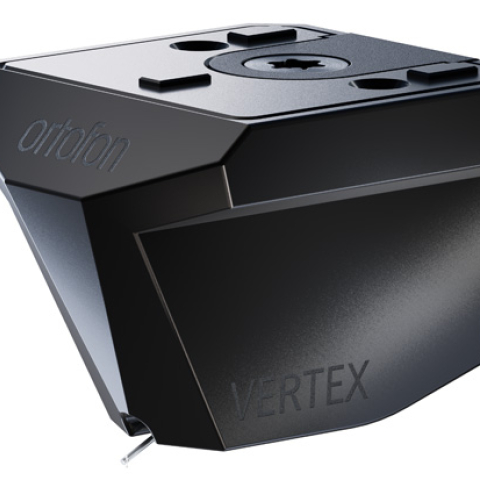
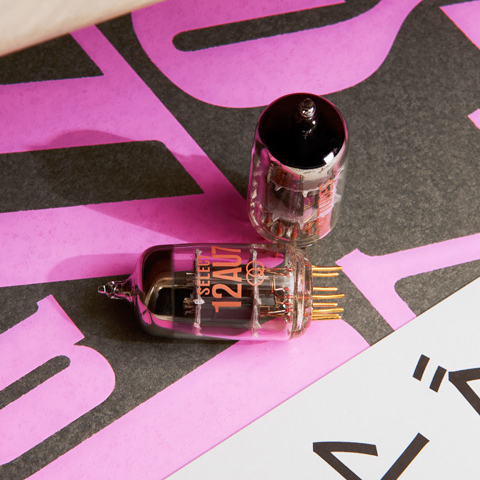
At 120lb each—same weight as the original—the Ampeggio 2024s were beasts to lift to my dwelling in the sky. Once that was accomplished it was setup time. After many minute adjustments, the Ampeggios ended up 12" from the front wall and 25" from sidewalls. I pushed my listening seat back an extra foot or so to allow the speaker's horn output to integrate with the direct sound from the full-range driver. I began listening with the VPI Avenger Direct turntable with VPI FatBoy tonearm and Hana Umami Blue cart (in for review), wired to a PrimaLuna EVO 100 phono stage and an integrated amp I will be reviewing in the August isssue, the PrimaLuna EVO 300 Hybrid integrated amplifier (100Wpc into 8 ohms; 150Wpc into 4 ohms). The 300 uses six 12AU7 tubes in its preamp section, the same configuration as the PrimaLuna EVO 400 preamplifier. The 300's solid state output stages use JFETs from Linear Systems; each channel uses two complementary pairs of Exicon MOSFETs.
Once upon a time, I attempted, as part of my reporter's task, to seek out the ultimate low-end thrill. That priority has changed. Now I seek bass that aligns seamlessly with higher frequencies. At that task, the Ampeggios excelled. Out of the gate, the combination of the two PrimaLuna components—the EVO 100 phono stage and EVO 300 integrated—pushed a vast soundstage out from the Ampeggios, with the best low-end slam I'd hear in my Ampeggio listening sessions.
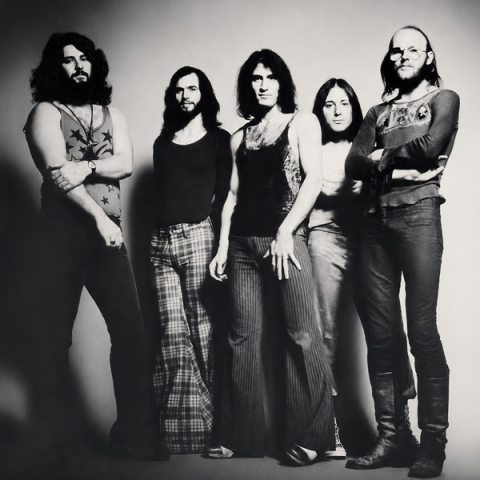
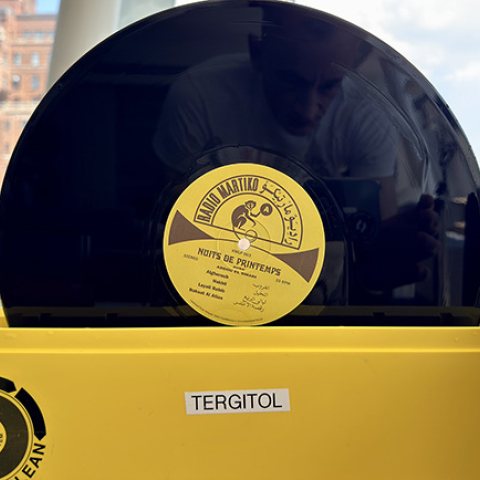
 The Ampeggios' clarity and corporeality were evident playing Analogue Productions' outstanding 45rpm UHQR cut of Steely Dan's 1973 album Countdown to Ecstasy (AUHQR 0010-45). Dan co-leader Walter Becker's bass was clean and clear as never before through the Voxativs, his pronounced, melodic playing preserved on two of my favorite cuts from the album, "Pearl of the Quarter" and "King of the World": dystopian forecast or tomorrow's reality? When the bridge kicked in on "King of the World," it was as if someone had mainlined caffeine to my brain, but my only stimulants were aural. When the song's outro arrived—and its high-velocity layering of dueling guitars—the speakers vanished and the guitars formed a holographic web that extended far beyond the speaker's physical cabinet boundaries.
Next, I continued with the PrimaLuna phono stage, but now I brought in my Shindo Labs Allegro preamp and the Rogue Audio Stereo 100 power amplifier.
The Ampeggios' clarity and corporeality were evident playing Analogue Productions' outstanding 45rpm UHQR cut of Steely Dan's 1973 album Countdown to Ecstasy (AUHQR 0010-45). Dan co-leader Walter Becker's bass was clean and clear as never before through the Voxativs, his pronounced, melodic playing preserved on two of my favorite cuts from the album, "Pearl of the Quarter" and "King of the World": dystopian forecast or tomorrow's reality? When the bridge kicked in on "King of the World," it was as if someone had mainlined caffeine to my brain, but my only stimulants were aural. When the song's outro arrived—and its high-velocity layering of dueling guitars—the speakers vanished and the guitars formed a holographic web that extended far beyond the speaker's physical cabinet boundaries.
Next, I continued with the PrimaLuna phono stage, but now I brought in my Shindo Labs Allegro preamp and the Rogue Audio Stereo 100 power amplifier.
 While I have yet to compare it to my original, the Power to the People reissue sounded remarkable through my Shindo/PrimaLuna/Rogue/Voxativ assemblage. Somehow the music sounded quieter than before, with a lower noisefloor and beautiful delicacy and natural decay, now coupled to an even wider, deeper soundstage. On the opening track, "Black Narcissus," which veers between quietude and eruption, each instrument—Henderson's tenor saxophone, Herbie Hancock's electric piano, a young Jack DeJohnette's drums—was wonderfully reanimated. There was nothing between me and these brilliant musicians except air and 55 years. I thrilled to the Ampeggios' whole-canvas delivery, their openness and fullness. Thrilling. Engaging. Stunning.
When I switched out the Shindo Labs and Rogue Audio gear for another EVO—the soon-to-be-reviewed Triode Labs 2A3 EVO integrated amplifier, which outputs just 4Wpc, all of it class-A—I heard more surprises. The 2A3 EVO uses Hashimoto transformers, Mundorf coupling caps, and an Alps Japan Blue volume pot in conjunction with a pair each of 12AX7s, 6SN7s, 2A3s, and a single GZ32 rectifier tube. Adler said 4Wpc should drive her speakers just fine. I wanted to investigate that claim.
While I have yet to compare it to my original, the Power to the People reissue sounded remarkable through my Shindo/PrimaLuna/Rogue/Voxativ assemblage. Somehow the music sounded quieter than before, with a lower noisefloor and beautiful delicacy and natural decay, now coupled to an even wider, deeper soundstage. On the opening track, "Black Narcissus," which veers between quietude and eruption, each instrument—Henderson's tenor saxophone, Herbie Hancock's electric piano, a young Jack DeJohnette's drums—was wonderfully reanimated. There was nothing between me and these brilliant musicians except air and 55 years. I thrilled to the Ampeggios' whole-canvas delivery, their openness and fullness. Thrilling. Engaging. Stunning.
When I switched out the Shindo Labs and Rogue Audio gear for another EVO—the soon-to-be-reviewed Triode Labs 2A3 EVO integrated amplifier, which outputs just 4Wpc, all of it class-A—I heard more surprises. The 2A3 EVO uses Hashimoto transformers, Mundorf coupling caps, and an Alps Japan Blue volume pot in conjunction with a pair each of 12AX7s, 6SN7s, 2A3s, and a single GZ32 rectifier tube. Adler said 4Wpc should drive her speakers just fine. I wanted to investigate that claim.
Every loudspeaker I've reviewed for Stereophile has had strengths and weaknesses, though a few were so good—and affordable enough—that I bought them. I would buy the Voxativ Ampeggio if I could.