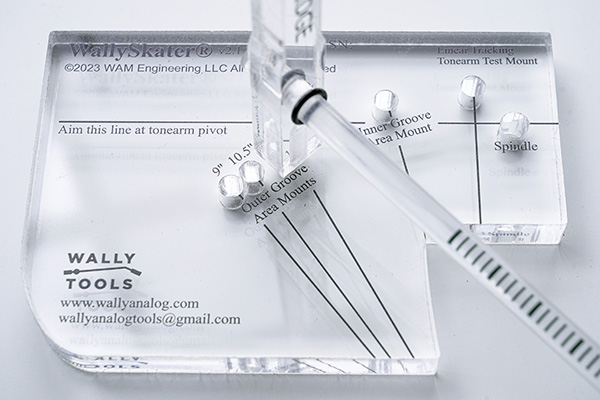
 Wally Tools WallySkater V2.1 Pro
They say you can't teach an old dog new tricks, and while I learn new things about setting up turntables all the time, I long ago settled into a set of skills I have been using to adjust turntables professionally for decades. What has changed is the tools available to assist that work, which have improved immensely over the decades. I have added many of those tools to my arsenal. Founded by turntable setup obsessive and inventor Wally Malewicz in 1994, WAM Engineering introduced a range of innovative setup tools that dug deep into setup issues most analog audiophiles didn't even know existed. Wally died in 2018, and for a while it seemed as if WAM Engineering would slip away, but a year later, the company was relaunched by Wally's son Andrzej and WAM's production assistant J.R. Boisclair (footnote 3). In the five years since the revival, Boisclair has done an impressive job of sorting out the company's previously disorganized operations, improving the company's website and owner's manuals, and launching a YouTube channel stocked with excellent tutorial videos. He has also delved deeper into more setup issues and developing new tools to deal with those issues. For example, WAM now offers a personalized cartridge analysis service, with custom fixes for any intrinsic alignment problems the analysis uncovers. There is no perfect approach to adjusting a tonearm's antiskating. Whatever antiskating force you end up applying will be a compromise. For decades, I have used a method promoted by cartridge rebuilder Peter Ledermann of Soundsmith, which he developed in collaboration with German tonearm designer Frank Schröder. The Ledermann/Schröder approach uses the blank spaces in the lead-out area of a record. Lower the stylus and observe which way the arm moves as it hits smooth vinyl. The goal is to get the stylus to slide slowly inward towards the label rather than having it sit in the same spot, as you occasionally see recommended. I found this to be pretty much impossible to do using the lead-out area of a record, because a short fraction of a second after you drop the stylus, it gets collected by the lead-out groove, ending your observation time.
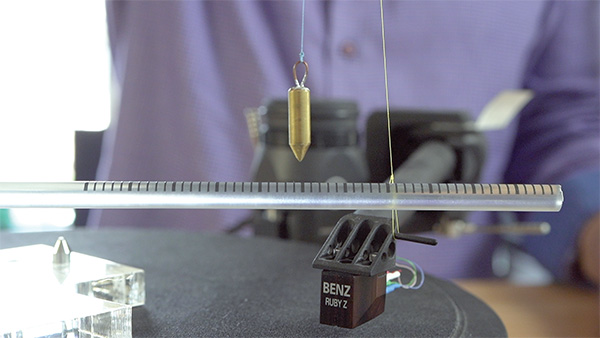
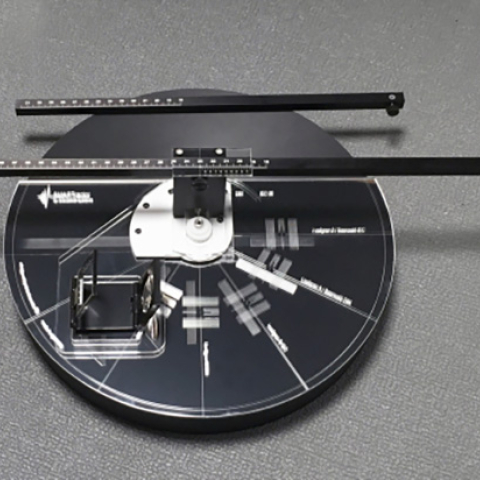
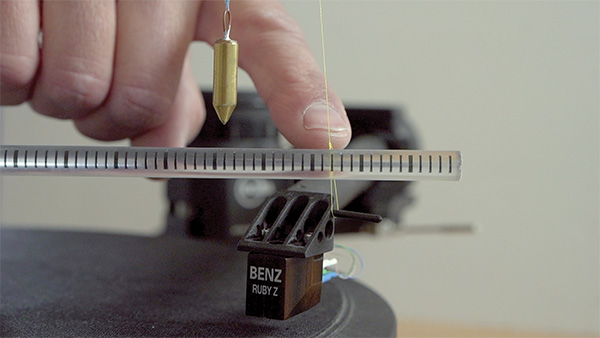 While the WallySkater's ability to measure and quantify the antiskate force is impressive, for me its true value lies in two additional tests it lets you perform. The static-friction test lets you see how much "sticktion" your arm's bearings have. By slowly sliding the hanger along the beam, you can observe how far you need to move the hanger before the arm moves to catch up with it. The more friction-free the arm's bearings are, the more closely the arm will follow the plumb bob. Even more useful is the internal horizontal torque force test, which allows you to see whether your arm is naturally pulling inwards or outwards, even when the antiskating device is disengaged. This proved invaluable for dressing the external wire loop on many arms, such as the Kuzma 4Point and VPI unipivots, dressing it to have the least possible influence on the arm. This showed me that with some arms I was compensating for an unmeasured internal arm force using the antiskating. When those internal forces are minimized and so applying only the minimum antiskating needed to oppose the skating force, the arm's behavior becomes more predictable.
In use, the WallySkater is fiddly and at times anxiety inducing, with your precious cartridge's stylus literally hanging by a thread over the platter. The two threads have a tendency to get twisted together, and adjusting the height of arm hanger thread and plumb bob weight as they swing around can be nerve wracking. You can reduce the danger factor by using the WallySkater with your cartridge's stylus guard in place, so long as you set the downforce on the arm with the guard fitted.
While the WallySkater's ability to measure and quantify the antiskate force is impressive, for me its true value lies in two additional tests it lets you perform. The static-friction test lets you see how much "sticktion" your arm's bearings have. By slowly sliding the hanger along the beam, you can observe how far you need to move the hanger before the arm moves to catch up with it. The more friction-free the arm's bearings are, the more closely the arm will follow the plumb bob. Even more useful is the internal horizontal torque force test, which allows you to see whether your arm is naturally pulling inwards or outwards, even when the antiskating device is disengaged. This proved invaluable for dressing the external wire loop on many arms, such as the Kuzma 4Point and VPI unipivots, dressing it to have the least possible influence on the arm. This showed me that with some arms I was compensating for an unmeasured internal arm force using the antiskating. When those internal forces are minimized and so applying only the minimum antiskating needed to oppose the skating force, the arm's behavior becomes more predictable.
In use, the WallySkater is fiddly and at times anxiety inducing, with your precious cartridge's stylus literally hanging by a thread over the platter. The two threads have a tendency to get twisted together, and adjusting the height of arm hanger thread and plumb bob weight as they swing around can be nerve wracking. You can reduce the danger factor by using the WallySkater with your cartridge's stylus guard in place, so long as you set the downforce on the arm with the guard fitted.
Footnote 3: WAM Engineering LLC, Santa Rosa, CA. Tel: (707) 210-6345. Web: wallyanalog.com.