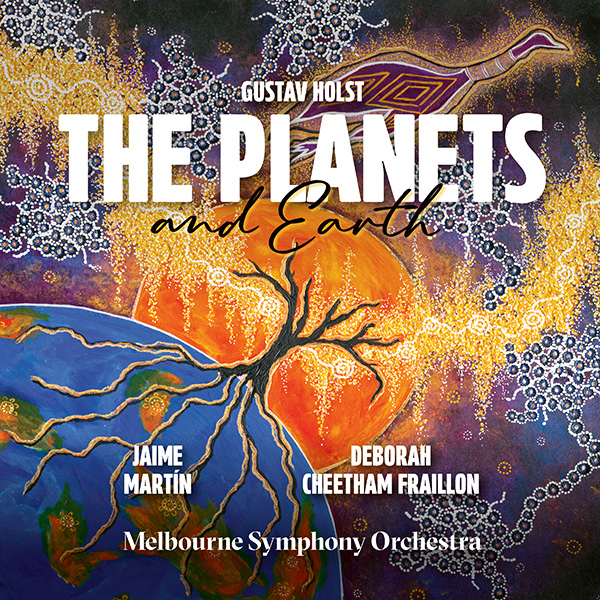
Holst: The Planets
Cheetham Fraillon: Earth
Deborah Cheetham Fraillon, soprano; Upper Voices of the MSO Chorus; Melbourne Symphony Orchestra/Jaime Martín
Melbourne Symphony MSO0003 (CD). 2025. Ingo Petry, prod.; Alex Stinson, eng.
Performance ****½
Sonics ***** Years ago, Hyperion released a Planets that added Colin Matthews's "Pluto, " absent from Holst's suite. Since then, alas, Pluto was demoted. Now the Melbourne Symphony has issued its own Planets—distributed through a partnership with LSO Live—appending an "Earth" movement composed by Deborah Cheetham Fraillon. This is one of the finest Planets I've heard. It's easy for conductors to underline this music's splashy washes of sound and roof-raising climaxes, but Jaime Martín plays the score for color as well as power. "Venus" is serene, with a pure solo violin; "Saturn" goes with a mysterious, solemn tread. The two scherzos, "Mercury" and "Uranus," are magical, with startling dynamic contrasts in the latter.
Once merely capable, the Melbourne Symphony has acquired a real personality. Strings, anchored by boldly resonant basses, provide warm top-to-bottom clarity; the airy, transparent reeds are a particular pleasure. The brass choir is powerful, with a clean, focused principal horn. The lead trumpet can be reticent: Note the back-and-forth with the trombone in "Mars." Save for that movement's dispirited snare drum, all the playing is poised and alert, coalescing into lustrous ensemble sonorities. All this is projected in open, spacious textures with clear definition, though the big organ glissando in "Uranus" briefly, inevitably, obscures matters. Details usually buried emerge, without artificial spotlighting. The fragmented textures of "Neptune" have a beautiful clarity, and the chorus sopranos "sneak in" like another instrument. This is as near "demonstration quality" as The Planets has gotten in years.
This recording is worth your while if you're looking to update your Steinberg or Haitink LPs.—Stephen Francis Vasta
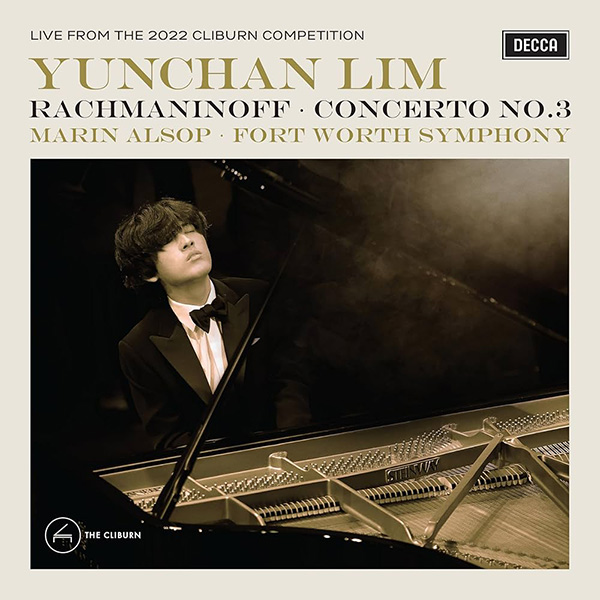 Rachmaninoff: Piano Concerto 3
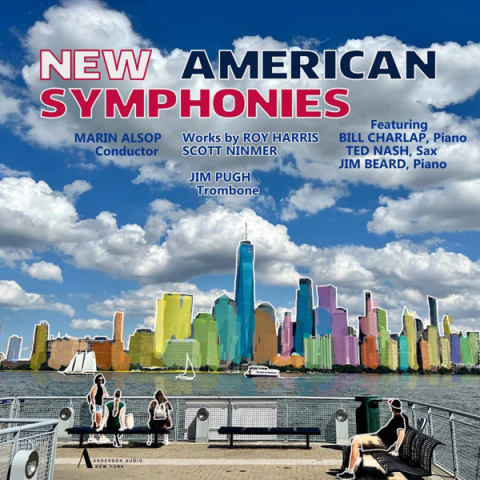
Yunchan Lim, piano; Fort Worth Symphony/Marin Alsop
Decca 028948712861 (CD). 2025. Dominic Fyfe, prod.; Tom Lazarus, eng.
Performance ***½
Sonics ****
This is the performance that clinched Yunchan Lim's Gold Medal at the XVI Van Cliburn Competition. How does it stack up in your living room?
Lim has technique and virtuosity to spare. The way he launches his first run, with lapidary, weighted articulations, is breathtaking. He's most impressive when he draws on his full tonal resonance to elicit an array of colors. The "chordal" end of the first-movement development sparkles; later, he makes the cadenza both scampering and ominous—not an obvious combination. From the central Intermezzo's crisp, full-throated chords out to the end of the piece, he's thrilling and persuasive.
I appreciate Lim's willingness to scale down, to inflect, and to be flexible with tempo, but his pretty, balanced tone doesn't maintain its presence at in-between dynamics. The first movement's second subject and the Intermezzo's theme are neutral. At first, I thought he wasn't layering the textures, but, no: The more intimate sound comes at the cost of tonal depth. The quiet theme in the Finale's development is a bit wan.
That movement also includes two actual sins of omission. The second theme's crisp chordal "anticipation" is thumpy in the recap. And both soloist and conductor belabor the rhetoric in the big climax, with a particularly arthritic peak.
Alsop keeps things shipshape. The Fort Worth strings have a warm, transparent blend, and the principal oboe is sensitive; the trumpet fanfares heralding the climax, strangely, almost aren't there. Some other details are too recessed, but that's the composer's doing, not Alsop's or the engineers'.
Lim's performance is musical, dynamic, and impressive, especially considering that he is only 18. But, despite the occasion's documentary importance, your home listening library wants better.—Stephen Francis Vasta
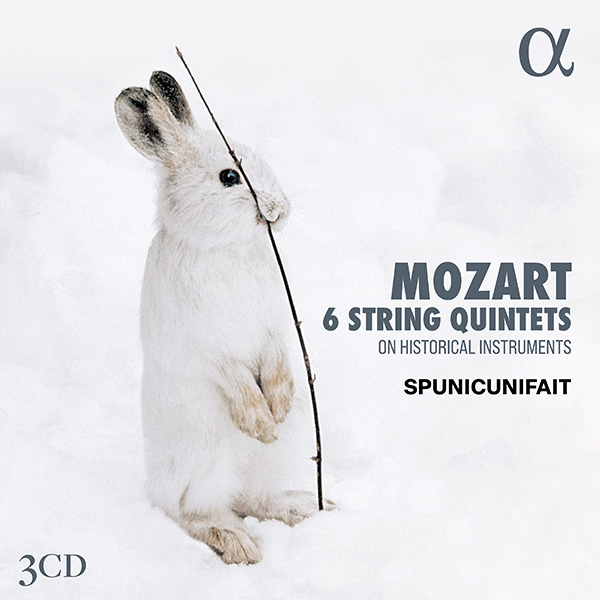 Mozart: 6 String Quintets on Historical Instruments
Spunicunifait
Alpha 1137. 3 CDs (reviewed as 24/192). 2025. Jean-Daniel Noir, prod., eng.
Performance ****
Sonics ****½ Mozart's six string quintets, composed for two violins, two violas, and a cello, span the length of his compositional maturity. The first, in B-flat Major K.174, was completed in Salzburg at the end of 1773, when he was 17. The last two were written within a year of his death. There aren't many recordings of these quintets on the instruments Mozart expected to hear, which makes this recording essential. Dynamic contrasts and soundstage width are less than on some modern instrument recordings, but in return we gain timbral contrasts—especially on viola—and clarity that enhance pleasure and understanding immensely.
Spunicunifait, a spun-for-the-occasion ensemble consisting of five young European string players with impressive credentials, takes its name from a word Mozart included in a letter to his cousin. Its meaning isn't completely clear, but the humor it embodies manifests in Spunicunifait's delightful performance of the first quintet's opening movement. The 1st's Adagio is fetchingly delicate, and its third movement minuet is quintessentially Mozartian in its songfulness. The final movement is a prime example of the sublime mixture of play and refinement that makes much of Mozart's writing so endearing. Curiously, the recording includes a zippier, alternative performance of the quintet's final Allegro without any explanation.
Where Spunicunifait's interpretations fall short are in some of the slow movements. In the two most famous of Mozart's quintets, No.3 in C Major, K.515 and No.4 in G minor, K.516, the music that expresses the soul of these masterpieces is taken too fast for my taste. By contrast, Quatuor Ébène is among many modern instrument ensembles that far more successfully touch the heart by devoting a full minute more to each of these movements.—Jason Victor Serinus
 L'Extase: Debussy & Messiaen
Magdalena Kožená, mezzo-soprano; Mitsuko Uchida, piano
Pentatone PTC 5187129, CD (reviewed as 24/192). 2025. Everett Porter (Polyhymnia International B.V.), prod., eng.
Performance ****½
Sonics ****½
From the start, mezzo Magdalena Kožená and pianist Mitsuko Uchida's rendition of Debussy's 3 Chansons de Bilitis, the first of four gorgeous song cycles by Debussy and Messaien on this recording, stopped me in my tracks. By taking some of the Bilitis songs more slowly than other artists (including Jane Bathori and Maggie Teyte, who sang with Debussy), Kožená and Uchida infuse them with introspective intimacy. Listen to how tender and private Kožená describes making love in the second song and how perfectly Uchida supports her.
The two women deserve equal credit for the high level of artistry on Pentatone's high-resolution achievement. There is nothing routine about the way Uchida plays; every note and chord is infused with meaning. In most recitals, pianists play accompanist; here Uchida's partnership consistently illumines the feelings behind Kožená's words. I was especially struck by Uchida's impeccable technique as she cleanly releases the final chord of the cycle's second song, "La chevelure," and the absolute finality to her close of the last song, "Le tombeau des Naiades."
Kožená's cool mezzo is perfect for almost everything on this disc. Her midrange sounds gorgeous and smooth, her soprano-like top remarkably free and easy. Her only shortcomings are an inability to maintain beauty of tone when singing fast in Debussy's famous "Chevaux de bois" (Wooden Horses) from Ariettes oubliées (Forgotten Melodies), poor enunciation on high, and a casual at best approach to French pronunciation.
Nonetheless, for her total embrace of sadness in that cycle's famous "Spleen" and her absolute conviction in the other two cycles—Debussy's Cinq poèmes de Charles Baudelaire and Messiaen's Poèmes pour Mi (Deuxième Livre)—L'extase merits ecstatic praise.—Jason Victor Serinus
Cheetham Fraillon: Earth
Deborah Cheetham Fraillon, soprano; Upper Voices of the MSO Chorus; Melbourne Symphony Orchestra/Jaime Martín
Melbourne Symphony MSO0003 (CD). 2025. Ingo Petry, prod.; Alex Stinson, eng.
Performance ****½
Sonics ***** Years ago, Hyperion released a Planets that added Colin Matthews's "Pluto, " absent from Holst's suite. Since then, alas, Pluto was demoted. Now the Melbourne Symphony has issued its own Planets—distributed through a partnership with LSO Live—appending an "Earth" movement composed by Deborah Cheetham Fraillon. This is one of the finest Planets I've heard. It's easy for conductors to underline this music's splashy washes of sound and roof-raising climaxes, but Jaime Martín plays the score for color as well as power. "Venus" is serene, with a pure solo violin; "Saturn" goes with a mysterious, solemn tread. The two scherzos, "Mercury" and "Uranus," are magical, with startling dynamic contrasts in the latter.
Rachmaninoff: Piano Concerto 3Yunchan Lim, piano; Fort Worth Symphony/Marin Alsop
Decca 028948712861 (CD). 2025. Dominic Fyfe, prod.; Tom Lazarus, eng.
Performance ***½
Sonics ****
Mozart: 6 String Quintets on Historical InstrumentsSpunicunifait
Alpha 1137. 3 CDs (reviewed as 24/192). 2025. Jean-Daniel Noir, prod., eng.
Performance ****
Sonics ****½ Mozart's six string quintets, composed for two violins, two violas, and a cello, span the length of his compositional maturity. The first, in B-flat Major K.174, was completed in Salzburg at the end of 1773, when he was 17. The last two were written within a year of his death. There aren't many recordings of these quintets on the instruments Mozart expected to hear, which makes this recording essential. Dynamic contrasts and soundstage width are less than on some modern instrument recordings, but in return we gain timbral contrasts—especially on viola—and clarity that enhance pleasure and understanding immensely.
L'Extase: Debussy & MessiaenMagdalena Kožená, mezzo-soprano; Mitsuko Uchida, piano
Pentatone PTC 5187129, CD (reviewed as 24/192). 2025. Everett Porter (Polyhymnia International B.V.), prod., eng.
Performance ****½
Sonics ****½