Scenes from the Kalevala, a spectacular new recording from Dima Slobodeniouk and the Lahti Symphony Orchestra (24/96 FLAC download, BIS BIS2371), offers musical views of the Kalevala legend by composers Uuno Klami, Leevi Madetoja, Tauno Pylkkänen, and Jean Sibelius. These vigorous performances benefited greatly from the enhanced soundstage depth afforded by the SS buffer; in passive mode, the music was marginally drier and smaller. The Freya's sound in solid state buffer mode is what I expect from a good preamp in a good system.
 Comparing tube mode was a bit more involved, due to the warm-up period, during which the Freya + is muted, and the tube mode's extra 12dB of gain. Quick A/B comparisons with tube mode are not practical.
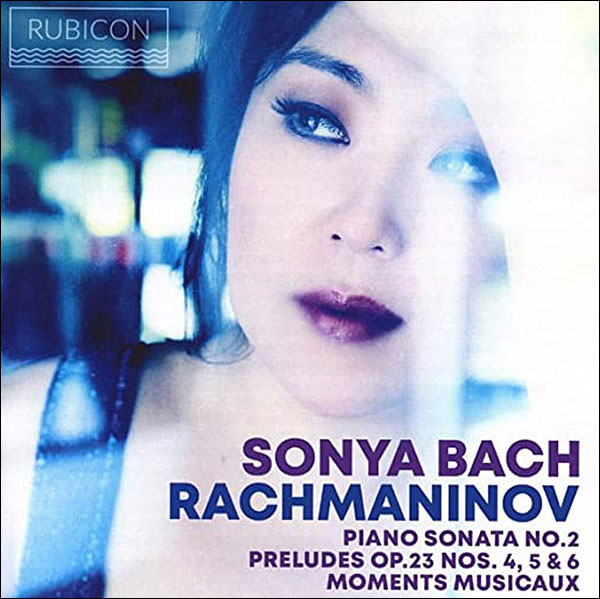 The muted warm-up wait created much anticipation. When the muting concluded, the immediate impression was of less distance. The treble seemed just a bit rolled off, resulting in a new, more intimate proximity. A good example of this is Sonya Bach, Rachmaninov (CD, Rubicon RCD1058). The sound of the piano in the brilliant Alla Marcia (No.5 from the 10 Preludes Op.23) was full and present, offering a strong impression of the wood body of the instrument, but the very bottom end seemed less prominent, suggesting more velvet glove than iron fist. At the upper end, the tones offer more pearl than ping. I missed some of the impact from the cast-iron frame of her Steinway Model D that I heard in the preamp's other modes.
In general, the tube mode of the Freya + sounded a little warm, rich, and forgiving—all attributes sought by many. The bass was rich and weighty, which I found quite enjoyable for passive listening, but I preferred the solid state buffer mode for its uncolored directness.
As for noise, the brief Freya + manual tells us to expect some hiss when using the differential tube gain stage but that it "should not be audible from the listening position in most typical systems." The only noise I heard was with the grille off and my ear within an inch of the tweeter and midrange drivers.
A comparison
The muted warm-up wait created much anticipation. When the muting concluded, the immediate impression was of less distance. The treble seemed just a bit rolled off, resulting in a new, more intimate proximity. A good example of this is Sonya Bach, Rachmaninov (CD, Rubicon RCD1058). The sound of the piano in the brilliant Alla Marcia (No.5 from the 10 Preludes Op.23) was full and present, offering a strong impression of the wood body of the instrument, but the very bottom end seemed less prominent, suggesting more velvet glove than iron fist. At the upper end, the tones offer more pearl than ping. I missed some of the impact from the cast-iron frame of her Steinway Model D that I heard in the preamp's other modes.
In general, the tube mode of the Freya + sounded a little warm, rich, and forgiving—all attributes sought by many. The bass was rich and weighty, which I found quite enjoyable for passive listening, but I preferred the solid state buffer mode for its uncolored directness.
As for noise, the brief Freya + manual tells us to expect some hiss when using the differential tube gain stage but that it "should not be audible from the listening position in most typical systems." The only noise I heard was with the grille off and my ear within an inch of the tweeter and midrange drivers.
A comparison
I stated earlier that I had been looking for simple, inexpensive, deadly clean preamps with balanced inputs and outputs, a relay-switched resistive-ladder volume control, and remote. That quest also turned up the Topping Pre90 that I reviewed in the February issue of Stereophile.
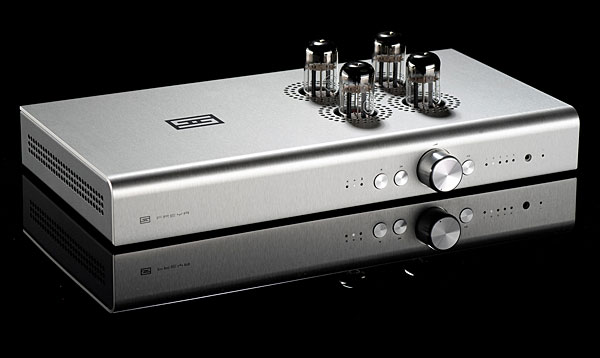 Once you add Topping's Ext90 to expand the Pre90's inputs, the two are similar in price (Freya + @ $949 vs Pre90 @ $848) and in the number of inputs (2 XLR + 3 RCA vs 4 XLR + 2 RCA). They both have XLR and RCA outputs, a relay-mediated resistor-ladder volume control, and a remote control. Neither remote control is optimal: The Pre90 RC demands extraordinary marksmanship, and the Freya + RC is tiny and obscurely labeled.
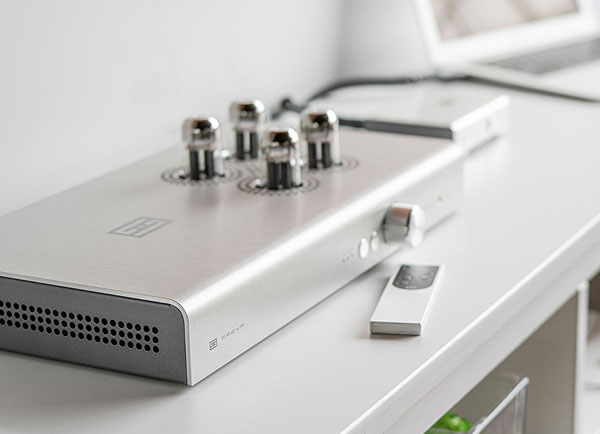
Each preamp does have distinguishing physical features. The Pre90 has a digital volume/source display, which is vastly more useful than the nearly invisible depression on the Freya's volume knob or its five input LEDs of the same color. The Freya + has two RCA outputs and a choice of three output modes—including the one with tubes.
The sound of the Freya + in tube mode was easy to contrast with the sound of the Pre90; I could A/B them using a Y-cable to feed them both from the same source and switch between them with my Coleman input switch. It was also easy because the contrast was more pronounced than that between the SS and tube modes of the Freya +. With the Pre90, the low end of the piano in Sonya Bach's Rachmaninov had just the right balance of iron and wood and a natural treble with both ping and pearl. The Pre90's re-creation of soundstage depth and size, with both the Kapsberger and Kalevala discs, was equivalent to that of the tube mode Freya + but with everything just a bit more distant.
In fact, the Pre90 sounded very much like the Freya + in its active SS differential buffer mode but with its slightly withdrawn midrange restored. These sonic differences are subtle and, when listening to music, even intently and critically, they tend to fade away.
For what it's worth, even if there were no audible differences, I would choose the Pre90 because of its digital volume display.
Once you add Topping's Ext90 to expand the Pre90's inputs, the two are similar in price (Freya + @ $949 vs Pre90 @ $848) and in the number of inputs (2 XLR + 3 RCA vs 4 XLR + 2 RCA). They both have XLR and RCA outputs, a relay-mediated resistor-ladder volume control, and a remote control. Neither remote control is optimal: The Pre90 RC demands extraordinary marksmanship, and the Freya + RC is tiny and obscurely labeled.
Each preamp does have distinguishing physical features. The Pre90 has a digital volume/source display, which is vastly more useful than the nearly invisible depression on the Freya's volume knob or its five input LEDs of the same color. The Freya + has two RCA outputs and a choice of three output modes—including the one with tubes.
The sound of the Freya + in tube mode was easy to contrast with the sound of the Pre90; I could A/B them using a Y-cable to feed them both from the same source and switch between them with my Coleman input switch. It was also easy because the contrast was more pronounced than that between the SS and tube modes of the Freya +. With the Pre90, the low end of the piano in Sonya Bach's Rachmaninov had just the right balance of iron and wood and a natural treble with both ping and pearl. The Pre90's re-creation of soundstage depth and size, with both the Kapsberger and Kalevala discs, was equivalent to that of the tube mode Freya + but with everything just a bit more distant.
In fact, the Pre90 sounded very much like the Freya + in its active SS differential buffer mode but with its slightly withdrawn midrange restored. These sonic differences are subtle and, when listening to music, even intently and critically, they tend to fade away.
For what it's worth, even if there were no audible differences, I would choose the Pre90 because of its digital volume display.
 Conclusions
The Freya + proved to be quite an accomplished product. It does what it says it does, and it sounds great. The Freya's three modes of operation provide the user with options to suit system, mood, program choice, or taste.
There are good things about each of the modes, but I preferred the Freya + in its active SS differential buffer mode. In this mode, the Freya + is clean, detailed, balanced, and conducive to long casual or critical listening.
The Freya's passive mode is quite similar but seems not as capable driving the balanced lines to my power amps. For those with more accommodating loads who are not looking for voltage gain but for a straightforward and honest volume control, the Freya + is quite appealing. In this mode, the Freya + is "a straight wire with variable gain" (with my apologies to Peter Walker).
The Freya + in its vacuum tube mode offers pleasing presence and warmth but without obscuring detail or disrupting musical balance. Many will welcome it as musical, and to them I can commend it with confidence.
The Freya + delivers high-quality sound and reliable operation at a very friendly price. Each of the Freya's modes will appeal to specific listeners, but, very likely, many will enjoy having all the options.
Comparing tube mode was a bit more involved, due to the warm-up period, during which the Freya + is muted, and the tube mode's extra 12dB of gain. Quick A/B comparisons with tube mode are not practical.
The muted warm-up wait created much anticipation. When the muting concluded, the immediate impression was of less distance. The treble seemed just a bit rolled off, resulting in a new, more intimate proximity. A good example of this is Sonya Bach, Rachmaninov (CD, Rubicon RCD1058). The sound of the piano in the brilliant Alla Marcia (No.5 from the 10 Preludes Op.23) was full and present, offering a strong impression of the wood body of the instrument, but the very bottom end seemed less prominent, suggesting more velvet glove than iron fist. At the upper end, the tones offer more pearl than ping. I missed some of the impact from the cast-iron frame of her Steinway Model D that I heard in the preamp's other modes.
I stated earlier that I had been looking for simple, inexpensive, deadly clean preamps with balanced inputs and outputs, a relay-switched resistive-ladder volume control, and remote. That quest also turned up the Topping Pre90 that I reviewed in the February issue of Stereophile.
Once you add Topping's Ext90 to expand the Pre90's inputs, the two are similar in price (Freya + @ $949 vs Pre90 @ $848) and in the number of inputs (2 XLR + 3 RCA vs 4 XLR + 2 RCA). They both have XLR and RCA outputs, a relay-mediated resistor-ladder volume control, and a remote control. Neither remote control is optimal: The Pre90 RC demands extraordinary marksmanship, and the Freya + RC is tiny and obscurely labeled.
Each preamp does have distinguishing physical features. The Pre90 has a digital volume/source display, which is vastly more useful than the nearly invisible depression on the Freya's volume knob or its five input LEDs of the same color. The Freya + has two RCA outputs and a choice of three output modes—including the one with tubes.
The sound of the Freya + in tube mode was easy to contrast with the sound of the Pre90; I could A/B them using a Y-cable to feed them both from the same source and switch between them with my Coleman input switch. It was also easy because the contrast was more pronounced than that between the SS and tube modes of the Freya +. With the Pre90, the low end of the piano in Sonya Bach's Rachmaninov had just the right balance of iron and wood and a natural treble with both ping and pearl. The Pre90's re-creation of soundstage depth and size, with both the Kapsberger and Kalevala discs, was equivalent to that of the tube mode Freya + but with everything just a bit more distant.
ConclusionsThe Freya + proved to be quite an accomplished product. It does what it says it does, and it sounds great. The Freya's three modes of operation provide the user with options to suit system, mood, program choice, or taste.