Horn players were always the show ponies of bebop. While drummer Art Blakey, pianist Thelonious Monk, and other instrumentalists were also powerful pioneers, it was the saxophonists, building on the legacy of the great Charlie Parker, who've come to symbolize this once-hated, now-revered form of jazz.
While the tenors and altos got the lion's share of saxophone glory, baritone players also made their mark, on bebop and also swing. Perhaps the most famous is Harry Carney, a mainstay of the Duke Ellington Orchestra. Serge Chaloff, Pepper Adams, Gerry Mulligan, and Cecil Payne are all baritone sax players of note. More recently, Gary Smulyan and Hamiet Bluiett have added their distinctive voices.
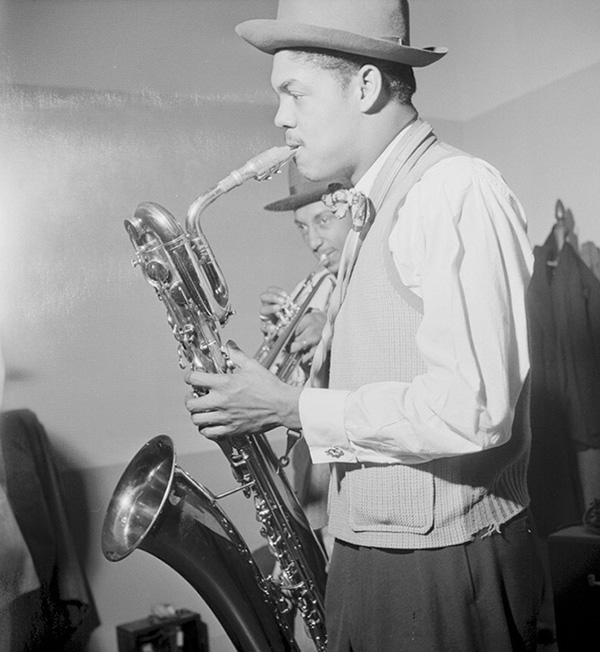
Demanding more air and a different, more supportive embouchure, the baritone sax emits an unforgettable tone. Often described as "brawny," that sound is immediately distinct when the hefty instrument is played with verve and gusto.
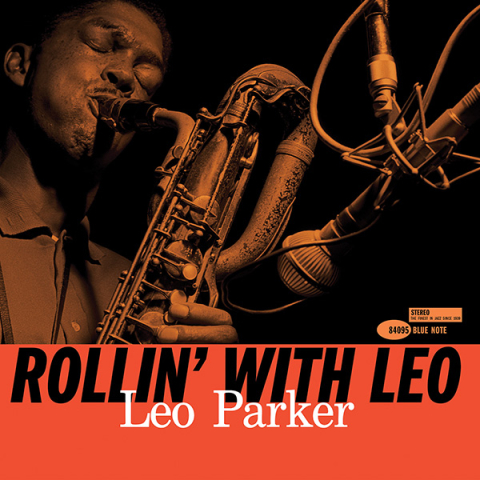
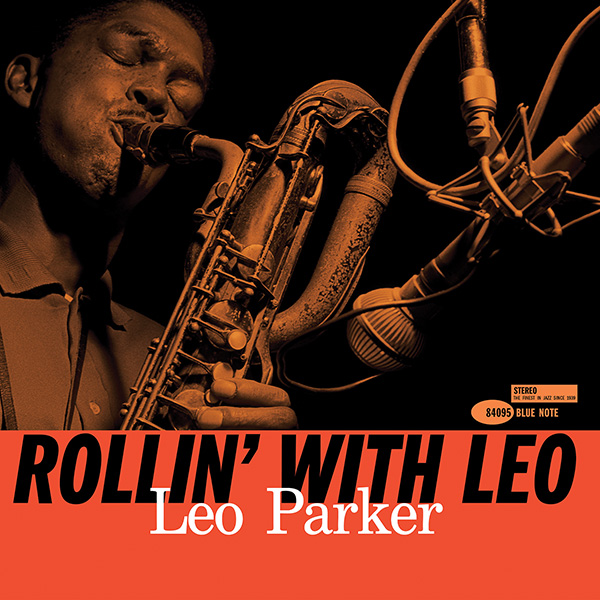
One of if not the earliest bebop baritone saxophone practitioners was Leo Parker. His last album, Rollin' With Leo, which was recorded in 1961 but not released until 1980, is one of the most recent releases in Blue Note Records' uniformly excellent Tone Poet vinyl-reissue series.
Born and raised in Washington, DC, Leo Parker made his mark after World War II, when jazz was first evolving from big band to bebop. Initially an alto saxophonist, he made his first recordings at age 18 on the alto as part of a 1944 Coleman Hawkins session that also included trumpeter Dizzy Gillespie, tenor saxophonist Don Byas, bassist Oscar Pettiford, and drummer Max Roach. These sessions, considered by many to be the first bebop recordings, were later collected and released, in 1992, as Rainbow Mist, on Bob Koester's Delmark label. In 1945, Parker switched to baritone saxophone and became a member of Billy Eckstine's band, joining a sax lineup known as "The Unholy Four."
Parker moved to tenor saxophonist Illinois Jacquet's band during a period captured on Toronto 1947, a live recording released on CD on the Uptown Records label. That session included bassist Al Lucas, who later appeared on Rollin' With Leo, as well as pianist Sir Charles Thompson. In 1951, Thompson and his All-Stars cut a session for Apollo Records with the great Charlie Parker that would produce the hit "Mad Lad," on which Leo Parker played a particularly memorable solo. The title of the song would thereafter become Leo Parker's nickname. Parker, who was the leader on a pair of 10" albums in 1951 for the Savoy label, also contributed to early 1950s sessions on labels including Gotham, King, Prestige, United, Aladdin, and Chess, some of which remain unissued to this day.
 Sadly, Mad Lad Parker became yet another drug casualty of the bebop era, a time when heroin was widely considered a rite of passage to the music. After scuffling and struggling mightily during the 1950s, he re-emerged from a decade of silence in 1961 to make a pair of records for Blue Note, Let Me Tell You 'Bout It and Rollin' With Leo, both recorded by Rudy Van Gelder in 1961. Leo died of a heart attack in early 1962 before the second session could be released. Cut from the original analog tapes, the 2025 Tone Poet release of Rollin' With Leo was mastered by Kevin Gray at Cohearent Audio and pressed at RTI. The project was supervised by Joe Harley, he of impeccable taste and open ears.
Five of the eight tunes on Rollin' With Leo are Leo Parker originals. The album opens with his smooth gliding "The Lion's Roar," on which the baritone shares solos with trumpeter Dave Burns. Burns is most famous for the time he spent playing with Dizzy Gillespie, though he also recorded on Blue Note albums by James Moody, George Wallington, and Dexter Gordon. Philadelphia-born pianist Johnny Acea, who was a sideman on sessions by Grant Green, Roy Haynes, and Don Wilkerson, among others, more than holds his own on these tracks. The drummers on the date are Purnell Rice and Wilbert Hogan. Perhaps the most well-realized tune on the session, the moody "Bad Girl" by bassist Stan Conover, who alternates with Lucas on this session, gives both Parker and Burns a chance to work in a deeper, bluesier vein.
Parker is an uncommonly nimble baritone player, capable of projecting the instrument's big sound but also adept at eliciting a crying, melancholy articulation and timbre, his signature legacy. Rather than an opportunity to blow, the title track is another midtempo excursion leaving plenty of room for Parker and Burns to stretch on uncommonly inventive and appealing solos. Another Parker original, the swinging "Jumpin' Leo," is exactly what the title implies, while the fast tempo of "Music Hall Beat" features another of the underrated sidemen on this session, tenor saxophonist Bill Swindell.
Rollin' With Leo is a treasure from bebop's past that's been reissued several times on CD and LP since 1980. This new version, with its freshened sound, proves again that Dexter Gordon's concise appraisal of Parker was on the mark: "The Kid could play. Lots of bottoms."
Sadly, Mad Lad Parker became yet another drug casualty of the bebop era, a time when heroin was widely considered a rite of passage to the music. After scuffling and struggling mightily during the 1950s, he re-emerged from a decade of silence in 1961 to make a pair of records for Blue Note, Let Me Tell You 'Bout It and Rollin' With Leo, both recorded by Rudy Van Gelder in 1961. Leo died of a heart attack in early 1962 before the second session could be released. Cut from the original analog tapes, the 2025 Tone Poet release of Rollin' With Leo was mastered by Kevin Gray at Cohearent Audio and pressed at RTI. The project was supervised by Joe Harley, he of impeccable taste and open ears.
Five of the eight tunes on Rollin' With Leo are Leo Parker originals. The album opens with his smooth gliding "The Lion's Roar," on which the baritone shares solos with trumpeter Dave Burns. Burns is most famous for the time he spent playing with Dizzy Gillespie, though he also recorded on Blue Note albums by James Moody, George Wallington, and Dexter Gordon. Philadelphia-born pianist Johnny Acea, who was a sideman on sessions by Grant Green, Roy Haynes, and Don Wilkerson, among others, more than holds his own on these tracks. The drummers on the date are Purnell Rice and Wilbert Hogan. Perhaps the most well-realized tune on the session, the moody "Bad Girl" by bassist Stan Conover, who alternates with Lucas on this session, gives both Parker and Burns a chance to work in a deeper, bluesier vein.
Parker is an uncommonly nimble baritone player, capable of projecting the instrument's big sound but also adept at eliciting a crying, melancholy articulation and timbre, his signature legacy. Rather than an opportunity to blow, the title track is another midtempo excursion leaving plenty of room for Parker and Burns to stretch on uncommonly inventive and appealing solos. Another Parker original, the swinging "Jumpin' Leo," is exactly what the title implies, while the fast tempo of "Music Hall Beat" features another of the underrated sidemen on this session, tenor saxophonist Bill Swindell.
Rollin' With Leo is a treasure from bebop's past that's been reissued several times on CD and LP since 1980. This new version, with its freshened sound, proves again that Dexter Gordon's concise appraisal of Parker was on the mark: "The Kid could play. Lots of bottoms."
Sadly, Mad Lad Parker became yet another drug casualty of the bebop era, a time when heroin was widely considered a rite of passage to the music. After scuffling and struggling mightily during the 1950s, he re-emerged from a decade of silence in 1961 to make a pair of records for Blue Note, Let Me Tell You 'Bout It and Rollin' With Leo, both recorded by Rudy Van Gelder in 1961. Leo died of a heart attack in early 1962 before the second session could be released. Cut from the original analog tapes, the 2025 Tone Poet release of Rollin' With Leo was mastered by Kevin Gray at Cohearent Audio and pressed at RTI. The project was supervised by Joe Harley, he of impeccable taste and open ears.
Five of the eight tunes on Rollin' With Leo are Leo Parker originals. The album opens with his smooth gliding "The Lion's Roar," on which the baritone shares solos with trumpeter Dave Burns. Burns is most famous for the time he spent playing with Dizzy Gillespie, though he also recorded on Blue Note albums by James Moody, George Wallington, and Dexter Gordon. Philadelphia-born pianist Johnny Acea, who was a sideman on sessions by Grant Green, Roy Haynes, and Don Wilkerson, among others, more than holds his own on these tracks. The drummers on the date are Purnell Rice and Wilbert Hogan. Perhaps the most well-realized tune on the session, the moody "Bad Girl" by bassist Stan Conover, who alternates with Lucas on this session, gives both Parker and Burns a chance to work in a deeper, bluesier vein.
Parker is an uncommonly nimble baritone player, capable of projecting the instrument's big sound but also adept at eliciting a crying, melancholy articulation and timbre, his signature legacy. Rather than an opportunity to blow, the title track is another midtempo excursion leaving plenty of room for Parker and Burns to stretch on uncommonly inventive and appealing solos. Another Parker original, the swinging "Jumpin' Leo," is exactly what the title implies, while the fast tempo of "Music Hall Beat" features another of the underrated sidemen on this session, tenor saxophonist Bill Swindell.