Change, it seems, is a byword for audio dealerships that aim to stay afloat, and Hanson Audio Video has seen its share of changes. Events and unconventional outreach are now integral to the company's approach.
I spoke with Greg Hanson and Showroom Manager Josh Gwin by phone then followed up with a (post-vaccine) visit to their Cincinnati showroom to find out what's going on there. Hanson and Gwin call the showroom an "experience center," because they want people who visit to have an experience, whether it's a new customer's first-ever high-end audio demo or a long-timer's regular check-in.
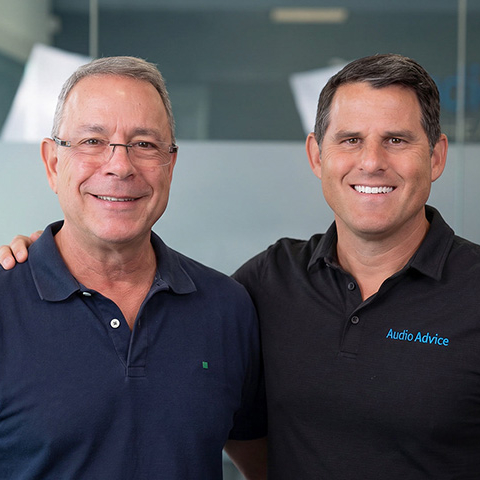
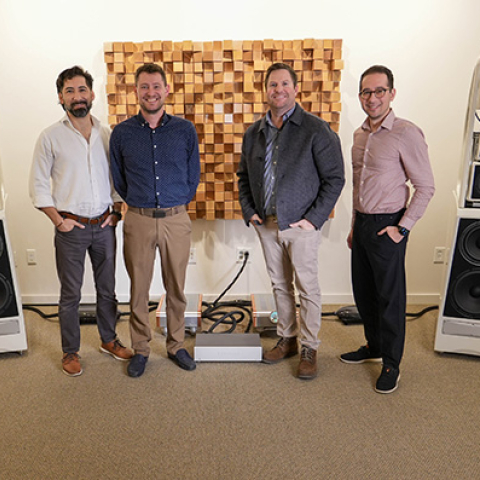
Like many audio companies, Hanson AV is a family business. It's helmed by Greg Hanson and his son, Troy; Greg runs the business, and Troy heads up sales and customer service and support. It started in 1999 in nearby Dayton, Ohio. After a few years of operating out of their home—mainly their garage—the Hansons began leasing to own their Dayton showroom, which they remodeled eight times and expanded in 2007.
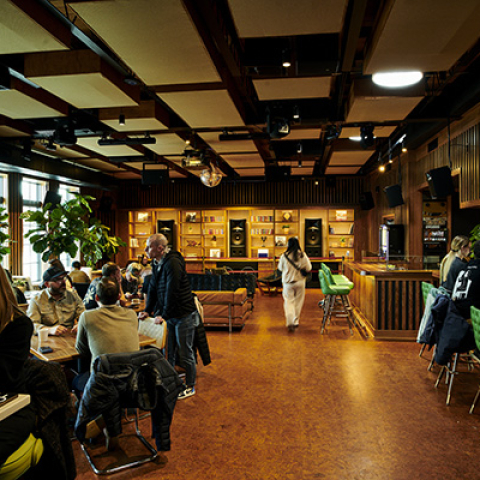
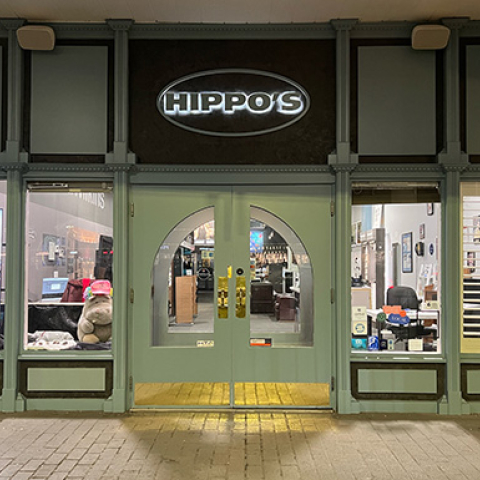
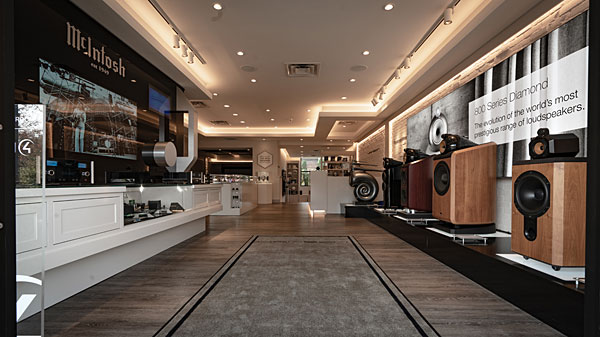
Then, in 2017, a time when high- end audio was dwindling, Hanson AV did something surprising: They opened a second, larger showroom—5600 square feet—designed by Troy and built from the ground up in Cincinnati.
Why expand? First, they realized that 70% of their Dayton business was coming from Cincinnati, and Cincinnati customers kept asking when they were going to open a store there. "We want to make a commitment to the markets we serve," Hanson père told me. "Own the real estate, put our name on the buildings." As "Video" in their name indicates, Hanson, like many dealers, has expanded from two-channel into home theater—and also outdoor audio, custom install, and home automation, and Cincinnati was a big market.
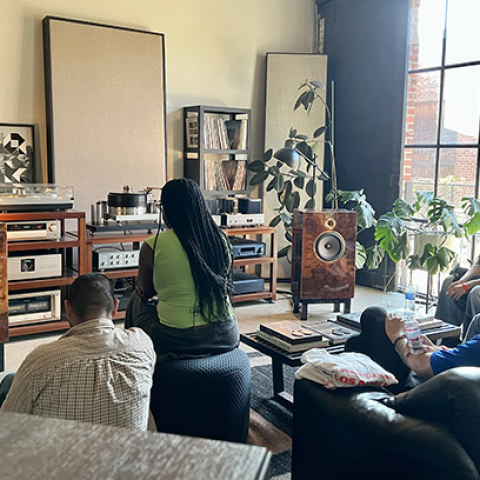
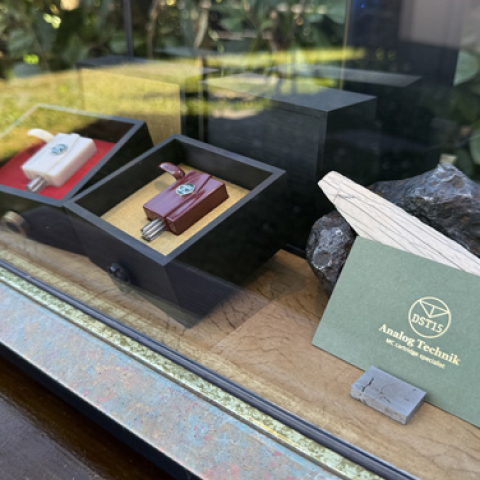
Second, they wanted space to create more homelike environments for demonstrating their products. Mini "exhibits" throughout the Cincinnati store add interest, conveying information about hi-fi brands and their histories. For instance, all the parts of a Bowers & Wilkins driver array are mounted in a display case. Several of the tools used to handcraft Sonus Faber speakers are shown in another.
Another wall displays reproductions of archival photos of celebrities with their hi-fi systems: Sinatra, Hendrix, Connery, McQueen, Audrey Hepburn, Marilyn Monroe. But Hanson is not about old-school cool; the company is working to expand its reach beyond the traditional audiophile market.
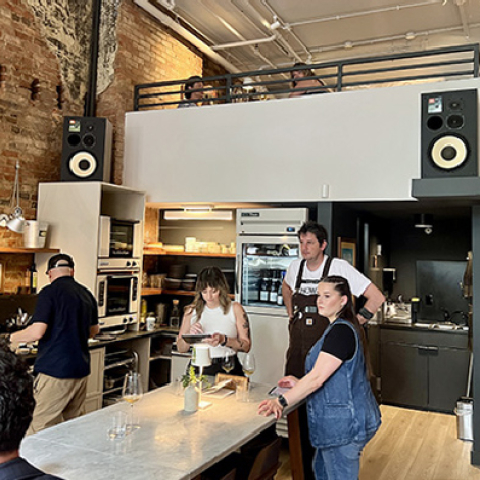
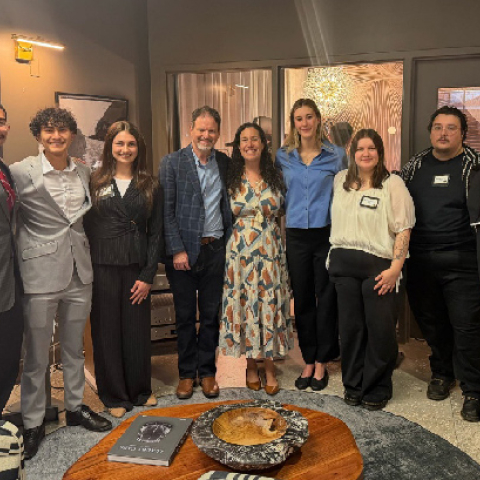
"Events are a good way to introduce new people, new groups, to two-channel and home theater, custom install, all of it," Hanson said. Hanson wants to expose people to great sound through their two-channel systems but also to find other ways to pique people's interest. In addition to regular dealer events with manufacturers' representatives, Hanson hosts events for realtors through a partnership with a residential real estate magazine. In Dayton, they hold large monthly "Coffee and Cars" events that draw regional auto enthusiasts. For these, Hanson sets up outdoor audio systems with as many as 18 speakers (plus subs) in big parking lots. "We also do some advertising, email blasts, stuff like that. ... Catering to new clients, it's kind of tough."
The pandemic hasn't helped to get new customers in the door, but it hasn't hurt business, either. On the contrary. "We have gotten busier during COVID," Gwin said. "If you'd have told me that 10 months ago, I'd have thought you were crazy. It's been wild."
Like much of America outside the major coastal cities, which many people appear to be fleeing, the Midwest has a hot housing market. "Home buying and building has gone through the roof," Gwin said. He surmises that the region's more affordable cost of living amounts to more disposable income. Some of the new customers have recently relocated to Cincinnati from Chicago or elsewhere, many of them younger than the typical customer. But not all the new traffic is local; some new customers have come from out of state—from, say, Nashville, or even Florida.
Like other dealers I've spoken with, the Hanson staff is seeing audiophile parents bringing in their teenage and early-20s kids. With time on their hands and no place to go—and no live music—some audiophiles are returning to the hobby. Some are digging out older components; others are starting fresh. Hanson recently introduced a trade-in program. They want to cultivate new customers across income brackets. Many are dipping their toes into hi-rez streaming. "They'll say, 'I have thousands of CDs, but I've been hearing more about Tidal and Qobuz,'" Gwin told me. "If you have a $100,000 system, you don't want to throw Sonos into it." Hanson does sell Sonos, so no slight is intended.
To accommodate a range of budgets, Hanson presents demos of "good, better, best, and ultimate systems." One customer might save up to buy a McIntosh amplifier; another comes in and buys whatever strikes her fancy. "It's just all over the map." Everyone is treated equally, Hanson says, whether they buy $200 headphones or $200,000 speakers.
Is two-channel audio becoming an afterthought? "Not at this point," Hanson said. "That business continues to grow for us every year. It's a key element of our strategy."
Hanson calls the store an "experience center" to make a point: "It's all about the experience," Hanson said. Customers "want to have fun. Most of our customers are people who just love music, and all of a sudden, they discover better sound is possible. There's a new generation of people buying this stuff. 'Two-channel' may be a foreign term to them, but people who like quality know and appreciate the difference."