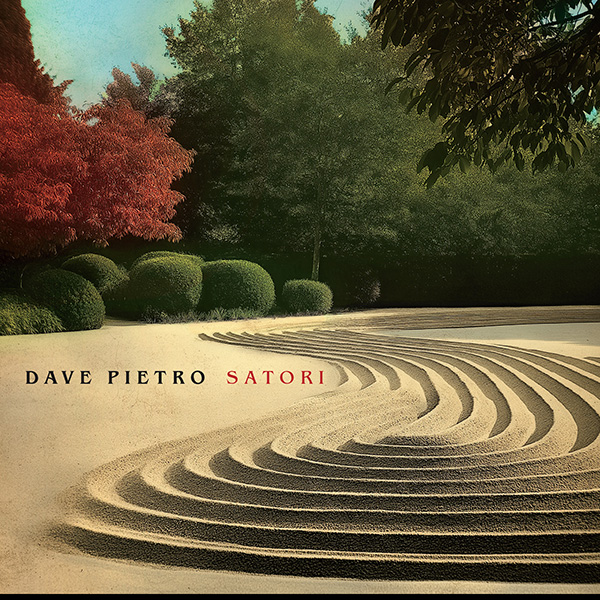
Dave Pietro: Satori
Pietro, alto saxophone; five others
East 15th E15R (CD). Pietro, prod.; Tyler McDiarmid, eng.
Performance ****
Sonics ****½ Dave Pietro is one of those dead-on reliable artists who are part of the bedrock on which the current jazz art form is built. His arsenal of reed instruments has been essential to the greatest jazz orchestras of our time, including those of Maria Schneider and Ryan Truesdell. He has now made 11 albums as a leader. For the last three, he has stayed loyal to the same core group of world-class collaborators. They include keyboardist Gary Versace and drummer Johnathan Blake. There is one new sideman on Satori: trumpeter Michael Rodriguez, a badass. Like his other recent releases, his new record contains Pietro compositions only. In the liner notes, he says, "I have this internal conflict." He is torn between his inclination to "control details of the music" as a composer and his desire for "more space and freedom" as an improviser. There is an obvious solution to this conflict: Include some standards in the set list and turn improvisers loose within the "space and freedom" the songs provide. But Pietro, like so many of today's jazz musicians, is locked into the role of composer.
Satori would have been even stronger if it had included opportunities for the six players to apply their interpretive gifts to a song or two that we know. Still, Pietro is the real deal as a composer. His nine intelligent tunes are brilliantly executed by his ensemble. Pieces like "Yes I Can't" and "Renascence" reveal how metrically advanced this band is and how orchestral a drummer Blake is. Pietro (on alto saxophone throughout) and Rodriguez clearly inspire one another as they wind in and out of one another's thoughts.
Surprisingly, in this high-energy session, the best moments are ballads. On "Numbers to Leave Numbers" and "Suchness," Pietro and Rodriguez bare their hearts.
One more virtue of Satori: It is a reference-quality sonic rendering of a small jazz ensemble.—Thomas Conrad
 Simón Willson: Feel Love
Willson, bass; Neta Ranaan, tenor saxophone; Evan Main, piano; Kayvon Gordon, drums
Endectomorph EMM-034 (CD). 2025. Kevin Sun, prod.; David Stoller, eng.
Performance ****
Sonics **** Simón Willson is in a breakout phase. He came to the United States from Chile in 2011 and since then has gradually gained acceptance as a sideman on the New York jazz scene. Then, in 2023, he started releasing remarkable records as leader. Feel Love is the third. The last two have the same personnel. A buzz is starting on the jazz street over Raanan, Main, and Gordon. They are all hot new prospects. In his own bands, Willson functions as a propulsive member of the rhythm section and as a defining ensemble presence. He is a powerful bass soloist who hires other lethal soloists exclusively. Yet his priorities are composition and ensemble. "Long Distances" is beautifully representative. It is about a three-month period when he was apart from the woman who became his wife. Its harmonic and melodic core is haunting. The arrangement asks Raanan and Main to take turns responding to the primary motif. They sound like two lovers calling to one another across a great emptiness. At the end, Raanan's tenor saxophone and Main's piano come together and insist on the melody, which allows Willson's bass and Gordon's drums to spill free and further intensify the song's passion. "Shades" is another example of inspired ensemble interaction. Raanan, Main, and Gordon are brilliant on this record yet never sound in it for themselves. They are organic to Willson's overarching whole.
A quibble: This album is mostly about love in all its permutations. As a leader, Willson has now recorded 25 tunes. All are originals. The Great American Songbook contains thousands of entries. The vast majority are about love. Wouldn't you think Willson would have used at least one of them in an album called Feel Love? He needs to venture outside his own works occasionally and explore the art of interpretation.—Thomas Conrad
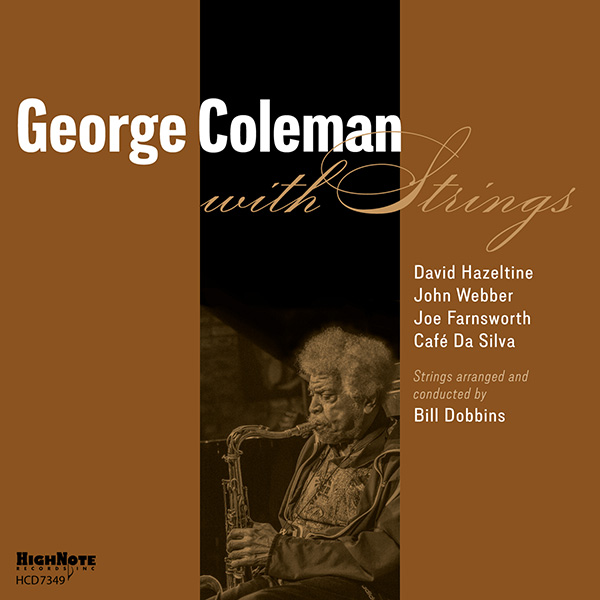 George Coleman: George Coleman with Strings
Coleman, tenor saxophone; David Hazeltine, piano; John Webber, bass; Joe Farnsworth, drums; Café Da Silva, percussion; Bill Dobbins, arranger; 13-piece string orchestra
HighNote HCD 7349 (CD). 2025. Diane Armesto, prod.; Maureen Sickler, eng.
Performance ****
Sonics **** Michael J. West's liner notes begin, "The 'with strings' album format has become ... a rite of passage for a great jazz soloist." He is not wrong, but there is another tradition that clings to strings projects: Critics put them down. They tend to find them too sweet. Even Charlie Parker couldn't catch a break from the critics on his two albums with strings.
There is a reason why such albums keep getting made: People love them. To surround a solo jazz instrument with the ear candy of layered, lavish strings is pure seduction.
George Coleman is late to the party. He just released his first strings album, at age 90. It contains five classic ballads, four from the American Songbook and one from Monk, with intelligent arrangements by Bill Dobbins. Johnny Mandel's "A Time for Love" and the Monk, "Ugly Beauty," appear in short and long versions, the latter with extended orchestral introductions.
You might think that Coleman, in his golden years, would relax and coast over some pretty string charts. Think again. He doesn't play any of these songs straight. Sammy Cahn's "Dedicated to You" is creatively reshaped and even more rapt than usual. Dobbins creates a lush, majestic rendering of "A Time for Love," especially in the long version. Thirteen violins give rise to a single voice. Coleman's tenor saxophone floats across Mandel's haunting melody, sometimes touching it, sometimes veering free. Monk seems like a strange choice for a string treatment, but "Ugly Beauty," in the hands of Dobbins and Coleman and pianist David Hazeltine, has fresh grace. On "Stella by Starlight," Coleman offers his own meaningful asides over the song's mysterious, through-composed harmonic progressions.—Thomas Conrad
 Patricia Brennan: Of the Near and Far
Brennan (vibraphone, marimba), Sylvie Courvoisier (piano), Miles Okazaki (guitars), Kim Cass (bass), John Hollenbeck (drums), others
Pyroclastic PR43 (CD, digital). David Breskin, prod.; Chris Allen, eng.
Performance ****
Sonics **** In the credits for her latest album, vibraphonist Patricia Brennan lists herself last among personnel that include a string quartet and an electronicist. This flipping of convention demonstrates Brennan's integration of varied components in a non-hierarchical group. Even when she solos, her apparent goal is to reinforce structures, not subjugate them. Brennan started composing this album by connecting constellations with intervallic music systems. That approach could have shackled her to an abstraction, but the result is airy and free, allowing organic movement among the 10 musicians. Brennan's processed vibraphone and the electronics of Arktureye (Brennan's drummer/turntabulist partner Noel) give rise to many cosmic moments. The pieces are named for those constellations, "Citlalli" ("star" in Nahuatl, the language spoken by the Aztecs; Brennan is from Mexico, though she lives in Brooklyn). The final track's title captures the spirit of the piece: "When You Stare Into the Abyss."
Piano, guitar, strings, vibraphone—even bass often inhabit similar frequency and dynamic ranges, resulting in a single very big-sounding instrument, best heard at the conclusion of "Andromeda," whose name and jittery push recall '70s progressive rock. When the music is quieter, as in the second half of "Lyra," individual strings cross each other with the delicacy and architectural strength of strands in a spiderweb. Rhythm is an element of this music, but it is not constraining.
Brennan doesn't sound like anyone. She coaxes her multivalent instrument to move among melody, percussiveness, and the spaces between notes. There's a prismatic sensibility in her writing, and a sort of maximalist minimalism.—Andrey Henkin
Pietro, alto saxophone; five others
East 15th E15R (CD). Pietro, prod.; Tyler McDiarmid, eng.
Performance ****
Sonics ****½ Dave Pietro is one of those dead-on reliable artists who are part of the bedrock on which the current jazz art form is built. His arsenal of reed instruments has been essential to the greatest jazz orchestras of our time, including those of Maria Schneider and Ryan Truesdell. He has now made 11 albums as a leader. For the last three, he has stayed loyal to the same core group of world-class collaborators. They include keyboardist Gary Versace and drummer Johnathan Blake. There is one new sideman on Satori: trumpeter Michael Rodriguez, a badass. Like his other recent releases, his new record contains Pietro compositions only. In the liner notes, he says, "I have this internal conflict." He is torn between his inclination to "control details of the music" as a composer and his desire for "more space and freedom" as an improviser. There is an obvious solution to this conflict: Include some standards in the set list and turn improvisers loose within the "space and freedom" the songs provide. But Pietro, like so many of today's jazz musicians, is locked into the role of composer.
Simón Willson: Feel LoveWillson, bass; Neta Ranaan, tenor saxophone; Evan Main, piano; Kayvon Gordon, drums
Endectomorph EMM-034 (CD). 2025. Kevin Sun, prod.; David Stoller, eng.
Performance ****
Sonics **** Simón Willson is in a breakout phase. He came to the United States from Chile in 2011 and since then has gradually gained acceptance as a sideman on the New York jazz scene. Then, in 2023, he started releasing remarkable records as leader. Feel Love is the third. The last two have the same personnel. A buzz is starting on the jazz street over Raanan, Main, and Gordon. They are all hot new prospects. In his own bands, Willson functions as a propulsive member of the rhythm section and as a defining ensemble presence. He is a powerful bass soloist who hires other lethal soloists exclusively. Yet his priorities are composition and ensemble. "Long Distances" is beautifully representative. It is about a three-month period when he was apart from the woman who became his wife. Its harmonic and melodic core is haunting. The arrangement asks Raanan and Main to take turns responding to the primary motif. They sound like two lovers calling to one another across a great emptiness. At the end, Raanan's tenor saxophone and Main's piano come together and insist on the melody, which allows Willson's bass and Gordon's drums to spill free and further intensify the song's passion. "Shades" is another example of inspired ensemble interaction. Raanan, Main, and Gordon are brilliant on this record yet never sound in it for themselves. They are organic to Willson's overarching whole.
George Coleman: George Coleman with StringsColeman, tenor saxophone; David Hazeltine, piano; John Webber, bass; Joe Farnsworth, drums; Café Da Silva, percussion; Bill Dobbins, arranger; 13-piece string orchestra
HighNote HCD 7349 (CD). 2025. Diane Armesto, prod.; Maureen Sickler, eng.
Performance ****
Sonics **** Michael J. West's liner notes begin, "The 'with strings' album format has become ... a rite of passage for a great jazz soloist." He is not wrong, but there is another tradition that clings to strings projects: Critics put them down. They tend to find them too sweet. Even Charlie Parker couldn't catch a break from the critics on his two albums with strings.
Patricia Brennan: Of the Near and FarBrennan (vibraphone, marimba), Sylvie Courvoisier (piano), Miles Okazaki (guitars), Kim Cass (bass), John Hollenbeck (drums), others
Pyroclastic PR43 (CD, digital). David Breskin, prod.; Chris Allen, eng.
Performance ****
Sonics **** In the credits for her latest album, vibraphonist Patricia Brennan lists herself last among personnel that include a string quartet and an electronicist. This flipping of convention demonstrates Brennan's integration of varied components in a non-hierarchical group. Even when she solos, her apparent goal is to reinforce structures, not subjugate them. Brennan started composing this album by connecting constellations with intervallic music systems. That approach could have shackled her to an abstraction, but the result is airy and free, allowing organic movement among the 10 musicians. Brennan's processed vibraphone and the electronics of Arktureye (Brennan's drummer/turntabulist partner Noel) give rise to many cosmic moments. The pieces are named for those constellations, "Citlalli" ("star" in Nahuatl, the language spoken by the Aztecs; Brennan is from Mexico, though she lives in Brooklyn). The final track's title captures the spirit of the piece: "When You Stare Into the Abyss."