"Think before you speak is criticism's motto; speak before you think is creation's."—E.M. Forster, "The Raison d'Être of Criticism in the Arts," 1947 (footnote 1)
1. Just as there are many different genres of films, comprising a list that grows longer with each passing season—Brit-indy horror, gal-pal western, art-house horror—there are many different genres of audio components.
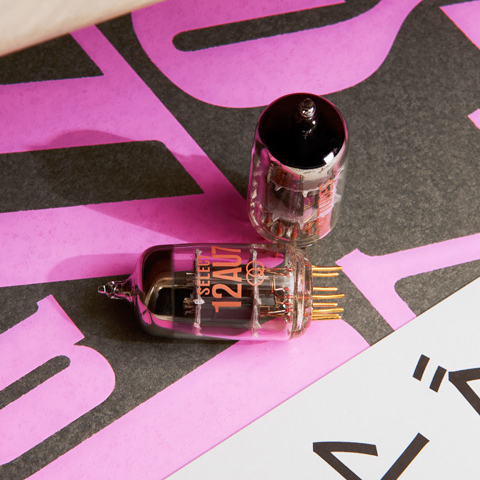
Somewhere, a circuit designer tries loading the plate of a driver tube somewhat differently than he used to. He likes what he hears, builds a new amp around his new idea, and sells about two dozen of them through a handful of audio salons.
 Meanwhile, on the other side of the planet, the senior vice-president in charge of purchasing at a large company sends a memo to the engineering department, proclaiming the bad news that one of their suppliers has discontinued a particular integrated circuit, and the good news that the part's replacement has a significantly higher current rating. Within eight months, three different integrated amplifiers in the product line have been redesigned; new, longer model designations have been coined; the marketing division has created a new promotional angle; and the products are offered for sale through a network of mostly Internet retailers.
Both of those scenes are acted out by honest, hardworking people who wish to make better products and earn enough money to stay in business. But does anyone really think there are more than a tiny handful of audio hobbyists who would consider buying products from both sources? More to the point, should any one critic apply to both of those products the same criteria of judgment, let alone compare them—explicitly or implicitly—to one another?
Not really.
2. From beginning to end, the technological differences between live music and recorded music are profound. At the one end, microphones don't hear sound in remotely the same manner as does the combination of human ear and brain. At the other end, no loudspeaker exists that can launch and disperse a complex waveform in the manner of any musical instrument—save, perhaps, that lyre of hip-hop, the record player—and while adding a second or even a fifth loudspeaker may enable certain entertaining effects, it moves the playback system only further from the ways of nature. I may not be perfect, but solving problems by compounding them has never been my bag.
For all that, the artistic distinctions between the real and the reproduced are even greater. Howsoever good it gets, domestic audio is a largely solitary approach to a social artform. Those who find nobility in the quixotic—myself included, although that's far from my only motivation—will find lots to love in hi-fi.
Yet we're frustrated. And in our desire to compensate for the human interaction that we miss by getting our music at home, we turn to each other, largely through reading. That's why we have magazines and chat forums. And that, I suppose, is why we have product reviews. What the hell else are we supposed to write about?
3. Most Americans enjoy listening to recorded music. A significant yet markedly smaller number of Americans enjoy varietal wines. Stereophile, the most popular magazine devoted to the subject of domestic playback gear, has a circulation of approximately 80,000 readers. Wine Spectator, which leads the pack of magazines devoted to oenophilia, has a circulation of 350,000.
Cyanide capsules never fall to hand when we most need them.
4. Audio critics have it a lot easier than circuit designers in at least one regard: An incompetent critic can, on occasion, get things right by sheer chance.
5. On the other hand, the most successful designers make a hell of a lot more money than the most successful critics.
6. Let's return to our friends at Wine Spectator. For more than a quarter of a century, that magazine has sponsored an annual series of restaurant awards for excellence in wine lists, for which dining establishments across the globe are eligible. The prize itself is a certificate, suitable for public display, that proclaims the establishment as being a cut above the competition in terms of the depth, breadth, creativity, and sheer quality of their list.
Throughout that time, a number of people have made light of the Wine Spectator awards. Some have suggested that the certificate is an award only in the sense that the "Always Ready With a Smile" and "Tries Really Hard To Avoid Eating Paste" certificates handed out at the local elementary school every Friday morning are awards. In 2003, a reporter for the New York Times pointed out that, of the 3573 entrants that year, 3360 restaurants received the coveted Wine Spectator award, and fully 3271 of those "winners" merely sent the magazine a copy of their wine list, a copy of their menu, and a descriptive cover sheet—and, of course, a check for the $175 entry fee.
Meanwhile, on the other side of the planet, the senior vice-president in charge of purchasing at a large company sends a memo to the engineering department, proclaiming the bad news that one of their suppliers has discontinued a particular integrated circuit, and the good news that the part's replacement has a significantly higher current rating. Within eight months, three different integrated amplifiers in the product line have been redesigned; new, longer model designations have been coined; the marketing division has created a new promotional angle; and the products are offered for sale through a network of mostly Internet retailers.
Both of those scenes are acted out by honest, hardworking people who wish to make better products and earn enough money to stay in business. But does anyone really think there are more than a tiny handful of audio hobbyists who would consider buying products from both sources? More to the point, should any one critic apply to both of those products the same criteria of judgment, let alone compare them—explicitly or implicitly—to one another?
Not really.
2. From beginning to end, the technological differences between live music and recorded music are profound. At the one end, microphones don't hear sound in remotely the same manner as does the combination of human ear and brain. At the other end, no loudspeaker exists that can launch and disperse a complex waveform in the manner of any musical instrument—save, perhaps, that lyre of hip-hop, the record player—and while adding a second or even a fifth loudspeaker may enable certain entertaining effects, it moves the playback system only further from the ways of nature. I may not be perfect, but solving problems by compounding them has never been my bag.
For all that, the artistic distinctions between the real and the reproduced are even greater. Howsoever good it gets, domestic audio is a largely solitary approach to a social artform. Those who find nobility in the quixotic—myself included, although that's far from my only motivation—will find lots to love in hi-fi.
Yet we're frustrated. And in our desire to compensate for the human interaction that we miss by getting our music at home, we turn to each other, largely through reading. That's why we have magazines and chat forums. And that, I suppose, is why we have product reviews. What the hell else are we supposed to write about?
3. Most Americans enjoy listening to recorded music. A significant yet markedly smaller number of Americans enjoy varietal wines. Stereophile, the most popular magazine devoted to the subject of domestic playback gear, has a circulation of approximately 80,000 readers. Wine Spectator, which leads the pack of magazines devoted to oenophilia, has a circulation of 350,000.
Cyanide capsules never fall to hand when we most need them.
4. Audio critics have it a lot easier than circuit designers in at least one regard: An incompetent critic can, on occasion, get things right by sheer chance.
5. On the other hand, the most successful designers make a hell of a lot more money than the most successful critics.
6. Let's return to our friends at Wine Spectator. For more than a quarter of a century, that magazine has sponsored an annual series of restaurant awards for excellence in wine lists, for which dining establishments across the globe are eligible. The prize itself is a certificate, suitable for public display, that proclaims the establishment as being a cut above the competition in terms of the depth, breadth, creativity, and sheer quality of their list.
Throughout that time, a number of people have made light of the Wine Spectator awards. Some have suggested that the certificate is an award only in the sense that the "Always Ready With a Smile" and "Tries Really Hard To Avoid Eating Paste" certificates handed out at the local elementary school every Friday morning are awards. In 2003, a reporter for the New York Times pointed out that, of the 3573 entrants that year, 3360 restaurants received the coveted Wine Spectator award, and fully 3271 of those "winners" merely sent the magazine a copy of their wine list, a copy of their menu, and a descriptive cover sheet—and, of course, a check for the $175 entry fee.
Footnote 1: Illustrations by Jeff Wong .
Meanwhile, on the other side of the planet, the senior vice-president in charge of purchasing at a large company sends a memo to the engineering department, proclaiming the bad news that one of their suppliers has discontinued a particular integrated circuit, and the good news that the part's replacement has a significantly higher current rating. Within eight months, three different integrated amplifiers in the product line have been redesigned; new, longer model designations have been coined; the marketing division has created a new promotional angle; and the products are offered for sale through a network of mostly Internet retailers.
Both of those scenes are acted out by honest, hardworking people who wish to make better products and earn enough money to stay in business. But does anyone really think there are more than a tiny handful of audio hobbyists who would consider buying products from both sources? More to the point, should any one critic apply to both of those products the same criteria of judgment, let alone compare them—explicitly or implicitly—to one another?
Not really.
2. From beginning to end, the technological differences between live music and recorded music are profound. At the one end, microphones don't hear sound in remotely the same manner as does the combination of human ear and brain. At the other end, no loudspeaker exists that can launch and disperse a complex waveform in the manner of any musical instrument—save, perhaps, that lyre of hip-hop, the record player—and while adding a second or even a fifth loudspeaker may enable certain entertaining effects, it moves the playback system only further from the ways of nature. I may not be perfect, but solving problems by compounding them has never been my bag.
Footnote 1: Illustrations by Jeff Wong .