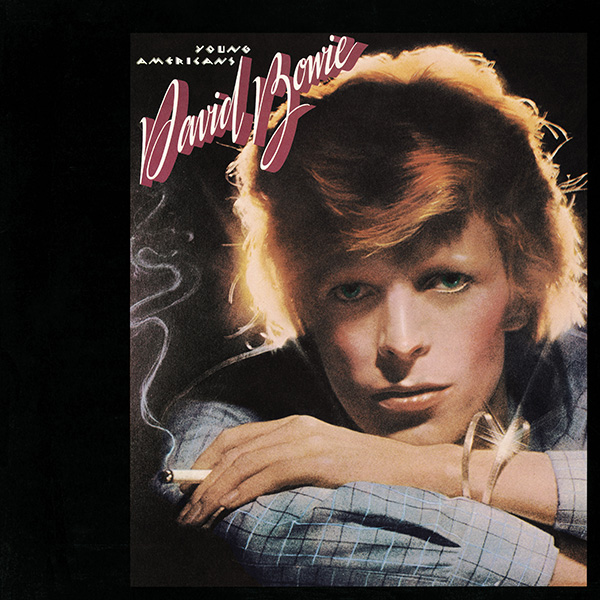
David Bowie: Young Americans
Parlophone. DBYA50. Half-Speed Master Neumann VMS80 lathe from 192kHz masters. Cut by John Webber at AIR Studios. David Bowie, Tony Visconti, Harry Maslin, prods.; Harry Maslin, Eddie Kramer, engs.
Performance *****
Sonics ****½ Young Americans lies mid-table in the Bowie album league, overshadowed by his artier-rock music. Fortunately, it has lost the tag of merely being a well-executed pastiche, but Bowie's joke that it was his "plastic soul" album has never done it any favors. To celebrate its 50th anniversary comes the release of a limited edition of Young Americans remastered at half-speed. The question is, will it change anyone's opinion? Sonically, the foundations are solid. Visconti, the album's first producer, understood Bowie. Bowie himself had grown up with soul music during his 1960s mod days. By his side was Kramer, who boasted an impressive CV handling the knobs and switches. Later, at a new studio, Bowie started working with Maslin, who became Bowie's new coproducer. John Webber, the engineer behind the remastering, is far from being an absolute beginner. It's an impressive team.
Bowie's aim was to produce a smooth "Philly Sound." Vocally, this has always been one of his finest albums, but the half-speed mastering gives vocals—all of them—extra clarity. That's important considering that the backing vocalists are of the very highest quality: Luther Vandross, Diane Sumler, and Ava Cherry, whose interplay with Bowie is such a feature. At times it's almost as if they're collective leads. This quality is heightened in this reissue. They positively soar on "Right" and "Fascination." Sublime. Another beneficiary of the extra space the mastering provides is David Sanborn. His saxophone, always prominent and distinctive on the title track, is now ever-present throughout the album, weaving from speaker to speaker.
This half-speed remaster probably won't change anyone's opinion about Young Americans. The differences are nuanced and subtle. It's the quality of the songs and Bowie's singing that make it a great album. There's nothing plastic about it.—Phil Brett
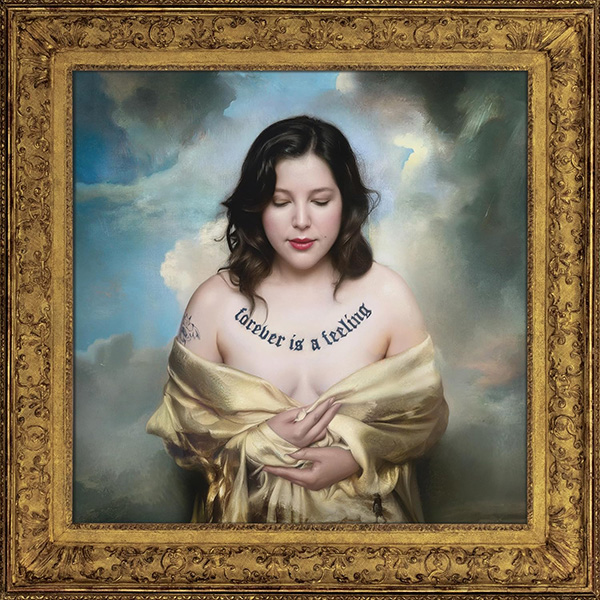 Lucy Dacus: Forever Is a Feeling
Lucy Dacus/Geffen Records (24-bit/192kHz streaming on Qobuz). 2025. Lucy Dacus, prod.; Will Maclellan, eng.
Performance ****½
Sonics ****
The title of this album is arguably its only fault, leading listeners to expect something shallow and insipid. Lucy Dacus's fourth solo album is neither of those things. The deliciously odd opening track, "Calliope Prelude," makes that clear right away, evoking that carnival instrument with a symphony of spooky harmonics from violinist Phoenix Rousiamanis.
Mood established, Dacus plunges into her usual insightful commentary into her own life, analyzing a breakup in "Big Deal," pinpointing moments that hinted at the relationship's fate. The gentle drum syncopation and a simple vocal melody expose that particular, universal flavor of human pain.
The aura of boygenius, Dacus's trio with Julien Baker and Phoebe Bridgers, is ever-present. Baker, who herself has a new album out, sings on "Most Wanted Man," an off-hand love song—she and Dacus are romantic partners—set in a "fancy restaurant" where they're flirting, a situation Dacus expands into their deeper connection: "I'll keep circumventing your pet peeves, bending over backwards every time that you say please."
Bridgers is the subject of "Modigliani," which turns detailed memories into a celebration of close friendship. On the duet "Bullseye," Hozier steps back from greater fame to support a talented pal.
The album's title song is thoughtful and poetic but not syrupy. Dacus sustains notes against a pointillistic, synth-led riff that's heavy on dissonance. The song cuts off abruptly, unapologetically—no fade-to-black wistfulness here.
The closest Dacus comes to sentimentality is on the closer, "Lost Time." Anyone who's been in love will know the feeling of not wanting to lose a moment together, seeing every day apart as a tragedy. But even Dacus's lapse into forgivable sweetness gets a gritty gloss from the distorted chords in the final verse.—Anne E. Johnson
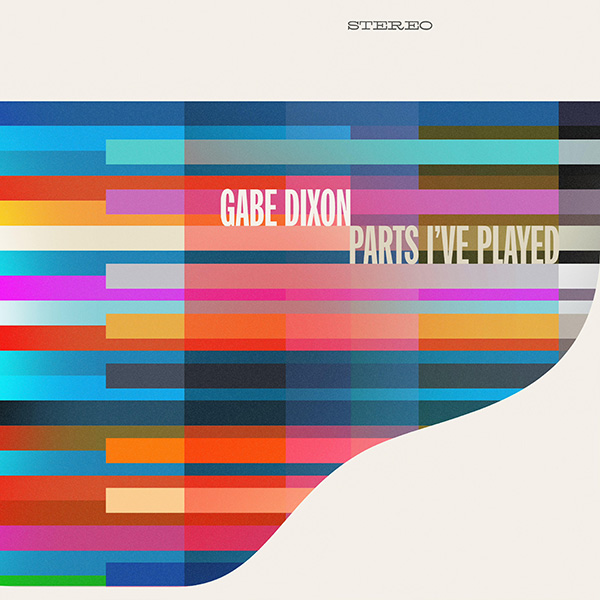 Gabe Dixon: Parts I've Played
Rolling Ball Records (auditioned as LP). 2024. Dustin Ransom, Gabe Dixon, prods.; Dustin Ransom, eng.
Performance ****½
Sonics **** Three years ago, when Gabe Dixon stepped in to become the keyboardist for the Tedeschi Trucks Band (TTB), he had big shoes to fill. Kofi Burbridge, who had just passed, was not only a gifted musician; he was beloved by his fellow band members. Dixon's experience fronting his own act and working with a wide variety of musicians in a wide variety of genres allowed him to slide seamlessly into the band's repertoire and culture. He also brought great playing chops, vocal skill, and an approach to writing that helped elevate the band's output. Now he's back, with a solo record that strips back the big band sound he has been surrounded by and delivers a more personal, funky collection of songs. Throughout, he taps into the 1970s approach to keyboards that Stevie Wonder, Dr. John, and at times Billy Joel ("Heart of the World") trademarked. But what holds everything together is a soulfulness that will remind you of Robert Palmer's work with The Meters, as when he was backed by the Meters (and Lowell George) on Sneakin' Sally Through the Alley.
The music is largely guitar-free, but what's left—what he and his collaborator, Dustin Ransom, provide in keys, percussion, and bass lines—is full-bodied, bright, and often slick. It all comes together at its best with the third track, "Ain't It 'Bout Time," where Dixon's ability to bring the groove to a boil is revealed several times across the song.
On tour, Dixon sings the wonderful "Passing Through," a song about life on the road, without the support of his band. He channels his best Tom Waits, singing a saloon song you could envision being played on an old upright piano tucked into a smoky corner of the room. It's a reflection of how broad his talents have become and an exciting tease as to what he might bring to the next TTB studio session.—Ray Chelstowski
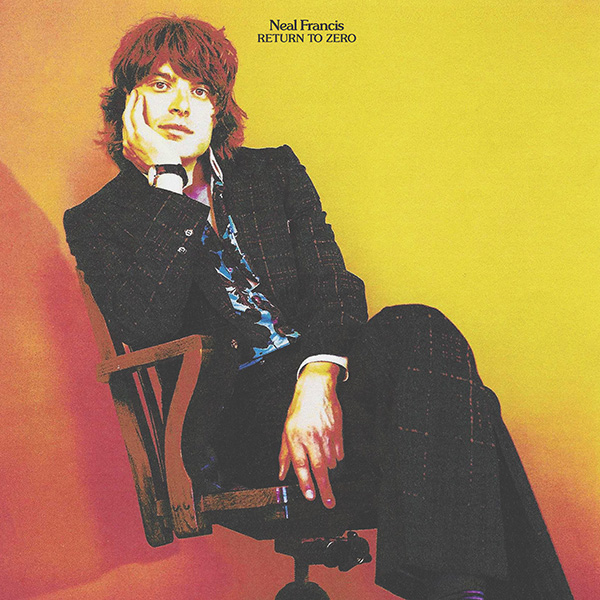 Neal Francis: Return To Zero
ATO Records (auditioned as LP). 2025. Sergio Rios, Neal Francis, prods.; Blake Rhein, eng.
Performance ****
Sonics ****
On his first two studio albums—2019's Changes and In Plain Sight from 2021—Neal Francis was celebrated for his psych-rock sensibilities, taking a modern-day pop-fusion approach to music with origins and influences you could easily assign to Leon Russell and at times Elton John. The songs were piano centric but surrounded by the hefty muscle of a solid touring band.
Partly inspired by the funk and dance records he spins during his sets working as an all-vinyl deejay, Return To Zero takes a turn toward disco; the album that results can be thought of as a party spin. The rhythm is often heavy on hi-hats and throbbing bass, but they are softened by the cosmic textures he continues to apply to his music. One of the most dance-ready tracks, "Back It Up," sails along on glossy synth lines. It acts as the album's centerpiece. This is where the record is taking you.
Which is not to say that Francis has left rock'n'roll behind completely. "Broken Glass" stomps forward with a funky bottom and the swagger of a great 1970s rock strut. The standout track, "150 More Times," is a big, rollicking, piano-driven barnburner that will feed long-term fans what they love most. It should also translate well to a live show. Those two songs are like bookends, on opposite sides of Francis's musical spectrum.
In total, the sound is complete and the arrangements are grand and warm, thanks to a collaboration with composer/conductor Dom Frigo. The songwriting benefits from a stacked lineup of partners including Queens of the Stone Age bassist Michael Shuman and Wild Belle cofounder Elliot Bergman.
Return to Zero is a retro album. The record was constructed without digital programming, which helps it feel genuine, even if the music suggests that dance, not rock, is Francis's new ground zero.—Ray Chelstowski
Parlophone. DBYA50. Half-Speed Master Neumann VMS80 lathe from 192kHz masters. Cut by John Webber at AIR Studios. David Bowie, Tony Visconti, Harry Maslin, prods.; Harry Maslin, Eddie Kramer, engs.
Performance *****
Sonics ****½ Young Americans lies mid-table in the Bowie album league, overshadowed by his artier-rock music. Fortunately, it has lost the tag of merely being a well-executed pastiche, but Bowie's joke that it was his "plastic soul" album has never done it any favors. To celebrate its 50th anniversary comes the release of a limited edition of Young Americans remastered at half-speed. The question is, will it change anyone's opinion? Sonically, the foundations are solid. Visconti, the album's first producer, understood Bowie. Bowie himself had grown up with soul music during his 1960s mod days. By his side was Kramer, who boasted an impressive CV handling the knobs and switches. Later, at a new studio, Bowie started working with Maslin, who became Bowie's new coproducer. John Webber, the engineer behind the remastering, is far from being an absolute beginner. It's an impressive team.
Lucy Dacus: Forever Is a FeelingLucy Dacus/Geffen Records (24-bit/192kHz streaming on Qobuz). 2025. Lucy Dacus, prod.; Will Maclellan, eng.
Performance ****½
Sonics ****
Gabe Dixon: Parts I've PlayedRolling Ball Records (auditioned as LP). 2024. Dustin Ransom, Gabe Dixon, prods.; Dustin Ransom, eng.
Performance ****½
Sonics **** Three years ago, when Gabe Dixon stepped in to become the keyboardist for the Tedeschi Trucks Band (TTB), he had big shoes to fill. Kofi Burbridge, who had just passed, was not only a gifted musician; he was beloved by his fellow band members. Dixon's experience fronting his own act and working with a wide variety of musicians in a wide variety of genres allowed him to slide seamlessly into the band's repertoire and culture. He also brought great playing chops, vocal skill, and an approach to writing that helped elevate the band's output. Now he's back, with a solo record that strips back the big band sound he has been surrounded by and delivers a more personal, funky collection of songs. Throughout, he taps into the 1970s approach to keyboards that Stevie Wonder, Dr. John, and at times Billy Joel ("Heart of the World") trademarked. But what holds everything together is a soulfulness that will remind you of Robert Palmer's work with The Meters, as when he was backed by the Meters (and Lowell George) on Sneakin' Sally Through the Alley.
Neal Francis: Return To ZeroATO Records (auditioned as LP). 2025. Sergio Rios, Neal Francis, prods.; Blake Rhein, eng.
Performance ****
Sonics ****