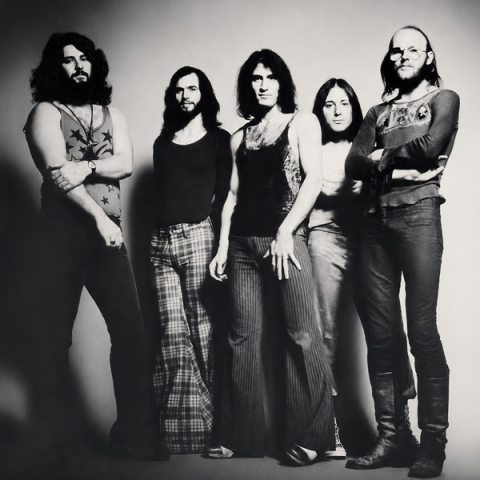
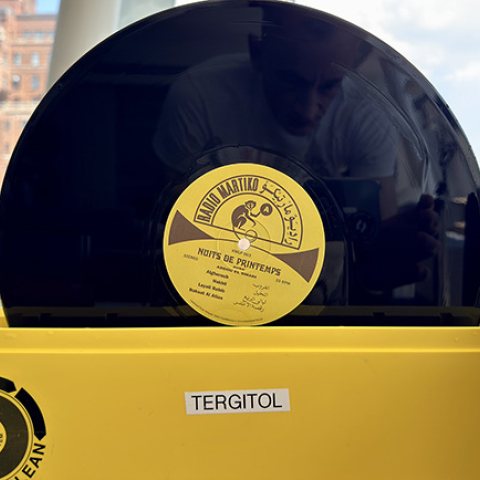
As my "Mystery Train" obsession lifted, editor Jim Austin posted a YouTube link on Facebook that immediately rekindled my love for the most colorful and iconic band of New Orleans in general and Mardi Gras in specific: the Wild Tchoupitoulas. I went immediately to their eponymous album, featuring the Meters and the Neville Brothers, which I bought when it blasted onto the downtown art scene in 1976 (LP, Island ILPS 9360). I have played this well-recorded vinyl disc 100 times, but now I was enjoying it in streaming digital (44.1/16 FLAC, Island Records/Tidal).
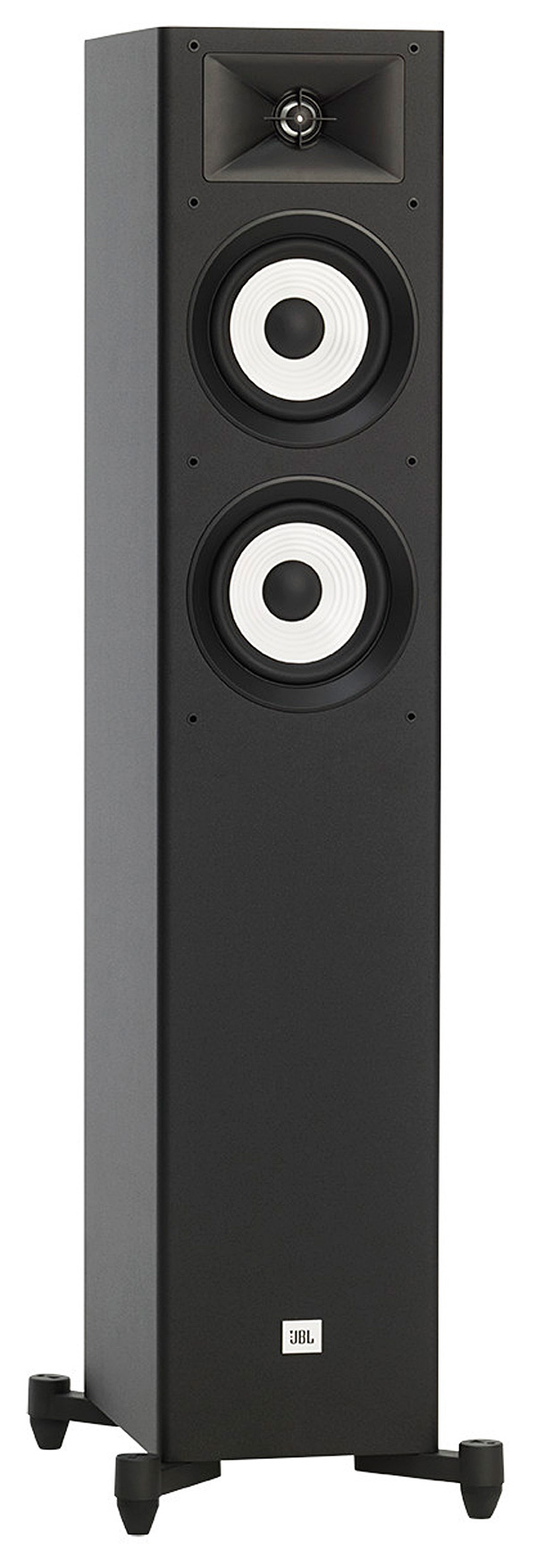
Halfway through "Meet de Boys on the Battlefront," I concluded that, no matter where I placed the A170 speakers, or how much I did or did not toe them in, with Schiit's Aegir amplifier, the Stage A170s played fat through the upper bass and lower midrange. I felt a constant 3–5dB bump centered around 120Hz. It was likely my room. Or maybe the July humidity. Whatever it was, it was coloring this recording.
Overall though, the 20Wpc Aegir driving the Stage A170s sounded rich, lively, and dynamic. Beats and melodies were well presented. Midrange detail was extraordinary. The A170s stomped some sonic rump while playing "Meet de Boys . . ."—but! When I turned that rump-stomping up, the Schiit amp crapped out, clipping noticeably.
Time for more power.
Listening (Rogue Stereo 100)
This was the moment when the Stage A170s stopped sounding soft and overly full. I learned quickly that the JBLs needed more power to open up and soar. Installing the 100Wpc Rogue Stereo 100 amplifier ($3495) worked like a shot of pure oxygen to the JBL's woofers. The A170s especially liked the Stereo 100 in Ultralinear mode, which added leading-edge transient bite. They liked tubes, too, which enhanced their spatial renderings and brightened up their top octave. They liked Isabelle Faust playing Bach's D minor Chaconne in high-resolution digital, from Bach Sonatas & Partitas for Solo Violin, Vol. 1 (24/96 FLAC, Harmonia Mundi/Qobuz). Not once during this recording, or at any time using this amplifier, did I wish for sharper focus, greater transparency, or tighter bass. The 100Wpc Rogue delivered genuine bass punch, greater high-frequency clarity, and sharper midrange focus than the Schiit Aegir. And on that Wild Tchoupitoulas album, there was no clipping or smearing during even the loudest rump-stompings. Music (and food) are always good in the Big Easy. Listening (Rogue Sphinx)
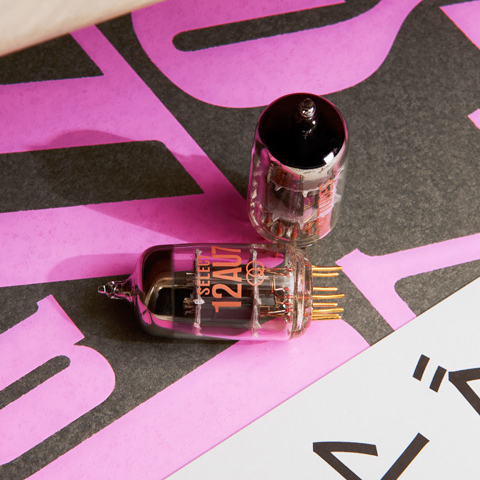
When I installed Rogue Audio's overachieving 100Wpc hybrid tube/class-D Sphinx integrated amplifier ($1495), I became instantly happy. Even cold, the Sphinx made the JBLs and the 24/96 Bach Sonatas dance and swing. The Sphinx/A170's soundstage was smaller than with the Stereo 100, but images were distinct. Isabelle Faust's Bach stretched out and danced like Ballets Russes Stravinsky. To my complete surprise, switching from the Rogue's KT120 tubes to the Sphinx's class-D Hypex output module actually enhanced the ease and poetic fantasy aspects of Faust's violin mastery.
In a strict comparison to the Rogue Stereo 100, the Sphinx reduced Isabelle Faust's bow-on-strings bite. Tone colors became less pronounced. Dynamic contrasts were softened, but not by much, especially considering the price. Despite a slight softness, I really enjoyed the Rogue Sphinx with the Stage A170s. It imparted a beguiling sense of motion and scale that enhanced Led Zep, Pink Floyd, and Jimi Hendrix. The JBLs made classic rock feel good.
Folks, this is a $2000 amp, preamp, and loudspeaker system that could give me a lifetime of audio-sonic and musical satisfaction. Plus! The Rogue Sphinx has a phono stage, so you can add a $699 Pioneer PLX-1000 turntable with a $300 moving-magnet cartridge—plus a $199 AudioQuest DragonFly Red USB DAC—and be living like a high-tone audio star.
Compared to Klipsch RP-600M
Driven by the Rogue Sphinx, the Klipsch RP-600M loudspeakers ($650 + stands) sounded clean, solid, and uber-responsive—more precise and microdetailed than the combination of Sphinx and JBLs. But ultimately the Sphinx is not an amp I would choose for the Klipsch speakers, which love pure tubes.
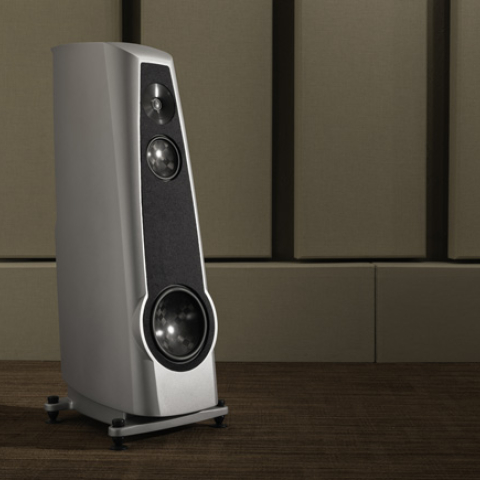
Both of these modestly priced speakers offer high levels of nuance, tonal fidelity, and musicality, but each will appeal to a different type of audiophile. The JBL Stage A170s played loud and large-in-the-room. They played all genres of music with surprising aplomb. They made more and deeper bass—and bigger soundstages—than the Klipsch RP-600Ms. But they needed a powerful (50-200Wpc) amplifier to sound their best.
Conversely, the Klipsch RP600Ms exhibit a dynamic life and a crisp, detailed precision that eluded the JBLs. The RP600Ms never get slumpy, dumpy, or slow—not even with low-feedback, low-power amps, nor even with a 9Wpc single-ended 300B amp like the Elekit KT-8600.
Compared to Wharfedale Linton
The $1198/pair ($1498/pair with stands) Wharfedale Lintons have departed the bunker. But I will never forget their refined, elegantly detailed, full-range sound, which made me want to play records. The JBL Stage A170s reminded me a lot of those Wharfedales. Both make music that occupies the room in an open, generous way. Both have broad dispersion, allowing for a couch-sized sweet spot. Both deliver detailed, true-of-timbre midranges. Both play every genre of music in a relaxed, satisfying way.
 The important differences between the Lintons and the A170s are: the Lintons generate a smoother, more balanced energy that makes violins sound richer and pianos feel more solid. And the Lintons offer a greater sense of textural refinement through the midrange. Consequently, the Lintons are especially fond of music by classical composers of British ancestry—meaning that the Lintons may appeal to a slightly more "pipe and slippers" crowd than the younger, still-up-partying JBL crowd.
Compared to Magnepan LRS
The important differences between the Lintons and the A170s are: the Lintons generate a smoother, more balanced energy that makes violins sound richer and pianos feel more solid. And the Lintons offer a greater sense of textural refinement through the midrange. Consequently, the Lintons are especially fond of music by classical composers of British ancestry—meaning that the Lintons may appeal to a slightly more "pipe and slippers" crowd than the younger, still-up-partying JBL crowd.
Compared to Magnepan LRS
Magnepan's $650/pair LRS quasi-ribbon panel speakers are supertransparent, low-distortion, and feel Tesla-coil quick in their responsiveness. They do midrange timbre like old Quads. Their top octaves are never strained or closed in. Unfortunately, the Magnepans develop substantially less bass and midrange energy than the JBL Stage A170s. Consequently, their soundstaging and imaging powers can seem a little diagrammatic—especially on deeply, resoundingly atmospheric programs like "Beachy Head," from Throbbing Gristle's first "easy on the ears" recording, 1979's 20 Jazz Funk Greats (24/96 FLAC, Mute/Tidal). I never understood the Sex Pistols (they seemed faux-punk), but Throbbing Gristle's Genesis P-Orridge's vocals made perfect sense to my New York City art-rock sensibilities. Even today, Gristle's music seems worldly, intelligent, and timeless.
The littlest Magnepans and the JBL Stage A170s both excel at projecting large, distinctly detailed soundstages, but the Magnepans' stage is light and bright and crisply rendered, while the Stage A170s' space is dark and deep and vaporous. This is an important difference.
On "Beachy Head," the JBLs delivered an electronically generated soundspace with an expressive, richly colorful fullness that made the rough art of Throbbing Gristle more human and poetic. The Magnepans, on the other hand, made "Beachy Head" and the same album's "Still Walking" seem detached and mechanical. On those same tracks, the Stage A170s brought singers and musicians to stage front—emphasizing rhythms and the earthbound intimacies of the composition.
If you haven't guessed already, the JBL Stage A170s favor big, dynamic, expansive music like Pink Floyd's The Wall (44.1/16 FLAC, Capital/Qobuz). The little Maggies are more intimately inclined.
What I realized
One of the systems I used for this review consisted of a Chord Qutest DAC ($1895) connected to Rogue's hybrid RP-7 line-level preamp ($4995) and my reference Rogue Stereo 100 tube power amplifier ($3495). Total cost: over $10,000 (without cables). That system sounded powerful and sophisticated. Late at night, candles lit, stemware in hand, the Stage A170s sounded like $5000 speakers. Postscript
So far this year, I have reviewed four high-value audiophile loudspeakers: the Wharfedale Linton, the Klipsch RP-600M, the Magnepan LRS, and now JBL's Stage A170. Each had its own distinct (and musically satisfying) sound character. Therefore, potential buyers must choose carefully the one that suits their temperament, room, and listening habits. To my ears, none of these loudspeakers would bring down a $10,000+ system. Meaning: Now might be the best time ever for audiophiles on a budget.
This was the moment when the Stage A170s stopped sounding soft and overly full. I learned quickly that the JBLs needed more power to open up and soar. Installing the 100Wpc Rogue Stereo 100 amplifier ($3495) worked like a shot of pure oxygen to the JBL's woofers. The A170s especially liked the Stereo 100 in Ultralinear mode, which added leading-edge transient bite. They liked tubes, too, which enhanced their spatial renderings and brightened up their top octave. They liked Isabelle Faust playing Bach's D minor Chaconne in high-resolution digital, from Bach Sonatas & Partitas for Solo Violin, Vol. 1 (24/96 FLAC, Harmonia Mundi/Qobuz). Not once during this recording, or at any time using this amplifier, did I wish for sharper focus, greater transparency, or tighter bass. The 100Wpc Rogue delivered genuine bass punch, greater high-frequency clarity, and sharper midrange focus than the Schiit Aegir. And on that Wild Tchoupitoulas album, there was no clipping or smearing during even the loudest rump-stompings. Music (and food) are always good in the Big Easy. Listening (Rogue Sphinx)
When I installed Rogue Audio's overachieving 100Wpc hybrid tube/class-D Sphinx integrated amplifier ($1495), I became instantly happy. Even cold, the Sphinx made the JBLs and the 24/96 Bach Sonatas dance and swing. The Sphinx/A170's soundstage was smaller than with the Stereo 100, but images were distinct. Isabelle Faust's Bach stretched out and danced like Ballets Russes Stravinsky. To my complete surprise, switching from the Rogue's KT120 tubes to the Sphinx's class-D Hypex output module actually enhanced the ease and poetic fantasy aspects of Faust's violin mastery.
Driven by the Rogue Sphinx, the Klipsch RP-600M loudspeakers ($650 + stands) sounded clean, solid, and uber-responsive—more precise and microdetailed than the combination of Sphinx and JBLs. But ultimately the Sphinx is not an amp I would choose for the Klipsch speakers, which love pure tubes.
The $1198/pair ($1498/pair with stands) Wharfedale Lintons have departed the bunker. But I will never forget their refined, elegantly detailed, full-range sound, which made me want to play records. The JBL Stage A170s reminded me a lot of those Wharfedales. Both make music that occupies the room in an open, generous way. Both have broad dispersion, allowing for a couch-sized sweet spot. Both deliver detailed, true-of-timbre midranges. Both play every genre of music in a relaxed, satisfying way.
The important differences between the Lintons and the A170s are: the Lintons generate a smoother, more balanced energy that makes violins sound richer and pianos feel more solid. And the Lintons offer a greater sense of textural refinement through the midrange. Consequently, the Lintons are especially fond of music by classical composers of British ancestry—meaning that the Lintons may appeal to a slightly more "pipe and slippers" crowd than the younger, still-up-partying JBL crowd.
Compared to Magnepan LRSMagnepan's $650/pair LRS quasi-ribbon panel speakers are supertransparent, low-distortion, and feel Tesla-coil quick in their responsiveness. They do midrange timbre like old Quads. Their top octaves are never strained or closed in. Unfortunately, the Magnepans develop substantially less bass and midrange energy than the JBL Stage A170s. Consequently, their soundstaging and imaging powers can seem a little diagrammatic—especially on deeply, resoundingly atmospheric programs like "Beachy Head," from Throbbing Gristle's first "easy on the ears" recording, 1979's 20 Jazz Funk Greats (24/96 FLAC, Mute/Tidal). I never understood the Sex Pistols (they seemed faux-punk), but Throbbing Gristle's Genesis P-Orridge's vocals made perfect sense to my New York City art-rock sensibilities. Even today, Gristle's music seems worldly, intelligent, and timeless.
One of the systems I used for this review consisted of a Chord Qutest DAC ($1895) connected to Rogue's hybrid RP-7 line-level preamp ($4995) and my reference Rogue Stereo 100 tube power amplifier ($3495). Total cost: over $10,000 (without cables). That system sounded powerful and sophisticated. Late at night, candles lit, stemware in hand, the Stage A170s sounded like $5000 speakers. Postscript
So far this year, I have reviewed four high-value audiophile loudspeakers: the Wharfedale Linton, the Klipsch RP-600M, the Magnepan LRS, and now JBL's Stage A170. Each had its own distinct (and musically satisfying) sound character. Therefore, potential buyers must choose carefully the one that suits their temperament, room, and listening habits. To my ears, none of these loudspeakers would bring down a $10,000+ system. Meaning: Now might be the best time ever for audiophiles on a budget.