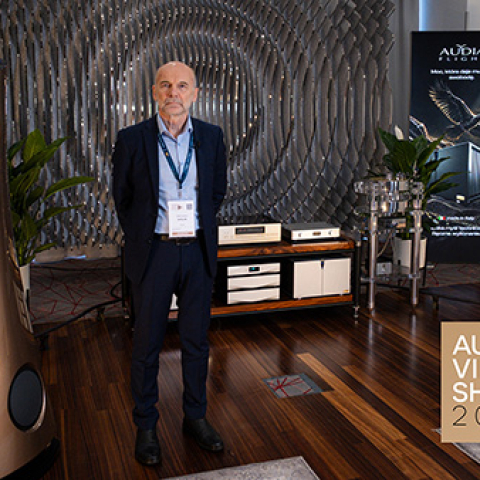
Vitorino's music collection centers on blues, rock, and progressive rock. Pink Floyd, "the odd Dire Straits and U2," and Crosby, Stills, Nash & Young are among his faves and currently serve as examples as he learns to play guitar. Recently, he's been listening to electronic music, including Yello and Boris Blank, and to titles influenced by "the psychedelic Pink Floyd aesthetic." After citing David Gilmour's "Faces of Stone" and Ry Cooder and Ali Farka Touré's "Amandrai," he admitted, sheepishly, that he uses the Eagles' "Hotel California" to test equipment. As I contemplated playing that track 10 times over during my listening tests, I thanked the good Lord that I've moved on from my California phase.
Connection and setup
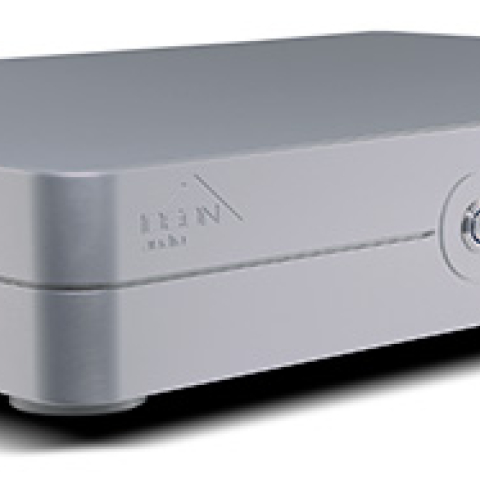
The Statement arrived without a printed manual, the online manual was a complex work in progress, and the short on-line setup guide described a different playback protocol than Vitorino advised. Fortunately, just in time, Innuos's North America's sales manager, industry veteran Emmanuel Le Quéré, arrived to assist with setup and operation. There was much to learn in a short time, and several Skype and email exchanges with Vitorino followed. The connections on the back panel of the Statement's server box, though, couldn't be simpler. In addition to the dual umbilical power connections, there are two reclocked Ethernet ports. One is labeled "LAN" for incoming connections from a router, the other "Streamer" for outgoing connections to network audio products (eg, streamers, wireless speakers, and the dCS Network Bridge). But don't fret if you confuse them—they are identical in function and sound quality.
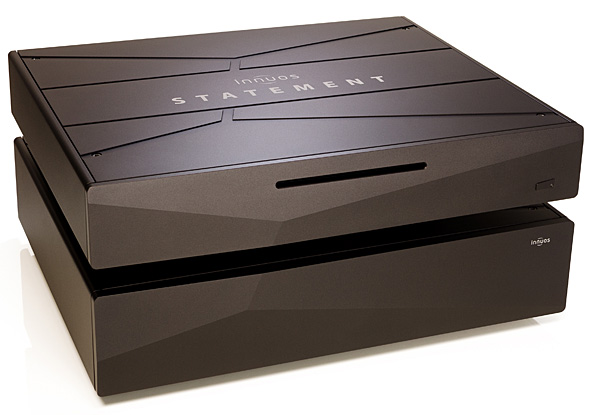 In addition to the (reclocked) USB-A port, which sits by itself at the far end of the server box's back panel and is the only way to connect the Statement directly to a DAC, that back panel features two other USB ports: a USB 3.0 slot for a backup drive, and a USB 2.0 slot for importing data from USB sticks and external HDs.
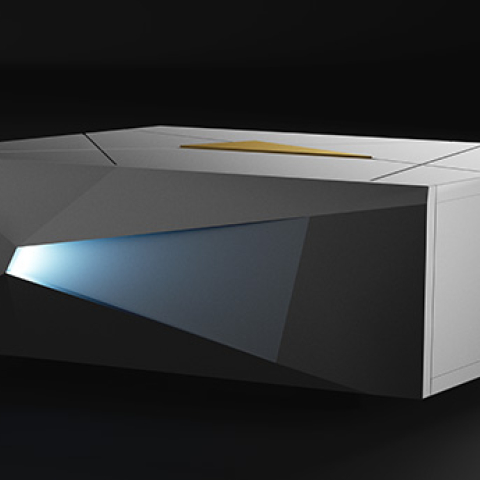
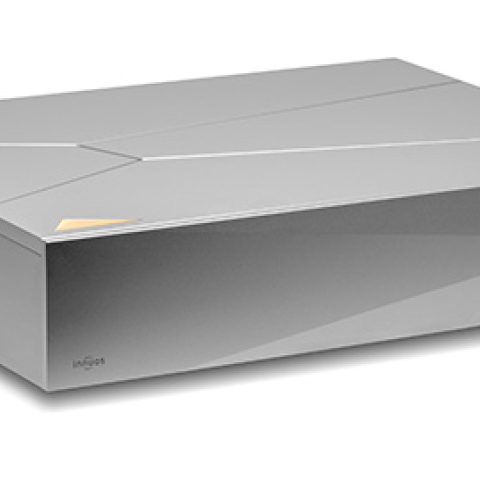
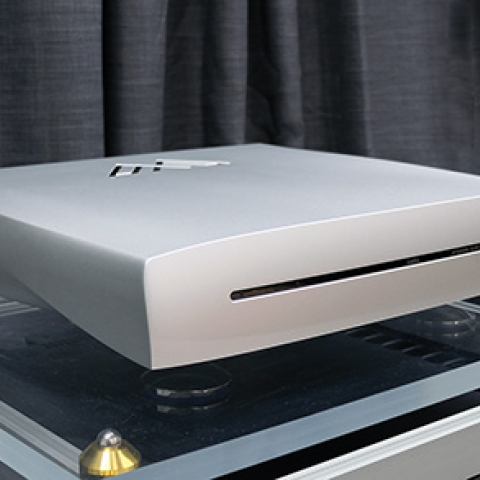
On the front of the server box, there's an on/off switch, a power indicator, and a CD drive slot. The power box's back panel includes, in addition to the two umbilical receptacles, a standard IEC receptacle and the main power switch. That's all.
I stacked the Statement's boxes on a bottom shelf of my double rack, using the server box's fancy feet to separate the two. With Vitorino's blessing, I placed three Grand Prix Apex support feet under the bottom power box. I then connected the Statement's power box to an AudioQuest Niagara 5000 power conditioner via a Nordost Odin 2 power cable.
There's a good time coming
In addition to the (reclocked) USB-A port, which sits by itself at the far end of the server box's back panel and is the only way to connect the Statement directly to a DAC, that back panel features two other USB ports: a USB 3.0 slot for a backup drive, and a USB 2.0 slot for importing data from USB sticks and external HDs.
On the front of the server box, there's an on/off switch, a power indicator, and a CD drive slot. The power box's back panel includes, in addition to the two umbilical receptacles, a standard IEC receptacle and the main power switch. That's all.
I stacked the Statement's boxes on a bottom shelf of my double rack, using the server box's fancy feet to separate the two. With Vitorino's blessing, I placed three Grand Prix Apex support feet under the bottom power box. I then connected the Statement's power box to an AudioQuest Niagara 5000 power conditioner via a Nordost Odin 2 power cable.
There's a good time coming
In a few months, Innuos is expected to begin rolling out big changes to InnuOS, the server operating system. "Our software has been basically rebuilt from the ground up," Vitorino said. Roon's file management and other computational heavy-lifting. The Statement can also be used as a Roon output device only—an endpoint in common Roon parlance—the Roon Core located elsewhere on your network—specifically, in this case, on my Roon That's a good thing because, compared to Roon, I found the InnuOS software frustrating. Configuration and operation required moving back and forth among different web pages, and there was no integration between the Statement's music library and subscription streaming services such as Tidal, Qobuz, and Spotify; separate searches of the library and each streaming service were necessary to find a desired album or track. For reasons unknown, sometimes Tidal disappeared altogether, and no amount of signing out and back in or restarting InnuOS or the server solved the problem. Liner notes were inaccessible in InnuOS, and every attempt to move forward or back in a track landed me at the beginning. On the other hand, Innuos's CD-ripper software was excellent—it took 3–5 minutes to rip a CD, after which the disc auto-ejected, and metadata and album-art matching worked well. On the third hand, matching metadata to tracks and albums copied from a USB stick or another storage device was hit and miss. Some files that Roon could identify remained strangers to InnuOS. Next issue: Because the contents of attached media could only be displayed alphabetically, adding the 10 most recent files to the library was a major challenge. And when I attached a 4TB HD, I could only choose between adding one file at a time or adding all 1037.
Here's hoping that all this improves with the coming software update.
Core flexibility
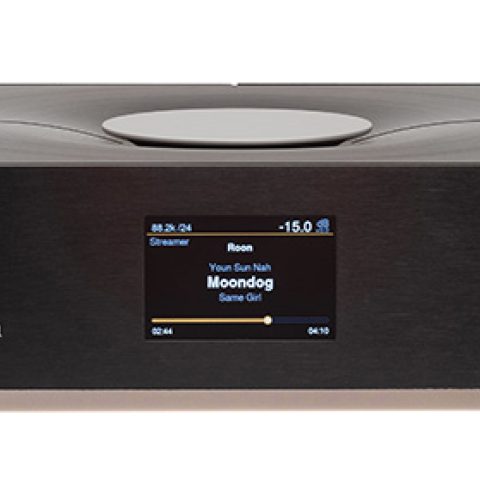
Natively, the Statement uses its own software—of course it does—to manage the library and streaming services and play music. "Its own software" is the InnuOS operating system, which is identical on all Innuos music servers and upgradable by Ethernet. The Statement is also compatible with Roon software; in fact it can be used with Roon in two distinct ways. (Please note, however, that Vitorino describes this as "an experimental mode" in which playback is "limited to 24/192 and DSD64".) First, the Statement can be used as the Roon "Core"—Roon's computational center, which does Roon's file management and other computational heavy-lifting. The Statement can also be used as a Roon output device only—an endpoint in common Roon parlance—the Roon Core located elsewhere on your network—specifically, in this case, on my Roon Nucleus +. In neither of these configurations is the Statement either "RoonReady" or "Roon-tested" currently, but this is expected to change with upcoming updates. ("We are working with Innuos to have their future products fully Roon Ready," Roon's Bill Leebens wrote to me in an email.) In future, all Roon server partners will be required to run ROCK, Roon's operating system. Roon and Innuos are still discussing how the two systems will work together. For most of my listening, I used the Statement with its native software and then, for comparison, auditioned the same tracks with the Nucleus +. In both cases, the servers were connected to one of two DACs—see below—by USB. Sound and silence
Feeding the dCS Rossini DAC/Clock combo via a Nordost Valhalla 2 USB cable, differences emerged between the two servers, with the Nucleus + powered by an external LPS. I played two very different test tracks, Berg's sonically complex, 12-tone Three Pieces for Orchestra, from a San Francisco Symphony digital-only release (24/192 WAV, SFS Media SFS0070), and Rickie Lee Jones's bizarre cover of the Rolling Stones' "Sympathy for the Devil" (Tidal, 16/44.1 FLAC), from her album The Devil You Know. Sound from both servers was clear and transparent, with excellent, strong bass and wide soundstages. The main difference that emerged was this: With music played via the Statement, the treble seemed slightly rounded, the presentation a touch warmer than through the Nucleus +. With tracks that on my system can sometimes sound a bit too hot and sizzly—eg, the female vocals on Yello's "Electrified II" from Toy (24/48 WAV, Polydor 4782160/HDtracks)—the Statement proved less fatiguing. But on Farinelli (Decca 485 0214, 24/96 WAV)—our Recording of the Month for the February 2020 Stereophile—mezzo-soprano Cecilia Bartoli's voice via the Statement sounded a bit warmer than when I've heard it live in three very different venues, and the contrasting colors of Il Giardino Armonico Ensemble's period instruments were slightly homogenized.
 This distinction held true for Patricia Barber's equally refined vocals, superbly recorded and electronically enhanced by Jim Anderson on another Stereophile Recording of the Month, Higher (ArtistShare AS0171). When I played tracks ripped directly from the CD to the Statement's drive and compared them to 16/44.1 FLAC files played from an SSD USB stick inserted into the Nucleus +, the Statement gifted Barber and her fellow artists with a bit of extra warmth and smoothness. It felt as though I was listening to Barber in a different nightclub, where someone had installed softer lighting that helped my cocktail go down easier.
Switching to percussion, I listened to Xenakis's complex Psappha on percussionist Kjell Tore Innervik's superbly recorded Utopias (MQA 24/352.8, 2L 2L-141). The Statement's depiction of low-end depth, dynamics, and impact was just great—everything that an artist or engineer could ask for. Also, for better or worse, treble overtones of the leading edge strikes were softer and warmer than through my reference.
For a weather report/reality check, as it were, I used the Rossini DAC/clock combo to audition Murray Perahia's performance, on piano, of Handel's Harpsichord Suite in E, HWV 430, from Murray Perahia Plays Handel and Scarlatti (CD, Sony Classical 62785). I listened three ways: direct from CD using the Rossini transport, streamed from Tidal (16/44.1 FLAC) using Roon on the Nucleus +, and streamed from Tidal using InnuOS 1.4.3 on the Statement.
Transport and Nucleus + did not sound identical, but their tonality was virtually the same—clear and full, with an ideal mix of fundamental and overtones and a natural-sounding leading edge. The Statement warmed the piano and smoothed out the top in a manner that some would call analoglike or tubelike.
This distinction held true for Patricia Barber's equally refined vocals, superbly recorded and electronically enhanced by Jim Anderson on another Stereophile Recording of the Month, Higher (ArtistShare AS0171). When I played tracks ripped directly from the CD to the Statement's drive and compared them to 16/44.1 FLAC files played from an SSD USB stick inserted into the Nucleus +, the Statement gifted Barber and her fellow artists with a bit of extra warmth and smoothness. It felt as though I was listening to Barber in a different nightclub, where someone had installed softer lighting that helped my cocktail go down easier.
Switching to percussion, I listened to Xenakis's complex Psappha on percussionist Kjell Tore Innervik's superbly recorded Utopias (MQA 24/352.8, 2L 2L-141). The Statement's depiction of low-end depth, dynamics, and impact was just great—everything that an artist or engineer could ask for. Also, for better or worse, treble overtones of the leading edge strikes were softer and warmer than through my reference.
For a weather report/reality check, as it were, I used the Rossini DAC/clock combo to audition Murray Perahia's performance, on piano, of Handel's Harpsichord Suite in E, HWV 430, from Murray Perahia Plays Handel and Scarlatti (CD, Sony Classical 62785). I listened three ways: direct from CD using the Rossini transport, streamed from Tidal (16/44.1 FLAC) using Roon on the Nucleus +, and streamed from Tidal using InnuOS 1.4.3 on the Statement.
Transport and Nucleus + did not sound identical, but their tonality was virtually the same—clear and full, with an ideal mix of fundamental and overtones and a natural-sounding leading edge. The Statement warmed the piano and smoothed out the top in a manner that some would call analoglike or tubelike.
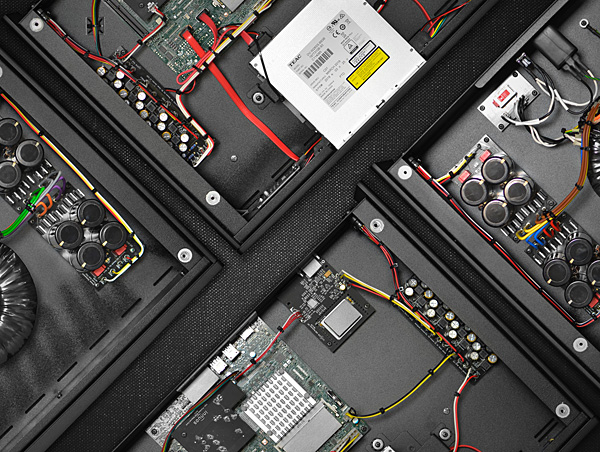 For another perspective, I connected the Statement, again by USB, to my other reference DAC, the EMM Labs DV2 ($30,000). The DV2 conveys more bass information than the dCS Rossini, and it is more microtonally layered and detailed and better controlled, but it is not as open or as realistically alive on top. The DV2's different cast was, in some ways, a better match for the Statement, with increased and more complexly layered bass compensating for the slight homogenization of color concomitant with the server's slightly warm top. My sister-in-law, Janet McNamee, who was visiting at the time, loved the "warmth and authenticity" of this DV2/Statement combo.
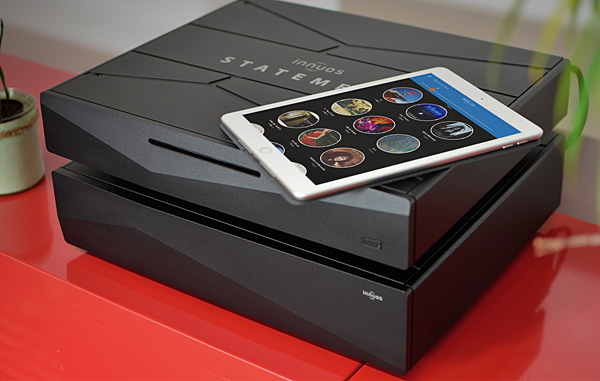
After accessing my.innuos.com on my iPad's Safari browser and scrolling to "Settings" and then "Server Integration," I chose to enable the Statement as "Roon Core." I could also have chosen "Roon as Player Only"—that's the setting in which the Statement serves as a Roon endpoint.
With the Statement as Roon Core, the music sounded markedly different than when the Nucleus + was the Core. With the Statement as the Roon Core, the music lacked transparency and detail, the soundstage wasn't as wide, etc. Setting the Statement to "Roon as Player Only" delivered music that was more involving. Bass seemed deeper and more profound, and the window between listener and source was scrubbed clean. Multiple back-and-forth comparisons on the opening section of "Hotel California" confirmed that with the Statement as Roon Player and the Nucleus + running Roon Core, guitar timbres sounded more interesting and complex, and the music as a whole grew more present and alive. Apparently, and unsurprisingly, the Statement works best with its own software running on its own hardware.
Living with the Statement
For another perspective, I connected the Statement, again by USB, to my other reference DAC, the EMM Labs DV2 ($30,000). The DV2 conveys more bass information than the dCS Rossini, and it is more microtonally layered and detailed and better controlled, but it is not as open or as realistically alive on top. The DV2's different cast was, in some ways, a better match for the Statement, with increased and more complexly layered bass compensating for the slight homogenization of color concomitant with the server's slightly warm top. My sister-in-law, Janet McNamee, who was visiting at the time, loved the "warmth and authenticity" of this DV2/Statement combo.
After accessing my.innuos.com on my iPad's Safari browser and scrolling to "Settings" and then "Server Integration," I chose to enable the Statement as "Roon Core." I could also have chosen "Roon as Player Only"—that's the setting in which the Statement serves as a Roon endpoint.
With the Statement as Roon Core, the music sounded markedly different than when the Nucleus + was the Core. With the Statement as the Roon Core, the music lacked transparency and detail, the soundstage wasn't as wide, etc. Setting the Statement to "Roon as Player Only" delivered music that was more involving. Bass seemed deeper and more profound, and the window between listener and source was scrubbed clean. Multiple back-and-forth comparisons on the opening section of "Hotel California" confirmed that with the Statement as Roon Player and the Nucleus + running Roon Core, guitar timbres sounded more interesting and complex, and the music as a whole grew more present and alive. Apparently, and unsurprisingly, the Statement works best with its own software running on its own hardware.
Living with the Statement
In its flagship Statement music server, Innuos has created a transparent instrument that scores big in soundstage size and depth, dynamics, and bass reach. InnuOS 1.4.3 scores fewer points, and might best be described as a work in need of progress, so it's good that a major software revamp is anticipated; I hope to publish a Follow-Up review when that occurs. Once the software is in order, the Statement will make a great choice for those who like their music files played back in a mostly transparent fashion but with a touch of warmth and smoothness.
The Statement arrived without a printed manual, the online manual was a complex work in progress, and the short on-line setup guide described a different playback protocol than Vitorino advised. Fortunately, just in time, Innuos's North America's sales manager, industry veteran Emmanuel Le Quéré, arrived to assist with setup and operation. There was much to learn in a short time, and several Skype and email exchanges with Vitorino followed. The connections on the back panel of the Statement's server box, though, couldn't be simpler. In addition to the dual umbilical power connections, there are two reclocked Ethernet ports. One is labeled "LAN" for incoming connections from a router, the other "Streamer" for outgoing connections to network audio products (eg, streamers, wireless speakers, and the dCS Network Bridge). But don't fret if you confuse them—they are identical in function and sound quality.
In addition to the (reclocked) USB-A port, which sits by itself at the far end of the server box's back panel and is the only way to connect the Statement directly to a DAC, that back panel features two other USB ports: a USB 3.0 slot for a backup drive, and a USB 2.0 slot for importing data from USB sticks and external HDs.
On the front of the server box, there's an on/off switch, a power indicator, and a CD drive slot. The power box's back panel includes, in addition to the two umbilical receptacles, a standard IEC receptacle and the main power switch. That's all.
I stacked the Statement's boxes on a bottom shelf of my double rack, using the server box's fancy feet to separate the two. With Vitorino's blessing, I placed three Grand Prix Apex support feet under the bottom power box. I then connected the Statement's power box to an AudioQuest Niagara 5000 power conditioner via a Nordost Odin 2 power cable.
In a few months, Innuos is expected to begin rolling out big changes to InnuOS, the server operating system. "Our software has been basically rebuilt from the ground up," Vitorino said. Roon's file management and other computational heavy-lifting. The Statement can also be used as a Roon output device only—an endpoint in common Roon parlance—the Roon Core located elsewhere on your network—specifically, in this case, on my Roon That's a good thing because, compared to Roon, I found the InnuOS software frustrating. Configuration and operation required moving back and forth among different web pages, and there was no integration between the Statement's music library and subscription streaming services such as Tidal, Qobuz, and Spotify; separate searches of the library and each streaming service were necessary to find a desired album or track. For reasons unknown, sometimes Tidal disappeared altogether, and no amount of signing out and back in or restarting InnuOS or the server solved the problem. Liner notes were inaccessible in InnuOS, and every attempt to move forward or back in a track landed me at the beginning. On the other hand, Innuos's CD-ripper software was excellent—it took 3–5 minutes to rip a CD, after which the disc auto-ejected, and metadata and album-art matching worked well. On the third hand, matching metadata to tracks and albums copied from a USB stick or another storage device was hit and miss. Some files that Roon could identify remained strangers to InnuOS. Next issue: Because the contents of attached media could only be displayed alphabetically, adding the 10 most recent files to the library was a major challenge. And when I attached a 4TB HD, I could only choose between adding one file at a time or adding all 1037.
Natively, the Statement uses its own software—of course it does—to manage the library and streaming services and play music. "Its own software" is the InnuOS operating system, which is identical on all Innuos music servers and upgradable by Ethernet. The Statement is also compatible with Roon software; in fact it can be used with Roon in two distinct ways. (Please note, however, that Vitorino describes this as "an experimental mode" in which playback is "limited to 24/192 and DSD64".) First, the Statement can be used as the Roon "Core"—Roon's computational center, which does Roon's file management and other computational heavy-lifting. The Statement can also be used as a Roon output device only—an endpoint in common Roon parlance—the Roon Core located elsewhere on your network—specifically, in this case, on my Roon Nucleus +. In neither of these configurations is the Statement either "RoonReady" or "Roon-tested" currently, but this is expected to change with upcoming updates. ("We are working with Innuos to have their future products fully Roon Ready," Roon's Bill Leebens wrote to me in an email.) In future, all Roon server partners will be required to run ROCK, Roon's operating system. Roon and Innuos are still discussing how the two systems will work together. For most of my listening, I used the Statement with its native software and then, for comparison, auditioned the same tracks with the Nucleus +. In both cases, the servers were connected to one of two DACs—see below—by USB. Sound and silence
Feeding the dCS Rossini DAC/Clock combo via a Nordost Valhalla 2 USB cable, differences emerged between the two servers, with the Nucleus + powered by an external LPS. I played two very different test tracks, Berg's sonically complex, 12-tone Three Pieces for Orchestra, from a San Francisco Symphony digital-only release (24/192 WAV, SFS Media SFS0070), and Rickie Lee Jones's bizarre cover of the Rolling Stones' "Sympathy for the Devil" (Tidal, 16/44.1 FLAC), from her album The Devil You Know. Sound from both servers was clear and transparent, with excellent, strong bass and wide soundstages. The main difference that emerged was this: With music played via the Statement, the treble seemed slightly rounded, the presentation a touch warmer than through the Nucleus +. With tracks that on my system can sometimes sound a bit too hot and sizzly—eg, the female vocals on Yello's "Electrified II" from Toy (24/48 WAV, Polydor 4782160/HDtracks)—the Statement proved less fatiguing. But on Farinelli (Decca 485 0214, 24/96 WAV)—our Recording of the Month for the February 2020 Stereophile—mezzo-soprano Cecilia Bartoli's voice via the Statement sounded a bit warmer than when I've heard it live in three very different venues, and the contrasting colors of Il Giardino Armonico Ensemble's period instruments were slightly homogenized.
This distinction held true for Patricia Barber's equally refined vocals, superbly recorded and electronically enhanced by Jim Anderson on another Stereophile Recording of the Month, Higher (ArtistShare AS0171). When I played tracks ripped directly from the CD to the Statement's drive and compared them to 16/44.1 FLAC files played from an SSD USB stick inserted into the Nucleus +, the Statement gifted Barber and her fellow artists with a bit of extra warmth and smoothness. It felt as though I was listening to Barber in a different nightclub, where someone had installed softer lighting that helped my cocktail go down easier.
Switching to percussion, I listened to Xenakis's complex Psappha on percussionist Kjell Tore Innervik's superbly recorded Utopias (MQA 24/352.8, 2L 2L-141). The Statement's depiction of low-end depth, dynamics, and impact was just great—everything that an artist or engineer could ask for. Also, for better or worse, treble overtones of the leading edge strikes were softer and warmer than through my reference.
For a weather report/reality check, as it were, I used the Rossini DAC/clock combo to audition Murray Perahia's performance, on piano, of Handel's Harpsichord Suite in E, HWV 430, from Murray Perahia Plays Handel and Scarlatti (CD, Sony Classical 62785). I listened three ways: direct from CD using the Rossini transport, streamed from Tidal (16/44.1 FLAC) using Roon on the Nucleus +, and streamed from Tidal using InnuOS 1.4.3 on the Statement.
For another perspective, I connected the Statement, again by USB, to my other reference DAC, the EMM Labs DV2 ($30,000). The DV2 conveys more bass information than the dCS Rossini, and it is more microtonally layered and detailed and better controlled, but it is not as open or as realistically alive on top. The DV2's different cast was, in some ways, a better match for the Statement, with increased and more complexly layered bass compensating for the slight homogenization of color concomitant with the server's slightly warm top. My sister-in-law, Janet McNamee, who was visiting at the time, loved the "warmth and authenticity" of this DV2/Statement combo.
After accessing my.innuos.com on my iPad's Safari browser and scrolling to "Settings" and then "Server Integration," I chose to enable the Statement as "Roon Core." I could also have chosen "Roon as Player Only"—that's the setting in which the Statement serves as a Roon endpoint.
In its flagship Statement music server, Innuos has created a transparent instrument that scores big in soundstage size and depth, dynamics, and bass reach. InnuOS 1.4.3 scores fewer points, and might best be described as a work in need of progress, so it's good that a major software revamp is anticipated; I hope to publish a Follow-Up review when that occurs. Once the software is in order, the Statement will make a great choice for those who like their music files played back in a mostly transparent fashion but with a touch of warmth and smoothness.