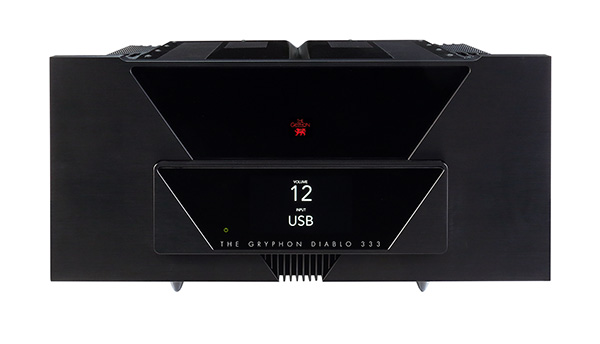
 When Anthony Chiarella delivered my review sample, we discussed class mobility, among other topics. Anthony pointed out that "The Diablo 333 integrated amplifier is biased to run >10W pure class-A. The old Diablo 300 is only running 5–6W pure class-A. Ideally, Gryphon wanted to achieve the same sonic characteristics as the Apex, by using Toshiba output transistors." A 5W difference may not sound like much, but it actually indeed does sound like much; music reproduction doesn't run that many peak watts over time—sonic quality of those "first watts" makes a lot of difference.
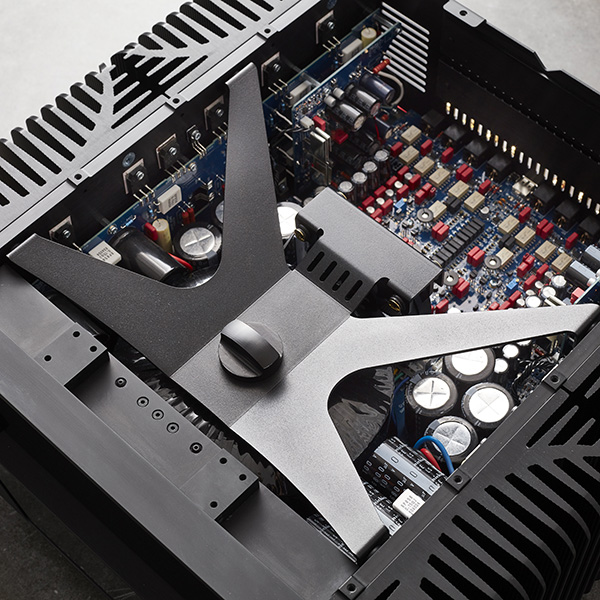
Even with the greater energy efficiency of a class-AB design, as compared to class-A types, the serious build quality of the Diablo 333 is obvious. The exterior design is by Flemming Rasmussen, the electronics design by Tom Møller, and the chassis mechanical engineering by Soren Slebo. I asked the design team to comment on the connection between the physical product and the sonic performance, and they responded: "The reason we have chosen to emphasize build quality and the design of the exterior is that these factors are crucial to the overall performance of the Diablo 333 [that] the listener enjoys. The mechanical construction, including damping and decoupling devices, materials selected for their resonant properties, isolation and shielding of internal components and circuits, all contribute to the 333's sonic performance."
By the Time We Got to Woodstock
When Anthony Chiarella delivered my review sample, we discussed class mobility, among other topics. Anthony pointed out that "The Diablo 333 integrated amplifier is biased to run >10W pure class-A. The old Diablo 300 is only running 5–6W pure class-A. Ideally, Gryphon wanted to achieve the same sonic characteristics as the Apex, by using Toshiba output transistors." A 5W difference may not sound like much, but it actually indeed does sound like much; music reproduction doesn't run that many peak watts over time—sonic quality of those "first watts" makes a lot of difference.
Even with the greater energy efficiency of a class-AB design, as compared to class-A types, the serious build quality of the Diablo 333 is obvious. The exterior design is by Flemming Rasmussen, the electronics design by Tom Møller, and the chassis mechanical engineering by Soren Slebo. I asked the design team to comment on the connection between the physical product and the sonic performance, and they responded: "The reason we have chosen to emphasize build quality and the design of the exterior is that these factors are crucial to the overall performance of the Diablo 333 [that] the listener enjoys. The mechanical construction, including damping and decoupling devices, materials selected for their resonant properties, isolation and shielding of internal components and circuits, all contribute to the 333's sonic performance."
By the Time We Got to WoodstockFor the first time in over 15 years, I now have a new listening room for my reference system. We have headed south, a little bit—from Cooperstown to Woodstock, New York. The new room was meant as some sort of family room/library addition to our new/old 1920s farmhouse. One wall is bookcases, or as I like to call them, bass traps. The other wall is French windows, now with curtains to reduce reflection issues, opening toward Overlook Mountain. The late Levon Helm's barn studio is a quarter-mile to the east. Home at last!
 My Son, the Deejay
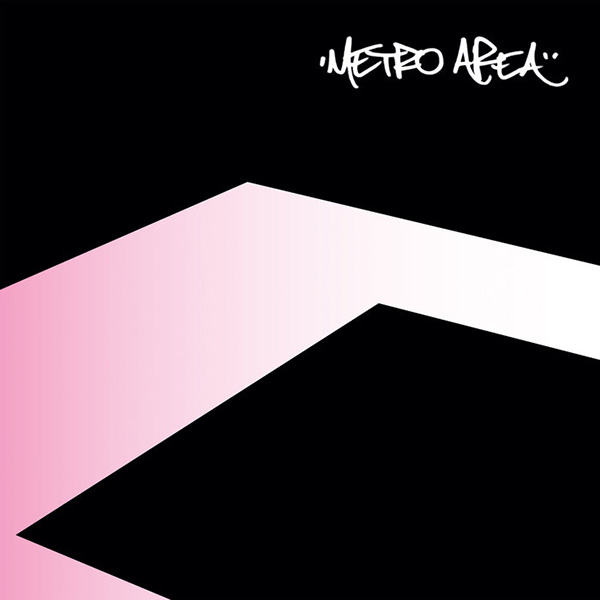
With a nod to Allan Sherman, for this review I finally did something I had meant to do for a while. My son Peter is a professional deejay, as well as a co-leader of the Brooklyn-based Afrobeat-Fela-inspired band Underground System. Peter has been doing his act at clubs and festivals in Europe and Central America for some time, as well as in deepest Brooklyn. Pre-COVID, I had Peter give me a tour of some Brooklyn clubs, which I wrote about for the Stereophile website. This time I asked him to bring me a selection of LPs he has spun, in a variety of genres. Club Matson was up and running, with an example of Nu-Disco from 2002, Metro Area's "Dance Reaction" (Environ Records SOURTDJ 074). Peter described the artist as "a duo specializing in minimalist meticulously produced dance music. I enjoy playing their work on hi-fi sound systems, like recently at the listening bar Spiritland in London." My reference Wilson Sasha V speakers are rated down to 20Hz. Well, they met their match this time—the Diablo 333's bandwidth is specified at 0.1Hz to 350kHz. Low impedances? The Diablo 333 could care less—get the right tool for the job! At 1:21 on this track subsonics fall in, Peter and I both noticed them loud and clear. I later pulled up this same track on Qobuz, and it sounded idiotic playing through a Mac desktop speaker—a toy music version of what I had heard earlier. Next on the dance floor: Róisín Murphy's track "Incapable," from the 2020 album Róisín Machine (Skint Records LC 19881). Further down the Nu-Disco line, with impressive heavily processed vocals. Peter's take: "Brooding torch songs set atop low-end heavy yet warm production, from Sheffield, England." Boy was that low-end indeed kicking. This is below-the-belt music—that's where you feel it. At least I did, with the Wilson/Gryphon combo.
 Switching to more age-appropriate music, and with household matters on the brain from moving, I heard Dick Strauss's "Symphonia Domestica," included in Strauss, Andris Nelsons's fabulous seven-CD box set with the Boston Symphony Orchestra from 2022 (DG 486 2040). Now I was running my CD transport, via the AES input on the Diablo 333's DAC3. Wow—such great sound! With reviews of powerful amps like the Gryphon, I read descriptions with words like "Grip" and "Slam" and "Control." Those are all true, but there is much subtle stuff going on as well. With massed string sections in the Strauss, heard through my Wilsons, there was a palpable sense of the ebb and flow around the musical phrases—as you feel in live performance. And talk about soundstaging! I experienced a weird moment that John Cage would have approved of. Down the hall from my new listening room is a cupboard with the washer/dryer in it. I was hearing pretty off-stage glockenspiel-type tinkly notes, and then I realized it was the new dryer happily playing some tune to announce that it had finished its cycle—a "Domestic Symphony" indeed!
 Time for my Bob fix—after all, up the road is where Dylan and his young family first lived in Woodstock. It was right around 9/11 too, which in one of the strangest coincidences ever, was the day when Love and Theft was released in 2001. I listened to the 2017 pressing (Columbia Records C2 85975, 2017). Tony Garnier's acoustic bass can sound a bit "thumpy" on this LP. The Diablo 333 controlled that better than I have heard it before. Along with low-end clarity, the better the highs, the more precise the diction becomes for Bob's vocals. That right there is as much of an acid test for hi-fi as I can think of. "Lonesome Day Blues" rang out loud and clear:
"Last night the wind was whisperin',Cooperstown is a baseball town—but Woodstock is a music village. The history of 1960s Woodstock is detailed in the fine book Small Town Talk, by Barney Hoskyns; in addition to Dylan, one of the other leading characters is Levon Helm—as one writer described him: "the connection between the hippies and the fire department."
I was trying to make out what it was.
I tell myself somethin's coming,
But it never does."
 I regret I did not get to Levon's barn studio for one of his Midnight Ramble sessions while he was still with us. However, his daughter Amy Helm and others continue that legacy, and live shows are ongoing there. A few weeks ago I finally made it and heard a smokin' set by Dave Alvin, Jimmy Dale Gilmore, and their band The Guilty Ones. Dave and Jimmy Dale have been hanging and recording for a few years now, and their latest album is titled TexiCali (Yep Roc Records YEP 3077). The guys were mostly performing tunes off this new record, and one that particularly grabbed me when I heard it live is "Blind Owl," by Dave Alvin—a song about Blues, and living the Blues Life.
 To be concluded
I was not ready for how truly excellent the Gryphon Audio Designs Diablo 333 integrated amplifier was going to be—what a fine world-class music maker it is. This is the first amp I have had in-house in some time that makes me question my marriage vows to my reference system. The Diablo 333 can power anything, while producing amazing lifelike dynamics, the blackest blacks, and the brightest colors. The sheer amount of musical energy conveyed, and the detailed truth of that—you need to hear it for yourself. I could trade four boxes for one, and I am all about downsizing these days. For now, reviewing hardware as I do, I need to keep the flexibility of separate components. Is it as good as separates? Yes—it is. The Gryphon Diablo 333 is guarding its treasures, waiting to reveal them just to you.