Since I reviewed it in
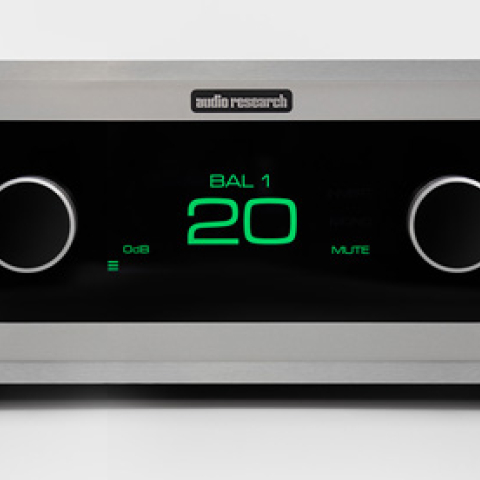
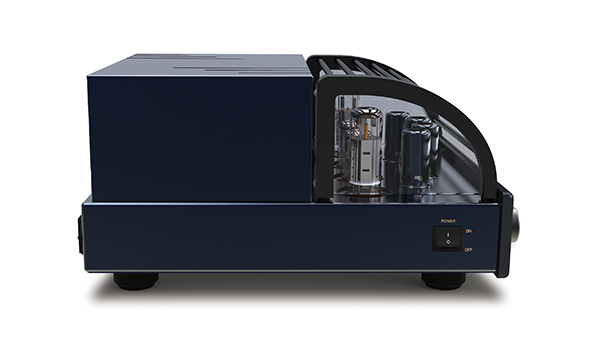
Gramophone Dreams #79, the EVO 100 has refused to make my system sound warm, soft, or second-harmonic thickened. It defies all clichéd descriptions of what tube amplification sounds like. Instead, it plays clean and fast and corners like a race car.
When Kevin Deal emailed asking if I was ready for a "free" EVO 100 "upgrade," I asked, "What's wrong with the way it is?"
He responded, "It's a parts upgrade and circuit tweak. We could do the MKII BS to raise the price, but we don't roll that way. Our job is supplying joy, not cashing in. Doing it free builds brand loyalty."
Then I asked Kevin about shipping. "Actually, the upgrade costs $275 plus shipping. But I've decided to make it no charge—just shipping—if the customer bought their EVO 100 at a dealer."
I loved the EVO 100 just as it was, but for the sake of a possible story, I shipped it back at Kevin's urging. When it returned to my studio, I was using the "moonluminous"
Benz Micro Gullwing SLR moving coil into Mobile Fidelity's whistle-clean MasterPhono phono stage and digging how much live-action vitality was coming off my discs. The first thing I noticed when I replaced MoFi's MasterPhono with the upgraded PrimaLuna was how much more I could feel the air molecules inside the recording venues. The negative spaces around performers were now declaring their unique physicality. They felt charged and activated, which in turn made the energy in my room feel the same way.

I began my upgraded EVO 100 auditions by spinning Wolfgang Schneiderhan (violin) and Carl Seemann (piano) performing Bartók's Sonata No.2 and Hindemith's Sonata in C on a Decca Gold Label LP (DL 9980). I was immediately impressed by the depth of quiet and clarity of sounds coming off this 140gm mono disc. My listening experience with the Gullwing through the EVO 100 was decidedly visual. Violin harmonics presented themselves as layered clouds of gray energy separated by slight differences in pitch. Through Decca's microphones, I could see Seemann's piano below me and Schneiderhan's violin off to one side. Wolfgang's string plucking was sharp and vital. The force of Seemann's hands on his keyboard was unusually present and tactile. The leading edges of notes seemed unusually complete.
The first and biggest thing I noticed about the EVO upgrade was deeper, cleaner, more natural bass. The 50Hz–500Hz region was as big and clear as I've heard with any megabuck phono stage.
Beyond the extranatural, extraclean bass, I couldn't say right away what else the upgrade enhanced. After a few days, I began noticing how the new EVO sounded perkier and prettier and maybe danced better than before. The more I used it, the more it seemed the upgraded EVO 100 had become slightly less visible—more
invisible, if that is possible.
 MoFi StudioSilver Redux
I felt bad when my First Watt SIT-4 report got tied to the tail of my Stick Palace yarn in
Gramophone Dreams #89 and even worse when my extremely favorable review of MoFi's StudioSilver moving coil was overshadowed by a cavalcade of Hana cartridge reportage in
Gramophone Dreams #90. Unfortunately I could not have done otherwise, because at the time I submitted those reports, my understanding of both products was still in the formative stages. Since then, my understanding of both has increased dramatically.
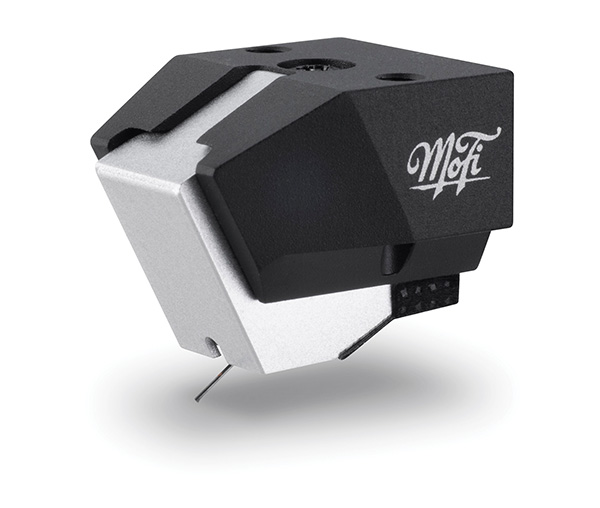
The SIT-4 is simply the most accurate and satisfying amplifier I have ever wired to an LS3/5a, and MoFi's StudioSilver MC phono cartridge (footnote 5) has been performing like a brilliant cross between the resolution of a fancy Lyra, the transient speed of
Dynavector's XX-2A, and the tone purity of an upmarket Audio-Technica.
Switching to the $1000 StudioSilver from the $3500 Benz Micro Gullwing SLR was not a letdown. The chief difference, and the first thing I noticed, was how the MoFi danced with lighter shoes. It was not as dark or dense, tonewise and basswise, as the Gullwing, but it was lighter on its feet. The StudioSilver's tone has a spritz of white wine flavor that in comparison made the Benz cartridge taste like brandy.
MoFi's StudioSilver cast a brilliant, slightly coolish light on the abovementioned Decca Gold Bartók—as if someone opened the curtains in the recital chamber. This light I am referring to is light shining on the soundstage. It's the light that shows Schneiderhan and Seemann playing together in front of their microphones. Here, the word "light" in no way suggests that the MoFi was less than appropriately dense or forceful. The left-hand side of Carl Seemann's keyboard displayed a solidity and a precisely rendered tone that reminded me of my top reference, the $3195
EMT JSD 6 moving coil mounted on the $7409 EMT 912 HI tonearm. Both cartridges lean heavily toward a smooth, studio-monitor sound, but don't let that fool ya: These cartridges can sing and bust moves.

It wasn't till I heard
Country Pickin' and Singin' by the Stanley Brothers and the Clinch Mountain Boys that I realized how thrilling the StudioSilver could sound. Think highway fast, wide open, and airy. If you like bluegrass, and you're looking for a demo record to drop jaws and impress your friends, this Mercury LP (MG 20349) will not disappoint. With the StudioSilver, this album's first track, "Orange Blossom Special," charged into my room and revved me up like it's supposed to do. The EMT JSD 6 showed me the grilles on the microphones, but the StudioSilver MC pushed my cart down the road at wagon-busting speed.
The best moving magnets, like
Grado's Platinum 3 and
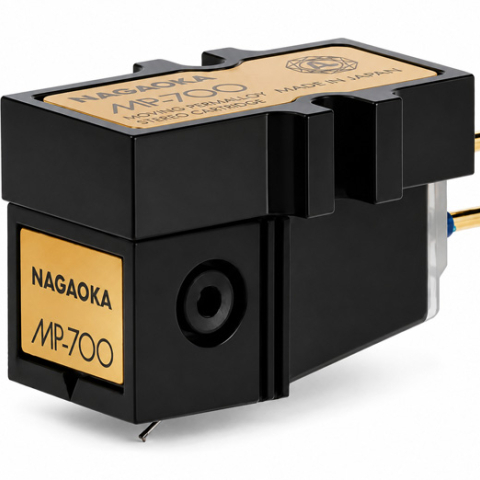
Nagaoka's MP-200, do an amazing job preserving music's textures, colors, and vitality, but even
they can struggle to sort and separate large orchestras and massed strings. MoFi's StudioSilver excelled at both tasks.
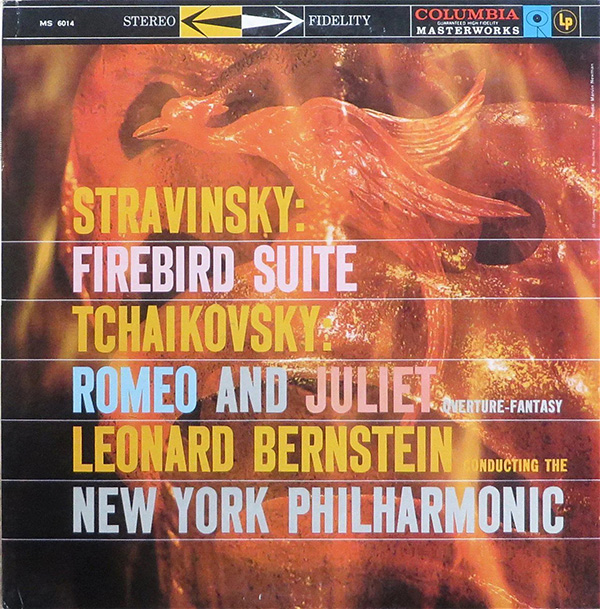
My test record for assessing massed string reproduction is Leonard Bernstein conducting the New York Philharmonic performing Tchaikovsky's
Romeo and Juliet – Overture-Fantasy (Columbia MS 6014). This 1958 six-eyes stereo recording packs a lot of strings under one microphone. Only my fanciest cartridges can put any space between the instruments, let alone spread them out and shine a light on them like MoFi's StudioSilver did.
What separates higher priced cartridges from lower priced ones is not just detail, depth, and dynamics; it's also the quality of
finish their magnetic circuit puts on the sound. I thought the StudioSilver's neodymium magnet and Permendur yoke put a distinct, polished gleam on the information recovered by the Silver's boron cantilever and nude MicroLinear stylus.
My best analogy would be car paint. I'm sure you've noticed how a cheap Chevy presents color with a shallower, drier luster than the reflective abyss-deep shine on a Mercedes Maybach S-class. This same effect applies to phono cartridges and complete sound systems. For example,
My Sonic Lab's Ultra Eminent Ex puts a deep, Maybach-level shine on every recording it scrapes through. Its black spaces both absorb and reflect light.
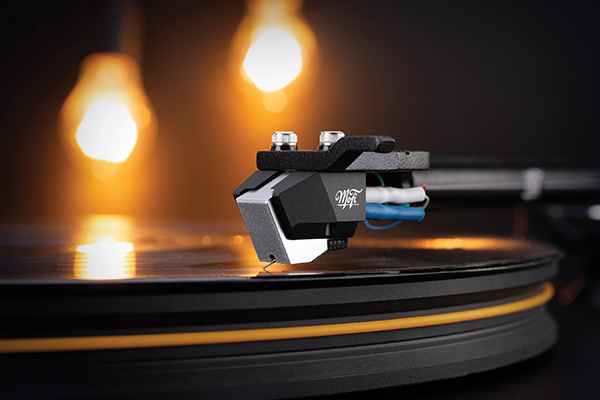
The finish I see with MoFi's StudioSilver features a good amount of shine, with layered depth punctuated by light touches of metalflake and pearlescence. These bright, sparkly touches are part of what makes the $999 MoFi feel like a more expensive cartridge than it is.
In my system, the essence of the Stu dioSilver MC was demonstrated by how it instantly satisfied my hypercritical left brain, after which the thought of audiophile issues disappeared completely from my awareness, leaving my right brain unsupervised and free to party like a berserker.
MoFi's StudioSilver looks like a strong candidate for Budget Product of the Year.
When new really means new?
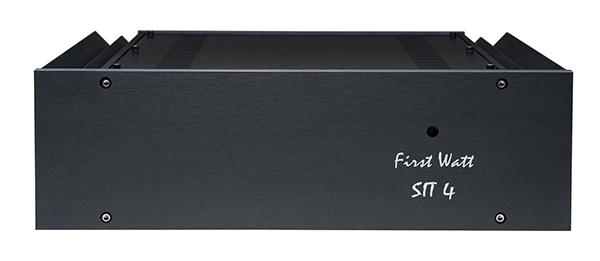
I revisited First Watt's SIT-4 power amplifier because long-term listening has shown it to be among the most unique amplification products I've ever encountered. The SIT-4 is a new, 25%-more-expensive First Watt amplifier that looks like an old, unfancy First Watt amplifier but sounds like a totally
new type of amplifier, worth much more than its extra cost. In my system, the SIT-4 powered my Falcons with a benign authority that whispered, "Herb, this is what accuracy sounds like." I agreed.
For me, the wizardry of
Nelson Pass is in how his First Watt designs are always experiments—fallout from his mind reaching forward, trying out fresh "what if?" ideas with limited commercial appeal—and no attempt to add glitzy casework or shrill ad campaigns.
After the
2019 Burning Amp Festival, I got to observe Nelson in his reclusive California habitat. What I saw was a humble man working simply and steadfastly, like a monk-scholar. Today, in
my reclusive habitat, the SIT-4 feels like Nelson has taken audio amplification to some type of next level, and that this is the beginning of a whole new adventure for his First Watt enterprise.
I described PrimaLuna's EVO 100 upgrade as a "circuit tweak and parts upgrade," but before the upgrade, that component was already preserving record amounts of previously unheard data, causing it to play black discs with an uncanny quiet and a sense of completeness that made playing records more exciting than ever. With my favorite cartridges, the original 10-tube EVO 100 presented recordings with a breathy, high-presence immediacy I really relished. After the upgrade, it presented recordings with noticeably stronger bass and an extra tablespoon of tube clarity.
I revisited MoFi's StudioSilver moving coil because the longer I use it, the more truthful and exciting it seems. I kept thinking as I listened that this $999 moving coil cartridge was created in Japan by wise, smart, talented folks who knew the kind of high-level sound they wanted and knew how to make it happen. At a modest price.
 Sing hallelujah!
My long-term auditions have shown each of these products to be capable of extraordinary levels of fidelity, listenability, and value. All are deserving my highest recommendation.
Footnote 5: Mobile Fidelity Electronics, 713 W. Ellsworth Rd., Ann Arbor, MI 48108-3322. Web: mofielectronics.com.