 After 30 sides
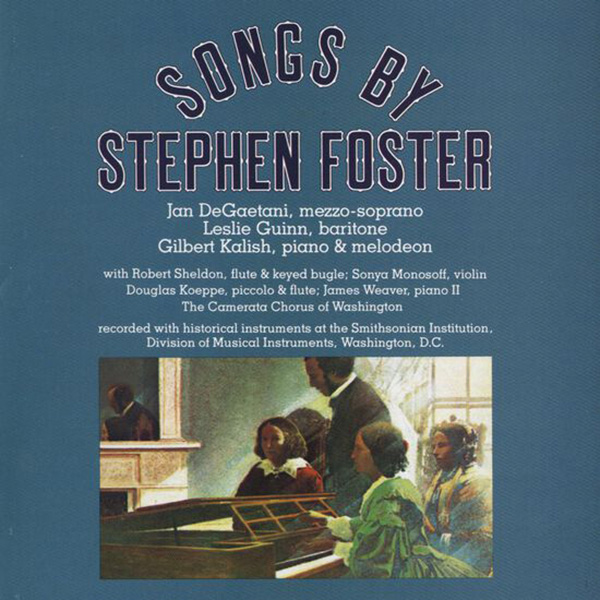
Beautiful dreamer, wake unto mePlaying my father's favorite song, Stephen Foster's haunting "Beautiful Dreamer," sung by baritone Leslie Guinn on Songs by Stephen Foster (Nonesuch stereo LP H-71268), the SL MK II delivered enough transparency to see the usually obscured walls and floor of the recital room where "Dreamer" was recorded using "historical instruments at the Smithsonian Institute, in Washington, DC." The MK II recovered more of "Dreamer"'s moodiness than the old SL did. This track, along with "Jeanie with the Light Brown Hair," kept my mind striving to imagine the nature of the divide that separates us from those who've passed over.
Starlight and dewdrops are waiting for thee
Oh! I sigh for Jeanie with the light brown hair,Loaded at 500 ohms, the Hana SL MK II presented this Stephen Foster recording in a crisp unaffected manner. Tone character was VG+. Transparency was 80% of the Umami Blue's. Loaded at 100 ohms, the sound got quieter, wetter, and more seductive. Tone character improved to E—Excellent. Transparency was now 90%. I did the rest of my listening at 100 ohms.
Floating, like a vapor, on the soft summer air.
 Life is cool running when I'm bouncing to grooves produced by Clement "Coxsone" Dodd at Studio One Records in Kingston, Jamaica. Feeling an urge for some dreamy ska moments, I let the SL MK II steer its way through Ride Me Donkey: Solid Gold From Jamaica (First label Studio One PSOL 7777). Folks, you have not fully lived till you've heard Jackie Mittoo playing his Hammond B3 on "Soul Call" or bobbed your head through "Miss Hiti-Tite" with its rocking-horse beat. This album is a Coxsone anthology of Jamaican ska and rocksteady created to be a peaceful donkey ride through the beats on the streets and sounds of radio in Kingston, Jamaica, ca 1968.
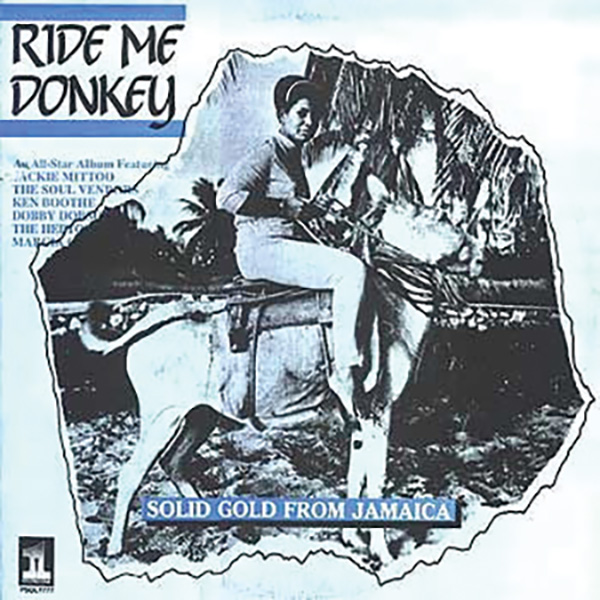 Donkey's syncopated flow put me in a nostalgic mood. I thought the "new II" with its tapered shank and Shibata stylus played Ride Me Donkey with more scooter and Red Stripe authenticity than the MicroLine Umami Blue.
All of these auditions were performed with the SL MK II attached to a $450 DS Audio HS-001 headshell (footnote 5) on a Sorane SA-1.2 tonearm, with an AudioQuest Yosemite tonearm cable into a Mobile Fidelity Electronics MasterPhono phono preamplifier. The rest of the system was my HoloAudio Serene preamp, First Watt SIT-4 amplifier, and Falcon Gold Badge LS3/5a speakers. I have a diverse herd of cartridges bolted to a diverse assortment of headshells by Thomas Schick, Jelco, SME, Ortofon, Audio-Technica, LP Gear, and others. None of those feel more rigid or precision-crafted—or more luxuriously finished—than DS Audio's made-in-Japan HS-001, which DS Audio says is machined from a solid billet of "ultra-duralumin" and which features the sturdiest, most expensive-looking Litz wires I've ever seen on a headshell.
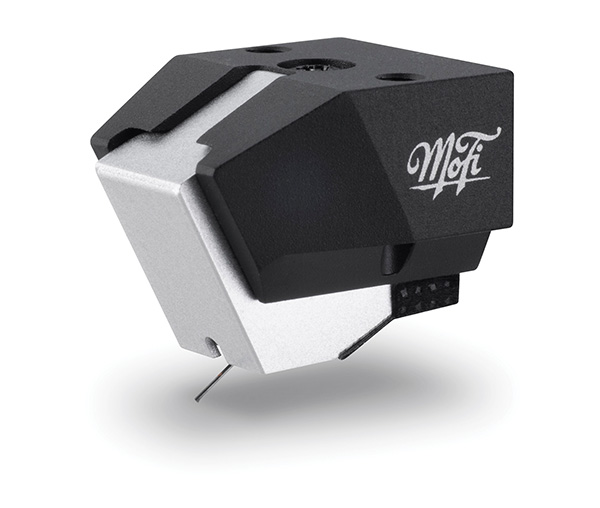 MoFi StudioSilver MC ($999)
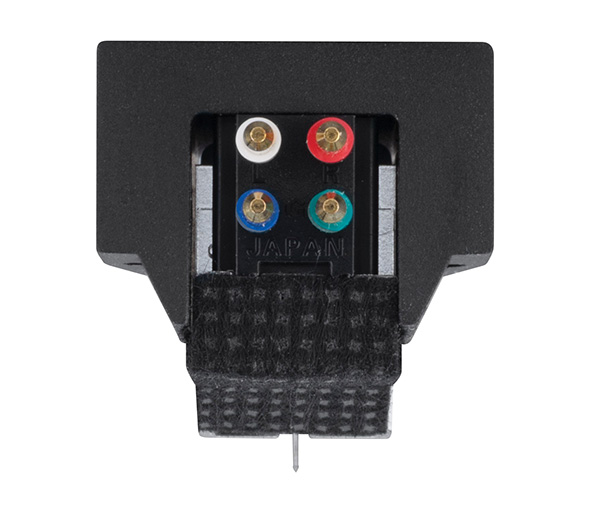
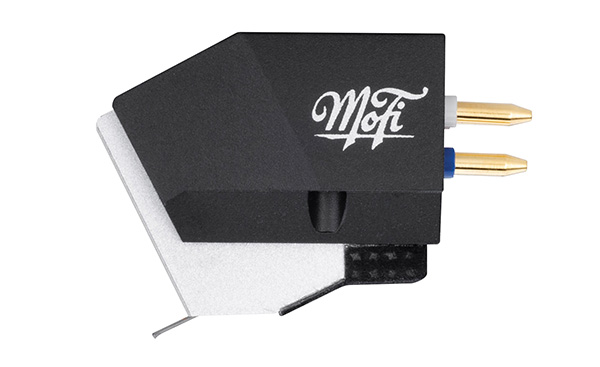
MoFi offers five phono cartridges: three moving magnets and two moving coils. The $999 StudioSilver moving coil I'm reviewing here sits just below their $1495 UltraGold MC (footnote 7). Both cartridges are made in Japan. The UltraGold features a Shibata stylus on a boron cantilever. The StudioSilver employs a boron cantilever with a "Nude MicroLinear" tip. The Silver makes 0.35mV from 12 ohm coils wound with Ohno Continuous Casting copper wire moving in the field of a neodymium magnet and a Permendur (footnote 8) yoke. The StudioSilver's 7.2gm body is made of aluminum and has threaded inserts and a sharp look that feels timeless, neither fancy nor unfancy. MoFi recommends a load of less than 100 ohms. I started my listening at 100 ohms.
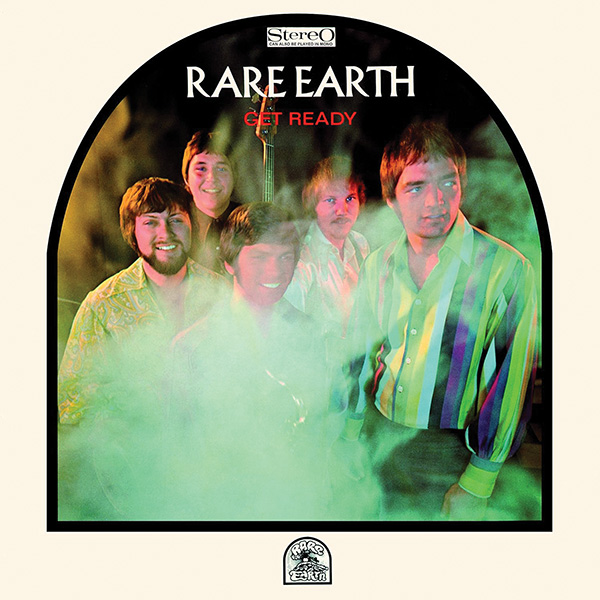 Get ready: I'm sure it's corny, but I love it. Every time I put on Rare Earth's 1969 album Get Ready (Motown LP RS 507), I freeze and sit motionless until the 21:30 minute "Get Ready" side is finished. Then I laugh, oh, gee, drummer Pete Rivera must have mixed the album because his loud metronomic snare-smashing dominates the singers and the rest of the band. Then I laugh.
 My Get Ready disc was a gift from Cyrille (who owned several copies) when I visited his French Farm; see the October Gramophone Dreams. Through his large Onken horns, "Get Ready" sounded large, super-present, and hyper-vivid. Through my small Falcons, Rivera's snare-smashing sounded more or less annoying, depending on which cartridge I was using. Noticing that, I turned "Get Ready" into a new test track. My copy of this disc has long scratches and a haze you can see from across the room. Incredibly, MoFi's StudioSilver played this record with something approaching complete silence. This seemed irrational and took me completely aback. But damn, the Silver played this quiet on all my used records. Quiet like this makes me think MoFi's MC has its mechanical resonances under control. Also, the StudioSilver's "MicroLinear" stylus never seemed to dredge up any dust balls. I don't know why. What I do know is this dust-and scratch-free quietness made each instrument on the title track stand out in clearly outlined bas-relief, very distinct, very 3-D. That made me wonder what would happen if I switched the load to 500 ohms.
At 500 ohms, those 3-D instruments moved forward, flattened out some, and made the fake crowd soundtrack sound more fake. The snare became annoying again. But 500 ohms kicked up the energy and enjoyment factors. At 500 ohms, the Silver presented this "anthem" in a mesmerizing, love-to-love-you-here-I-come fashion. It did this in big-stage rock-opera style. MoFi's StudioSilver played this disc with eye-popping clarity and show-off-your-system swagger.
With either load, MoFi's new StudioSilver moving coil's excitements could be mistaken for those of a cartridge costing several times its asking price. A high-value pickup that's easy to recommend.
My Get Ready disc was a gift from Cyrille (who owned several copies) when I visited his French Farm; see the October Gramophone Dreams. Through his large Onken horns, "Get Ready" sounded large, super-present, and hyper-vivid. Through my small Falcons, Rivera's snare-smashing sounded more or less annoying, depending on which cartridge I was using. Noticing that, I turned "Get Ready" into a new test track. My copy of this disc has long scratches and a haze you can see from across the room. Incredibly, MoFi's StudioSilver played this record with something approaching complete silence. This seemed irrational and took me completely aback. But damn, the Silver played this quiet on all my used records. Quiet like this makes me think MoFi's MC has its mechanical resonances under control. Also, the StudioSilver's "MicroLinear" stylus never seemed to dredge up any dust balls. I don't know why. What I do know is this dust-and scratch-free quietness made each instrument on the title track stand out in clearly outlined bas-relief, very distinct, very 3-D. That made me wonder what would happen if I switched the load to 500 ohms.
At 500 ohms, those 3-D instruments moved forward, flattened out some, and made the fake crowd soundtrack sound more fake. The snare became annoying again. But 500 ohms kicked up the energy and enjoyment factors. At 500 ohms, the Silver presented this "anthem" in a mesmerizing, love-to-love-you-here-I-come fashion. It did this in big-stage rock-opera style. MoFi's StudioSilver played this disc with eye-popping clarity and show-off-your-system swagger.
With either load, MoFi's new StudioSilver moving coil's excitements could be mistaken for those of a cartridge costing several times its asking price. A high-value pickup that's easy to recommend.
 Collecting cartridges
I have discovered no greater audiophile pleasure than collecting records, treating turntables like project cars, and trying out as many cartridges as possible. Lately, my friends who can are restoring their estate-sale turntables and firing up old phono cartridges they've accumulated over time. They're doing this for fun and curiosity and to tune their tastes to a broader spectrum of excitement. Just this month, I've received invites from friends to hear the Fairchild 225-A (a high-output moving coil cartridge designed and built by Joe Grado in 1951; footnote 9), a low-mileage Koetsu Black from 1980, a 1977 Koetsu Rosewood, and an ancient Nagaoka ribbon cartridge called the Jeweltone. Even little tastes of these antique cartridges grow my understanding and help me understand what type of sound suits my temperament. The most fun part is seeing how the sound of today's cartridges compares to that of their forebears. I heard that rare Fairchild MC at Alex Halberstadt's loft in Red Hook, where, after fresh shrimp, homemade pasta, and some amber-toned wine, he played 1950s Rudy Van Gelder recordings through the most tone-truthful phono pickup I'd ever heard.
Footnote 5: DS Audio, 4-50-40, Kamitsuruma-Honcho, Minami-ku, Sagamihara, Kanagawa 252-0318, Japan. Tel: (81) 427-47-0900. Web: ds-audio-w.biz. US distributor: Musical Surroundings, Inc., 5662 Shattuck Ave., Oakland, CA 94609. Tel: (510) 547-5006. Web: musicalsurroundings.com.