 Close listening
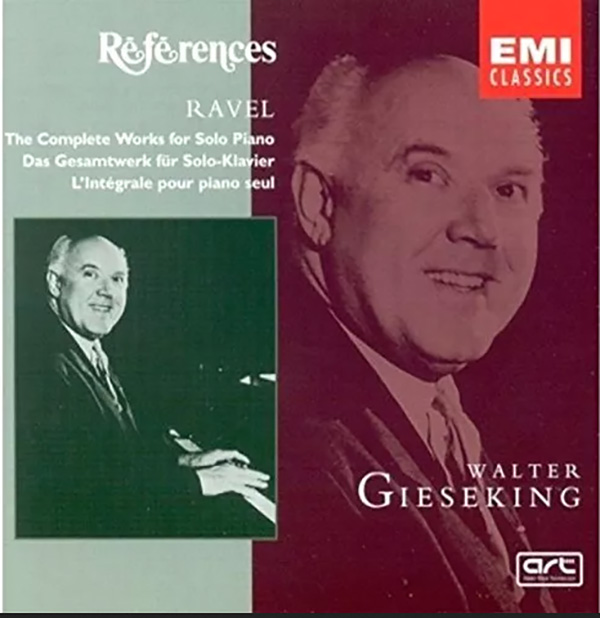
My first night of close listening with the Lina was highlighted by a CD transported from my Onkyo C-7030 player, connected via S/PDIF on RCA: Walter Gieseking playing the Complete Piano Music of Maurice Ravel (NCA CD LC 12281). On page 546 in his Essential Canon of Classical Music (North Point Press), David Dubal described Ravel as "an elegant Apollonian" and an "exquisite jeweler," but for me Ravel is a more distinctly modernist extrapolation of Debussy's dreamier, more sensation-based creations. In Gaspard de la nuit, Ravel's three poems for piano, I experienced death and the abyss, a hangman standing on a gallows, plus devilish imps dancing on glistening water under sparkling lights—and all I had to do was press Play, close my eyes, and listen. The dCS Lina and Walter Gieseking played these Ravel sound poems with brilliance and light-saber precision, especially on the second poem, "Le Gibet" ("The gallows"); the metronomic ticking of the last seconds of the prisoner's life was riveting and bell-clear. By the end of this 5:48 track, it was obvious that the Lina was presenting Gieseking's Ravel with more corporality and stronger forward drive than I get from the HoloAudio May KTE or the Denafrips Terminator Plus. The bass and treble ends of Gieseking's keyboard were denser and more energized than with the May or Terminator DACs. On Gaspard de la nuit's last movement, "Scarbo," the Lina exposed Gieseking's small-note mastery of Ravel's devilish-to-play composition. The Lina sorted Scarbo in a manner that made its tiniest parts more observable and comprehensible, something this composition requires to be enjoyable.
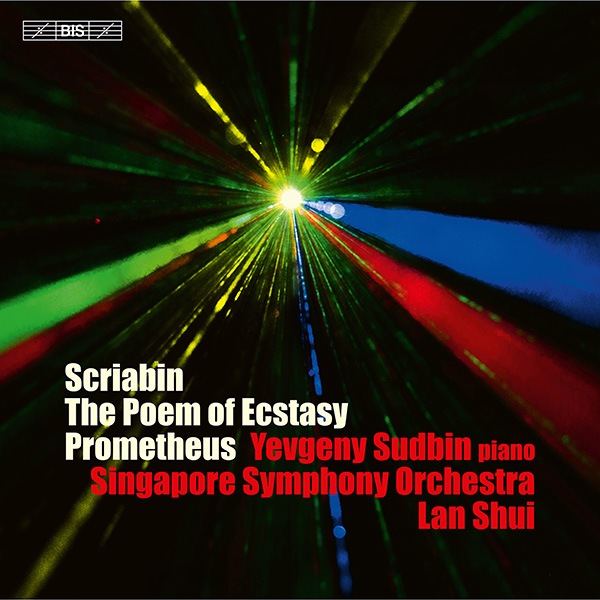 After spending a few days in the vision-inducing realms of Debussy and Ravel, I pressed further into the 20th century with the music of Alexander Scriabin via the album Alexander Scriabin: The Poem of Ecstasy, Op.54, Prometheus, Op.60 & Piano Sonata No. 5, Op.53 (24/96 FLAC, BIS/Qobuz), with the Singapore Symphony Orchestra conducted by Lan Shui and with Yevgeny Sudbin on piano. I searched, as I usually do when listening to Scriabin, for what Scriabin biographer Arthur Eaglefield Hull called the "mystic chord" and scholar Leonid Sabaneyev later called the "Prometheus chord," a chord or note sequence on which the mystical-minded Scriabin based some of his later works (footnote 3). As I listened, I imagined this chord to be some form of shape-shifting tone arrangement used to suggest cosmic realms. Using the tone-precise Lina to study The Poem of Fire, I never found sounds I could point to and say, "There's the Prometheus chord!," but I did notice ordered arrangements of reverberant, quasi-atmospheric sounds I felt alluded to higher realms.
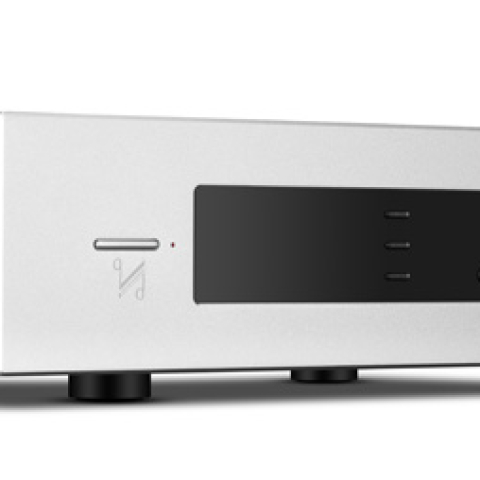
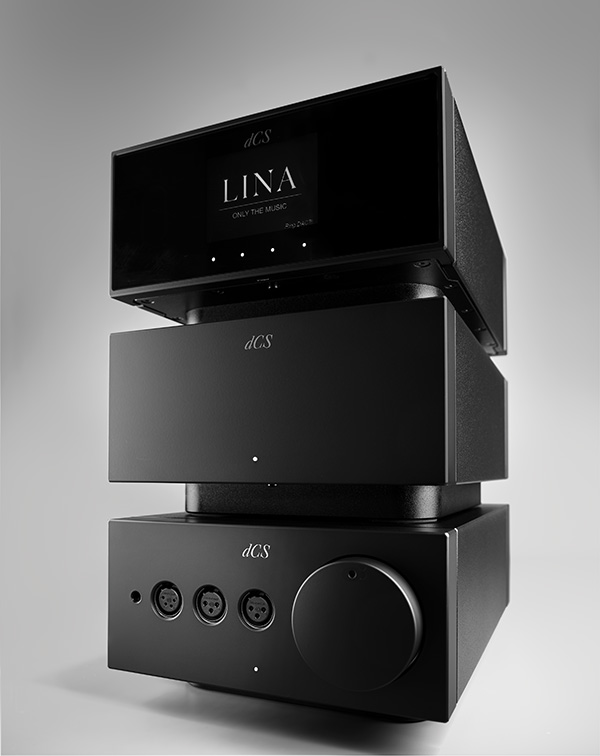 Lina DAC and headphone amp
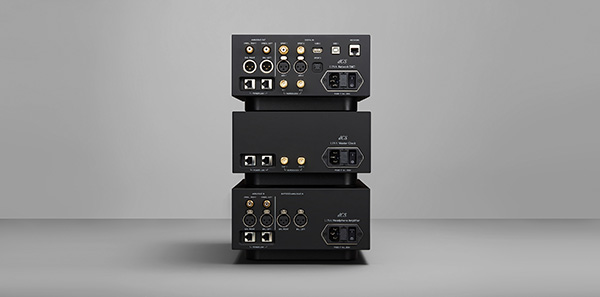
I was enjoying how clear, solid, and expansive the Lina DAC sounded playing through my Falcons when I got to wondering if those impressions would be corroborated at higher resolutions using the Lina headphone amp ($9750) powering a few of the world's finest transducers. I started with Meze Audio's 32 ohm, 101dB/mW Elite headphones playing the Poor Things soundtrack via Qobuz and the dCS Mosaic app. What I mean is, micro and macro dynamics were many times enhanced compared to my Falcons. What I wrote earlier about this recording was now doubly true: "some amount of the uncompressed theater version was coming through." This Lina-Meze combo threw so much clarity and live energy into the sound that I texted my friend Sphere and told him, "The Lina is amazing. I feel like I'm getting everything!"
All the above observations were made without the Lina Master Clock ($7750). Because sequence is everything, I took my time, waiting to install the clock until my head was fully in tune with the sound character of the basic Lina DAC. And then I put it in. Sixty seconds into the first track, I remarked to myself, "Well dang, that sounds real nice!" I smiled. I was responding to an easily noticeable increase in vividosity, dimensionality, and transparency. It was not a loud change, but neither was it subtle. The clock-enhanced repro seemed distinctly calmer and sharper focused, with smaller, more clearly outlined molecules of sound. With the clock, I felt the music's energy more because it occupied a larger portion of my room.
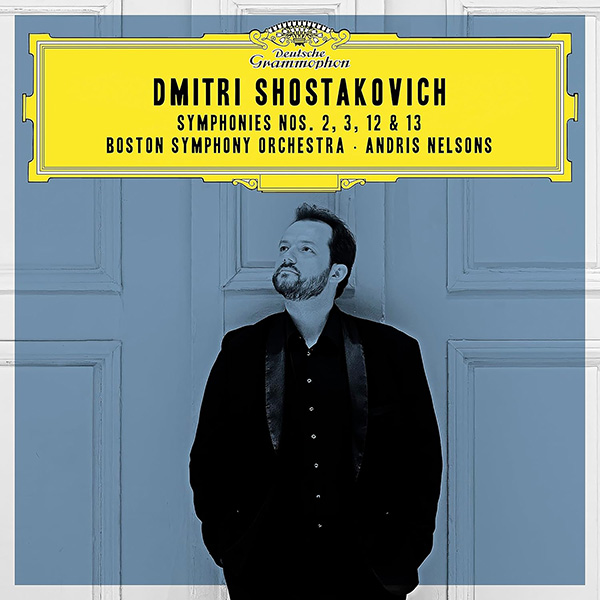 My Falcons have never sounded cleaner, bigger, or less inhibited than they did playing Andris Nelsons conducting the Boston Symphony Orchestra on Dmitri Shostakovich: Symphonies Nos. 2, 3, 12, and 13 (24/96 FLAC, Deutsche Grammophon/Qobuz). At no previous time had my LS3/5a's sounded this transparent or awake. More than a few times, this demonstration-quality recording made me jump with surprise; I was startled by sudden loud sounds. The last time a digital recording startled me, I was using Mola Mola's Tambaqui DAC, which specializes in push and jump factor. The Tambaqui delivered a high measure of clarity and could pound and dance and genuinely satisfy, but it could not do nuanced tone or fine lighting like the Lina, which made me constantly aware of those things. In my system, the Lina specialized in subtlety and superb left-brain/right-brain balance.
 Besides more finely formed detail and less-fettered dynamics, the clock-locked Lina projected a more evenly lit, cloud-free space than it did without the Master Clock. The Lina's clock-enhanced spaciousness seemed similar (visually and tactilely) to what I routinely experience with the Denafrips Terminator Plus, except in my system, the Denafrips's space is sparkling deep-water moody while the Lina's space was brighter, more straightforward, and more intensely energized.
I judge the quality of digital playback not by its resolution but by its density, rhythmic force, and the beauty of its space and light. The Lina excelled at all three.
Comparing the Lina to HoloAudio's Spring 3 DAC was difficult, because the Spring 3 has its own distinct vivo, PRaT, and jump factor that I find quite engaging. Every time I put the Spring 3 in my big system, it runs over, jumps up, and greets me like a just-washed dog. It plays clear, fleet of foot, and vigorous. But it can't match the Kodachrome transparency of its more costly sibling, the HoloAudio May DAC, or the sparkling depths of the Denafrips space, or the solid unmitigated realism of the Lina. With the Lina, I always felt I was getting the complete picture, presented with absolute authority. And that's something I'd pay extra for.
Besides more finely formed detail and less-fettered dynamics, the clock-locked Lina projected a more evenly lit, cloud-free space than it did without the Master Clock. The Lina's clock-enhanced spaciousness seemed similar (visually and tactilely) to what I routinely experience with the Denafrips Terminator Plus, except in my system, the Denafrips's space is sparkling deep-water moody while the Lina's space was brighter, more straightforward, and more intensely energized.
I judge the quality of digital playback not by its resolution but by its density, rhythmic force, and the beauty of its space and light. The Lina excelled at all three.
Comparing the Lina to HoloAudio's Spring 3 DAC was difficult, because the Spring 3 has its own distinct vivo, PRaT, and jump factor that I find quite engaging. Every time I put the Spring 3 in my big system, it runs over, jumps up, and greets me like a just-washed dog. It plays clear, fleet of foot, and vigorous. But it can't match the Kodachrome transparency of its more costly sibling, the HoloAudio May DAC, or the sparkling depths of the Denafrips space, or the solid unmitigated realism of the Lina. With the Lina, I always felt I was getting the complete picture, presented with absolute authority. And that's something I'd pay extra for.
The chief thing I've learned from reviewing is how the best audio products are the ones that achieve long-term relevance. It's not for nothing that the Klipschorn, Denon DL-103, Technics SL-1200, the Koetsu, the Ongaku, the Linn Sondek LP12, and several versions of the BBC LS3/5a are still in production. If any digital products that require periodic software upgrades could ever pass the long-term relevance test, it would be Data Conversion System's Lina Stack. The Lina 2.0 DAC, Master Clock, and headphone amplifier feel like they are operating on a performance plateau that will not easily or quickly be surpassed, which is what the above-mentioned products felt like when they were introduced. The first audiophile "stack" I ever used was the Marantz Model 9 amplifier supporting the matching Model 7 preamp, crowned by the nearly peerless 10B tuner. Like this Lina tower with its fancy DAC, that Marantz stack performed at a higher level than its contemporaries. Though long out of production, the Marantz stack has held its status and value for 60 years because it still looks amazing and sounds amazing, and because Saul Marantz, Sid Smith, and Dick Sequerra were engineering leaders with a shared long-term vision. I believe the minds at dCS are operating with a similar long-term vision.
Footnote 3: Scholars disagree about the importance of this chord in Scriabin's compositions.