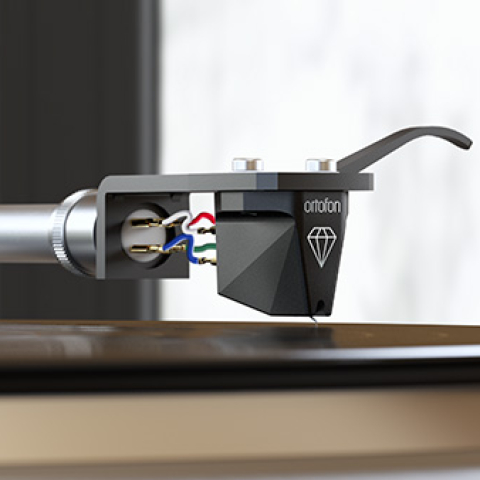
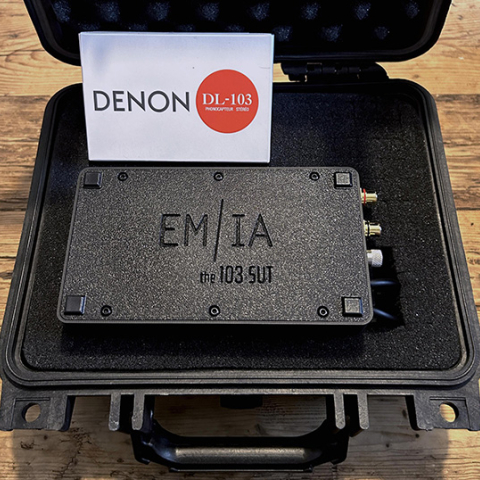
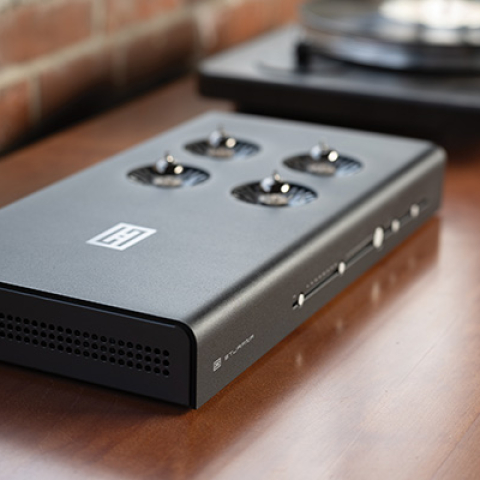
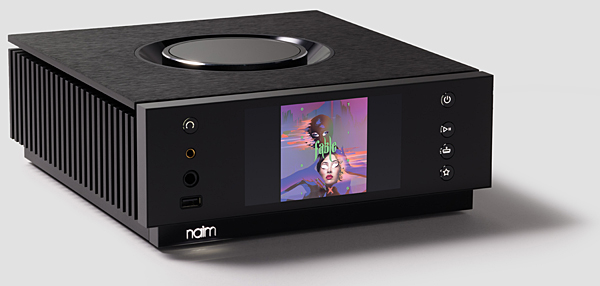
The Atom's line stage: In order to get a feel for the driving power of the Uniti Atom's line stage, I connected my Dr. Feickert Analogue Blackbird turntable, equipped with a 10.5" Schick arm and a Koetsu Rosewood Signature Platinum moving coil cartridge, which sent its current to my EMIA 1:10 step-up transformer driving the tubed Tavish Design Adagio phono stage. My goal: to see how the Naim preamp section compared to my reference Rogue Audio RP-7 line-level amplifier, which, at $4995, costs 50% more than the $3290 Uniti Atom HE. I spent days using this Blackbird-Atom combo to explore every music genre, simply because it was a pleasure to do. Chamber music and avant-garde jazz came through with intoxicating brandy-in-a-snifter richness. Classical orchestras appeared in nicely focused, well-sorted layers. Punk swaggered and spit like it ought to.
Impressively vivid, the Uniti Atom's line stage had excellent drive and a penchant for invisibility.
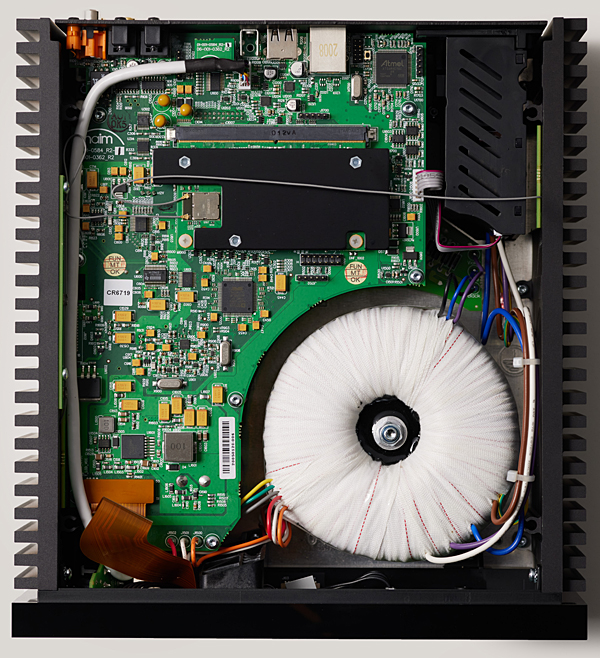 The Atom's headphone amp: The second pillar of Naim Audio's parent company—the VerVent Group—is French manufacturer Focal, a company with a long history of making some of the world's finest loudspeakers and headphones. Together, Naim and Focal share a decades-long narrative of making products that treat build quality, product style, and quality of sound equally in an intelligent, no-detail-overlooked manner.
Naim's Uniti Atom HE and Focal's Stellia headphones ($2990) are promoted as a couple on Focal's website, so, to see what they were bragging about, I started my Uniti Atom headphone auditions with the Stellia closed-backs.
With the Atom HE powering the easy-to-drive, low-impedance (35 ohms), high-sensitivity (106dB/mW) Stellia, the sound was squeaky-clean, bass-taut, and superdynamic lively. No question, the Atom-Stellia's sound was impressive, but I wasn't sure if its overt cleanliness would match long-term with my audio-on-acid proclivities.
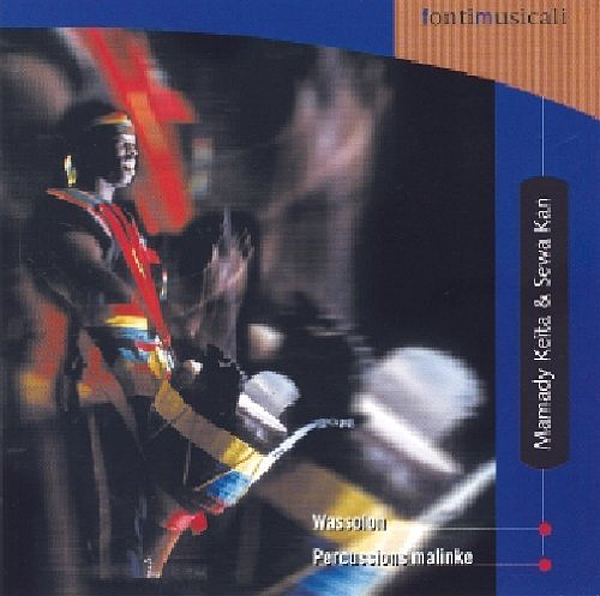
That uncertainty passed quickly, because the Atom-Stellia combo did not prevent me from getting gone and trancing out to my favorite Guinean djembe drummer Mamady Keïta and his hypnotic, majestically inventive 1989 album, Wassolon (24/96 FLAC, Fonti Musicali/Qobuz). The Stellia-Atom combo was not too pure nor too sanitary for me to feel the tribal earth while following the dynamic near-drum/far-drum call and response of Wassolon's "Kuku" track. But it was sharp-focused and transparent enough to elucidate the intricate sounds of birds and other creatures "singing" in the rich darkness at the beginning of Wassolon's first track, "Kassa." It was gut-level real enough to remind me, track after track, that recorded music is the main tool I use to fathom human nature.
The Atom's headphone amp: The second pillar of Naim Audio's parent company—the VerVent Group—is French manufacturer Focal, a company with a long history of making some of the world's finest loudspeakers and headphones. Together, Naim and Focal share a decades-long narrative of making products that treat build quality, product style, and quality of sound equally in an intelligent, no-detail-overlooked manner.
Naim's Uniti Atom HE and Focal's Stellia headphones ($2990) are promoted as a couple on Focal's website, so, to see what they were bragging about, I started my Uniti Atom headphone auditions with the Stellia closed-backs.
With the Atom HE powering the easy-to-drive, low-impedance (35 ohms), high-sensitivity (106dB/mW) Stellia, the sound was squeaky-clean, bass-taut, and superdynamic lively. No question, the Atom-Stellia's sound was impressive, but I wasn't sure if its overt cleanliness would match long-term with my audio-on-acid proclivities.
That uncertainty passed quickly, because the Atom-Stellia combo did not prevent me from getting gone and trancing out to my favorite Guinean djembe drummer Mamady Keïta and his hypnotic, majestically inventive 1989 album, Wassolon (24/96 FLAC, Fonti Musicali/Qobuz). The Stellia-Atom combo was not too pure nor too sanitary for me to feel the tribal earth while following the dynamic near-drum/far-drum call and response of Wassolon's "Kuku" track. But it was sharp-focused and transparent enough to elucidate the intricate sounds of birds and other creatures "singing" in the rich darkness at the beginning of Wassolon's first track, "Kassa." It was gut-level real enough to remind me, track after track, that recorded music is the main tool I use to fathom human nature.
 Atom + Susvara: The success of Naim's Uniti Atom HE driving Focal's supersensitive, low-impedance Stellia was a foregone conclusion. I wanted to know if the Atom's 1.5W headphone amp could produce enough current (got 250mA?) and voltage gain (got 20dB?) to power the 60 ohm, 83dB/mW, HiFiMan Susvara. That is a more difficult question.
On Wassolon's "Kuku" track, you can hear Master of Masters Mamady Keãta on a djembe drum sitting close to the microphone and second djembe Master Sewa Kan playing on a smaller drum farther away. Both drums are explicitly rendered and dynamic in the extreme. Keãta's drum makes powerful transients.
If an amplifier clips or compresses, it's easy to spot. The Uniti Atom didn't just drive the Susvara without noticeable clipping; it out-resolved the headphone amp in the Mytek Manhattan II.
I continued my Atom-Susvara testing with a denser, more complex, more difficult-to-sort track called "Outlaws," from Bill Frisell (with Dave Holland and Elvin Jones) (16/44.1 FLAC, ECM/ Qobuz). On this composition, the HE appeared to clip subtly in a low, dull, blurry way. What I heard sounded like a fog of IM distortion.
Atom + Susvara: The success of Naim's Uniti Atom HE driving Focal's supersensitive, low-impedance Stellia was a foregone conclusion. I wanted to know if the Atom's 1.5W headphone amp could produce enough current (got 250mA?) and voltage gain (got 20dB?) to power the 60 ohm, 83dB/mW, HiFiMan Susvara. That is a more difficult question.
On Wassolon's "Kuku" track, you can hear Master of Masters Mamady Keãta on a djembe drum sitting close to the microphone and second djembe Master Sewa Kan playing on a smaller drum farther away. Both drums are explicitly rendered and dynamic in the extreme. Keãta's drum makes powerful transients.
If an amplifier clips or compresses, it's easy to spot. The Uniti Atom didn't just drive the Susvara without noticeable clipping; it out-resolved the headphone amp in the Mytek Manhattan II.
I continued my Atom-Susvara testing with a denser, more complex, more difficult-to-sort track called "Outlaws," from Bill Frisell (with Dave Holland and Elvin Jones) (16/44.1 FLAC, ECM/ Qobuz). On this composition, the HE appeared to clip subtly in a low, dull, blurry way. What I heard sounded like a fog of IM distortion.
 When I switched to the much less expensive, much easier to drive (106dB/mW) Focal Clear Mg headphones, this intense, complex music opened up and spread out, becoming clearer and brighter. The IM gunk was gone.
Atom + ZMF Vérité: The 300 ohm, 99dB/mW, $2499.99 ZMF Vérité are the most subtly refined, overtly natural, highest-resolving closed-backs I've used. But their 300 ohm impedance makes them a little voltage hungry (got 7V?), and some amps can't deliver. Powered by ZMF's own Justin Weber–designed Pendant tube amplifier, the Vérité's angled, beryllium-sputtered, polyethylene-naphthalate drivers did speed, intoxicating microdynamics, and rabid three-dimensionality as well as any headphone at any price. Powered by Naim Audio's Uniti Atom HE, ZMF's Vérité sounded nano-detailed, micro'n'macro dynamic, and emotionally engaging—but not as rich of tone or three-dimensional as with the ZMF Pendant amplifier.
When I switched to the much less expensive, much easier to drive (106dB/mW) Focal Clear Mg headphones, this intense, complex music opened up and spread out, becoming clearer and brighter. The IM gunk was gone.
Atom + ZMF Vérité: The 300 ohm, 99dB/mW, $2499.99 ZMF Vérité are the most subtly refined, overtly natural, highest-resolving closed-backs I've used. But their 300 ohm impedance makes them a little voltage hungry (got 7V?), and some amps can't deliver. Powered by ZMF's own Justin Weber–designed Pendant tube amplifier, the Vérité's angled, beryllium-sputtered, polyethylene-naphthalate drivers did speed, intoxicating microdynamics, and rabid three-dimensionality as well as any headphone at any price. Powered by Naim Audio's Uniti Atom HE, ZMF's Vérité sounded nano-detailed, micro'n'macro dynamic, and emotionally engaging—but not as rich of tone or three-dimensional as with the ZMF Pendant amplifier.
 Atom + Abyss: No headphone shows me more of what's on a recording than the JPS Labs' Abyss AB-1266 Phi TC planar-magnetic open-backs, and the Phi TC's renowned resolving powers provide a unique tool for examining amp behavior. Their 47 ohm impedance and 88dB/mW sensitivity gave me an opportunity to see if the Atom HE's amplifier can breeze through Bill Frisell's "Outlaws" with a headphone only 5dB less challenging than the Susvara.
What I observed pleased me: The Atom HE's amplifier provided all the clean power the Abyss needed to peer down into the dust-n-specs region of the Outlaw's textures. There was no intermodulation distortion that I could hear, only flow and sparkle and open space. Driving the Abyss, the Atom exhibited no strain and plenty of gain.
My conclusion: The Atom HE plays best with headphones with a sensitivity of 88dB/mW or higher.
vs Manhattan II: Mytek HiFi's (recently discontinued) Manhattan II DAC/preamp/headphone amp was the only DAC/preamp/headphone amp I had in-house to compare the Uniti Atom HE to. When I reviewed the Manhattan II, it cost $5995 and was a top-shelf, Stereophile Class A+ example of this new type of all-in-one digital audio component.
When I switched to the Manhattan II after a couple of weeks of listening exclusively to the Uniti Atom HE, the first thing I noticed was how dark and thick it sounded. The birds and creatures in the background of "Kassa" were farther back in the soundspace, and muted. In contrast, the Uniti Atom played with a brighter, more pronounced, better-focused clarity that made "looking into" sonic spaces easier and more exciting.
After five weeks of auditions, I concluded that the Uniti Atom HE's best and most obvious trait was how gracefully and insightfully it danced through one musical genre after another. It was never not enticing. It was never not engaging. It never disappointed.
Everyone knows: I like headphone amplifiers to be power amplifiers—not feature-laden lifestyle products with a built-in DAC that might or might not be the kind of converter I'd choose for myself.
That is why I didn't even try the headphone amp in Naim's Uniti Atom HE until I had separately assessed its DAC and line stage. Fortunately, and a little surprisingly, both performed at a level of resolution and insight that would not be out of place in a mastering studio. I could live happily with both forever.
Once satisfied with the DAC and preamp, I settled in and studied the headphone amp, which is the Uniti Atom HE's main reason for being. It was here that things became more difficult to assess.
Assessment was difficult because I think headphones and headphone amplifiers should be chosen together, and in this case, I wondered exactly what sort of headphones the Atom's amp designer had in mind. As I tried my usual group of headphones, representing a wide range of sensitivities and impedances, the best I could tell was: The Atom HE could drive any reasonably drivable headphone, but it was most comfortable and sounded its relaxed and vivid best with easy-to-power headphones from their VerVent Group stablemate Focal.
Naim Audio's Uniti Atom HE was that rare audio product that charmed and impressed me completely. It seemed to excel at everything. It was always a joy to use, and I felt sad as I carted it to FedEx.
Focal's New Clear Mg
Atom + Abyss: No headphone shows me more of what's on a recording than the JPS Labs' Abyss AB-1266 Phi TC planar-magnetic open-backs, and the Phi TC's renowned resolving powers provide a unique tool for examining amp behavior. Their 47 ohm impedance and 88dB/mW sensitivity gave me an opportunity to see if the Atom HE's amplifier can breeze through Bill Frisell's "Outlaws" with a headphone only 5dB less challenging than the Susvara.
What I observed pleased me: The Atom HE's amplifier provided all the clean power the Abyss needed to peer down into the dust-n-specs region of the Outlaw's textures. There was no intermodulation distortion that I could hear, only flow and sparkle and open space. Driving the Abyss, the Atom exhibited no strain and plenty of gain.
My conclusion: The Atom HE plays best with headphones with a sensitivity of 88dB/mW or higher.
vs Manhattan II: Mytek HiFi's (recently discontinued) Manhattan II DAC/preamp/headphone amp was the only DAC/preamp/headphone amp I had in-house to compare the Uniti Atom HE to. When I reviewed the Manhattan II, it cost $5995 and was a top-shelf, Stereophile Class A+ example of this new type of all-in-one digital audio component.
When I switched to the Manhattan II after a couple of weeks of listening exclusively to the Uniti Atom HE, the first thing I noticed was how dark and thick it sounded. The birds and creatures in the background of "Kassa" were farther back in the soundspace, and muted. In contrast, the Uniti Atom played with a brighter, more pronounced, better-focused clarity that made "looking into" sonic spaces easier and more exciting.
After five weeks of auditions, I concluded that the Uniti Atom HE's best and most obvious trait was how gracefully and insightfully it danced through one musical genre after another. It was never not enticing. It was never not engaging. It never disappointed.
Everyone knows: I like headphone amplifiers to be power amplifiers—not feature-laden lifestyle products with a built-in DAC that might or might not be the kind of converter I'd choose for myself.
That is why I didn't even try the headphone amp in Naim's Uniti Atom HE until I had separately assessed its DAC and line stage. Fortunately, and a little surprisingly, both performed at a level of resolution and insight that would not be out of place in a mastering studio. I could live happily with both forever.
Once satisfied with the DAC and preamp, I settled in and studied the headphone amp, which is the Uniti Atom HE's main reason for being. It was here that things became more difficult to assess.
Assessment was difficult because I think headphones and headphone amplifiers should be chosen together, and in this case, I wondered exactly what sort of headphones the Atom's amp designer had in mind. As I tried my usual group of headphones, representing a wide range of sensitivities and impedances, the best I could tell was: The Atom HE could drive any reasonably drivable headphone, but it was most comfortable and sounded its relaxed and vivid best with easy-to-power headphones from their VerVent Group stablemate Focal.
Naim Audio's Uniti Atom HE was that rare audio product that charmed and impressed me completely. It seemed to excel at everything. It was always a joy to use, and I felt sad as I carted it to FedEx.
Focal's New Clear Mg
Before Focal's closed-back Stellia arrived, I was addicted to the proletarian comfort and straightforward musicality of Focal's dynamic, open-backed Clear headphones ($1495). I've used and enjoyed the aluminum-magnesium alloy–domed Clear almost every day since I reviewed them way back in GD22.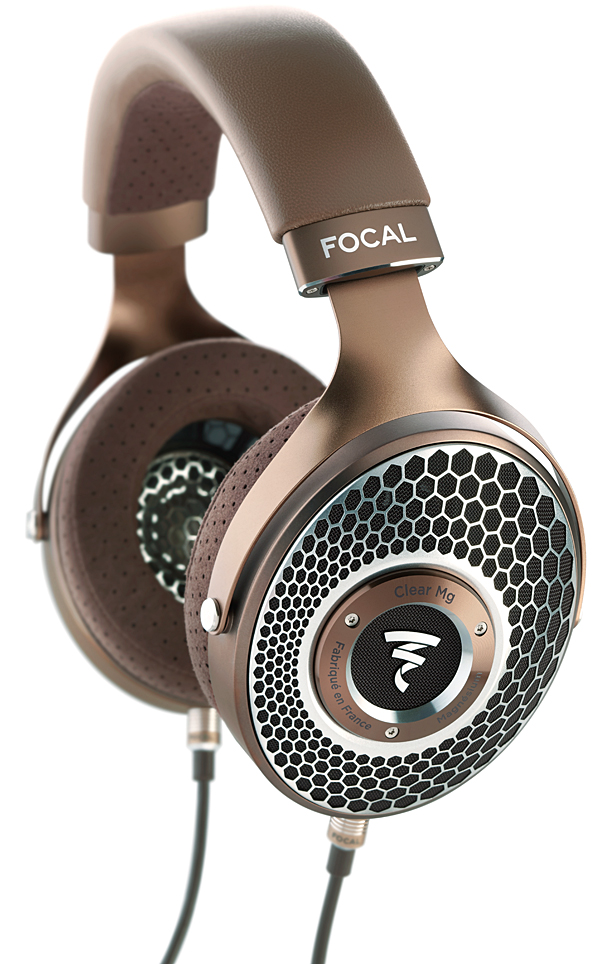 Now, Focal has introduced a stylish new Clear named the Clear Mg, which costs $1500.
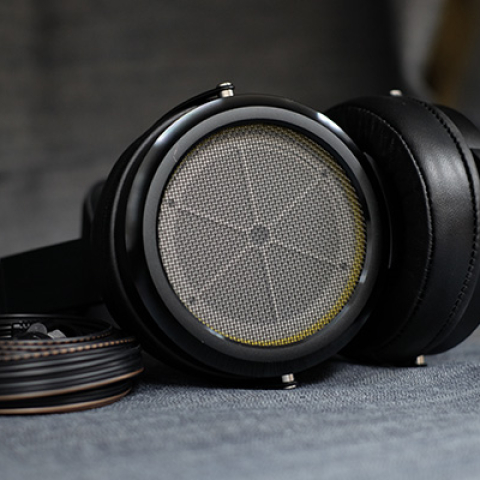
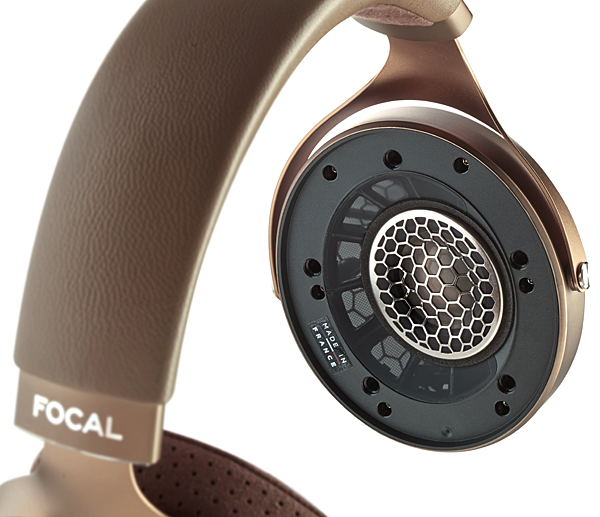
The Clear Mg's pure-magnesium domes are ensconced in a posh, chestnut-colored, honeycomb-grilled headset finished in leather, microfiber, and "mixed metals." It looks almost as luxurious as Focal's $2999.99 Stellia. The old, plain-gray Clear and the new, chestnut-colored Clear Mg look, feel, and sound substantially different, but price and specification-wise they are identical: 55 ohm impedance, 104dB/mW sensitivity. Both use 40mm M-profile dynamic drivers. Both headsets weigh 0.99lb (450gm).
The old Clears are naturally detailed—not overly sharp or hi-fi sounding—dynamic, and extremely easy-flowing. My only criticism of Focal's gray-colored Clear is that they are (don't laugh) a bit gray-sounding and low-contrast. The edges of sounds are slightly softened. Instrumental tones are slightly grayed. Images of performers are more shadowed than they are with Focal's new, brighter, sharper-sounding Clear Mg.
The new Clear is more clear than the old clear: instead of soft or gray, the Mg produces a fresh, bell-like clarity that puts my mind closer to and further inside every recording. Reverb has more presence with the Clear Mg. Piano notes have better-articulated attack and decay. Guitar strings are tauter and more vividly described.
Now, Focal has introduced a stylish new Clear named the Clear Mg, which costs $1500.
The Clear Mg's pure-magnesium domes are ensconced in a posh, chestnut-colored, honeycomb-grilled headset finished in leather, microfiber, and "mixed metals." It looks almost as luxurious as Focal's $2999.99 Stellia. The old, plain-gray Clear and the new, chestnut-colored Clear Mg look, feel, and sound substantially different, but price and specification-wise they are identical: 55 ohm impedance, 104dB/mW sensitivity. Both use 40mm M-profile dynamic drivers. Both headsets weigh 0.99lb (450gm).
The old Clears are naturally detailed—not overly sharp or hi-fi sounding—dynamic, and extremely easy-flowing. My only criticism of Focal's gray-colored Clear is that they are (don't laugh) a bit gray-sounding and low-contrast. The edges of sounds are slightly softened. Instrumental tones are slightly grayed. Images of performers are more shadowed than they are with Focal's new, brighter, sharper-sounding Clear Mg.
The new Clear is more clear than the old clear: instead of soft or gray, the Mg produces a fresh, bell-like clarity that puts my mind closer to and further inside every recording. Reverb has more presence with the Clear Mg. Piano notes have better-articulated attack and decay. Guitar strings are tauter and more vividly described.
 Let's take a minute and forget all that audiophile sound stuff and instead listen to a dead man's voice speaking to us from beyond the grave.
With the original Clear, I listened to Lefty Frizzell singing one of the most moving, tear-extracting songs ever recorded: his haunting cover of the Danny Dill/Marijohn Wilkin masterpiece "Long Black Veil" off of Lefty's greatest hits album, Look What Thoughts Will Do (16/44.1 FLAC, Columbia Legacy/Qobuz). I started sobbing. The pedal-steel cried with me, and the spring-reverb sounded just as I remember it from the original LP. The Clear let all of Lefty's dark poetry connect with my DNA.
Let's take a minute and forget all that audiophile sound stuff and instead listen to a dead man's voice speaking to us from beyond the grave.
With the original Clear, I listened to Lefty Frizzell singing one of the most moving, tear-extracting songs ever recorded: his haunting cover of the Danny Dill/Marijohn Wilkin masterpiece "Long Black Veil" off of Lefty's greatest hits album, Look What Thoughts Will Do (16/44.1 FLAC, Columbia Legacy/Qobuz). I started sobbing. The pedal-steel cried with me, and the spring-reverb sounded just as I remember it from the original LP. The Clear let all of Lefty's dark poetry connect with my DNA.
 When I listened again with the Clear Mg, the effect was more hi-fi, more emotionally distant. The doom and remorse in Lefty's voice were less accessible.
On every recording I tried, the new Clear Mg sounded more transparent, more sharply focused, more punchy, and more left-brain precise than the original Clear. But on every male and female vocal, the old Clear put me closer in touch with the singer's personality.
When I listened again with the Clear Mg, the effect was more hi-fi, more emotionally distant. The doom and remorse in Lefty's voice were less accessible.
On every recording I tried, the new Clear Mg sounded more transparent, more sharply focused, more punchy, and more left-brain precise than the original Clear. But on every male and female vocal, the old Clear put me closer in touch with the singer's personality.
The Atom's headphone amp: The second pillar of Naim Audio's parent company—the VerVent Group—is French manufacturer Focal, a company with a long history of making some of the world's finest loudspeakers and headphones. Together, Naim and Focal share a decades-long narrative of making products that treat build quality, product style, and quality of sound equally in an intelligent, no-detail-overlooked manner.
Naim's Uniti Atom HE and Focal's Stellia headphones ($2990) are promoted as a couple on Focal's website, so, to see what they were bragging about, I started my Uniti Atom headphone auditions with the Stellia closed-backs.
Atom + Susvara: The success of Naim's Uniti Atom HE driving Focal's supersensitive, low-impedance Stellia was a foregone conclusion. I wanted to know if the Atom's 1.5W headphone amp could produce enough current (got 250mA?) and voltage gain (got 20dB?) to power the 60 ohm, 83dB/mW, HiFiMan Susvara. That is a more difficult question.
When I switched to the much less expensive, much easier to drive (106dB/mW) Focal Clear Mg headphones, this intense, complex music opened up and spread out, becoming clearer and brighter. The IM gunk was gone.
Atom + ZMF Vérité: The 300 ohm, 99dB/mW, $2499.99 ZMF Vérité are the most subtly refined, overtly natural, highest-resolving closed-backs I've used. But their 300 ohm impedance makes them a little voltage hungry (got 7V?), and some amps can't deliver. Powered by ZMF's own Justin Weber–designed Pendant tube amplifier, the Vérité's angled, beryllium-sputtered, polyethylene-naphthalate drivers did speed, intoxicating microdynamics, and rabid three-dimensionality as well as any headphone at any price. Powered by Naim Audio's Uniti Atom HE, ZMF's Vérité sounded nano-detailed, micro'n'macro dynamic, and emotionally engaging—but not as rich of tone or three-dimensional as with the ZMF Pendant amplifier.
Atom + Abyss: No headphone shows me more of what's on a recording than the JPS Labs' Abyss AB-1266 Phi TC planar-magnetic open-backs, and the Phi TC's renowned resolving powers provide a unique tool for examining amp behavior. Their 47 ohm impedance and 88dB/mW sensitivity gave me an opportunity to see if the Atom HE's amplifier can breeze through Bill Frisell's "Outlaws" with a headphone only 5dB less challenging than the Susvara.
Before Focal's closed-back Stellia arrived, I was addicted to the proletarian comfort and straightforward musicality of Focal's dynamic, open-backed Clear headphones ($1495). I've used and enjoyed the aluminum-magnesium alloy–domed Clear almost every day since I reviewed them way back in GD22.
Now, Focal has introduced a stylish new Clear named the Clear Mg, which costs $1500.
The Clear Mg's pure-magnesium domes are ensconced in a posh, chestnut-colored, honeycomb-grilled headset finished in leather, microfiber, and "mixed metals." It looks almost as luxurious as Focal's $2999.99 Stellia. The old, plain-gray Clear and the new, chestnut-colored Clear Mg look, feel, and sound substantially different, but price and specification-wise they are identical: 55 ohm impedance, 104dB/mW sensitivity. Both use 40mm M-profile dynamic drivers. Both headsets weigh 0.99lb (450gm).
Let's take a minute and forget all that audiophile sound stuff and instead listen to a dead man's voice speaking to us from beyond the grave.
When I listened again with the Clear Mg, the effect was more hi-fi, more emotionally distant. The doom and remorse in Lefty's voice were less accessible.
On every recording I tried, the new Clear Mg sounded more transparent, more sharply focused, more punchy, and more left-brain precise than the original Clear. But on every male and female vocal, the old Clear put me closer in touch with the singer's personality.