The first sound I heard, from Masked and Anonymous, was the explosive voice of John Goodman, saying, "Man has the mind of God but a body of dust . . . God does not suffer!" Next came Bob Dylan's "My Back Pages," performed (and sung in Japanese) by the Magokoro Brothers. One line into the next track—Shirley Caesar singing Dylan's "Gotta Serve Somebody"—and I was laughing at the amount of change I heard. I was also worried about how to tell you about it. Sure, there was less noise, more dark and empty space, less hashy veiling, etc. What's most difficult to describe was how the music seemed to go from indirect and fuzzy to a condition of extreme directness. Think presence plus enhanced clarity and momentum. I admire and desire these rare traits of high-fidelity sound more than any others, and the Niagara 1000's ability to deliver them was not subtle. It was as if my system had gotten a heart-shot of adrenalin. I'll stake my reputation as a reviewer on it: This $1000 chrome thingy delivered an adventure-enhancing clarity, speed, and directness that I am suddenly unprepared to live without.
Dylan's "Most of the Time," performed by Sophie Zelmani, went from nice, interesting, easy listening to a powerful, hypervivid poetic event. This effect only increased as I added to the Niagara 1000 the AC plugs of my DAC, preamp, and phono stages. I heard no improvement by just using the Niagara with only my Palmer 2.0 or Roksan Radius 7 turntable. I still plug those, and whatever product I'm reviewing, directly into my 123VAC, 59.78Hz Brooklyn power.
Really, folks . . . I am by nature a preacher and pontificator, but as an audio journalist I try, mostly without success, to avoid being a fabulist. And I'm here to tell you, AudioQuest's Niagara 1000 delivered conspicuously—as in 100% double-blind recognizable—more tangibly real, jumpin', jivin', easier-to-follow music than my Brooklyn wall power. It might be the single most important, most high-value component I've auditioned for Stereophile.
HiFiMan HE1000 V2 headphones
Former acid-house club DJ Gilles Peterson, of Caen, France, got his start in South London's pirate-radio movement in the early 1980s. Today he hosts an eponymously titled weekly show on BBC Radio 6, and travels the globe spinning musical gospel by the likes of James Blake (London), Flying Lotus (Los Angeles), Acid Arab (Paris), and Sun Ra (Birmingham, Alabama). Peterson doesn't stop there; he's started three record labels, and works as an A&R man, and a producer, remixer, and curator of recordings. Peterson's taste in music is so eclectic and high-level that he's replaced legendary BBC DJ John Peel (1939–2004) as today's go-to man for new musical discoveries.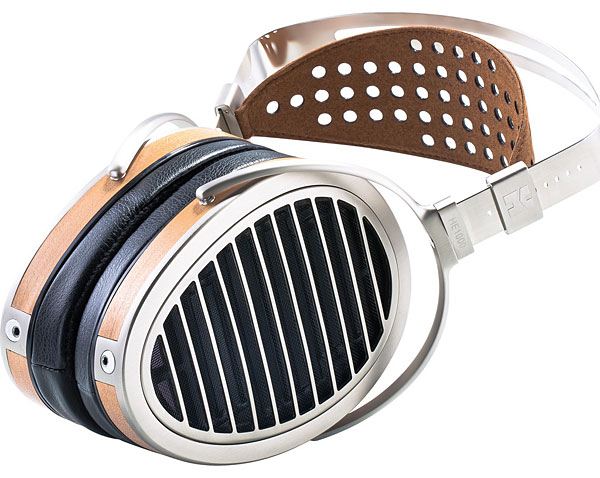 I doubt that Dr. Fang Bian knows much about Gilles Peterson, but the new V2 version of his HiFiMan HE1000 headphones (footnote 2) is today playing the livin' international outer-space bejesus out of all of the abovementioned artists, and especially Gilles Peterson Presents Sun Ra and His Arkestra: "To Those of Earth and Other Worlds" (2 LPs and 2 CDs, Strut 125). What's better than music and audio globalism? Audio-musical galacticism!
Fang Bian founded HiFiMan in 2007. He and his main competitor, Audeze, founded a year later, practically invented today's hurricane-paced world of high-quality personal audio. HiFiMan has spent the last decade raising the bar of what's possible with planar-magnetic headphones, while also creating some of the highest-quality, moderately priced planar-magnetic models—eg, the esteemed HE400S ($299) and HE400i ($449).
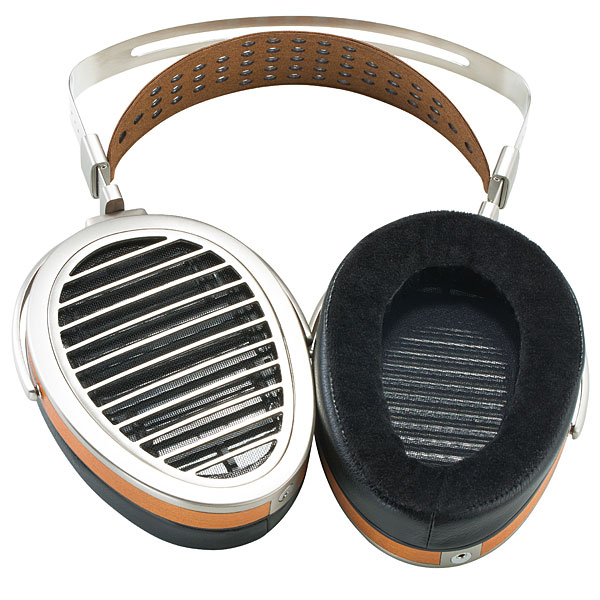
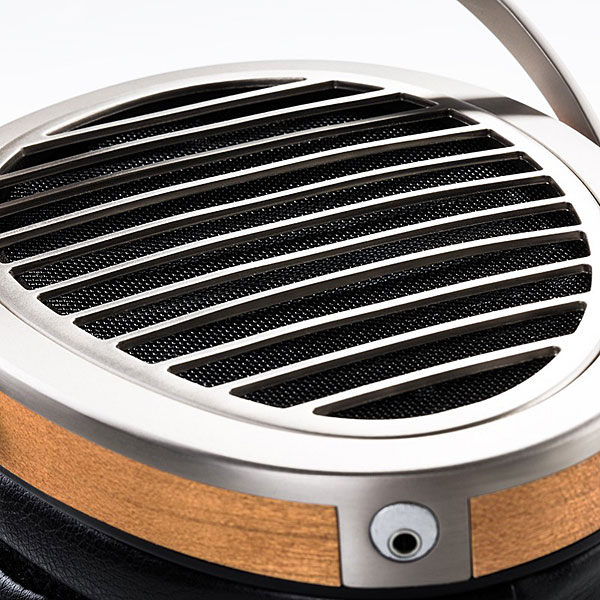
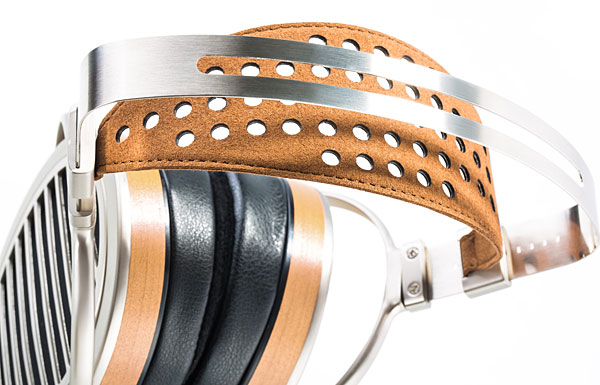
The V2 is a significant and multifaceted upgrade of the HE1000, though the price remains unchanged: $2999. The biggest change is the new "nanometer thickness" diaphragm—which, without disclosing its actual thickness, HiFiMan claims is the largest, lightest diaphragm in the history of headphones, and the only one made in the shape of the human ear. The impedance is 35 ohms, the sensitivity a low 90dB. The HE1000s' weight has been reduced from 16.9 to 14.8oz in the V2, and the earcup depth by 0.12". The HE1000 V2s are, to my taste, the most artfully designed, timeless-looking, ultra-high-tech headphones on the market.
I doubt that Dr. Fang Bian knows much about Gilles Peterson, but the new V2 version of his HiFiMan HE1000 headphones (footnote 2) is today playing the livin' international outer-space bejesus out of all of the abovementioned artists, and especially Gilles Peterson Presents Sun Ra and His Arkestra: "To Those of Earth and Other Worlds" (2 LPs and 2 CDs, Strut 125). What's better than music and audio globalism? Audio-musical galacticism!
Fang Bian founded HiFiMan in 2007. He and his main competitor, Audeze, founded a year later, practically invented today's hurricane-paced world of high-quality personal audio. HiFiMan has spent the last decade raising the bar of what's possible with planar-magnetic headphones, while also creating some of the highest-quality, moderately priced planar-magnetic models—eg, the esteemed HE400S ($299) and HE400i ($449).
The V2 is a significant and multifaceted upgrade of the HE1000, though the price remains unchanged: $2999. The biggest change is the new "nanometer thickness" diaphragm—which, without disclosing its actual thickness, HiFiMan claims is the largest, lightest diaphragm in the history of headphones, and the only one made in the shape of the human ear. The impedance is 35 ohms, the sensitivity a low 90dB. The HE1000s' weight has been reduced from 16.9 to 14.8oz in the V2, and the earcup depth by 0.12". The HE1000 V2s are, to my taste, the most artfully designed, timeless-looking, ultra-high-tech headphones on the market.
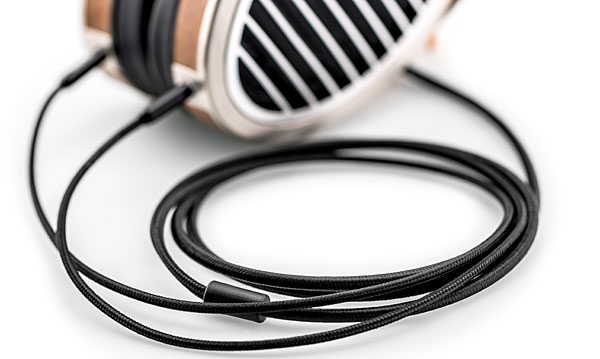
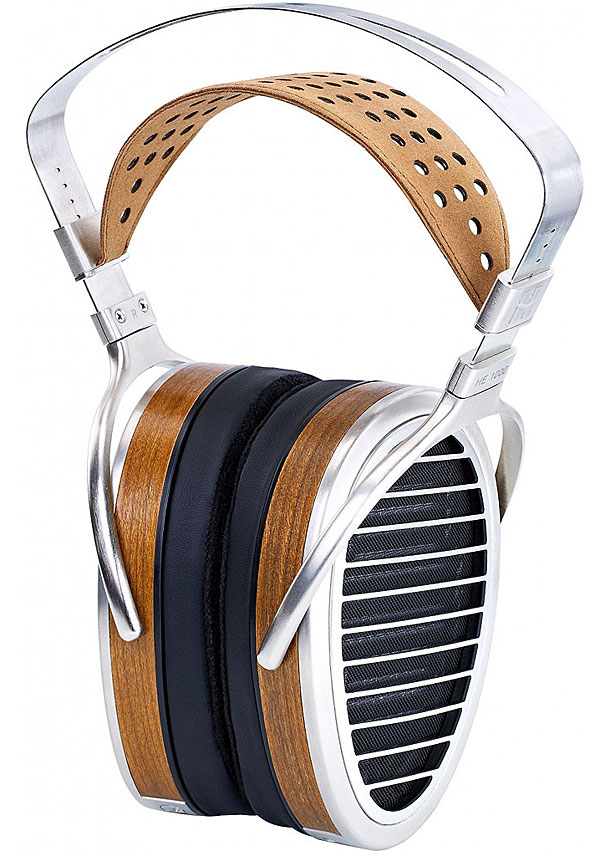 The V2 earpads are thicker and more asymmetrical than the originals, to better "conform to more heads." The outside of the earpads is still made of pleather (ie, plastic "leather"), but to "increase sound transparency," the part of the pad that contacts the head is now made of polyester, not velour. To enhance durability, three new, "stronger" cables are included, each with three conductors of crystalline copper and silver, one each terminated with a ¼" plug, a 3.5mm plug, and a four-pin XLR. (The original HE1000s had two-conductor cables foe each earpiece.)
I used my iPhone 7 and four amplifiers while auditioning the HiFiMan HE1000 V2s: the Simaudio Moon Neo 430HA, the Pass Labs HPA-1, the Mytek Brooklyn, and Linear Tube Audio's recently updated (power supply, 12SN7 tubes) microZOTL2.0 (Follow-Up on the way). The HE1000 V2s played music as well as whatever DAC and headphone amp I used. Although they're relatively insensitive, the HiFiMans were consistently more sonically invisible than the amplifiers I plugged them into. They never seemed to drag an amp down. They were also more invisible than the original HE1000s, which I loved for their robust clarity and spiderweb detail. The V2s sounded quicker, more electrostat-like, with an improved octave-to-octave energy balance that I experienced as more analytic than robust or sensual. The HE1000s are very transparent; the V2s are extremely transparent, and excel at imaging and spatiality. Only the Focal Utopia, and Stax SR-009 headphones might rival them in these areas.
The V2 earpads are thicker and more asymmetrical than the originals, to better "conform to more heads." The outside of the earpads is still made of pleather (ie, plastic "leather"), but to "increase sound transparency," the part of the pad that contacts the head is now made of polyester, not velour. To enhance durability, three new, "stronger" cables are included, each with three conductors of crystalline copper and silver, one each terminated with a ¼" plug, a 3.5mm plug, and a four-pin XLR. (The original HE1000s had two-conductor cables foe each earpiece.)
I used my iPhone 7 and four amplifiers while auditioning the HiFiMan HE1000 V2s: the Simaudio Moon Neo 430HA, the Pass Labs HPA-1, the Mytek Brooklyn, and Linear Tube Audio's recently updated (power supply, 12SN7 tubes) microZOTL2.0 (Follow-Up on the way). The HE1000 V2s played music as well as whatever DAC and headphone amp I used. Although they're relatively insensitive, the HiFiMans were consistently more sonically invisible than the amplifiers I plugged them into. They never seemed to drag an amp down. They were also more invisible than the original HE1000s, which I loved for their robust clarity and spiderweb detail. The V2s sounded quicker, more electrostat-like, with an improved octave-to-octave energy balance that I experienced as more analytic than robust or sensual. The HE1000s are very transparent; the V2s are extremely transparent, and excel at imaging and spatiality. Only the Focal Utopia, and Stax SR-009 headphones might rival them in these areas.
 From Outer to Inner Space: Which brings me back to Gilles Peterson's epic Sun Ra compilation, "To Those of Earth and Other Worlds." This set of two CDs and two LPs is beyond perfect for evaluating headphones and speakers because, over the course of the LP set's 16 long tracks, it has everything: a wide range of instruments, dialogue and singing, celestial spaces, subtle and gross dynamic episodes, and, best of all, the artful charm and inspired free jazz of Herman Poole Blount, aka Le Sony'r Ra, aka Sun Ra.
I have two kinds of friends: those who prefer cool 1950s jazz and those who prefer angry '60s jazz. Some, like me, think jazz ended with Louis Armstrong, then returned in the '60s with an alternative, painterly jazz that I've always called the Albert Ayler Effect. Among its so-called "free jazz" practitioners, I best understand Ornette Coleman, late Miles Davis, John Zorn, and Sun Ra. None of my friends appreciate Ra. That's because they have yet to experience the super-sophisticated version of his Myth-Science Arkestra playing "On Jupiter" or "Blackman" in the sound quality audible on Gilles Peterson's compilation.
From Outer to Inner Space: Which brings me back to Gilles Peterson's epic Sun Ra compilation, "To Those of Earth and Other Worlds." This set of two CDs and two LPs is beyond perfect for evaluating headphones and speakers because, over the course of the LP set's 16 long tracks, it has everything: a wide range of instruments, dialogue and singing, celestial spaces, subtle and gross dynamic episodes, and, best of all, the artful charm and inspired free jazz of Herman Poole Blount, aka Le Sony'r Ra, aka Sun Ra.
I have two kinds of friends: those who prefer cool 1950s jazz and those who prefer angry '60s jazz. Some, like me, think jazz ended with Louis Armstrong, then returned in the '60s with an alternative, painterly jazz that I've always called the Albert Ayler Effect. Among its so-called "free jazz" practitioners, I best understand Ornette Coleman, late Miles Davis, John Zorn, and Sun Ra. None of my friends appreciate Ra. That's because they have yet to experience the super-sophisticated version of his Myth-Science Arkestra playing "On Jupiter" or "Blackman" in the sound quality audible on Gilles Peterson's compilation.
 Great audio systems are those that can reproduce complex music such as Sun Ra's with ease and panache—those like the HiFiMan HE1000 V2s driven by the Pass HPA-1. This kind of ease is not about high highs or tight lows or even spectacular transparency. It's about balance, flow, and composure—things at which the V2s are masters. The V2s did serpentine flow better than any headphones I know. Their transparency was not simply audiophile "super-clarity"; its unique viscosity made me feel as if I were physically immersed in the sound. As if I could feel the air I'm breathing while standing near the stage. I felt this stage air on my face because the texture of the entire space felt real. Very few audio components accomplish this.
The texture and density of the HE1000 V2's spatial recreations radically changed with each amp I tried. Air had the greatest density with the Mytek Brooklyn DAC–preamp–headphone amp; it felt strikingly tangible, but it was too dense for the Arkestra. The Simaudio Moon Neo 430HA delivered the thinnest space—almost a vacuum. In between, the Pass Labs HPA-1 added a kind of vaporous ether that was extremely fine and evenly dispersed, and contributed a sense of spatial connectedness. With the HPA-1, details were never over-etched or sculpted in aural bas-relief, because the Pass Labs' rarefied ether smoothed their pointy edges.
Great audio systems are those that can reproduce complex music such as Sun Ra's with ease and panache—those like the HiFiMan HE1000 V2s driven by the Pass HPA-1. This kind of ease is not about high highs or tight lows or even spectacular transparency. It's about balance, flow, and composure—things at which the V2s are masters. The V2s did serpentine flow better than any headphones I know. Their transparency was not simply audiophile "super-clarity"; its unique viscosity made me feel as if I were physically immersed in the sound. As if I could feel the air I'm breathing while standing near the stage. I felt this stage air on my face because the texture of the entire space felt real. Very few audio components accomplish this.
The texture and density of the HE1000 V2's spatial recreations radically changed with each amp I tried. Air had the greatest density with the Mytek Brooklyn DAC–preamp–headphone amp; it felt strikingly tangible, but it was too dense for the Arkestra. The Simaudio Moon Neo 430HA delivered the thinnest space—almost a vacuum. In between, the Pass Labs HPA-1 added a kind of vaporous ether that was extremely fine and evenly dispersed, and contributed a sense of spatial connectedness. With the HPA-1, details were never over-etched or sculpted in aural bas-relief, because the Pass Labs' rarefied ether smoothed their pointy edges.
 As usual, Linear Tube Audio's microZOTL2.0 overachieved in its liquid, June-sun way, ever so slightly wetting up the HiFiMans' slightly dry sound. It was funny to note that my juicy Audeze LCD-X headphones sound perfect with the almost-cool, but neither wet nor dry Moon Neo 430HA, and that the V2s perfectly balanced out their yin/yang thing with the microZOTL2.0. I can never overemphasize the importance of matching headphone amps to the headphones they drive—especially at the level of the best, where subtle issues become magnified.
But here's the extraordinary part: The 35-ohm HE1000 V2s have a sensitivity of 90dB, which meant that I needed to turn up the volume only a little bit more with the above amps. This lowish sensitivity never once let the music hesitate, or lack for sparkle or momentum—not even with my iPhone 7.
As usual, Linear Tube Audio's microZOTL2.0 overachieved in its liquid, June-sun way, ever so slightly wetting up the HiFiMans' slightly dry sound. It was funny to note that my juicy Audeze LCD-X headphones sound perfect with the almost-cool, but neither wet nor dry Moon Neo 430HA, and that the V2s perfectly balanced out their yin/yang thing with the microZOTL2.0. I can never overemphasize the importance of matching headphone amps to the headphones they drive—especially at the level of the best, where subtle issues become magnified.
But here's the extraordinary part: The 35-ohm HE1000 V2s have a sensitivity of 90dB, which meant that I needed to turn up the volume only a little bit more with the above amps. This lowish sensitivity never once let the music hesitate, or lack for sparkle or momentum—not even with my iPhone 7.
 With HiFiMan's included 3.5mm-terminated cable and AudioQuest's DragonFly Red USB DAC-headphone amplifier, the V2s played Tidal streams and Chesky downloads better than I'd ever dreamed possible. Who needs a hi-fi? Passengers on Brooklyn's L and G trains opened their eyes wide when they saw (and heard) me listening to Sun Ra through the fully open-backed HE1000 V2s. A gray-haired teen even gave me a hug and handed me her signed copy of Tao Lin's novel Eeeee Eee Eeee. That type of fun will never happen with the Abyss AB-1266es.
In the End: The HE1000 V2s are luxury audiophile headphones that must be regarded among that elite group we call "the best." Are the HE1000 V2s better than Audeze's LCD-4s ($3995)? I think so. I love my Audeze LCD-Xes ($1699)—they remain unchallenged as my day-in, day-out 'phones for enjoying music. But I feel certain that the HE1000 V2s are more truthful, more transparent, and way more comfortable than any Audeze model. Are the HE1000 V2s better than Focal's Utopias ($3999)? Perhaps, but I doubt it. Sadly, my Utopias have been returned to their French masters, so I couldn't directly compare, but they and the HiFiMan HE1000 V2s danced and sang at similar levels of personal-audio wonderfulness. And that is how "best" I think this latest upgrade from Dr. Fang Bian is.
With HiFiMan's included 3.5mm-terminated cable and AudioQuest's DragonFly Red USB DAC-headphone amplifier, the V2s played Tidal streams and Chesky downloads better than I'd ever dreamed possible. Who needs a hi-fi? Passengers on Brooklyn's L and G trains opened their eyes wide when they saw (and heard) me listening to Sun Ra through the fully open-backed HE1000 V2s. A gray-haired teen even gave me a hug and handed me her signed copy of Tao Lin's novel Eeeee Eee Eeee. That type of fun will never happen with the Abyss AB-1266es.
In the End: The HE1000 V2s are luxury audiophile headphones that must be regarded among that elite group we call "the best." Are the HE1000 V2s better than Audeze's LCD-4s ($3995)? I think so. I love my Audeze LCD-Xes ($1699)—they remain unchallenged as my day-in, day-out 'phones for enjoying music. But I feel certain that the HE1000 V2s are more truthful, more transparent, and way more comfortable than any Audeze model. Are the HE1000 V2s better than Focal's Utopias ($3999)? Perhaps, but I doubt it. Sadly, my Utopias have been returned to their French masters, so I couldn't directly compare, but they and the HiFiMan HE1000 V2s danced and sang at similar levels of personal-audio wonderfulness. And that is how "best" I think this latest upgrade from Dr. Fang Bian is.
Footnote 2: HiFiMan, 2602 Beltagh Avenue, Bellmore, NY 11710. Tel: (201) 443-4626. Web: www.hifiman.com.
Former acid-house club DJ Gilles Peterson, of Caen, France, got his start in South London's pirate-radio movement in the early 1980s. Today he hosts an eponymously titled weekly show on BBC Radio 6, and travels the globe spinning musical gospel by the likes of James Blake (London), Flying Lotus (Los Angeles), Acid Arab (Paris), and Sun Ra (Birmingham, Alabama). Peterson doesn't stop there; he's started three record labels, and works as an A&R man, and a producer, remixer, and curator of recordings. Peterson's taste in music is so eclectic and high-level that he's replaced legendary BBC DJ John Peel (1939–2004) as today's go-to man for new musical discoveries.
I doubt that Dr. Fang Bian knows much about Gilles Peterson, but the new V2 version of his HiFiMan HE1000 headphones (footnote 2) is today playing the livin' international outer-space bejesus out of all of the abovementioned artists, and especially Gilles Peterson Presents Sun Ra and His Arkestra: "To Those of Earth and Other Worlds" (2 LPs and 2 CDs, Strut 125). What's better than music and audio globalism? Audio-musical galacticism!
Fang Bian founded HiFiMan in 2007. He and his main competitor, Audeze, founded a year later, practically invented today's hurricane-paced world of high-quality personal audio. HiFiMan has spent the last decade raising the bar of what's possible with planar-magnetic headphones, while also creating some of the highest-quality, moderately priced planar-magnetic models—eg, the esteemed HE400S ($299) and HE400i ($449).
The V2 earpads are thicker and more asymmetrical than the originals, to better "conform to more heads." The outside of the earpads is still made of pleather (ie, plastic "leather"), but to "increase sound transparency," the part of the pad that contacts the head is now made of polyester, not velour. To enhance durability, three new, "stronger" cables are included, each with three conductors of crystalline copper and silver, one each terminated with a ¼" plug, a 3.5mm plug, and a four-pin XLR. (The original HE1000s had two-conductor cables foe each earpiece.)
I used my iPhone 7 and four amplifiers while auditioning the HiFiMan HE1000 V2s: the Simaudio Moon Neo 430HA, the Pass Labs HPA-1, the Mytek Brooklyn, and Linear Tube Audio's recently updated (power supply, 12SN7 tubes) microZOTL2.0 (Follow-Up on the way). The HE1000 V2s played music as well as whatever DAC and headphone amp I used. Although they're relatively insensitive, the HiFiMans were consistently more sonically invisible than the amplifiers I plugged them into. They never seemed to drag an amp down. They were also more invisible than the original HE1000s, which I loved for their robust clarity and spiderweb detail. The V2s sounded quicker, more electrostat-like, with an improved octave-to-octave energy balance that I experienced as more analytic than robust or sensual. The HE1000s are very transparent; the V2s are extremely transparent, and excel at imaging and spatiality. Only the Focal Utopia, and Stax SR-009 headphones might rival them in these areas.
From Outer to Inner Space: Which brings me back to Gilles Peterson's epic Sun Ra compilation, "To Those of Earth and Other Worlds." This set of two CDs and two LPs is beyond perfect for evaluating headphones and speakers because, over the course of the LP set's 16 long tracks, it has everything: a wide range of instruments, dialogue and singing, celestial spaces, subtle and gross dynamic episodes, and, best of all, the artful charm and inspired free jazz of Herman Poole Blount, aka Le Sony'r Ra, aka Sun Ra.
I have two kinds of friends: those who prefer cool 1950s jazz and those who prefer angry '60s jazz. Some, like me, think jazz ended with Louis Armstrong, then returned in the '60s with an alternative, painterly jazz that I've always called the Albert Ayler Effect. Among its so-called "free jazz" practitioners, I best understand Ornette Coleman, late Miles Davis, John Zorn, and Sun Ra. None of my friends appreciate Ra. That's because they have yet to experience the super-sophisticated version of his Myth-Science Arkestra playing "On Jupiter" or "Blackman" in the sound quality audible on Gilles Peterson's compilation.
Great audio systems are those that can reproduce complex music such as Sun Ra's with ease and panache—those like the HiFiMan HE1000 V2s driven by the Pass HPA-1. This kind of ease is not about high highs or tight lows or even spectacular transparency. It's about balance, flow, and composure—things at which the V2s are masters. The V2s did serpentine flow better than any headphones I know. Their transparency was not simply audiophile "super-clarity"; its unique viscosity made me feel as if I were physically immersed in the sound. As if I could feel the air I'm breathing while standing near the stage. I felt this stage air on my face because the texture of the entire space felt real. Very few audio components accomplish this.
As usual, Linear Tube Audio's microZOTL2.0 overachieved in its liquid, June-sun way, ever so slightly wetting up the HiFiMans' slightly dry sound. It was funny to note that my juicy Audeze LCD-X headphones sound perfect with the almost-cool, but neither wet nor dry Moon Neo 430HA, and that the V2s perfectly balanced out their yin/yang thing with the microZOTL2.0. I can never overemphasize the importance of matching headphone amps to the headphones they drive—especially at the level of the best, where subtle issues become magnified.
But here's the extraordinary part: The 35-ohm HE1000 V2s have a sensitivity of 90dB, which meant that I needed to turn up the volume only a little bit more with the above amps. This lowish sensitivity never once let the music hesitate, or lack for sparkle or momentum—not even with my iPhone 7.
With HiFiMan's included 3.5mm-terminated cable and AudioQuest's DragonFly Red USB DAC-headphone amplifier, the V2s played Tidal streams and Chesky downloads better than I'd ever dreamed possible. Who needs a hi-fi? Passengers on Brooklyn's L and G trains opened their eyes wide when they saw (and heard) me listening to Sun Ra through the fully open-backed HE1000 V2s. A gray-haired teen even gave me a hug and handed me her signed copy of Tao Lin's novel Eeeee Eee Eeee. That type of fun will never happen with the Abyss AB-1266es.
In the End: The HE1000 V2s are luxury audiophile headphones that must be regarded among that elite group we call "the best." Are the HE1000 V2s better than Audeze's LCD-4s ($3995)? I think so. I love my Audeze LCD-Xes ($1699)—they remain unchallenged as my day-in, day-out 'phones for enjoying music. But I feel certain that the HE1000 V2s are more truthful, more transparent, and way more comfortable than any Audeze model. Are the HE1000 V2s better than Focal's Utopias ($3999)? Perhaps, but I doubt it. Sadly, my Utopias have been returned to their French masters, so I couldn't directly compare, but they and the HiFiMan HE1000 V2s danced and sang at similar levels of personal-audio wonderfulness. And that is how "best" I think this latest upgrade from Dr. Fang Bian is.
Footnote 2: HiFiMan, 2602 Beltagh Avenue, Bellmore, NY 11710. Tel: (201) 443-4626. Web: www.hifiman.com.