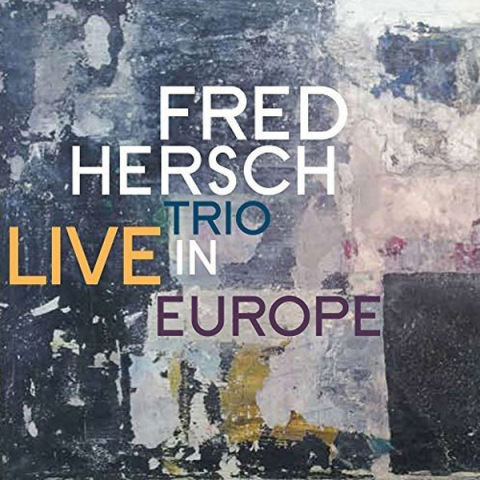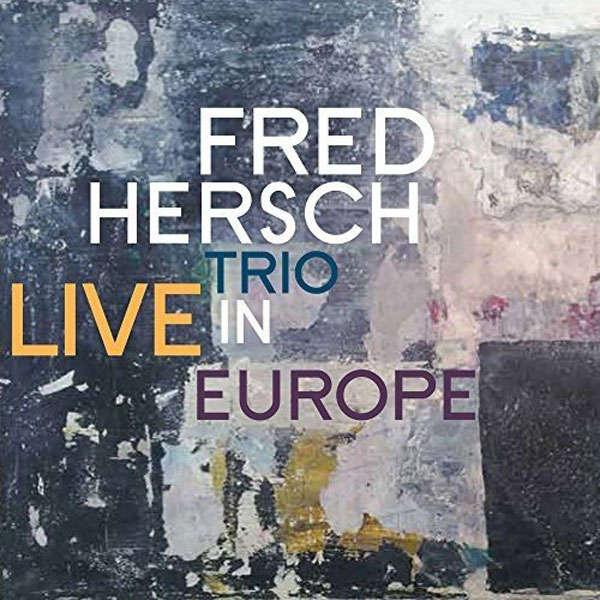
At age 62, pianist Fred Hersch is playing as rousingly and rivetingly as ever. His latest disc, Live in Europe (on the Palmetto label), may be his best trio album to date.
It also highlights another, less-noted trait—his restlessness. Hersch's sound is familiarly distinctive, but he never falls back on old tricks. He is known for his lush harmonies and galvanic rhythms. He'll occasionally toss a discordant number into a set, but it often comes off as an excursion. Here, though, he weaves the lyrical and the adventurous into a seamless web. His touch is, at times, both fleet and percussive, measured but swinging.
The album's 10 tracks range farther and wider than most—two tunes by Monk, two by Wayne Shorter, and the rest originals, one of them inspired by Sonny Rollins' calypsos. Hersch has long had a peculiarly deep feel for Monk. His 1997 album, Thelonious, is one of the very few covers by any pianist that captures the spirit of Monk's music in a thoroughly original manner, without a hint of mere imitativeness. (Jason Moran is the only other pianist I can think of who pulls off this trick, and he does it in a still different way.) Here he takes Monk's "We See" on a jitterbug ride unlike any I've witnessed (I'd like to see him play this accompanied with tap dancer).
Live in Europe marks the first time, as far as I can remember, that Hersch has covered Shorter, and his treatment of "Miyako," in particular, flows with rapids and tremolos reminiscent of Debussy. "Newklyso," his Rollins tribute, grooves with a joy fully worthy of the saxophone colossus. "The Big Easy," another original, simmers with the ambling mystery of a New Orleans noir.
Hersch's long-active bandmates—John Hebert on bass and Eric McPherson on drums—are also in superb form.
Finally, the sound quality is excellent. Hersch writes in the liner notes that he didn't intend to release this Fall 2017 concert as an album, but the acoustics (at Flagey Studios 4, a renowned hall in Brussels' former National Institute for Radio Broadcasting) were wondrous, the piano was in great shape, and the house recording (miked by Stef Lenaerts) captured it all. So he took it to Rick Kwan for the mixing, Mark Wilder for the mastering—and here we have a terrific album, by all measures.