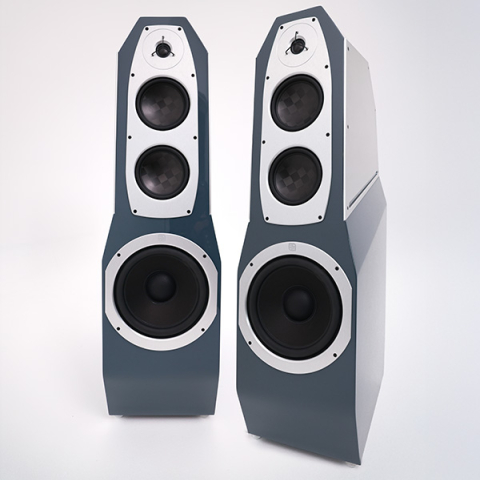
 Hankering for a recording with a greater sense of space and place, I moved to another recording by Les Siècles, one that has become a favorite of mine, Fauré's Requiem Op.48, which adds the vocal group Ensemble Aedes to the mix, both ensembles conducted by Mathieu Romano (24/96 FLAC, Aparté AP201). This piece was recorded in Abbaye de Lessay, in Manche, which offers a warm acoustic without loss of detail. From the first, defining pedal, everything was sweet and clear, and the AURAs delivered the voices and instruments distinct from the enveloping ambience. However, I heard less of the bass line than I have in the past from this recording.
Is it all about the bass?
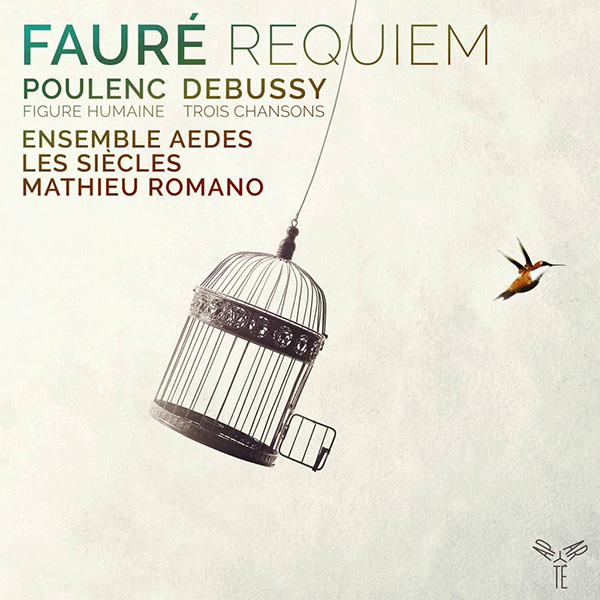
Hankering for a recording with a greater sense of space and place, I moved to another recording by Les Siècles, one that has become a favorite of mine, Fauré's Requiem Op.48, which adds the vocal group Ensemble Aedes to the mix, both ensembles conducted by Mathieu Romano (24/96 FLAC, Aparté AP201). This piece was recorded in Abbaye de Lessay, in Manche, which offers a warm acoustic without loss of detail. From the first, defining pedal, everything was sweet and clear, and the AURAs delivered the voices and instruments distinct from the enveloping ambience. However, I heard less of the bass line than I have in the past from this recording.
Is it all about the bass?To follow up on that point, I listened to some recordings that feature oktavists, singers whose range extends below that of a basso profundo, "down to contra B flat and lower in a choral setting." (footnote 3) Among those in my library, the contribution of the oktavists is clearest on Rachmaninoff 's All-Night Vigil (aka Vespers), as performed by Gloriæ De Cantores joined by members of the St. Romanos Cappella, the Patriarch Tikhon Choir, and the Washington Master Chorale, all under Peter Jermihov (SACD, Gloriae Dei Cantores, GDCD 063, also available as a half-speed–mastered 45rpm, 2-LP set). This performance incorporates seven oktavists among 22 bassos. The AURAs did a grand job with this landmark performance, depicting the large chorus with subtle, wide dynamics in a wide, tall, deep soundstage. The oktavists contributed greatly to the richness of the chorus, but they can best be heard in Part 5, "Nunc Dimittus," listed as "Now Lettest Thou." As this part is ending, the music descends in pitch until only the oktavists are left to sing the final notes. The AURAs let me hear and appreciate the oktavists' contributions and to contrast this with the many recordings of the Vespers that employ only "regular" bassos. Those deep, otherworldly tones were stunning.
 Still, I'd have liked a bit more from the lowest notes—which by the way go down around 58Hz. Via the AURAs, a normal low voice, such as Hans Theessink's in "Late Last Night" from Burmester's Vorführungs - CD II (Burmester Art for the Ear, no catalog number), displayed the expected gruff tonality in full. The AURAs did justice to the accompanying trombone and tuba. The percussion had kick. But if I pushed the AURAs with "The Flight of the Cosmic Hippo" (Bela Fleck, Warner Bros. 9 26562-2, CD) or with my favorite recording of Mendelssohn's first organ sonata with Thomas Murray (CD, Raven 390), I heard everything there was down to the lows in the second verse of "Hippo" and all the pedal tones in the last movement of the Mendelssohn, but I didn't feel the bass, and there was much less bass energy in the room than I am accustomed to. Although the AURAs have an extended low frequency response as would be expected from their size and use of a 10" woofer, their bass rolloff sounds like it begins rather high up—but hang on just a minute.
I chose this moment to switch to the Benchmark AHB2 monoblocks to see if what I was hearing was related to amp/speaker matching. It was. I have swapped power amplifiers many times while reviewing speakers. I have even done so with these particular amplifiers, the NAD and Benchmarks, and struggled to describe the subtle differences I heard. But this time it was easy. Using the Benchmarks with the AURAs, the bass was improved so much that the light bass I heard previously was no longer an issue. The above caveats no longer apply.
 The gloves are off
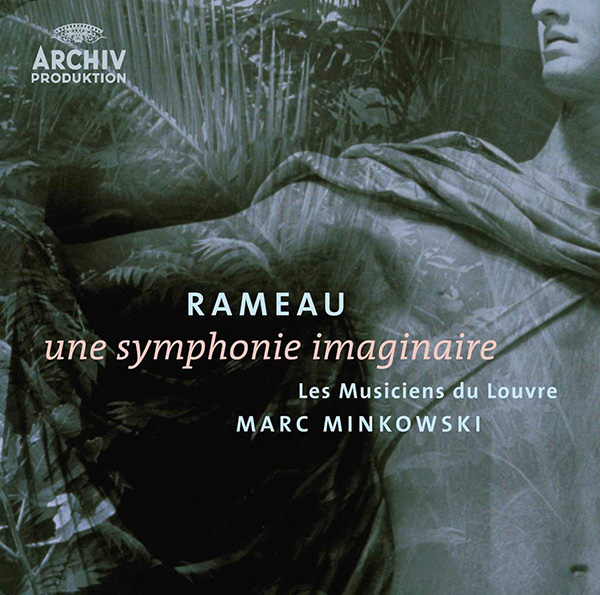
I usually save the "big" music for the end of a review, and I am glad I did so with the AURAs, now powered by the monoblock Benchmark AHB2s. The opening drum salvo of Rameau's "Zaïs – Ouverture" from Une Symphonie Imaginaire, by Marc Minkowski and Les Musiciens du Louvre (SACD, DGG Archiv 00289 477 5578), was proof positive that all was well. When the whacks got louder to set the tempo, the strings and winds exploded with the joyful melody, filling a wide and deep soundstage.
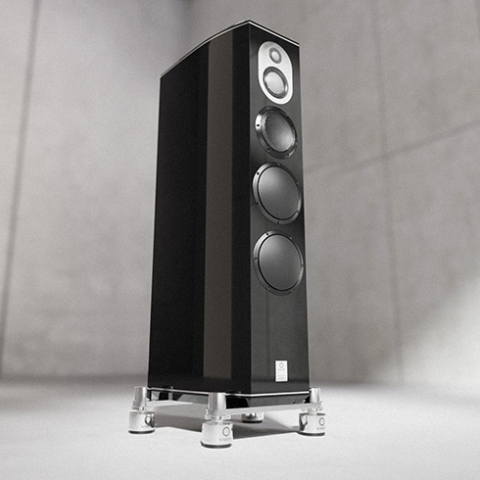
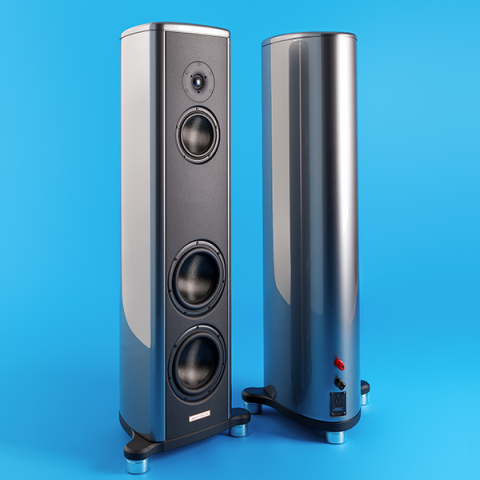
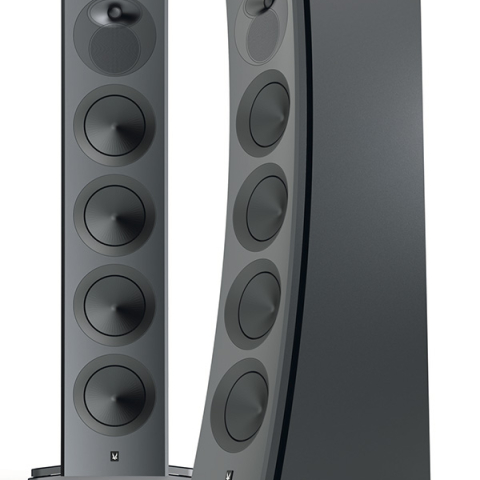
I compared the Estelon AURAs with my KEF Blade 2 Metas, driven by the Benchmark amps. The results were fascinating. Direct comparison highlighted the AURAs' impressively pellucid and detailed soundstage, which, by contrast, made the KEFs seem somewhat relaxed. The AURA soundstage stretched across the room, with lots of immediacy in the speaker plane, while the KEFs depicted a soundstage that was both wider and deeper. The AURAs' bass was somewhat less full and less extended than that of the Blades, but this might have escaped my notice had I not been sensitized to it by my prior experience with the NAD amp. Perhaps a different amplifier would relevel the playing field, even more than the Benchmark amps already had. Moreover, this is the part of the spectrum most affected by room acoustics and placement. I should also note that the AURA's tight bass will suit the tastes of many listeners and will certainly be kinder to neighbors. For those still not fully satisfied, adding a subwoofer could resolve this, if not for their neighbors.
 Conclusions
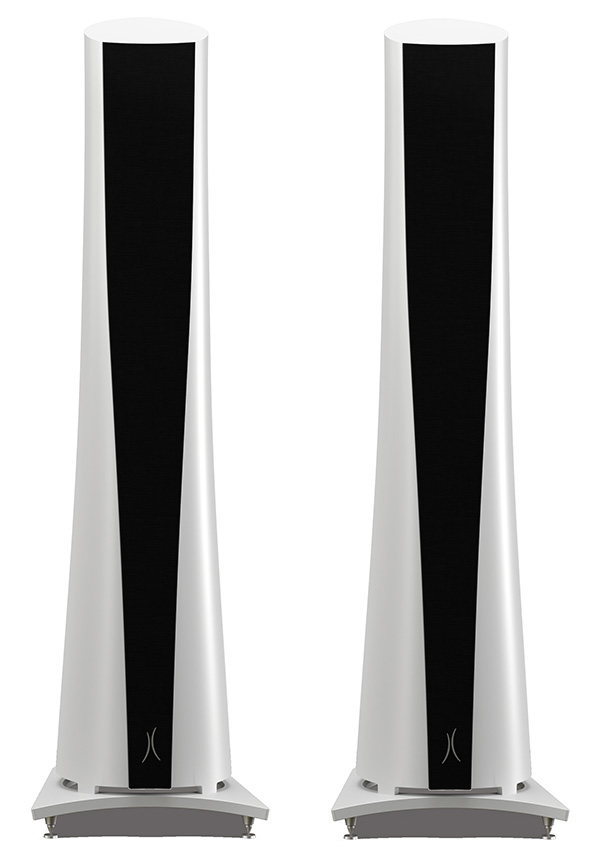
I have spent weeks listening to the Estelon AURAs and thoroughly enjoying the music. They are among the most transparent speakers I've reviewed, and they present voices, instruments, and ensembles with refreshing immediacy and impact. Never did anything, including its bass performance, disturb that enjoyment or distract from it. The choice of amplifier is critical, however, for the AURAs' potential to be fully realized. While my original attraction to the Estelon AURAs was based on appearance, I believe they are just as beautiful when I listen to music with my eyes closed.
Footnote 3: See oktavism.com/post/2014/11/16/what-is-an-oktavist.