 The sound
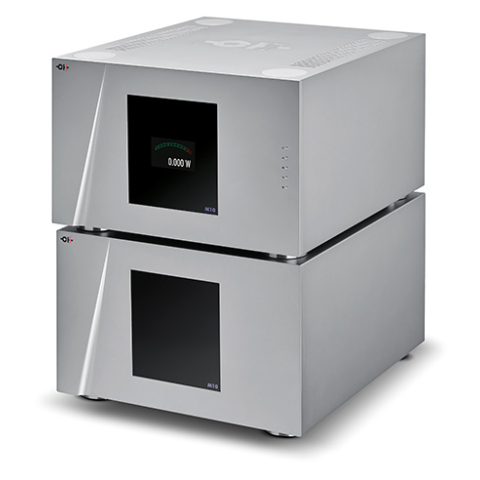
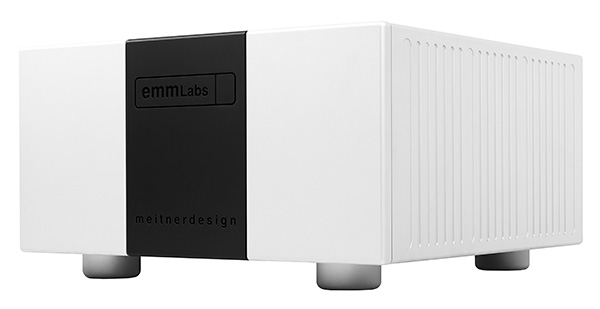
Of all the amps I've reviewed in recent memory, the MTRS immediately and continually struck me as the most honest and neutral of the lot. It neither glamorized nor warmed the sound. Every acoustic instrument sounded as I knew it to sound; every distinctive voice sounded unique and timbrally true. The inherently sweet sounded sweet; rasping rasped; emphatic exclamations resounded with force. Music intended to tug at the heart or break it open, such as the Adagietto from Mahler Symphony No.5 is wont to do, did precisely that. When I played Rafael Payare and the Orchestre symphonique de Montréal's superbly recorded issue of same (24/96 FLAC download, Pentatone), every subtly sighing string left a mark on my heart. In the funeral march of the Fifth's opening movement, as trumpets and trombones blared and percussion pounded, I sat up as tall as my slowly shrinking spine and execrable posture allow. The deep bass drum near the movement's start, captured with more weight and force than on most other recordings of Mahler's Fifth, were immense—tremendous—the lower midrange fleshed out beautifully. Farther into the movement, when every instrument got going at once, every line was as clear as they can be in my room. Image corporeality—size, density, weight, impact, believability—was up there with the best I've heard through my speakers. Some amplifiers, especially monoblocks, may deliver even blacker backgrounds than the MTRS. Monoblocks, as well, generally deliver a wider, more expansive soundstage, more breathtaking dynamic contrasts, and other features important to audiophiles. (Ed certainly knows what he's talking about in this regard.) Nonetheless, I cannot recall the last time I encountered a full-range stereo amplifier that sounded as honest, true, and faithful to recorded music as the MTRS, let alone one that satisfied me so much that I kept focusing on how good it made me feel.
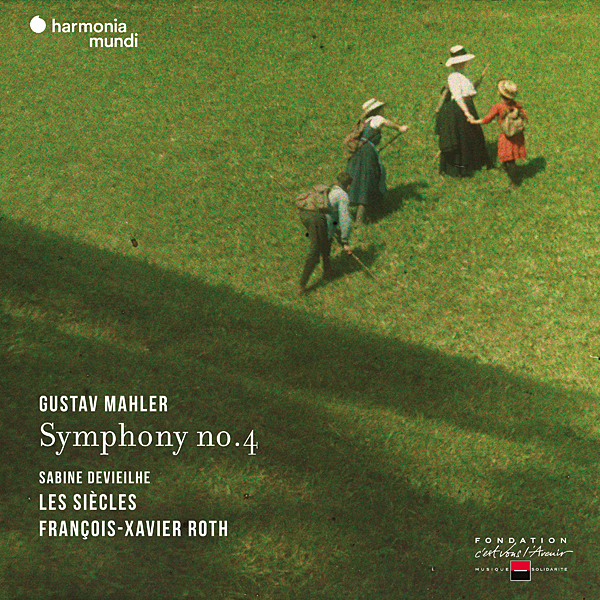 The first listen involving notetaking was to François-Xavier Roth and Les Siècles' period instrument recording of Mahler Symphony No.4 (24/96 WAV download, Harmonia Mundi), a favored reference standby. The unique timbres of Les Siècles' marvelous period woodwinds were differentiated in all their glory. Sometimes through my livelier reference, I experience a bit more nuanced shading; here, the colors were equally satisfying and unquestionably honest. The soundstage wasn't as wide as through most monoblocks, but every musical element essential to appreciating and enjoying Roth and Mahler's achievement was there.
Friend Scott Campbell visited to play some of his latest faves. Every color on Ike Quebec's "Blue and Sentimental" (Remastered 2007/Rudy Van Gelder Edition), from the 1962 album of the same name (24/96 FLAC, Blue Note/Qobuz)—every color on every track we played from Shirley Horn's fabulous, prime-voice Travelin' Light (16/44.1 FLAC, Impulse!/Qobuz)—was delectable. As much as I wished that Horn's recording had been transferred and remastered in hi-rez—I love the larger and deeper presentation as well as the more saturated colors higher rez supports—I'll take artistic mastery in whatever form I can get it. I'm not sure I'd want to play Scott's next choice, Joe Jackson's "Steppin' Out," from Steppin' Out: The Very Best of Joe Jackson (16/44.1 FLAC, A&M/Qobuz) as regularly as virtually anything by Shirley Horn, but it sure was loads of fun.
The first listen involving notetaking was to François-Xavier Roth and Les Siècles' period instrument recording of Mahler Symphony No.4 (24/96 WAV download, Harmonia Mundi), a favored reference standby. The unique timbres of Les Siècles' marvelous period woodwinds were differentiated in all their glory. Sometimes through my livelier reference, I experience a bit more nuanced shading; here, the colors were equally satisfying and unquestionably honest. The soundstage wasn't as wide as through most monoblocks, but every musical element essential to appreciating and enjoying Roth and Mahler's achievement was there.
Friend Scott Campbell visited to play some of his latest faves. Every color on Ike Quebec's "Blue and Sentimental" (Remastered 2007/Rudy Van Gelder Edition), from the 1962 album of the same name (24/96 FLAC, Blue Note/Qobuz)—every color on every track we played from Shirley Horn's fabulous, prime-voice Travelin' Light (16/44.1 FLAC, Impulse!/Qobuz)—was delectable. As much as I wished that Horn's recording had been transferred and remastered in hi-rez—I love the larger and deeper presentation as well as the more saturated colors higher rez supports—I'll take artistic mastery in whatever form I can get it. I'm not sure I'd want to play Scott's next choice, Joe Jackson's "Steppin' Out," from Steppin' Out: The Very Best of Joe Jackson (16/44.1 FLAC, A&M/Qobuz) as regularly as virtually anything by Shirley Horn, but it sure was loads of fun.
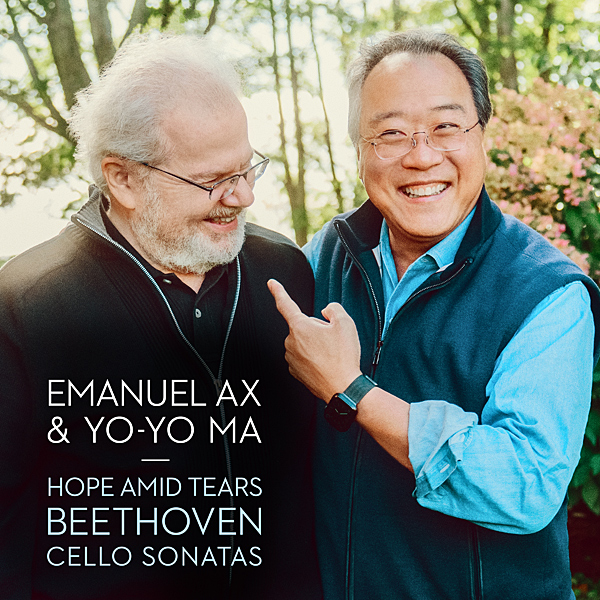 After a New Year's Eve dessert party with dear friends, I returned home in an echt-Serinus state of mind, determined to approach midnight playing recordings of Mozart's man and wife love duet, "Bei Männern, welche Liebe fühlen," from Die Zauberflöte. Searching through Qobuz's offerings, I happened upon Beethoven's 7 Variations on "Bei Männern," performed by cellist Yo-Yo Ma and pianist Emanuel Ax on their 2021 recording, Hope Amid Tears: Beethoven Cello Sonatas (24/96 FLAC, Sony/Qobuz). I recall having reservations about this recording's sonics when I reviewed it in 2021. But now, thanks at least as much to the MTRS as to other improvements to my system, the cello sounded fuller and richer, the piano clear, full, and sonorous. I was transported by the music's copious delights. Sometimes a recording you thought wasn't great was just waiting for the right amplifier to reproduce it.
Fireworks were exploding all over the Olympic Peninsula, but in my music room, I sat transfixed by Qobuz streams of one of the most touching love songs ever composed for soprano, Mozart's "Deh vieni, non tardar" from Le nozze di Figaro. As best I can recall, I began with Kathleen Battle's lovely rendition with the Metropolitan Opera Orchestra under James Levine, from Kathleen Battle: Mozart Opera Arias (24/48 FLAC, Deutsche Grammophon/Qobuz), a 1985 recording. For contrast, I turned to Patrizia Ciofi's period-authentic version on the complete recording of the opera from René Jacobs and Concerto Köln (16/44.1 FLAC, Harmonia Mundi/Qobuz). Not only did the MTRS take to the soprano voice quicker than a duck takes to water; it also sounded far more attractive (than a duck, that is. In writing this, I realize that I shall heretofore be criticized by the Great Lakes Chapter of the National Association of Duck Lovers and their Honking Friends.)
After a New Year's Eve dessert party with dear friends, I returned home in an echt-Serinus state of mind, determined to approach midnight playing recordings of Mozart's man and wife love duet, "Bei Männern, welche Liebe fühlen," from Die Zauberflöte. Searching through Qobuz's offerings, I happened upon Beethoven's 7 Variations on "Bei Männern," performed by cellist Yo-Yo Ma and pianist Emanuel Ax on their 2021 recording, Hope Amid Tears: Beethoven Cello Sonatas (24/96 FLAC, Sony/Qobuz). I recall having reservations about this recording's sonics when I reviewed it in 2021. But now, thanks at least as much to the MTRS as to other improvements to my system, the cello sounded fuller and richer, the piano clear, full, and sonorous. I was transported by the music's copious delights. Sometimes a recording you thought wasn't great was just waiting for the right amplifier to reproduce it.
Fireworks were exploding all over the Olympic Peninsula, but in my music room, I sat transfixed by Qobuz streams of one of the most touching love songs ever composed for soprano, Mozart's "Deh vieni, non tardar" from Le nozze di Figaro. As best I can recall, I began with Kathleen Battle's lovely rendition with the Metropolitan Opera Orchestra under James Levine, from Kathleen Battle: Mozart Opera Arias (24/48 FLAC, Deutsche Grammophon/Qobuz), a 1985 recording. For contrast, I turned to Patrizia Ciofi's period-authentic version on the complete recording of the opera from René Jacobs and Concerto Köln (16/44.1 FLAC, Harmonia Mundi/Qobuz). Not only did the MTRS take to the soprano voice quicker than a duck takes to water; it also sounded far more attractive (than a duck, that is. In writing this, I realize that I shall heretofore be criticized by the Great Lakes Chapter of the National Association of Duck Lovers and their Honking Friends.)
 My big discovery of the New Year was Dawn Upshaw's fetching rendition of "Deh vieni..." from another complete recording of the opera, again performed by the Metropolitan Opera Orchestra under James Levine (16/44.1 FLAC, Deutsche Grammophon/Qobuz), in 1991. Decades ago, I listened on the car radio unimpressed as Upshaw performed the aria live from the Met, but here, on a recording issued a mere 33 years ago, I could appreciate all aspects of her charm, sincerity, innocence, and vocal beauty. When she interpolated a flawless high D near the aria's end, I was in heaven. Bravo Dawn, and bravo MTRS.
My last listening session was with Gary Forbes, a friend with a very different, constantly rotating playlist. First came "Go Easy, Kid" by a woman he'd heard recently in Seattle: Monica Martin, in duet with James Blake (24/48 FLAC, Things We Like Records/Qobuz; footnote 6). The sound was clear, smooth, and beautiful, and I could not resist the song's final line: "and said, f *ck it, it's only rock'n'roll." Hooked on Martin's voice—I'm currently replaying the song on my desktop system and loving how she rises an octave for the final bars—Gary and I headed to her "Show Me," another track with Blake, this one from his album Friends That Break Your Heart (16/44.1 FLAC, Polydor/Qobuz). The MTRS rendered the recording's spatial effects superbly. Said Gary, "On your system, I've heard things on this track I've never heard before."
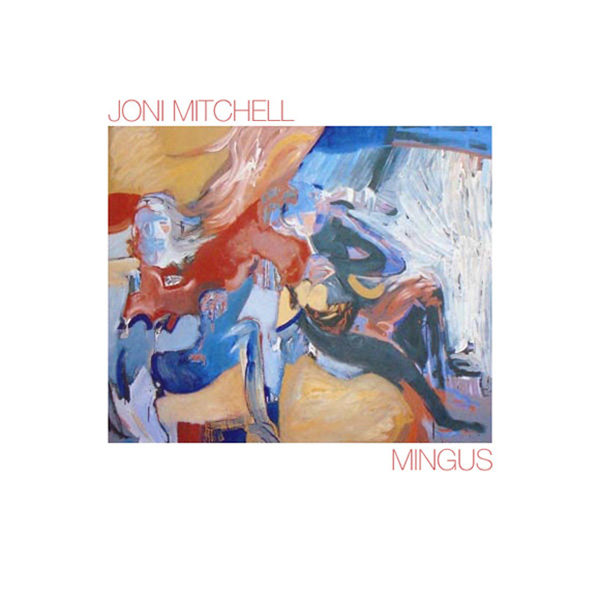
Next came music from Ranky Tanky, Carsie Blanton, and René Marie (Gary's vocal teacher at the last Centrum jazz camp in Port Townsend). Then, from Joni Mitchell, several tracks from Mingus (24/192 FLAC, Rhino-Elektra/Qobuz). "I bought that album on LP more than 50 years ago," Gary said. "I've been waiting decades to hear it sound like this."
My big discovery of the New Year was Dawn Upshaw's fetching rendition of "Deh vieni..." from another complete recording of the opera, again performed by the Metropolitan Opera Orchestra under James Levine (16/44.1 FLAC, Deutsche Grammophon/Qobuz), in 1991. Decades ago, I listened on the car radio unimpressed as Upshaw performed the aria live from the Met, but here, on a recording issued a mere 33 years ago, I could appreciate all aspects of her charm, sincerity, innocence, and vocal beauty. When she interpolated a flawless high D near the aria's end, I was in heaven. Bravo Dawn, and bravo MTRS.
My last listening session was with Gary Forbes, a friend with a very different, constantly rotating playlist. First came "Go Easy, Kid" by a woman he'd heard recently in Seattle: Monica Martin, in duet with James Blake (24/48 FLAC, Things We Like Records/Qobuz; footnote 6). The sound was clear, smooth, and beautiful, and I could not resist the song's final line: "and said, f *ck it, it's only rock'n'roll." Hooked on Martin's voice—I'm currently replaying the song on my desktop system and loving how she rises an octave for the final bars—Gary and I headed to her "Show Me," another track with Blake, this one from his album Friends That Break Your Heart (16/44.1 FLAC, Polydor/Qobuz). The MTRS rendered the recording's spatial effects superbly. Said Gary, "On your system, I've heard things on this track I've never heard before."
Next came music from Ranky Tanky, Carsie Blanton, and René Marie (Gary's vocal teacher at the last Centrum jazz camp in Port Townsend). Then, from Joni Mitchell, several tracks from Mingus (24/192 FLAC, Rhino-Elektra/Qobuz). "I bought that album on LP more than 50 years ago," Gary said. "I've been waiting decades to hear it sound like this."
 Finally, we listened to Joni's second recording of "Both Sides Now" with symphonic accompaniment plus Wayne Shorter on soprano and tenor saxophones and many others, arranged and conducted by Vince Mendoza (24/96 FLAC, Rhino-Warner/Qobuz). As heart-burstingly profound as the performance may be, and as superb as its midrange sounded through the MTRS, we were both surprised to hear flabbiness in the bass. Gary, who is a bass player with deep knowledge of bass-frequency sounds, declared, "You must have a major bass node at 73Hz." (footnote 7)
Hmmm. According to the extremely detailed and thorough acoustic analysis that Norman Varney of A/V RoomService performed on my room earlier in 2023, I have a major dip at 56.3Hz and a corresponding rise that peaks around 68Hz (footnote 8). Close enough. But I hadn't heard so much bass boom in my room since the Alexia Vs arrived. Had I discovered a weakness in the MTRS's otherwise five-star presentation?
A return to Leiviskä's orchestral music and Payare's Mahler Symphony No.5 also confirmed bass flabbiness around 68–77Hz. It thus became clear that the flabbiness wasn't caused by the MTRS. Rather, the MTRS was transmitting more bass through my speakers than I was accustomed to. That weightier bass exacerbated the consequences of that pesky room node.
Finally, we listened to Joni's second recording of "Both Sides Now" with symphonic accompaniment plus Wayne Shorter on soprano and tenor saxophones and many others, arranged and conducted by Vince Mendoza (24/96 FLAC, Rhino-Warner/Qobuz). As heart-burstingly profound as the performance may be, and as superb as its midrange sounded through the MTRS, we were both surprised to hear flabbiness in the bass. Gary, who is a bass player with deep knowledge of bass-frequency sounds, declared, "You must have a major bass node at 73Hz." (footnote 7)
Hmmm. According to the extremely detailed and thorough acoustic analysis that Norman Varney of A/V RoomService performed on my room earlier in 2023, I have a major dip at 56.3Hz and a corresponding rise that peaks around 68Hz (footnote 8). Close enough. But I hadn't heard so much bass boom in my room since the Alexia Vs arrived. Had I discovered a weakness in the MTRS's otherwise five-star presentation?
A return to Leiviskä's orchestral music and Payare's Mahler Symphony No.5 also confirmed bass flabbiness around 68–77Hz. It thus became clear that the flabbiness wasn't caused by the MTRS. Rather, the MTRS was transmitting more bass through my speakers than I was accustomed to. That weightier bass exacerbated the consequences of that pesky room node.
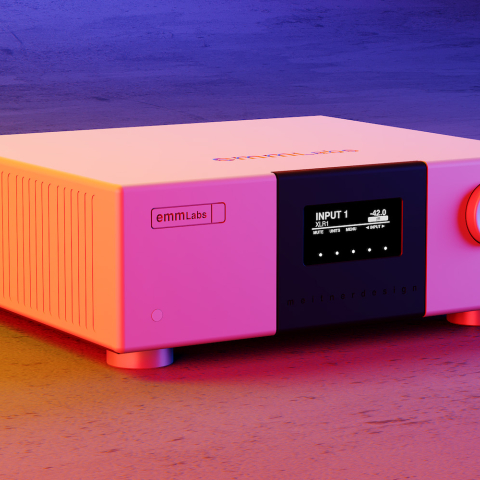
The EMM Labs MTRS is the finest, most musically complete stereo amp I've reviewed to date. As much as the word "neutrality" come to mind, it falls short as a descriptor of sound as honest, true, thrilling, heart-warming, and emotionally rewarding as the MTRS's. The MTRS is a must-audition for any music lover with the space and budget to give it a home. Hey, even if you don't have the bucks to buy one, give it a listen. If you don't, you'll miss out on experiencing the significance of Ed Meitner's accomplishment and the greatness of his team's achievement.
Footnote 6: "Go Easy, Kid" was released by Martin as a single in 2021 and then, in the duet with Blake, in 2022, also as a single. I wasn't able to locate a Martin-Blake version on Qobuz or Tidal, but it is on Apple Music and Spotify, and a live-in-studio recording of the piece (with Martin and Blake) is on YouTube at youtu.be/3G4T6L7tm4I?si=BUWW8TLcfvtUdV_m.