Sidebar 3: Measurements
Due to some logistical issues, I couldn't measure the Focus 10s auditioned by Jason Victor Serinus. Instead, I tested samples that had been shipped to me from Denmark by Dynaudio. The serial numbers were 10033212 (Primary, left) and 10033213 (Client, right).
I followed the manual's instructions to set up the Dynaudio Focus 10s, first installing the Dynaudio Connect and Control app on my iPhone 11 then connecting the Primary speaker to my Wi-Fi network. Once the speaker was connected to the network, it automatically updated its firmware to version 1.2.77.0x2250d4a. To select the input and set the volume, I mainly used the app, but I could also control the speaker with its remote. I connected the Primary speaker to the Client speaker with a coaxial S/PDIF cable—the output was muted unless both speakers were switched on—but all measurements were performed on the Primary speaker.
Although Roon recognized the Dynaudio as a Roon-Ready AirPlay device, I didn't use Roon for the testing. Instead, I performed a complete set of measurements with DRA Labs' MLSSA system using the Primary Focus 10's analog Line input, repeating some of the tests using the coaxial and TosLink inputs. The coaxial input locked to data with sample rates from 44.1kHz to 192kHz; the optical input was restricted to a maximum sampling rate of 96kHz. I used a calibrated DPA 4006 microphone for farfield measurements and an Earthworks QTC-40 mike for the nearfield response. I set the DSP for free space.
Because the Focus 10 is an active loudspeaker, I calculated the single-ended input impedance by using spot frequency tones generated by my Audio Precision SYS2722 and examining how the nearfield sound pressure level dropped when I increased the source impedance from 20 ohms to 600 ohms. The input impedance calculated with this method was 8k ohms. Dynaudio doesn't specify the speaker's sensitivity, but with the line input fed white noise at a magnitude of 200mV and the speaker's volume control set to its maximum, the B-weighted spl at 1m was 87.5dB.
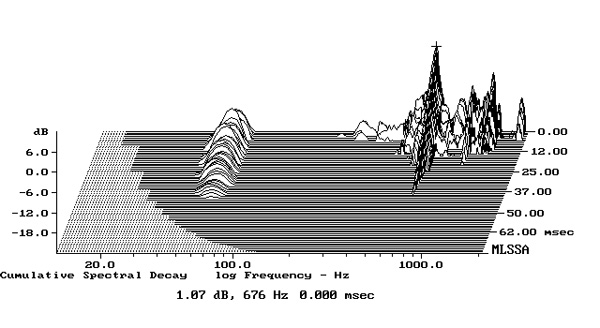
I investigated the enclosure's vibrational behavior with a plastic-tape accelerometer. A resonant mode at 676Hz was present on all surfaces (fig.1). However, this mode is fairly high in frequency, 676Hz falls between two notes (E and F) in the Equal Tempered Scale, and the resonance has a high Q (Quality Factor); these factors will mitigate the audible consequences of this behavior.
 The black trace below 300Hz in fig.2 shows the response of the woofer, measured in the nearfield, with the volume control set to its maximum. The woofer's output rolls out very quickly below 40Hz, with a steeper slope than the usual sealed-box 12dB/octave. The 3dB peak in the midbass region will be due to the nearfield measurement technique, which assumes that the drive units are mounted in a true infinite baffle, ie, one that extends to infinity in both planes.
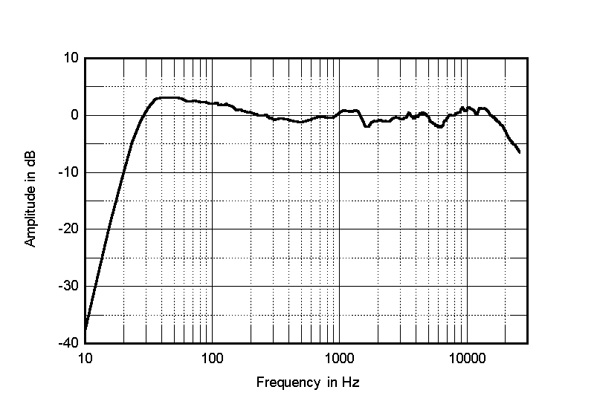
 With the Focus 10's tonal balance set to Neutral with the app, its farfield response on the tweeter axis, averaged across a 30° horizontal angle (fig.2, black trace above 300Hz), is even overall, though there is a slight excess of energy between 1kHz and 1.6kHz and a slight lack between 5kHz and 7kHz. Fig.2 was taken without the speaker's grille. With the grille in place, the small suckout in the mid-treble deepened and the top octave was slightly higher in level. Fig.5 shows the differences in the tweeter-axis response made by using the app to set the balance to Bright (red trace) and to Dark (blue trace). These settings tilt the response by ±1dB at 200Hz and 20kHz, with a hinge frequency of 3kHz.

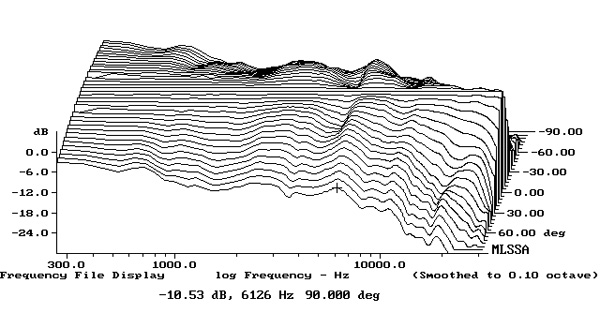
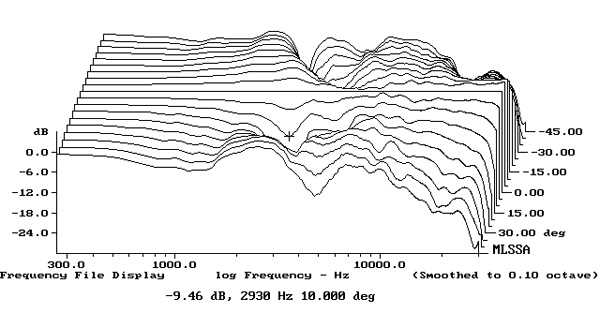
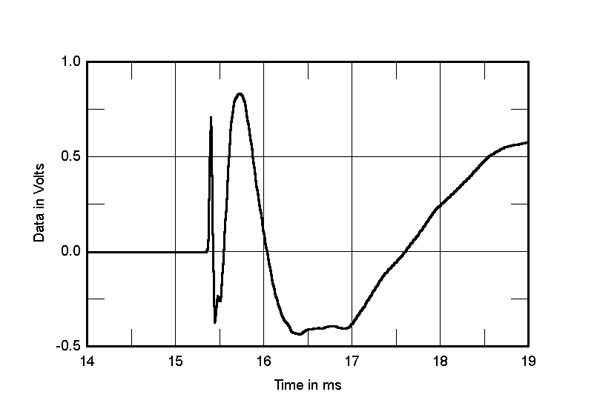
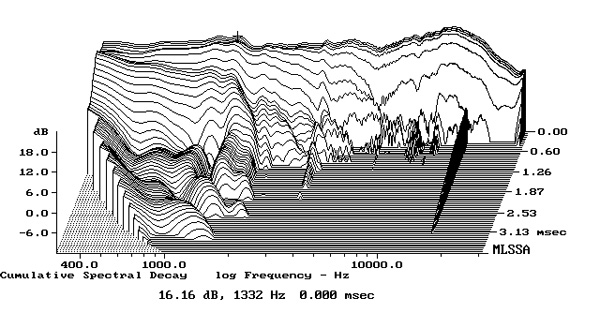
Fig.1 Dynaudio Focus 10, cumulative spectral-decay plot calculated from output of accelerometer fastened to center of top panel (MLS driving voltage to speaker, 490mV; measurement bandwidth, 2kHz).
Fig.2 Dynaudio Focus 10, Neutral setting, anechoic response on HF axis at 50", averaged across 30° horizontal window and corrected for microphone response, with the nearfield woofer response plotted below 300Hz.
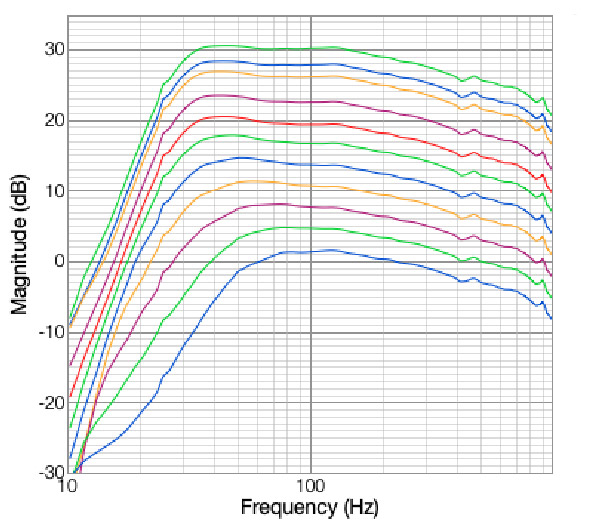
To investigate the DSP in the Dynaudio's low frequencies, as described by Stephen Entwistle in Jason's review, I measured the woofer's nearfield response with the Dynaudio's volume control set to 60%, with a swept sinewave level of –37dB then stepping up the level in 3dB increments, reducing the microphone preamp gain each time by the same 3dB to avoid clipping. Fig.3 shows the response, with the lowest signal level at the top (green trace) and with the signal 30dB higher in level at the bottom (blue trace). The spl at 1m with the latter was approximately 90dB (C-weighted, slow ballistics) at 1m. As the spl increases, the LF rolloff starts higher in frequency with a shallower slope. At the lowest level (top, green trace), the Focus 10 has full output down to around 30Hz; at the highest level I measured (bottom, blue trace), full output extends only to about 60Hz.
Fig.3 Dynaudio Focus 10, effect of level on LF roll-off. Top trace (green) shows a stepped sinewave at –37dB; successive lower traces step up the level in 3dB increments.
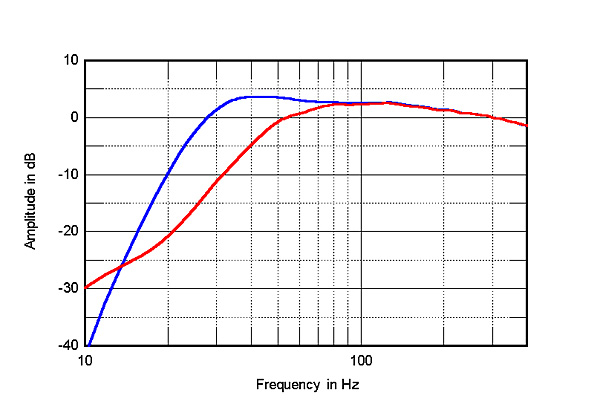
Fig.4 shows the woofer response at an spl of 90dB (red trace) and 72dB (blue). The 90dB trace shows, I believe, the intrinsic woofer response—an overdamped, second-order, sealed-box alignment. The 72dB trace indicates that DSP is used to flatten and extend the response, but with then a faster, fourth-order rolloff below the corner frequency.
Fig.4 Dynaudio Focus 10, effect of level on LF roll-off at 72dB (blue) and at 90dB (red).
Fig.5 Dynaudio Focus 10, effect on the Neutral setting of the Bright setting (red trace) and Dark setting (blue) (1dB/vertical div.),
The Focus 10's horizontal dispersion, normalized to the response on the tweeter axis, which therefore appears as a straight line, is shown in fig.6. The contour lines in this graph are evenly spaced, and the mid-treble suckout, indicated by the cursor position, tends to fill in to the speaker's sides. The radiation pattern smoothly narrows above 10kHz. Fig.7 shows the speaker's dispersion in the vertical plane. A suckout appears at 2.9kHz, close to the specified crossover frequency between the tweeter and woofer of 2.2kHz, 10° above and below the HF axis.
Fig.6 Dynaudio Focus 10, lateral response family at 50", normalized to response on HF axis, from back to front: differences in response 90–5° off axis, reference response, differences in response 5–90° off axis.
Fig.7 Dynaudio Focus 10, vertical response family at 50", normalized to response on HF axis, from back to front: differences in response 45–5° above axis, reference response, differences in response 5–45° below axis.
In the time domain, the Focus 10's step response (fig.8) indicates that both drive units are connected in positive acoustic polarity, with the tweeter's output arriving first at the microphone. Note the scaling of the horizontal axis in this graph. With a passive loudspeaker, it takes 3.7ms for its sound to arrive at the microphone 50" away. By contrast, the Dynaudio's output arrives at 15.4ms. The delay of 11.7ms compared with a passive speaker will be due to the latency of the Dynaudio speaker's A/D and D/A converters and to the fact that the crossover is implemented in the digital domain. Repeating the capture with the coaxial digital input gave an identical step response with similar latency.
Fig.8 Dynaudio Focus 10, step response on HF axis at 50" (5ms time window, 30kHz bandwidth).
The Focus 10's cumulative spectral-decay plot on the tweeter axis (fig.9) is superbly clean, though a slight ridge of delayed energy is seen at 1.33kHz, the center frequency of the small peak in the farfield trace in fig.2. (As always in my CSD graphs, ignore the ridge just below 16kHz, which is due to interference from the test computer's video circuitry.)
Fig.9 Dynaudio Focus 10, cumulative spectral-decay plot on HF axis at 50" (0.15ms risetime).
The Focus 10's measured performance indicates a well-sorted design. And props to Dynaudio for the ease of setup and operation with the app.—John Atkinson