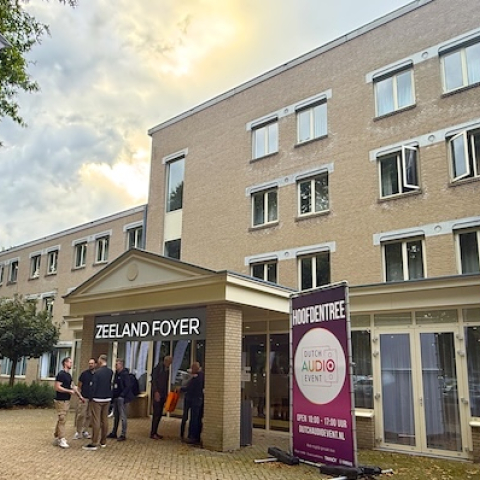

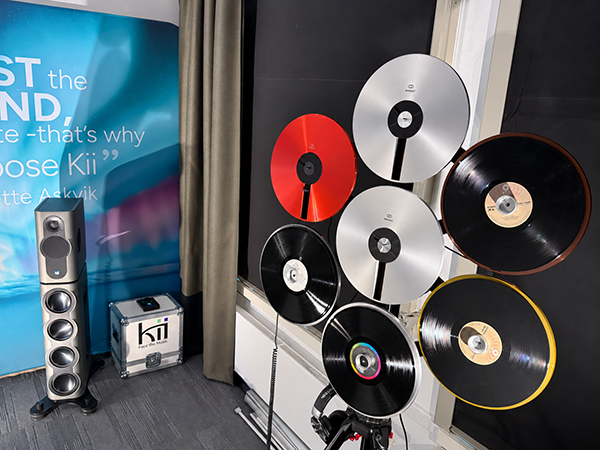
Halfway through my conversation with Miniot's Piet Kolkman at the 2026 Dutch Audio Event, I asked him a half-joking question: "How many of your customers died waiting for their prepaid turntables?"
A few, he replied sunnily. In some cases, Miniot had ended up shipping the product to the customers' children. Yeah, a six-year delay will do that.
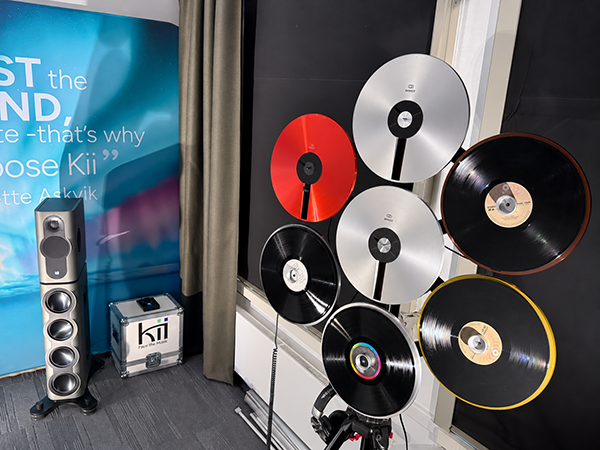
Kolkman, a talented tinkerer who is in his late 20s and has no education beyond high school, is the engineer behind Miniot, a Dutch turntable maker. In 2016, his father, Peter, a now-60-something designer, came up with an idea for a svelte turntable he called the Wheel. Kolkman père envisioned a circular design with a tonearm that plays records from underneath, hiding virtually everything except the spinning LP. The Wheel, Miniot's first record player, was an inspired proposition that also excited audiophiles on Kickstarter, the crowdfunding site. In 2017, the Dutch company raised roughly $456,000 from 762 Kickstarter backers, and took another 200-plus orders on its website.
Then came the hard part: making the damn thing. Piet Kolkman explained to me at the Dutch show that the original mechanism was hideously complicated, and that his family startup had badly underestimated production costs. The Kolkmans burned through virtually all the money raised. With the original Wheel proving too complicated and costly to manufacture, Miniot developed a simpler, more practical successor, the Wheel 2. The company then asked its long-suffering buyers to pay another €300 to upgrade to the new model. Following an outcry, the Kolkmans halved that surcharge, and agreed to collect it only upon shipment. Even so, some backers balked at the additional expense, and wondered whether they'd been scammed.
Piet Kolkman says that most customers eventually received their turntables—albeit some of them six to seven years after ordering them. Others canceled and got refunds, though there are reports of early buyers who requested their money back and were told no.
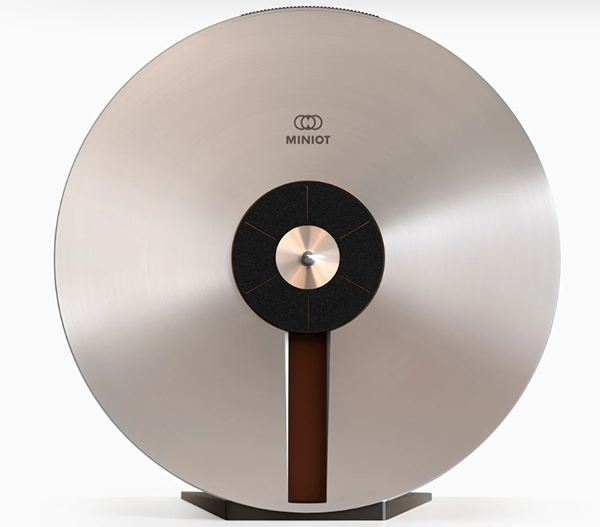
Whatever the product line's past problems, the current Wheel 3 is a delightfully clever machine: a minimalist-looking record player that, as mentioned, plays the reverse side of the album—i.e., you're looking at side B while listening to side A, and vice versa. Each Wheel 3 (€3400 / $3883) uses a short linear-tracking arm tucked behind the LP. The product can lie flat, stand upright, or hang on a wall. When used vertically, a magnetic puck keeps the record in place.
The controls are nearly as unusual. Miniot's "slidetrack" is a touch-sensitive display of tiny white LEDs that form a line around the top curve of the turntable. The LEDs take the place of knobs and buttons. Sliding a finger adjusts volume; pressing different positions selects tracks or pauses playback. The system automatically locates individual tracks and marks their positions on the LED-line display, allowing the listener to select a song directly.
Then there's the cartridge, which may be the Wheel 3's most interesting innovation. Japan's DS Audio has enjoyed considerable success with optical cartridges, but Miniot developed its own version. Like DS Audio's designs, it employs a diamond stylus riding in the groove, generating its signal optically rather than electromagnetically. Attached to the cantilever is a minuscule, laser-cut flag made of black paper. An LED shines past the flag onto two photosensors; as the stylus moves, the flag modulates the light reaching them, producing an analog electrical signal.
Why paper? Kolkman cited its combination of low mass, stiffness, and damping. Removing the magnets or coils from the moving assembly, he contended, allows better tracking and greater frequency extension. The Wheel uses the optical cartridge's signal to keep the linear-tracking arm properly aligned with the groove. Separately, its direct-drive motor uses optical speed feedback to regulate rotation and, Miniot claims, compensate for off-center records. The Wheel includes a built-in phono preamp tailored to the cartridge, with line-level and headphone outputs.
At the Veldhoven show, the Miniot turntable played through a $36,000 pair of Kii Three active loudspeakers with BXT bass modules. That's a formidable active-speaker system—and, during my 20 minutes of listening, and with people talking in the background, I heard no obvious sonic shortcomings. Lou Reed's eternal 1972 classic "Perfect Day" came through with solid colors and the singer's schmaltz intact; Anette Askvik's unavoidable 2021 song "Liberty" sounded sweetly somber, triggering my occasional synesthesia with notes of … patchouli, I think?
The Wheel 3 is available directly from Miniot's website. Whatever else we make of the Kolkmans' decade-long (mis)adventure, they've produced a genuinely original piece of engineering and design. Now comes the less glamorous business of delivering it—and consistently delighting customers. Fingers crossed.