

Returning to Morlot and Seattle's Rite, I confirmed that while the sound was a touch warmer than neutral higher in the range, timbres were absolutely believable with timpani and bass drum. Further listens to recordings of percussion, cello, and double bass confirmed that, through my Wilson Audio Alexias, the Progressions excelled at conveying low pitches with more tonal accuracy than I was accustomed to.
I also began to realize that while my reference Pass Labs XA 200.8 monoblocks sound gorgeous, and convey a special glow around the edges of each note, the Progressions illuminated each note from within. The experiences are different but equally gratifying.
I've often lamented that my audio reviews have never approached the levels of poetry and flights of fancy that make Herb Reichert's writing so special. But as I continued to explore familiar and new recordings, I discovered that the Progressions made me want to listen deeper and deeper, and play entire compositions without pausing to take notes. I was seduced without knowing it—and when my head cleared, I imagined the fabled Sirens, who beckoned sailors to their deaths, luring me with their spell. Herb may be able to paint a better verbal picture of what I experienced—he's a visual artist, after all—but the call of the Progressions was so strong that, on multiple occasions, hours of listening went by without my remembering to use the pen I held in my hand.
A great amp will do that to you.
 Somewhere in my journey—when you've fallen in love, it's hard to remember such practical considerations as numbering the pages of whatever notes you do manage to take—I played "Insensatez," from Rosa Passos and Ron Carter's Entre Amigos (CD, Chesky JD247). In short order, I realized that I could hear guitarist Lula Galvão's fingering and the pitches of Carter's double bass as never before. Rather than sounding etched—the Progressions never sounded detailed to the point of being clinical—the D'Agostino's revelations of additional detail only brought the music closer to me. Ditto with "Black on White Paper" and "This Screaming Dream," from Zen Widow's Screaming in Daytime (Makes Men Forget) (CD, pfMentum PFMCD 069): I could hear slight, previously masked noises and ticks in the right channel as percussionist Garth Powell and his fellow musicians picked up and moved instruments. This CD was recorded on two-track analog tape by Joe Harley, and mastered by Bernie Grundman—the depth, width, and height of its soundstage blew me away.
As weeks went by, reviewing recordings for Stereophile.com became more of a joy than ever. Through the Progressions, Yo-Yo Ma, Chris Thile, and Edgar Meyer's recording of various works by J.S. Bach arranged for mandolin, cello, and double bass (24/96 WAV, Nonesuch 558933/HDtracks) revealed all its glories and shortcomings; while the sense of space in Rímur, the flawless pairing of Trio Mediaeval and trumpeter Arne Henriksen (24/96 download, ECM New Series 2520), positively tranced me out. I was also amazed that while David Chesky's download-only hi-rez recording of his song cycle The Spanish Poems, with soprano Maureen McKay and the Orchestra of the 21st Century (Chesky/HDtracks) was limited to 24/48—his usual DAC was being repaired—its spacious soundstage and color-rich palette suggested something of far higher resolution.
One of my most joyous listening sessions was with a new friend, a viola da gamba player, who'd recently moved to Port Townsend and attended a potluck we hosted. When he asked to hear Jordi Savall and his ensembles' M. A. Charpentier à la Chapelle Royale de Versailles (SACD/CD, Alia Vox AV DVD 9905), we sat stunned by the melding of beautiful voices with early instruments. Wishing my guest to hear more of how well the Progressions did with voices, I turned to Puccini's "Che gelida manina," from Franco Corelli's The Unknown Recordings (CD, EMI 5626992), and Verdi's "D'Amor sull'ali Rosee," from L'art de Montserrat Caballé, Vol.2 (CD, Forlane UCD 10905). When tenor Corelli opened up on his glorious high C, and incomparable soprano Caballé transitioned from mere threads of sound to full-throated outpourings, the dynamic contrasts were something to behold—even within the Compact Disc's limited dynamic range.
My final extended listen to the Progressions was with members of the Pacific Northwest Audio Society. We didn't compare amps, DACs, or anything else—we just enjoyed what the Progressions could offer. For much of the afternoon, I found myself turning off the lights so that, with the room illumined only by indirect light coming from a hallway window, we could sink even deeper into the music.
Somewhere in my journey—when you've fallen in love, it's hard to remember such practical considerations as numbering the pages of whatever notes you do manage to take—I played "Insensatez," from Rosa Passos and Ron Carter's Entre Amigos (CD, Chesky JD247). In short order, I realized that I could hear guitarist Lula Galvão's fingering and the pitches of Carter's double bass as never before. Rather than sounding etched—the Progressions never sounded detailed to the point of being clinical—the D'Agostino's revelations of additional detail only brought the music closer to me. Ditto with "Black on White Paper" and "This Screaming Dream," from Zen Widow's Screaming in Daytime (Makes Men Forget) (CD, pfMentum PFMCD 069): I could hear slight, previously masked noises and ticks in the right channel as percussionist Garth Powell and his fellow musicians picked up and moved instruments. This CD was recorded on two-track analog tape by Joe Harley, and mastered by Bernie Grundman—the depth, width, and height of its soundstage blew me away.
As weeks went by, reviewing recordings for Stereophile.com became more of a joy than ever. Through the Progressions, Yo-Yo Ma, Chris Thile, and Edgar Meyer's recording of various works by J.S. Bach arranged for mandolin, cello, and double bass (24/96 WAV, Nonesuch 558933/HDtracks) revealed all its glories and shortcomings; while the sense of space in Rímur, the flawless pairing of Trio Mediaeval and trumpeter Arne Henriksen (24/96 download, ECM New Series 2520), positively tranced me out. I was also amazed that while David Chesky's download-only hi-rez recording of his song cycle The Spanish Poems, with soprano Maureen McKay and the Orchestra of the 21st Century (Chesky/HDtracks) was limited to 24/48—his usual DAC was being repaired—its spacious soundstage and color-rich palette suggested something of far higher resolution.
One of my most joyous listening sessions was with a new friend, a viola da gamba player, who'd recently moved to Port Townsend and attended a potluck we hosted. When he asked to hear Jordi Savall and his ensembles' M. A. Charpentier à la Chapelle Royale de Versailles (SACD/CD, Alia Vox AV DVD 9905), we sat stunned by the melding of beautiful voices with early instruments. Wishing my guest to hear more of how well the Progressions did with voices, I turned to Puccini's "Che gelida manina," from Franco Corelli's The Unknown Recordings (CD, EMI 5626992), and Verdi's "D'Amor sull'ali Rosee," from L'art de Montserrat Caballé, Vol.2 (CD, Forlane UCD 10905). When tenor Corelli opened up on his glorious high C, and incomparable soprano Caballé transitioned from mere threads of sound to full-throated outpourings, the dynamic contrasts were something to behold—even within the Compact Disc's limited dynamic range.
My final extended listen to the Progressions was with members of the Pacific Northwest Audio Society. We didn't compare amps, DACs, or anything else—we just enjoyed what the Progressions could offer. For much of the afternoon, I found myself turning off the lights so that, with the room illumined only by indirect light coming from a hallway window, we could sink even deeper into the music.
 Some of our selections included tracks from Yello's Toy (24/48, Polydor) and streams of music by trumpeter Arturo Sandoval (16/44.1, Tidal HiFi). While both were flawlessly delivered—the Progressions controlled the pounding low end of Yello's "Electrified II" without sweat while throwing a huge soundstage—the most startling track of all was one I've played countless times: soprano Maria Callas singing the Sleepwalking scene from Verdi's Macbeth, recorded in 1958 for her album Callas Portrays Verdi Heroines, with Nicola Rescigno conducting the Philharmonia Orchestra (24/96 file, Warner Classics). Not only could I hear more details of Callas's vocal production than ever before, but I also discovered that solo instruments in the orchestra were surrounded by what sounded like unprecedented amounts of air. That the flute stood out so hauntingly, as if singing in the dark, confirmed that Verdi and Rescigno intended every sound of the orchestra to underscore Lady Macbeth's bloodthirsty madness. To use a descriptor favored by John Atkinson, I was gobsmacked.
Conclusions
Some of our selections included tracks from Yello's Toy (24/48, Polydor) and streams of music by trumpeter Arturo Sandoval (16/44.1, Tidal HiFi). While both were flawlessly delivered—the Progressions controlled the pounding low end of Yello's "Electrified II" without sweat while throwing a huge soundstage—the most startling track of all was one I've played countless times: soprano Maria Callas singing the Sleepwalking scene from Verdi's Macbeth, recorded in 1958 for her album Callas Portrays Verdi Heroines, with Nicola Rescigno conducting the Philharmonia Orchestra (24/96 file, Warner Classics). Not only could I hear more details of Callas's vocal production than ever before, but I also discovered that solo instruments in the orchestra were surrounded by what sounded like unprecedented amounts of air. That the flute stood out so hauntingly, as if singing in the dark, confirmed that Verdi and Rescigno intended every sound of the orchestra to underscore Lady Macbeth's bloodthirsty madness. To use a descriptor favored by John Atkinson, I was gobsmacked.
Conclusions
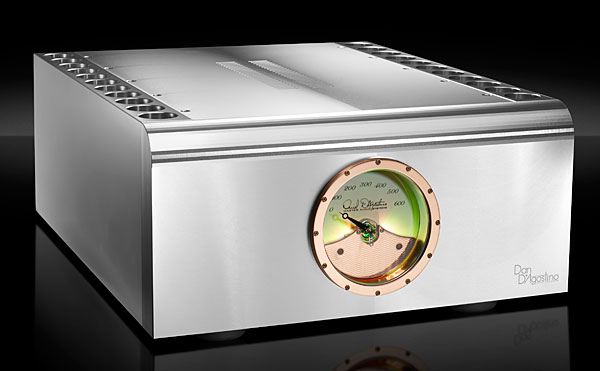
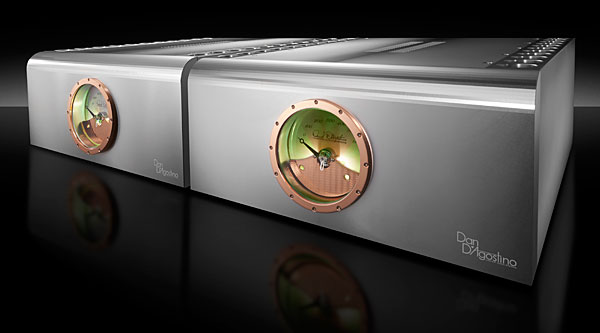
As I write these words, the Progressions sit boxed up, awaiting shipment to JA's house. With the first few reviews I wrote for Stereophile, each such farewell was accompanied by the gnawing fear that John's measurements would lead him to write, "These are some of the worst-measuring amps ever to cross my threshold," and reveal me as a total dolt (footnote 2). I harbor no such fears about the Dan D'Agostino Master Audio Systems Progression Mono. Instead, I'm eager to discover if JA's tests will help explain how these monoblocks produced such detailed, natural-sounding, air-filled, ultra-dynamic, supremely musical sound.
While the Progression wasn't the most neutral-sounding amp on the planet, its mild warmth in no way interfered with its ability to communicate the visceral, emotional, and spiritual imports of music. Delicate music sounded exactly that, while ultra-aggressive percussion, screaming horns, and cries of pain—imagine some diabolical cross between Shostakovich, Diamanda Galas, and Metallica—only gained in impact from the Progressions' ability to reveal it in all its glory. "Wow!" only begins to tell the tale.
Footnote 2: Stereophile's reviewers don't see the measurements of the product they have reviewed until after they have written and submitted their text.—John Atkinson
Somewhere in my journey—when you've fallen in love, it's hard to remember such practical considerations as numbering the pages of whatever notes you do manage to take—I played "Insensatez," from Rosa Passos and Ron Carter's Entre Amigos (CD, Chesky JD247). In short order, I realized that I could hear guitarist Lula Galvão's fingering and the pitches of Carter's double bass as never before. Rather than sounding etched—the Progressions never sounded detailed to the point of being clinical—the D'Agostino's revelations of additional detail only brought the music closer to me. Ditto with "Black on White Paper" and "This Screaming Dream," from Zen Widow's Screaming in Daytime (Makes Men Forget) (CD, pfMentum PFMCD 069): I could hear slight, previously masked noises and ticks in the right channel as percussionist Garth Powell and his fellow musicians picked up and moved instruments. This CD was recorded on two-track analog tape by Joe Harley, and mastered by Bernie Grundman—the depth, width, and height of its soundstage blew me away.
As weeks went by, reviewing recordings for Stereophile.com became more of a joy than ever. Through the Progressions, Yo-Yo Ma, Chris Thile, and Edgar Meyer's recording of various works by J.S. Bach arranged for mandolin, cello, and double bass (24/96 WAV, Nonesuch 558933/HDtracks) revealed all its glories and shortcomings; while the sense of space in Rímur, the flawless pairing of Trio Mediaeval and trumpeter Arne Henriksen (24/96 download, ECM New Series 2520), positively tranced me out. I was also amazed that while David Chesky's download-only hi-rez recording of his song cycle The Spanish Poems, with soprano Maureen McKay and the Orchestra of the 21st Century (Chesky/HDtracks) was limited to 24/48—his usual DAC was being repaired—its spacious soundstage and color-rich palette suggested something of far higher resolution.
One of my most joyous listening sessions was with a new friend, a viola da gamba player, who'd recently moved to Port Townsend and attended a potluck we hosted. When he asked to hear Jordi Savall and his ensembles' M. A. Charpentier à la Chapelle Royale de Versailles (SACD/CD, Alia Vox AV DVD 9905), we sat stunned by the melding of beautiful voices with early instruments. Wishing my guest to hear more of how well the Progressions did with voices, I turned to Puccini's "Che gelida manina," from Franco Corelli's The Unknown Recordings (CD, EMI 5626992), and Verdi's "D'Amor sull'ali Rosee," from L'art de Montserrat Caballé, Vol.2 (CD, Forlane UCD 10905). When tenor Corelli opened up on his glorious high C, and incomparable soprano Caballé transitioned from mere threads of sound to full-throated outpourings, the dynamic contrasts were something to behold—even within the Compact Disc's limited dynamic range.
Some of our selections included tracks from Yello's Toy (24/48, Polydor) and streams of music by trumpeter Arturo Sandoval (16/44.1, Tidal HiFi). While both were flawlessly delivered—the Progressions controlled the pounding low end of Yello's "Electrified II" without sweat while throwing a huge soundstage—the most startling track of all was one I've played countless times: soprano Maria Callas singing the Sleepwalking scene from Verdi's Macbeth, recorded in 1958 for her album Callas Portrays Verdi Heroines, with Nicola Rescigno conducting the Philharmonia Orchestra (24/96 file, Warner Classics). Not only could I hear more details of Callas's vocal production than ever before, but I also discovered that solo instruments in the orchestra were surrounded by what sounded like unprecedented amounts of air. That the flute stood out so hauntingly, as if singing in the dark, confirmed that Verdi and Rescigno intended every sound of the orchestra to underscore Lady Macbeth's bloodthirsty madness. To use a descriptor favored by John Atkinson, I was gobsmacked.
ConclusionsAs I write these words, the Progressions sit boxed up, awaiting shipment to JA's house. With the first few reviews I wrote for Stereophile, each such farewell was accompanied by the gnawing fear that John's measurements would lead him to write, "These are some of the worst-measuring amps ever to cross my threshold," and reveal me as a total dolt (footnote 2). I harbor no such fears about the Dan D'Agostino Master Audio Systems Progression Mono. Instead, I'm eager to discover if JA's tests will help explain how these monoblocks produced such detailed, natural-sounding, air-filled, ultra-dynamic, supremely musical sound.
Footnote 2: Stereophile's reviewers don't see the measurements of the product they have reviewed until after they have written and submitted their text.—John Atkinson















