Sidebar 3: Follow-Up Measurements
Compared with the earlier sample (fig.1), the new Troubador's step response (fig.2) reveals that the tweeter and woofer are now connected with the same positive acoustic polarity. The tweeter output does lead that of the woofer by a fraction of a millisecond, however, meaning that the step response doesn't quite conform with the desired triangle shape that would indicate a true time-aligned design.
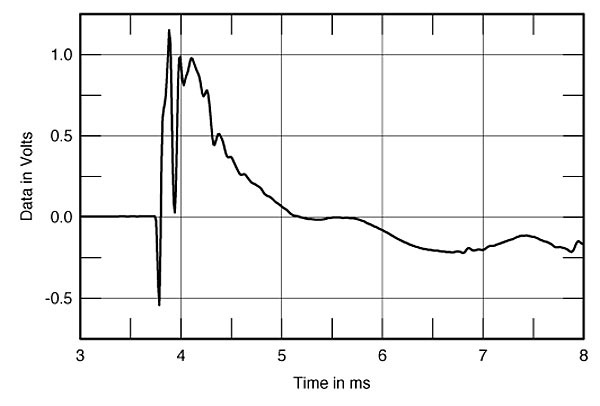
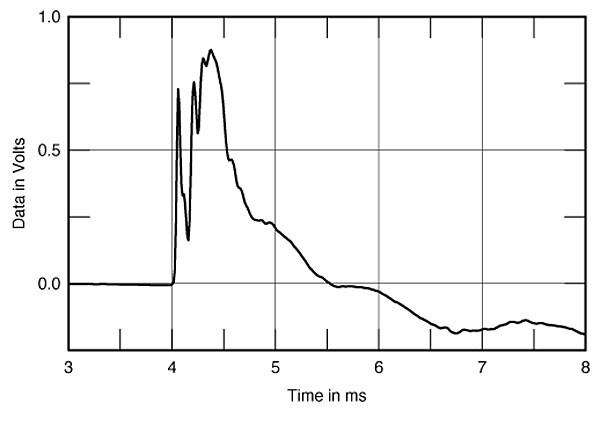 Fig.3 shows the individual responses of the Troubador's tweeter, woofer, and port. The latter's classic bandpass output is centered on 57Hz, somewhat above the woofer's minimum-motion frequency of 50Hz. The woofer has a little bit of unevenness at the top of its passband but rolls off smoothly above 1600Hz with an approximate 18dB/octave slope. The tweeter's high-pass slope is also 18dB/octave, third-order, something that puzzled me considering the manufacturer's statement that the Troubador's crossover was first-order in nature. The tweeter's output suffers from some peaks and sharp dips throughout its passband, these due to the horn-loading offered by the woofer cone.

 This lack of presence-region energy can also be seen in the spatially averaged response that I measured in my room (fig.5). The midrange is smooth, but with a slight rising trend apparent, while the mid-treble is also even. Over almost all the audioband, the Troubador's in-room response meets very close limits. However, the crossover region between the drive-units can be seen to be depressed.
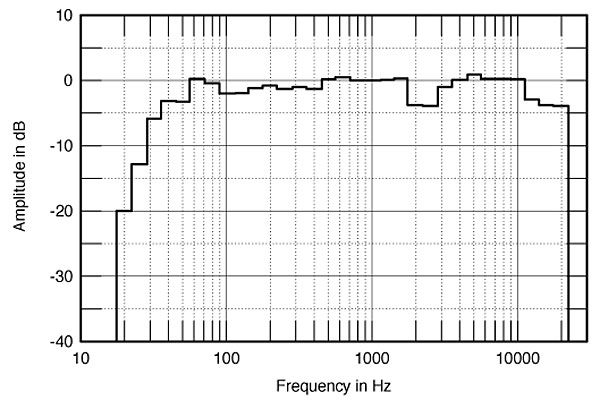

Fig.1 Coincident Troubador, WP sample, step response on tweeter axis at 50" (5ms time window, 30kHz bandwidth).
Fig.2 Coincident Troubador, new sample, step response on tweeter axis at 50" (5ms time window, 30kHz bandwidth).
Fig.3 Coincident Troubador, new sample, acoustic crossover on tweeter axis at 50", corrected for microphone response, with nearfield woofer and port responses plotted below 300Hz and 600Hz, respectively.
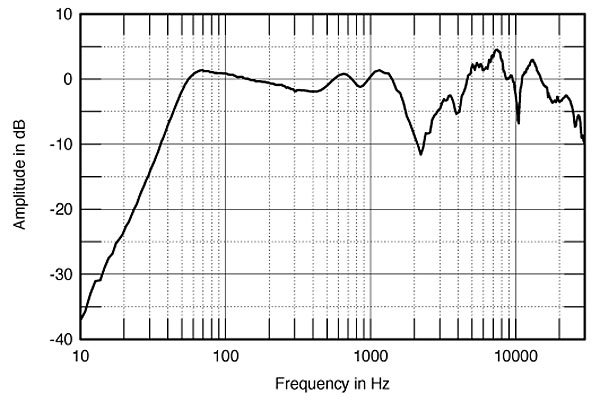
The Troubador's response averaged across a 30° horizontal angle on the tweeter axis at a distance of 50" is shown in fig.4. On the left of this graph is the complex sum—accounting for magnitude, phase, and the physical separation—of the nearfield woofer and port responses. The measured –6dB point is 42Hz, the lowest note of the 4-string double-bass, which is lower than I expected from my auditioning. The upper bass is slightly elevated but the overall midrange is smooth.
Fig.4 Coincident Troubador, new sample, anechoic response on tweeter axis at 50", averaged across 30° horizontal window and corrected for microphone response, with complex sum of nearfield woofer and port responses plotted below 300Hz.
But look at the suckout in the low treble. The measured lack of energy in the crossover region in this graph correlates with the residual hollowness I noted in the speaker's perceived balance and the rather uninvolving nature of its sound. Because this character was similar to the original Troubador samples', I checked the second speaker. It was identical; in fact, the pair-matching of the two speakers was excellent.
The conventional wisdom regarding a symmetrical third-order crossover with in-phase drivers, which is what the Troubador appears now to have, is that the response is flat in the crossover region. However, with a conventional design in which the tweeter is mounted above the woofer, this type of crossover tilts the main response lobe up due to a 90° phase difference between the two drive-units. I suspect that in this coincident design, the 90° phase difference adds to the phase shift due to the residual time delay between the drivers to give something approaching an opposing-phase condition in a narrow band in the presence region (1–3kHz).
Fig.5 Coincident Troubador, new sample, spatially averaged, 1/3-octave response in JA's room.
Finally, fig.6 shows the Troubador's on-axis response with the tweeter polarity inverted. Now the two drivers add in-phase through the crossover region, but the entire low- and mid-treble regions are elevated, giving rise to the hard-sounding, "megaphoney" tonal balance I noted with this condition.—John Atkinson
Fig.6 Coincident Troubador, new sample, anechoic response on tweeter axis at 50" with inverted tweeter polarity, corrected for microphone response, with complex sum of nearfield woofer and port responses plotted below 300Hz.