

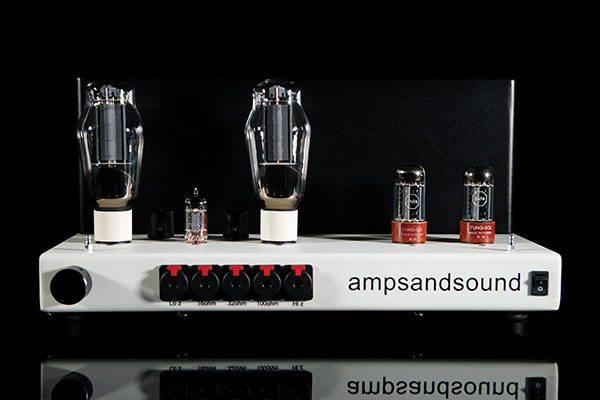
 The Sound of Red October
I have to start this section with a caveat for can heads: Though I've been using good headphones for much of my adult life, I strongly prefer listening through speakers. So my impressions of the Red October's headphone capabilities lack the subtlety and knowhow of a true headspace aficionado like Herb Reichert. That said, I used four sets of cans—the Audeze LCD-3, the Sennheiser HD 650, the HiFiMan HE-R10P, and the Meze Elite—and listened to both vinyl and streaming. Though the Ampsandsound flagship lacked the near-silent backgrounds of some solid state headphone amps, it imbued the sound with tonal richness, huge dynamic kick, and—with cans that allowed it—wide, out-of-the-head imaging. And the luxury of those multiple outputs assured an ideal load. I happen to think that most headphone amps are underpowered, and I reveled in the Red October's reassuring control and lack of strain. I particularly liked listening with the crazy-comfortable and pellucid-sounding Mezes, which lent the music a transparency and inner life I haven't heard with other cans. In many ways, the Red October reminded me of my favorite headphone amp of all time, the Woo Audio WA5-LE, another transformer-covered beast that relies on a pair of 300Bs. Listening regularly for several months, I became reacquainted with my headphones. But as enjoyable as it was, I wasn't tempted to get rid of my speakers. In fact, after each headphone listening session, I couldn't wait to get the music out of my head and into the room. I began to think that headphones weren't really for me, but before shipping the Red October back to Weber, I decided to listen to the speaker outputs, just to say that I did.
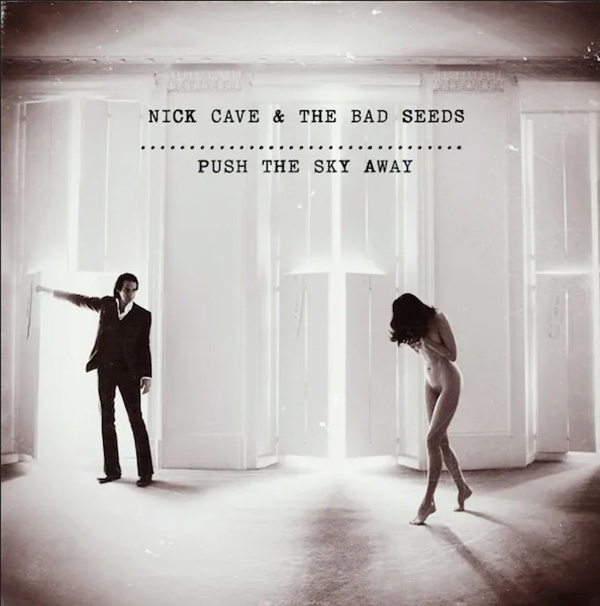 I've spoiled the surprise, but the sound the Red October made with the La Scalas came as a bit of a shock. Listening to "Jubilee Street" from an LP of Nick Cave & the Bad Seeds' Push the Sky Away (The Bad Seed Ltd. BS001V), I was floored by the rock-solid grip the amp had on the speakers, its precise pace and timing, and the prodigious, taut sound of Martyn Casey's bass. The saturated colors I heard through headphones were just as evident with the La Scalas, and the music had scads of presence, weight, and body.
Better yet, the Red October proved a wiz at making sense of complex music. In the second part of "Jubilee Street," the soundstage gets crowded with layers of sound, including backing vocals credited to the "children of École St. Martin," which refers to a school in the idyllic town of Saint-Rémy-de-Provence where the band recorded the album. (One hopes this is a children's choir and not random schoolchildren grabbed off the wisteria-shaded streets by Cave and his middle-aged, Versace Eros–scented bandmates.) The amp provided enough separation and space to sort this passage, making everything sound not quite soothing but coherent, with each element easily audible as what it is.
What the Red October did not do is sound like a typical 300B SET amp. Characterizing a sound of an amplifier based on its power tubes is a dodgy proposition, but then the 300B SET might be the most ubiquitous tube amp topology on the market, the hi-fi version of the Adidas Samba. And many of them—particularly inexpensive models using off-the-shelf transformers—tend to have a sparkly, gossamer presentation emphasizing the upper mids and creating an impression of hyper-clarity, while also featuring a bass section as light and puffy as a breakfast pastry.
I've spoiled the surprise, but the sound the Red October made with the La Scalas came as a bit of a shock. Listening to "Jubilee Street" from an LP of Nick Cave & the Bad Seeds' Push the Sky Away (The Bad Seed Ltd. BS001V), I was floored by the rock-solid grip the amp had on the speakers, its precise pace and timing, and the prodigious, taut sound of Martyn Casey's bass. The saturated colors I heard through headphones were just as evident with the La Scalas, and the music had scads of presence, weight, and body.
Better yet, the Red October proved a wiz at making sense of complex music. In the second part of "Jubilee Street," the soundstage gets crowded with layers of sound, including backing vocals credited to the "children of École St. Martin," which refers to a school in the idyllic town of Saint-Rémy-de-Provence where the band recorded the album. (One hopes this is a children's choir and not random schoolchildren grabbed off the wisteria-shaded streets by Cave and his middle-aged, Versace Eros–scented bandmates.) The amp provided enough separation and space to sort this passage, making everything sound not quite soothing but coherent, with each element easily audible as what it is.
What the Red October did not do is sound like a typical 300B SET amp. Characterizing a sound of an amplifier based on its power tubes is a dodgy proposition, but then the 300B SET might be the most ubiquitous tube amp topology on the market, the hi-fi version of the Adidas Samba. And many of them—particularly inexpensive models using off-the-shelf transformers—tend to have a sparkly, gossamer presentation emphasizing the upper mids and creating an impression of hyper-clarity, while also featuring a bass section as light and puffy as a breakfast pastry.
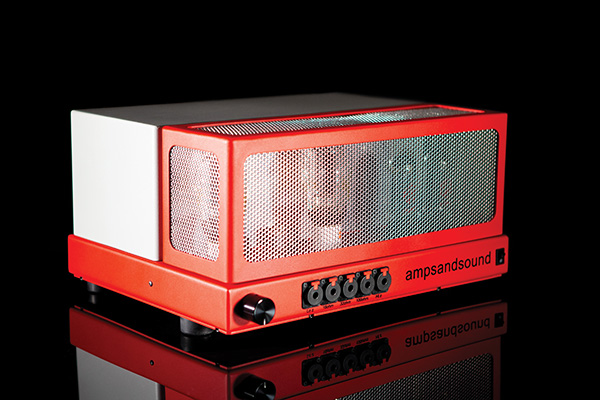 The Red October offers a different presentation than the amps I've been using most with the La Scalas: the Manley Mahi monoblocks (which use four EL84s per side and also hail from California). The Mahis are snappier and more propulsive; the Red October sounds weightier, bigger, and slightly more colorful. The Mahis are better at rock; the Red October is better at unraveling busy music. Both are terrific at musical flow and communication. Whereas the Mahis offer verve and excitement, the Red October offers a more contemplative experience, encouraging the listener to close their eyes and sink into the music.
What kept nagging at me was why the low-gain, zero-feedback Red October sounded wonderful with the La Scalas when other, even far more powerful SETs didn't. According to Weber, it's mostly to do with the massive output transformers, which he described as his amp's centerpiece. They are a collaboration with Gery Gaetani of Transcendar Transformers in Hollister, California, who has wound magnetics for Audio Research. Weber told me that he's worked with Gaetani for nearly 20 years, and also that Gaetani is hard of hearing and communicates entirely via email, so he has never met him or even heard his voice. In any case, the output transformers are as overbuilt as everything else in the Red October, reportedly wound using a particularly heavy gauge of magnet wire and built around 20W cores, which some might consider overkill for an 8W amp.
The Red October offers a different presentation than the amps I've been using most with the La Scalas: the Manley Mahi monoblocks (which use four EL84s per side and also hail from California). The Mahis are snappier and more propulsive; the Red October sounds weightier, bigger, and slightly more colorful. The Mahis are better at rock; the Red October is better at unraveling busy music. Both are terrific at musical flow and communication. Whereas the Mahis offer verve and excitement, the Red October offers a more contemplative experience, encouraging the listener to close their eyes and sink into the music.
What kept nagging at me was why the low-gain, zero-feedback Red October sounded wonderful with the La Scalas when other, even far more powerful SETs didn't. According to Weber, it's mostly to do with the massive output transformers, which he described as his amp's centerpiece. They are a collaboration with Gery Gaetani of Transcendar Transformers in Hollister, California, who has wound magnetics for Audio Research. Weber told me that he's worked with Gaetani for nearly 20 years, and also that Gaetani is hard of hearing and communicates entirely via email, so he has never met him or even heard his voice. In any case, the output transformers are as overbuilt as everything else in the Red October, reportedly wound using a particularly heavy gauge of magnet wire and built around 20W cores, which some might consider overkill for an 8W amp.
 Enter the XL
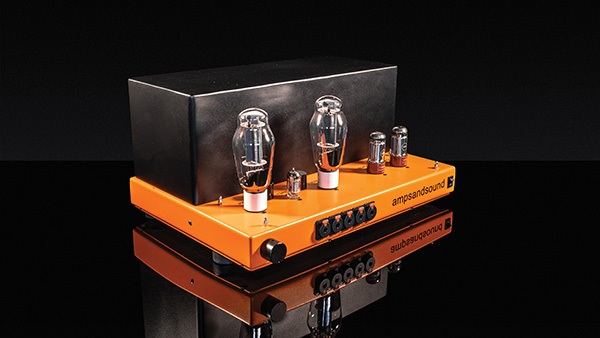
To underscore the output transformer's primacy, Weber let it drop that the Red October was no longer the flagship of his headphone amp lineup. He'd recently introduced the Red October XL, which differs from the smaller amp mainly in one way: the presence of even larger, more complex output transformers, with more interleaving and 30W cores. (It actually differs in two ways: the XL costs an eye-watering $19,000.) Weber suggested that the new amp sounds substantially different from the Red October and asked if I wanted to hear it. "How much does it weigh?" I blurted out. And that is how, despite better judgment, I was soon wincing at the sight of the FedEx guy pulling a Pelican-style case weighing 126lb toward my front door. I hope I've conveyed how much I enjoyed my time with the Red October, which paired as winningly with the La Scalas as any amp I've tried. But the XL turned out to be a whole 'nother trip. Moving to the larger amp was akin to looking at a scene by a terrific Renaissance painter like Andrea del Sarto and then looking at a Caravaggio. On the surface the differences are subtle, but in the ways that matter the two are as distinct as night and day.















