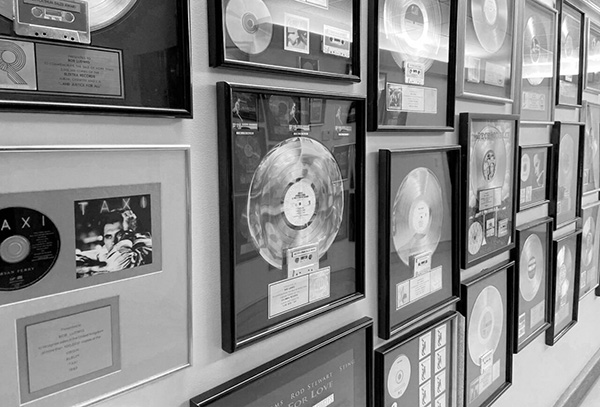
The wall of Gold and Platinum Disc Awards, as displayed at the Gateway Mastering website.
In Part 1 of this interview, which announced that famed mastering engineer Bob Ludwig was retiring, Ludwig discussed his early days as a music-loving student, as a trumpet player, his graduation from Eastman College with a Master's degree in music performance, and how working with legendary engineer and producer Phil Ramone at A&R Studio awakened his interest in how records are made. In this second part, Ludwig talks about how he moved to Sterling Sound, then to Masterdisk, and finally how and why he set up his own studio, Gateway Mastering Studios in Portland, Maine.
The new place in town – Sterling SoundLudwig hit a crossroads at A&R. The studio built a stereo mastering room, at 799 7th Ave., and he learned how to wrestle an early Neumann automated lathe and first-generation two-channel stereo cutting head into making "fairly good-sounding" results. Steve Temmer, owner of Gotham Audio and Neumann's US distributor, loaned him a new helium-cooled cutting head, the SX-68. "I was really happy about it. But after living with it for a short time, Temmer said, 'I have to take it back and show it around to the other studios.' I thought, no matter how good I am, there will be a lot of records I cannot beat now without that head. For some reason, A&R would not buy me the head. I was pretty annoyed." Meanwhile, a new state of the art operation had started, a new kind of business. In December 1967, Doug Sax had opened the first dedicated mastering studio in California; the studio's sole business was to cut records. There were no recording facilities, no sound-for-picture operation—just mastering.

Joe Paschek in one side of Sterling's original control room.
Back in New York, partners Lee Hulko and Joe Paschek established Sterling Sound in October 1968. Brand new in all respects, their facility had a Neumann VMS-66 lathe with—yes—a SX-68 cutter head and new Neumann high-power solid state amplifiers. A Neumann mastering console including equalization and dynamics-control facilities and a state-of-the-art Telefunken M10A tape machine designed with a special preview-audio head to feed the lathe's analog computer, which controlled groove pitch and depth based on loudness, frequency, and phase information from the musical signal, completed the signal chain. The future had arrived.
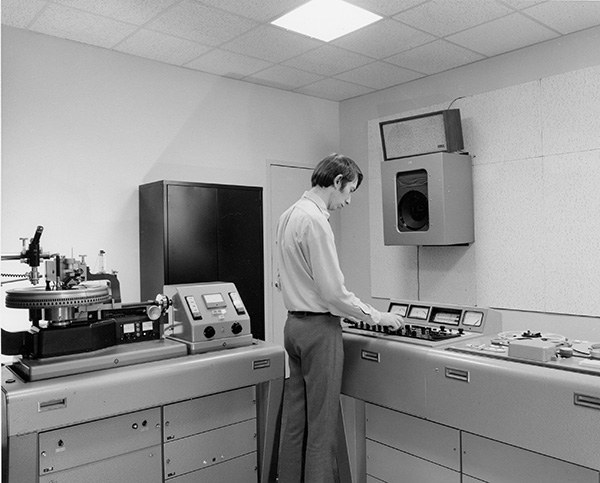
Lee Hulko in the other part of the original control room.
"I called them up and visited. Lee Hulko ... was a super-smart guy," Ludwig said. "I asked if maybe they needed some help, and they offered me a job." He was paid a salary plus a percentage of the work he brought in, so the new job meant more money, "but I didn't care about that. The only thing I cared about was that cutterhead," he said, only half-jokingly.
He joined Sterling in mid-1969. For a short time, he also worked at A&R, training his replacement mastering engineer, Dave Crawford. The move to Sterling was successful. "We started cutting records and cutting hits right away."
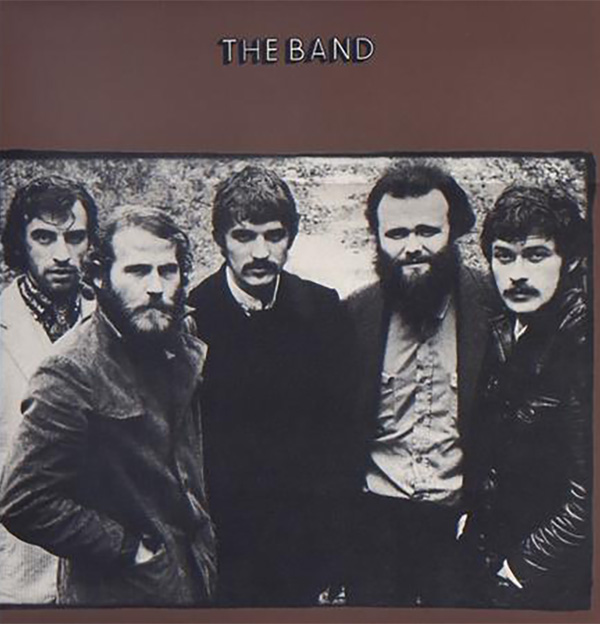 Pinning Ludwig down on a handful of favorite albums he mastered is basically impossible—the handful becomes an overflowing cornucopia; see the sidebar "Bob's Favorite Cuts"—but he is quick to name his top choice: The Band's self-titled second album, which he cut at Sterling in 1969, soon after he arrived. "That's my favorite of all ... Robbie (Robertson) was there and he was making suggestions. This one stands at the top top, the fact that I was involved with the music that was so iconic."
Ludwig received his first credit on a record sleeve, "Special Thanks," on the inner sleeve of Sly and the Family Stone's There's A Riot Goin' On (footnote 5). It chafes him that mastering credits were not regularly listed prior to 1972 and that it took decades for Grammy Awards to include mastering engineers. Nowadays, he worries about lax metadata standards for streaming tracks (check the credits for a few of your favorite albums and songs on your favorite streaming service—is the mastering engineer named consistently? In many if not most cases, you will not find this information in the credits—or, on albums that have been reissued often, you'll find several mastering engineers listed regardless of who mastered that issue).
A chance meeting at Sterling led Ludwig to a long-time association with equipment designer and entrepreneur Mark Levinson. "This guy gets off the elevator and pops his head through the window of the waiting room at Sterling and yells, 'Do you know you're destroying your sound with transformers?' That was my introduction to Mark Levinson. We got to talking with him and he said, 'you know, if you remove transformers from the circuits in the audio your equipment will sound better.' We followed that, and it can be true." Over the years, Ludwig has used many Levinson-associated products including (at Masterdisk) Levinson's massive HQD hybrid loudspeaker system.
Pinning Ludwig down on a handful of favorite albums he mastered is basically impossible—the handful becomes an overflowing cornucopia; see the sidebar "Bob's Favorite Cuts"—but he is quick to name his top choice: The Band's self-titled second album, which he cut at Sterling in 1969, soon after he arrived. "That's my favorite of all ... Robbie (Robertson) was there and he was making suggestions. This one stands at the top top, the fact that I was involved with the music that was so iconic."
Ludwig received his first credit on a record sleeve, "Special Thanks," on the inner sleeve of Sly and the Family Stone's There's A Riot Goin' On (footnote 5). It chafes him that mastering credits were not regularly listed prior to 1972 and that it took decades for Grammy Awards to include mastering engineers. Nowadays, he worries about lax metadata standards for streaming tracks (check the credits for a few of your favorite albums and songs on your favorite streaming service—is the mastering engineer named consistently? In many if not most cases, you will not find this information in the credits—or, on albums that have been reissued often, you'll find several mastering engineers listed regardless of who mastered that issue).
A chance meeting at Sterling led Ludwig to a long-time association with equipment designer and entrepreneur Mark Levinson. "This guy gets off the elevator and pops his head through the window of the waiting room at Sterling and yells, 'Do you know you're destroying your sound with transformers?' That was my introduction to Mark Levinson. We got to talking with him and he said, 'you know, if you remove transformers from the circuits in the audio your equipment will sound better.' We followed that, and it can be true." Over the years, Ludwig has used many Levinson-associated products including (at Masterdisk) Levinson's massive HQD hybrid loudspeaker system.
Footnote 4: As a teenager, I owned a copy of the timid Atlantic cut of LZII. I always wondered why the album sounded so much bigger and louder on FM radio. I now suspect that New York's rock stations were playing original Ludwig cuts. Footnote 5: See bit.ly/47j4ngz. Footnote 6: See discogs.com/release/4662551-Peggy-Lee-Mirrors.