In a deal news reports value between $6 and $7 billion, BMG Rights Management GmbH, a subsidiary of Bertelsmann Group, will merge with Concord Music Group, paying Concord's current owner Great Mountain Partners $1.16 billion and leaving them with 33% of the resulting entity. BMG will own 67%. The deal is expected to close later this year.
According to a BMG press release, Concord CEO Bob Valentine will serve as CEO, and BMG CEO Thomas Coesfeld will serve as chairman of the combined company, with global headquarters in Nashville (where Concord is currently based) and European Headquarters in Berlin. It will be named BMG, with two divisions. BMG Publishing will handle the companies' vast music-publishing and rights-management businesses, and Concord Records will handle the combined back catalog of the BMG and Concord record labels.
 BMG's press release says that the goal is growth. "A mid-term ambition (is) to achieve $1.2 billion in EBITDA, building from a pro forma EBITDA base of more than $730 million in 2026, driven through organic growth, [mergers and acquisitions], and synergies."
In terms of total value, the merged companies will become the fourth largest in the global music business, a close fourth place to Warner Music and far behind behemoths Universal Music Group and Sony Music.
BMG's press release says that the goal is growth. "A mid-term ambition (is) to achieve $1.2 billion in EBITDA, building from a pro forma EBITDA base of more than $730 million in 2026, driven through organic growth, [mergers and acquisitions], and synergies."
In terms of total value, the merged companies will become the fourth largest in the global music business, a close fourth place to Warner Music and far behind behemoths Universal Music Group and Sony Music.
 BMG and Concord have mostly focused on back-catalog reissues, but they do boast a handful of modern-day stars. BMG's artist lineup includes Jelly Roll and Lainey Wilson on the country side and Kylie Minogue, Lily Allen, Marina, and Louis Tomlinson in pop. Concord's lineup of current artists is smaller and less well-known; it includes Ghost, Sierra Ferrell, Margo Price, Sarah McLachlan, and Korn.
 The Concord Group started out as Concord Jazz, a record label founded in 1973 by Carl Jefferson, owner of a Lincoln-Mercury dealership in Concord, California. The current entity took shape in 2004, when Concord Records purchased the Fantasy Label Group, which included Stax, Prestige, Riverside, Milestone, Fantasy, and other former independent record labels. In 2005, the company acquired Telarc Records; former Telarc engineer Paul Blakemore is currently Concord Group's head of mastering.
At one time, the state of Michigan's retirement fund was the majority owner of Concord. Just as Fantasy Group was quick to release much of its massive archive on CDs, Concord has aggressively migrated its music to streaming. It has also pursued an aggressive push into vinyl over the past decade.
The Concord Group started out as Concord Jazz, a record label founded in 1973 by Carl Jefferson, owner of a Lincoln-Mercury dealership in Concord, California. The current entity took shape in 2004, when Concord Records purchased the Fantasy Label Group, which included Stax, Prestige, Riverside, Milestone, Fantasy, and other former independent record labels. In 2005, the company acquired Telarc Records; former Telarc engineer Paul Blakemore is currently Concord Group's head of mastering.
At one time, the state of Michigan's retirement fund was the majority owner of Concord. Just as Fantasy Group was quick to release much of its massive archive on CDs, Concord has aggressively migrated its music to streaming. It has also pursued an aggressive push into vinyl over the past decade.

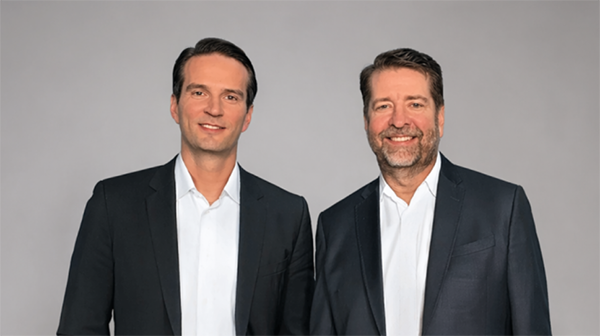
BMG's Thomas Coesfeld (left) and Concord's Bob Valentine. Photo courtesy of BMG-Concord.
BMG reported that since 2021 it has "invested more than $1.5 billion in music rights acquisitions and an equal amount in signings, licenses, and technology," doubling its operating EBITDA (Earnings Before Interest, Taxes, Depreciation, and Amortization; EBITDA is a measure of operating profitability). According to BMG, "Concord brings a similarly disciplined approach, investing more than $3 billion since 2020 across publishing, recorded music, theatrical rights, and distribution and supporting more than 125,000 artists and songwriters around the world."
Jelly Roll and Lainey Wilson perform "Save Me" at the Grand Ole Opry in March 2026. © Grand Ole Opry; photo by Chris Hollo.
Margo Price. Photo by Yana Yatsuk.
On the publishing side, BMG represents Jagger/Richards, Bruno Mars, Diane Warren, Lewis Capaldi, John Legend, and Pitbull. Concord's publishing business represents The 1975, Jacob Collier, Denzel Curry, Mark Ronson, and Daniel Lanois, among others.
Bertlesmann, a privately owned multinational conglomerate, was already in the European publishing and music businesses when it acquired a stake in RCA Records in 1985. BMG, for Bertelsmann Music Group, was established in 1987 and came to fully own RCA, Arista, and other labels just as CD's heyday dawned. In 2004, Bertelsmann and Sony merged their music divisions to form Sony-BMG, and Sony bought out Bertelsmann in 2008, for $1.5 billion. The current BMG was constituted in the wake of that sale, originally made up of BMG's retained music publishing and rights-management businesses. Gradually, the company got back into recorded music on a relatively small scale.