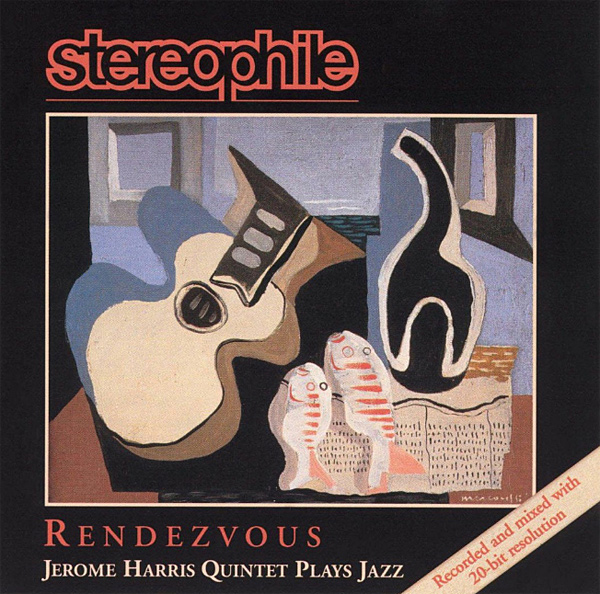
 The midrange was now smooth- and natural-sounding. The imaging was precise on my late-1990s recordings of the Santa Fe Chamber Music Festival, and the soundstage was reproduced with the appropriate depth. This was particularly the case with the KEFs, with which the Audio Research amplifier made a synergistic match. In "Decision Point" from Jerome Harris Quartet's Rendezvous (16/44.1 ALAC file, Stereophile STPH013-2, footnote 3), which I recorded in Chad Kassem's Blue Heaven Studio in Kansas, the pairing made palpable the delicate church acoustic around and behind Billy Drummond's drums.
Harris's Taylor acoustic bass guitar is inherently soft toned, but it sounded slightly more so with the Audio Research amplifier compared with the Parasound Halo JC 1+ monoblocks driven directly by the digital sources with the volume controlled by Roon. Listening to the bass guitar on Ronald Isley's rococo version of "The Look of Love" (16/44.1 ALAC rip from CD, Here I Am, DreamWorks B0001005 02), these solid state amplifiers had a better sense of low-frequency drive, even with the two minimonitors, though it is fair to note that at $18,998/pair, the Parasounds cost more than three times the price of the I/50. It is also fair to note that the less-expensive Audio Research's reproduction of soundstage depth on Rendezvous equaled that produced by the Parasounds.
One thing I noticed with the Isley track was that, with the balanced drive from the MBL processor, I was in danger of running out of gain. (The amplifier's balanced input has 6dB less gain than the single-ended inputs—see the Measurements sidebar.) With the 87.5dB-sensitive GoldenEar speakers and the I/50's volume control set to "41," about 5dB below the maximum, the SPL at my listening chair, measured with the Studio Six app on my iPhone, was 89.4dB(C). In my medium-sized room, the music was sufficiently but not excessively loud. In a room larger than mine or with insensitive loudspeakers, the amplifier may not play loud enough unless used with a single-ended source.
The midrange was now smooth- and natural-sounding. The imaging was precise on my late-1990s recordings of the Santa Fe Chamber Music Festival, and the soundstage was reproduced with the appropriate depth. This was particularly the case with the KEFs, with which the Audio Research amplifier made a synergistic match. In "Decision Point" from Jerome Harris Quartet's Rendezvous (16/44.1 ALAC file, Stereophile STPH013-2, footnote 3), which I recorded in Chad Kassem's Blue Heaven Studio in Kansas, the pairing made palpable the delicate church acoustic around and behind Billy Drummond's drums.
Harris's Taylor acoustic bass guitar is inherently soft toned, but it sounded slightly more so with the Audio Research amplifier compared with the Parasound Halo JC 1+ monoblocks driven directly by the digital sources with the volume controlled by Roon. Listening to the bass guitar on Ronald Isley's rococo version of "The Look of Love" (16/44.1 ALAC rip from CD, Here I Am, DreamWorks B0001005 02), these solid state amplifiers had a better sense of low-frequency drive, even with the two minimonitors, though it is fair to note that at $18,998/pair, the Parasounds cost more than three times the price of the I/50. It is also fair to note that the less-expensive Audio Research's reproduction of soundstage depth on Rendezvous equaled that produced by the Parasounds.
One thing I noticed with the Isley track was that, with the balanced drive from the MBL processor, I was in danger of running out of gain. (The amplifier's balanced input has 6dB less gain than the single-ended inputs—see the Measurements sidebar.) With the 87.5dB-sensitive GoldenEar speakers and the I/50's volume control set to "41," about 5dB below the maximum, the SPL at my listening chair, measured with the Studio Six app on my iPhone, was 89.4dB(C). In my medium-sized room, the music was sufficiently but not excessively loud. In a room larger than mine or with insensitive loudspeakers, the amplifier may not play loud enough unless used with a single-ended source.
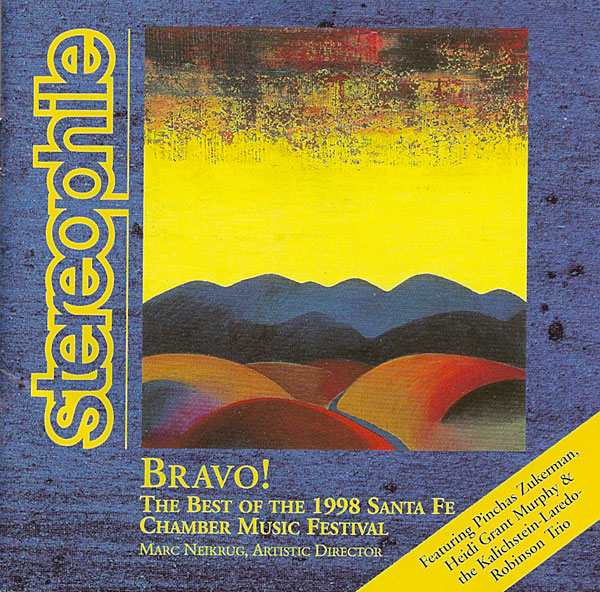 In 1998, I recorded the Kalichstein-Laredo-Robinson Trio, augmented by Daniel Phillips on violin and Robert Rinehart on viola, performing Elgar's hauntingly monumental Piano Quintet for a Stereophile CD (Bravo!, STPH 014-2). Listening to the 16/44.1 master files with Roon, the MBL DAC, the I/50, and the Audeze headphones, I was transported back to Santa Fe's St. Francis Auditorium. The sound was full-bodied, perhaps too much so—until I remembered to disable the low-frequency equalization (in Roon) that I had been using for the KEF and GoldenEar speakers. So engaging was the I/50's presentation that, instead of switching among albums, I listened to all 39 minutes of the Elgar, marveling at how the composer gave the viola so many of the tunes. The left-hand register of Kalichstein's piano sounded authoritative even without the benefit of Roon's DSP preset for the LCD-X (footnote 5).
I experienced one bug with the amplifier's control software. Occasionally, the amplifier spontaneously went into standby mode, at least as indicated by the Lexitubes' single dots, while the tubes all remained powered up. This could be some sort of tube-protection feature except that it didn't seem related to playback level; the average voltage the last time it happened was 3v RMS, and it never occurred during high-power measuring on the test bench. Pressing the Power button on the amplifier's top panel, after waiting the requisite 3 minutes, always brought the I/50 back into action.
Conclusion
In 1998, I recorded the Kalichstein-Laredo-Robinson Trio, augmented by Daniel Phillips on violin and Robert Rinehart on viola, performing Elgar's hauntingly monumental Piano Quintet for a Stereophile CD (Bravo!, STPH 014-2). Listening to the 16/44.1 master files with Roon, the MBL DAC, the I/50, and the Audeze headphones, I was transported back to Santa Fe's St. Francis Auditorium. The sound was full-bodied, perhaps too much so—until I remembered to disable the low-frequency equalization (in Roon) that I had been using for the KEF and GoldenEar speakers. So engaging was the I/50's presentation that, instead of switching among albums, I listened to all 39 minutes of the Elgar, marveling at how the composer gave the viola so many of the tunes. The left-hand register of Kalichstein's piano sounded authoritative even without the benefit of Roon's DSP preset for the LCD-X (footnote 5).
I experienced one bug with the amplifier's control software. Occasionally, the amplifier spontaneously went into standby mode, at least as indicated by the Lexitubes' single dots, while the tubes all remained powered up. This could be some sort of tube-protection feature except that it didn't seem related to playback level; the average voltage the last time it happened was 3v RMS, and it never occurred during high-power measuring on the test bench. Pressing the Power button on the amplifier's top panel, after waiting the requisite 3 minutes, always brought the I/50 back into action.
ConclusionI enjoyed my time with the Audio Research I/50. It is the perfect amplifier for use in a relatively small room with a high-quality source and speakers, especially if the latter have a fairly high impedance. The I/50 has a touch of that "tube magic" but without going whole hog, as so many of the current crop of tubed amplifiers do
Footnote 3: This CD is out-of-print but the files can be downloaded or streamed from jeromeharris.bandcamp.com/album/rendezvous. Footnote 4: I used to use a peak-reading digital sound pressure meter I had designed for an article in the October 1981 issue of Hi-Fi News & Record Review to measure the spls at a live classical concerts. In a concerto performance in London's Royal Festival Hall, Perlman's solo violin averaged about 70dB spl at my seat, with orchestral climaxes about 25dB higher. Footnote 5: See help.roonlabs.com/portal/en/kb/articles/audeze-presets#What_are_Audeze_Presets.