Setup . . .
. . . was easy. The Ascona Mk.2's three large knobs make it easy to level the top chassis and thus the platter. The outboard AlphaDIG power supply allowed for easy, precise adjustment of the platter's two speeds (33 1/3 and 45rpm). I'm still not sold on the need for three motors, let alone six in the Invictus. I understand the rationale for equalizing the pull of the belt on the bearing, but in the real world, how much actual pull can there be, especially with a compliant belt?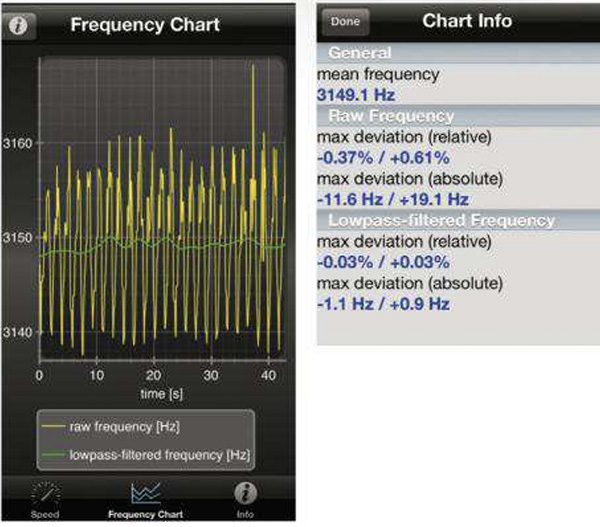
Sound: Ascona Mk.2
Combined with the TA-9000—also an unknown—the Ascona Mk.2 produced a smooth sound with a rich midrange, great detail, and great resolution. The Acoustic Signature combo had far less grip on and control of the bottom end than did the Kuzma Stabi M and 14" 4Point arm, which had better bottom-end extension, speed, and rhythmic clarity for a lower price, though the Ascona Mk.2 and TA-9000 were far better at fleshing out the midrange to produce a pleasing, measured bloom. Eliminating the arm variable meant using the SAT arm with both the Continuum Caliburn and the Ascona Mk.2. That was easy—I had a second SAT mount on the Ascona. I could play a track on the Caliburn, lift the arm out of the base of one turntable, and plop it down in the other, knowing that all setup parameters were identical. And, of course, I was able to use the same Lyra Atlas cartridge in both rigs, which helped determine the true measures of the TA-9000 tonearm and the Ascona Mk.2 itself.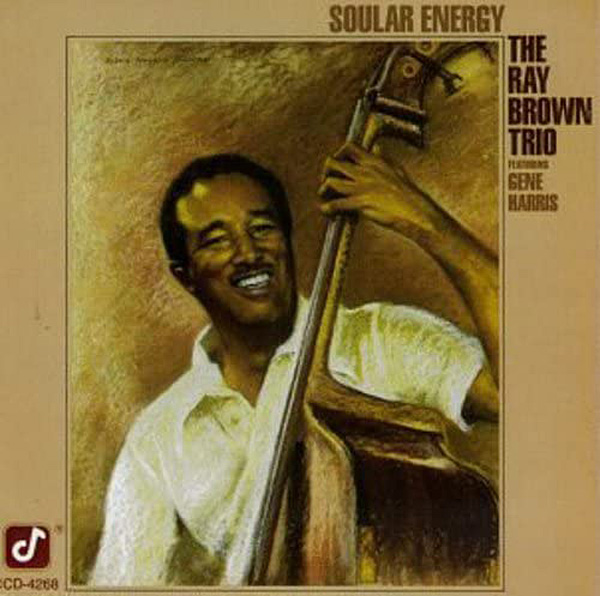
I recorded three tracks at 24/96 with each 'table, but listened to many more on both. The recorded tracks were a reissue of the Ray Brown Trio's Soular Energy (Concord Jazz/Analogue Productions APJ-268-45); a reissue of Gershwin's Rhapsody in Blue with pianist Earl Wild and Arthur Fiedler conducting the Boston Pops (RCA Living Stereo/Analogue Productions LSC-2367); and an original pressing of Eno's Another Green World (UK Island ILPS 9135). I've long had a second pressing of the Eno on Polydor, as well as a Japanese original, but I'd always wanted an original UK Island. I found a minty one on Discogs and pulled the $100 trigger. I'd rather have this record than $100 in the bank!
I'll spare you the methodology and cut to the chase. Extracting only the turntable results from these comparisons: The sound of the Ascona Mk.2 was pleasingly rich in the midrange, and delicately drawn in terms of attack, sustain, and decay—quite the opposite of the combination of Kuzma Stabi M turntable and 4Point 14" tonearm. However, the Kuzma player's bottom end was better controlled, and further extended and distinct. The Ascona Mk.2's somewhat rich midrange also produced larger, somewhat less focused images than the Kuzma player with its own arm or the Continuum with the SAT arm.
On the Kuzma combination and the Caliburn with the SAT arm, the image of Wild's piano was compact, well focused, and appropriately small—as you'd hear it from, say, the first row in the balcony—though the Kuzma presented it as more of a percussive event, losing some of the instrument's woody tonality. The Ascona's rendering was larger, bloomier, and less well focused. The tonality, though, was preferable to the Kuzma's.
The Ascona Mk.2's strongest suits, aside from pleasingly "black" backgrounds, were its delicacy of attack, midband richness, and textural smoothness without softening that reminded me of the very expensive Onedof turntable ($175,000). A higher compliment I can't pay.
However, macrodynamics, bottom-end extension, and rhythmic drive, while reasonably good, weren't as fully expressed as I'd expected from so massive a design, nor were backdrops as drop-dead "black" as I'd expected. If you value high-resolution delicacy—and, especially, textural and harmonic expressiveness—and have the money, the Acoustic Signature Ascona Mk.2 is worth your attention.
Sound: TA-9000
Gunther Frohnhöfer said that his goal was to produce a light, stiff, well-damped armtube. He's accomplished the light, stiff part for sure, but the TA-9000 was surprisingly lively in response to a finger tap, transmitting a great deal of the tap's energy through the system to the speakers. (Perhaps it's the inner arm that counts in such a tap, but there's no way to test that.) That surprised me. I was more surprised when I assessed the arm's horizontal and vertical resonant frequencies using the Hi-Fi News & Record Review Test Record (LP, Hi-Fi News HFN 001), and couldn't hear or see the arm jiggle the way it should at the test frequencies for horizontal and vertical resonance—which means they were not only outside the desired range of 8–12Hz, but outside the test-band range of 5–25Hz. That would indicate that the arm's mass is too low for a typical low-compliance moving-coil cartridge, which would put the resonant frequency beyond the upper, 25Hz limit of the Test Record's range (footnote 4).
Just to be sure, I ran the same test on the SAT arm. Sure enough, in the tests of both horizontal and vertical resonances, the arm and cartridge began to violently jiggle and wobble within a very narrow frequency range centered on 9Hz—as they should.
Because the Ascona Mk.2 was also not ironfisted on the bottom, I don't recommend using it with the TA-9000. Instead, I'd bet the TA-9000 would sound better on the Kuzma Stabi M, and the Kuzma 4Point on the Ascona Mk.2. (I'd also bet that neither manufacturer enjoyed reading that last sentence.) Still, an arm of relatively low mass like the TA-9000 won't be ideal for any low-compliance MC cartridge.
Unless I'm missing something and my measurements are off (though I've reliably measured dozens of arms), it seems that Gunther Frohnhöfer has overlooked something. Which surprises me.
One more thing: After using the supplied AudioQuest DIN-to-RCA phono cable for most of my listening, toward the end I received a Luminous Audio Technology Silver Reference DIN-to-RCA that, much to my surprise, improved every aspect of the TA-9000's sound: better focus, more tightly drawn images, more air, "blacker" backgrounds. Recordings of the two cables played for disinterested parties confirmed all of that.
The Luminous Silver Reference ($1599) is made of 21-gauge, 99.999%-pure silver wire coated with Teflon, and is fitted with Furutech's FP-DIN connector and ETI silver Bullet Plugs. The custom shielding is handmade, and includes a double braid of copper insulated with a special polypropylene mesh to help reduce capacitance.
Conclusions
The Acoustic Signature Ascona Mk.2 turntable is ingeniously designed, superbly machined and constructed, and versatile. It excels where music lives—in the midrange—where it reproduces recordings with great delicacy and a pleasing smoothness that brought back fond memories of the Onedof turntable's creamy midband smoothness and precise reproduction of transients.
However, despite the Ascona's ultra-high mass and heroic engineering, and even with the $5000 Invictus platter option, I felt that its overall performance, while very enjoyable, enticing, and musically pleasing, was on the polite side.
Why? Image focus was less well defined and less tightly controlled than I'd expected, and while its bottom-end extension was very good, its dynamic slam failed to throw me back in my seat with records that I know are capable of delivering precisely that. The price of this turntable is justified by its construction quality and cosmetics, somewhat less so by its overall sound (footnote 5).
As for the beautifully designed and innovatively constructed TA-9000 tonearm, unless my resonant-frequency observations were somehow off-the-charts wrong—though they did back up what I'd heard in terms of diminished bass output—the arm's mass is too low to work well with modern, low-compliance MC cartridges. Also, for $17,995, I feel you're entitled to an easier, more sophisticated way of adjusting VTA and SRA.
Footnote 4: According to the Acoustic Signature website, the TA-9000's effective mass is 14.7gm, which in theory would be appropriate for use with a cartridge with low–moderate compliance. With the Lyra Atlas's specified mass of 11.6gm and compliance of 12cu, the resonance should lie at 9Hz. Unless the TA-9000 features significant damping at the pivot or the specified numbers are incorrect, it is a puzzle why the resonance was not detectable.—Ed. Footnote 5: See Michael Fremer's July 2017 Follow-Up review here.—Ed.
. . . was easy. The Ascona Mk.2's three large knobs make it easy to level the top chassis and thus the platter. The outboard AlphaDIG power supply allowed for easy, precise adjustment of the platter's two speeds (33 1/3 and 45rpm). I'm still not sold on the need for three motors, let alone six in the Invictus. I understand the rationale for equalizing the pull of the belt on the bearing, but in the real world, how much actual pull can there be, especially with a compliant belt?
Fig.1 Acoustic Signature Ascona Mk.2, speed stability (raw frequency yellow; low-pass filtered frequency green). Fig.2 Acoustic Signature Ascona Mk.2, speed stability data.
Even if the AlphaDIG works perfectly, small deviations in the pulley machining and/or the belt's thickness would probably undo any gains in terms of speed accuracy. The measurements I took with Dr. Feickert Analogue's PlatterSpeed software (figs.1 & 2) were very, very good, but not exceptionally so—certainly not three times better than 'tables fitted with one motor, and, as I recall, not as good as some of them.
Though unsuspended, the Ascona's platter was extremely well isolated from exterior vibrations. With the stylus sitting in the groove and me tapping—banging—on the HRS platform with a finger, I heard almost no sound from the speakers. When I banged on the upper chassis, same result.
Combined with the TA-9000—also an unknown—the Ascona Mk.2 produced a smooth sound with a rich midrange, great detail, and great resolution. The Acoustic Signature combo had far less grip on and control of the bottom end than did the Kuzma Stabi M and 14" 4Point arm, which had better bottom-end extension, speed, and rhythmic clarity for a lower price, though the Ascona Mk.2 and TA-9000 were far better at fleshing out the midrange to produce a pleasing, measured bloom. Eliminating the arm variable meant using the SAT arm with both the Continuum Caliburn and the Ascona Mk.2. That was easy—I had a second SAT mount on the Ascona. I could play a track on the Caliburn, lift the arm out of the base of one turntable, and plop it down in the other, knowing that all setup parameters were identical. And, of course, I was able to use the same Lyra Atlas cartridge in both rigs, which helped determine the true measures of the TA-9000 tonearm and the Ascona Mk.2 itself.
I recorded three tracks at 24/96 with each 'table, but listened to many more on both. The recorded tracks were a reissue of the Ray Brown Trio's Soular Energy (Concord Jazz/Analogue Productions APJ-268-45); a reissue of Gershwin's Rhapsody in Blue with pianist Earl Wild and Arthur Fiedler conducting the Boston Pops (RCA Living Stereo/Analogue Productions LSC-2367); and an original pressing of Eno's Another Green World (UK Island ILPS 9135). I've long had a second pressing of the Eno on Polydor, as well as a Japanese original, but I'd always wanted an original UK Island. I found a minty one on Discogs and pulled the $100 trigger. I'd rather have this record than $100 in the bank!
Gunther Frohnhöfer said that his goal was to produce a light, stiff, well-damped armtube. He's accomplished the light, stiff part for sure, but the TA-9000 was surprisingly lively in response to a finger tap, transmitting a great deal of the tap's energy through the system to the speakers. (Perhaps it's the inner arm that counts in such a tap, but there's no way to test that.) That surprised me. I was more surprised when I assessed the arm's horizontal and vertical resonant frequencies using the Hi-Fi News & Record Review Test Record (LP, Hi-Fi News HFN 001), and couldn't hear or see the arm jiggle the way it should at the test frequencies for horizontal and vertical resonance—which means they were not only outside the desired range of 8–12Hz, but outside the test-band range of 5–25Hz. That would indicate that the arm's mass is too low for a typical low-compliance moving-coil cartridge, which would put the resonant frequency beyond the upper, 25Hz limit of the Test Record's range (footnote 4).
The Acoustic Signature Ascona Mk.2 turntable is ingeniously designed, superbly machined and constructed, and versatile. It excels where music lives—in the midrange—where it reproduces recordings with great delicacy and a pleasing smoothness that brought back fond memories of the Onedof turntable's creamy midband smoothness and precise reproduction of transients.
Footnote 4: According to the Acoustic Signature website, the TA-9000's effective mass is 14.7gm, which in theory would be appropriate for use with a cartridge with low–moderate compliance. With the Lyra Atlas's specified mass of 11.6gm and compliance of 12cu, the resonance should lie at 9Hz. Unless the TA-9000 features significant damping at the pivot or the specified numbers are incorrect, it is a puzzle why the resonance was not detectable.—Ed. Footnote 5: See Michael Fremer's July 2017 Follow-Up review here.—Ed.