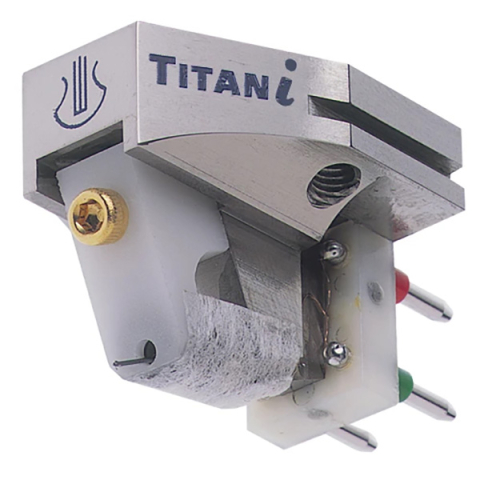
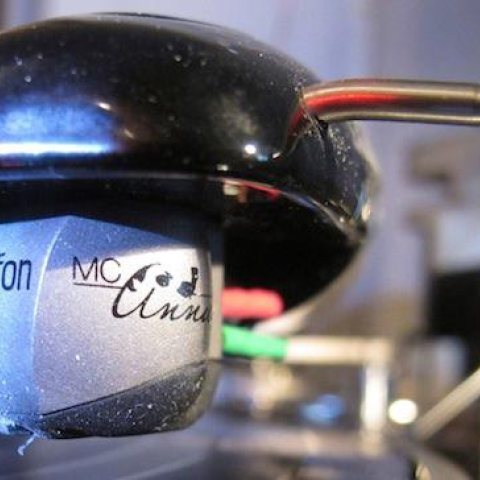
The Madake produced more cymbal shimmer and transient precision than the Shilabe, but not at the expense of the physicality of a metal disc being struck. Those who accuse more analytical cartridges of serving more sizzle than steak, and the Shilabe of dishing out steak but no sizzle, will here find plenty of both.
The Madake's very top produced much of the air and space delivered by some of the cartridges described as "analytical" by some, but without "capital B" brightness or etch. At the same time, the Madake's midrange was well fleshed out and full bodied, just not as fully and generously as the Shilabe's. The Shilabe sounds richer, but the Madake was faster and, in my opinion, more linear.
While the Shilabe reproduces voices with fleshy richness, it has an intrusive coloration that makes this too much of a good thing. The Madake produced an equally attractive but better-balanced richness—and its ability to portray instrumental textures, from the deepest bass-producing instruments to the fastest, highest-frequency percussion, was singular. Harmonic envelopes were signed, sealed, and delivered as few other cartridges can manage—and those that do usually lose some of the Madake's top-end sparkle.
You'll get greater overall slam, dynamic contrasts, imaging specificity, and soundstage depth from the Transfiguration Proteus and the Lyras, among other cartridges, but Miyajima Laboratory's Madake sound is, in my experience, unique. If you have a removable headshell, can easily swap out cartridges, and can afford it, you'll definitely want to add the Madake to your arsenal. I couldn't stop listening to it.
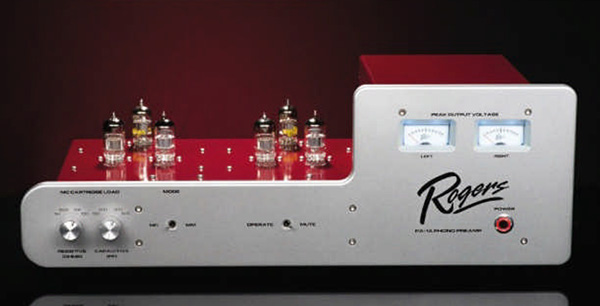 Rogers High Fidelity PA-1A phono preamplifier
If audio manufacturers were judged solely on how well they package and present their products, Rogers High Fidelity would be crowned King—and in this case, what the package contains is equally impressive. That's hardly surprising from a company founded and run by Roger Gibboni (footnote 3), who spent more than 20 years in aerospace engineering and who's designed and manufactured hi-tech gear for the Department of Defense and NASA. For vinyl fans, there's something vindicating about a guy with such a background producing, in 2014, an all-tube phono preamplifier. The comprehensive instruction manual for Gibboni's PA-1A moving-magnet/moving-coil phono preamplifier ($7400) includes a full set of measurements and graphs taken at the factory, after the unit purchased has been given a thorough burn-in. Its red case and brushed-aluminum faceplate are snazzy. On that faceplate are switches for its MM and MC inputs (the latter via a pair of internally mounted transformers), knobs for capacitive and a limited range of resistive loading, a Mute switch, and two meters that indicate peak output voltage, though these are more decorative than useful. On the rear panel, the right-channel jacks are above the left, as is done by only one other company I know of—a well-known Minnesota maker of tubed gear that perhaps was Gibboni's inspiration.
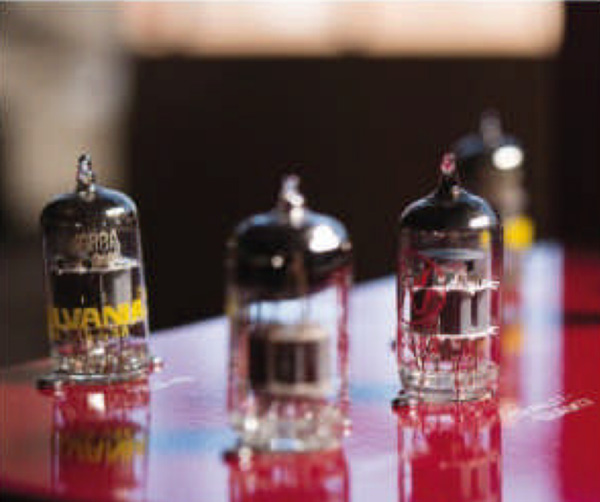
The dual-mono, pure class-A PA-1A has three tubes for each channel: a 12AU7, a 12AX7, and a 6GH8. A second 12AX7 (supplied) can be substituted for the 12AU7 to produce 10dB more gain, at the expense of some noise. The gain is specified at 50dB for MM, or up to 65dB with two 12AX7s for MC gain. The 12AU7 tube provides the first gain stage, half of the dual-triode 12AX7 another 20dB of gain, while the other half acts as a level sensor for the meters. Half of the dual-pentode 6GH8 tube is used as a line driver, the other half as a constant-current sink to ensure reliable linearity, regardless of the quality and length of the phono cables. Rogers expects the tubes to last about 10,000 hours, which is good—the PA-1A needed at least an hour of warmup to sound its best, especially in terms of upper-octave extension.
Suffice it to say that, with his aerospace background, Roger Gibboni has included robust power supplies for both the low-voltage tube filaments and the PA-1A's high-voltage needs, the details of which I don't have space to provide here.
 Inside, welded dividers of aluminum separate the power supply and the two channels from each other. Wiring passing through the chassis dividers are fed through specially designed isolating RF feed-through capacitive filters. Everything, from the chassis to the point-to-point–wired components, is mil-spec. If you get a chance, remove the bottom plate of a PA-1A and have a look inside. It's impressive by any standard, and fully justifies the $7400 price.
Smooth, Tubey Sound: Tube rolling, while easily accomplished with the PA-1A, was off the table: To avoid confusion, I review products as delivered. Even with 0.2mV-output cartridges like the Transfiguration Proteus, the PA-1A produced enough gain with its 12AU7 tube. The system preamp gain needed further cranking, but thanks to the PA-1A's excellent signal/noise ratio, backgrounds remained superbly quiet. Still, for some reason the Rogers was susceptible to hum with both MM and MC cartridges; I had to use well-shielded interconnects and place the PA-1A with care. Auditioning variations included running MC into the PA-1A's transformer-based input, as well as via an outboard transformer into its MM input, and MM direct using a Clearaudio Maestro V2 Ebony cartridge.
Not surprisingly, the PA-1A shared many sonic characteristics with Hagerman Audio Labs' Trumpet Reference, which I reviewed in February 2014. The Trumpet, too, is a well-executed, well-built tubed phono preamp that uses 12AU7 and 12AX7 tubes (though Hagerman uses a JFET-based head amp rather than step-up transformers), and, at $7200, costs almost the same as the Rogers.
The PA-1A produced a glorious, mesmerizingly rich midrange, and the overall drive and musical flow for which tubed phono preamps are renowned, as well as the less-than-taut-and-punchy bottom end for which they're also known. Tactile bass textures more than made up for the lack of tautness, the latter more noticeable with electric guitar than double bass.
Running the Transfiguration Proteus into the MC input, even fully unloaded at 1 megohm, somewhat tamed the cartridge's pleasingly exuberant top end. Running the Proteus through the very large Ypsilon MC16 step-up transformer and into the PA-1A's MM input greatly opened up the top end and improved dynamics—as well it should, at a cost, of almost as much as the PA-1A itself. And while some tubed phono preamps can sound thick and a bit cloudy, the PA-1A was remarkably transparent, though you'd still have no trouble guessing you were listening to tubes.
Inside, welded dividers of aluminum separate the power supply and the two channels from each other. Wiring passing through the chassis dividers are fed through specially designed isolating RF feed-through capacitive filters. Everything, from the chassis to the point-to-point–wired components, is mil-spec. If you get a chance, remove the bottom plate of a PA-1A and have a look inside. It's impressive by any standard, and fully justifies the $7400 price.
Smooth, Tubey Sound: Tube rolling, while easily accomplished with the PA-1A, was off the table: To avoid confusion, I review products as delivered. Even with 0.2mV-output cartridges like the Transfiguration Proteus, the PA-1A produced enough gain with its 12AU7 tube. The system preamp gain needed further cranking, but thanks to the PA-1A's excellent signal/noise ratio, backgrounds remained superbly quiet. Still, for some reason the Rogers was susceptible to hum with both MM and MC cartridges; I had to use well-shielded interconnects and place the PA-1A with care. Auditioning variations included running MC into the PA-1A's transformer-based input, as well as via an outboard transformer into its MM input, and MM direct using a Clearaudio Maestro V2 Ebony cartridge.
Not surprisingly, the PA-1A shared many sonic characteristics with Hagerman Audio Labs' Trumpet Reference, which I reviewed in February 2014. The Trumpet, too, is a well-executed, well-built tubed phono preamp that uses 12AU7 and 12AX7 tubes (though Hagerman uses a JFET-based head amp rather than step-up transformers), and, at $7200, costs almost the same as the Rogers.
The PA-1A produced a glorious, mesmerizingly rich midrange, and the overall drive and musical flow for which tubed phono preamps are renowned, as well as the less-than-taut-and-punchy bottom end for which they're also known. Tactile bass textures more than made up for the lack of tautness, the latter more noticeable with electric guitar than double bass.
Running the Transfiguration Proteus into the MC input, even fully unloaded at 1 megohm, somewhat tamed the cartridge's pleasingly exuberant top end. Running the Proteus through the very large Ypsilon MC16 step-up transformer and into the PA-1A's MM input greatly opened up the top end and improved dynamics—as well it should, at a cost, of almost as much as the PA-1A itself. And while some tubed phono preamps can sound thick and a bit cloudy, the PA-1A was remarkably transparent, though you'd still have no trouble guessing you were listening to tubes.
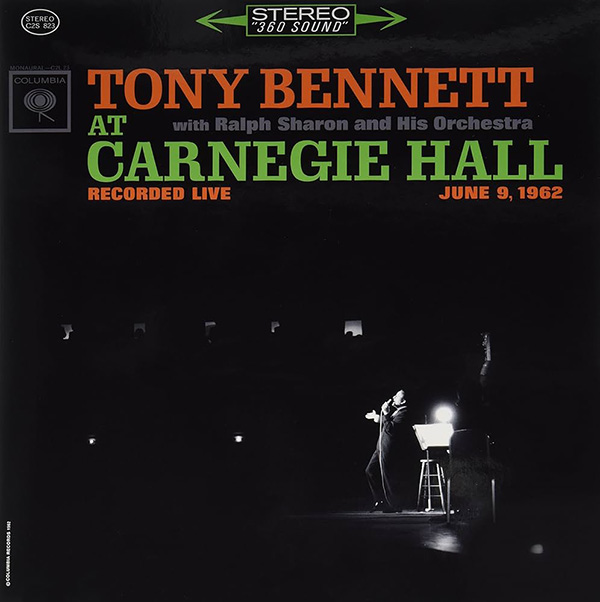 The Proteus or Lyra Etna into the PA-1A's MC input worked effectively with well-recorded acoustic music, such as the reissue of Tony Bennett's At Carnegie Hall (2 LPs, Columbia/Analogue Productions AAPP 823): the hall's acoustic was fully expressed, as was the aura around Bennett's voice. I like a bit more sparkle on top, but that's a matter of taste, and the string tones of Ralph Sharon's orchestra produced maximum listening pleasure.
However, I thought Miyajima Labs' Madake cartridge through the PA-1A was too much of a good thing, producing way too dark a picture. I'd pair the PA-1A with a faster, leaner cartridge: the Proteus, the Lyra Atlas or Etna, or even Clearaudio's Maestro V2 Ebony, which is among the most MC-sounding moving-magnets I've heard.
Those pairings maximized the PA-1A's strengths without revealing its weaknesses, which were mostly in terms of less-than-fully-expressed high-frequency transient speed, edge definition, and rhythmic drive. The PA-1A's overall personality was somewhat soft; some familiar recordings, particularly rock and fusion, felt as if they needed a bit of a wake-up call.
The Proteus or Lyra Etna into the PA-1A's MC input worked effectively with well-recorded acoustic music, such as the reissue of Tony Bennett's At Carnegie Hall (2 LPs, Columbia/Analogue Productions AAPP 823): the hall's acoustic was fully expressed, as was the aura around Bennett's voice. I like a bit more sparkle on top, but that's a matter of taste, and the string tones of Ralph Sharon's orchestra produced maximum listening pleasure.
However, I thought Miyajima Labs' Madake cartridge through the PA-1A was too much of a good thing, producing way too dark a picture. I'd pair the PA-1A with a faster, leaner cartridge: the Proteus, the Lyra Atlas or Etna, or even Clearaudio's Maestro V2 Ebony, which is among the most MC-sounding moving-magnets I've heard.
Those pairings maximized the PA-1A's strengths without revealing its weaknesses, which were mostly in terms of less-than-fully-expressed high-frequency transient speed, edge definition, and rhythmic drive. The PA-1A's overall personality was somewhat soft; some familiar recordings, particularly rock and fusion, felt as if they needed a bit of a wake-up call.
 On the other hand, a recent reissue of Herbie Hancock's Maiden Voyage (LP, Blue Note/Music Matters ST-84195), an album that has always sounded anemic, closed-in, and not particularly well recorded, was, through the PA-1A, a cosmic ear-opener of cleanly rendered, believable instrumental textures and open-window transparency. So were the sonorous, richly textured string tones reproduced by the PA-1A from a new direct-to-disc recording of Vivaldi's The Four Seasons, performed by Interpreti Veneziani and recorded by Mike Valentine at London's AIR Studios (VALDC001; see www.chasingthedragon.co.uk). A recently scored original pressing of Ernest Ansermet and the Royal Opera House Orchestra's The Royal Ballet: Gala Performances (LP, RCA Living Stereo LDS-6065) was a melt-in-the-ear experience.
If you listen mostly to acoustic jazz and/or classical music, the Rogers PA-1A, paired with a cartridge that's fast, open, and extended on top, could be your ticket to long-term satisfaction. If your tastes also run to hard rock and electronic music, you'd probably want to keep on hand an alternative phono preamp, to produce the sparkle and snap on top and the tautness on bottom that kind of music requires, and which I think the Rogers delivers somewhat less of.
In that context, I was thinking of the definite yang of the Dynamic Sounds Associates Phono II ($12,000, reviewed in October 2013), opposed to the Rogers PA-1A's well-defined yin. In that case, I'd pair the DSA with the Miyajima Madake and the Rogers with the Proteus or Atlas, and live happily—and poorer—ever after.
On the other hand, a recent reissue of Herbie Hancock's Maiden Voyage (LP, Blue Note/Music Matters ST-84195), an album that has always sounded anemic, closed-in, and not particularly well recorded, was, through the PA-1A, a cosmic ear-opener of cleanly rendered, believable instrumental textures and open-window transparency. So were the sonorous, richly textured string tones reproduced by the PA-1A from a new direct-to-disc recording of Vivaldi's The Four Seasons, performed by Interpreti Veneziani and recorded by Mike Valentine at London's AIR Studios (VALDC001; see www.chasingthedragon.co.uk). A recently scored original pressing of Ernest Ansermet and the Royal Opera House Orchestra's The Royal Ballet: Gala Performances (LP, RCA Living Stereo LDS-6065) was a melt-in-the-ear experience.
If you listen mostly to acoustic jazz and/or classical music, the Rogers PA-1A, paired with a cartridge that's fast, open, and extended on top, could be your ticket to long-term satisfaction. If your tastes also run to hard rock and electronic music, you'd probably want to keep on hand an alternative phono preamp, to produce the sparkle and snap on top and the tautness on bottom that kind of music requires, and which I think the Rogers delivers somewhat less of.
In that context, I was thinking of the definite yang of the Dynamic Sounds Associates Phono II ($12,000, reviewed in October 2013), opposed to the Rogers PA-1A's well-defined yin. In that case, I'd pair the DSA with the Miyajima Madake and the Rogers with the Proteus or Atlas, and live happily—and poorer—ever after.
Footnote 3: Rogers High Fidelity, 52 Kain Road, Warwick, NY 10990. Tel: (845) 987-7744. Web: rogershighfidelity.com.
Rogers High Fidelity PA-1A phono preamplifierIf audio manufacturers were judged solely on how well they package and present their products, Rogers High Fidelity would be crowned King—and in this case, what the package contains is equally impressive. That's hardly surprising from a company founded and run by Roger Gibboni (footnote 3), who spent more than 20 years in aerospace engineering and who's designed and manufactured hi-tech gear for the Department of Defense and NASA. For vinyl fans, there's something vindicating about a guy with such a background producing, in 2014, an all-tube phono preamplifier. The comprehensive instruction manual for Gibboni's PA-1A moving-magnet/moving-coil phono preamplifier ($7400) includes a full set of measurements and graphs taken at the factory, after the unit purchased has been given a thorough burn-in. Its red case and brushed-aluminum faceplate are snazzy. On that faceplate are switches for its MM and MC inputs (the latter via a pair of internally mounted transformers), knobs for capacitive and a limited range of resistive loading, a Mute switch, and two meters that indicate peak output voltage, though these are more decorative than useful. On the rear panel, the right-channel jacks are above the left, as is done by only one other company I know of—a well-known Minnesota maker of tubed gear that perhaps was Gibboni's inspiration.
Inside, welded dividers of aluminum separate the power supply and the two channels from each other. Wiring passing through the chassis dividers are fed through specially designed isolating RF feed-through capacitive filters. Everything, from the chassis to the point-to-point–wired components, is mil-spec. If you get a chance, remove the bottom plate of a PA-1A and have a look inside. It's impressive by any standard, and fully justifies the $7400 price.
The Proteus or Lyra Etna into the PA-1A's MC input worked effectively with well-recorded acoustic music, such as the reissue of Tony Bennett's At Carnegie Hall (2 LPs, Columbia/Analogue Productions AAPP 823): the hall's acoustic was fully expressed, as was the aura around Bennett's voice. I like a bit more sparkle on top, but that's a matter of taste, and the string tones of Ralph Sharon's orchestra produced maximum listening pleasure.
However, I thought Miyajima Labs' Madake cartridge through the PA-1A was too much of a good thing, producing way too dark a picture. I'd pair the PA-1A with a faster, leaner cartridge: the Proteus, the Lyra Atlas or Etna, or even Clearaudio's Maestro V2 Ebony, which is among the most MC-sounding moving-magnets I've heard.
On the other hand, a recent reissue of Herbie Hancock's Maiden Voyage (LP, Blue Note/Music Matters ST-84195), an album that has always sounded anemic, closed-in, and not particularly well recorded, was, through the PA-1A, a cosmic ear-opener of cleanly rendered, believable instrumental textures and open-window transparency. So were the sonorous, richly textured string tones reproduced by the PA-1A from a new direct-to-disc recording of Vivaldi's The Four Seasons, performed by Interpreti Veneziani and recorded by Mike Valentine at London's AIR Studios (VALDC001; see www.chasingthedragon.co.uk). A recently scored original pressing of Ernest Ansermet and the Royal Opera House Orchestra's The Royal Ballet: Gala Performances (LP, RCA Living Stereo LDS-6065) was a melt-in-the-ear experience.
If you listen mostly to acoustic jazz and/or classical music, the Rogers PA-1A, paired with a cartridge that's fast, open, and extended on top, could be your ticket to long-term satisfaction. If your tastes also run to hard rock and electronic music, you'd probably want to keep on hand an alternative phono preamp, to produce the sparkle and snap on top and the tautness on bottom that kind of music requires, and which I think the Rogers delivers somewhat less of.
Footnote 3: Rogers High Fidelity, 52 Kain Road, Warwick, NY 10990. Tel: (845) 987-7744. Web: rogershighfidelity.com.