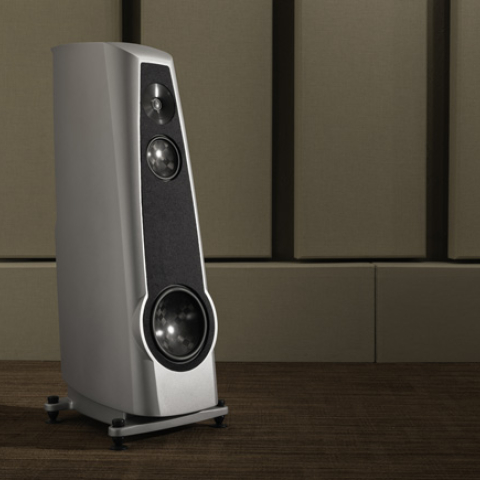
 Because of their extraordinary focusing and structuring talents, both speakers—the Acelec and the TAD—shared a knack for making me pay attention to, and oftentimes enjoy, music I did not appreciate previously.
One such piece, Richard Strauss's Metamorphosen, TrV 290, performed by the recently formed (2018) Sinfonia Grange au Lac, conducted by Finnish conductor/composer Esa-Pekka Salonen (24/48 FLAC, Alpha Classics/Qobuz), drew me all the way in and held my attention all the way through. This never would have happened with a lesser speaker. With the Acelec Model Ones, the orchestra's swollen, cloudlike textures entered my room mixing lush tones of doom with quick, well-defined transients. No blur or crimping between instruments. No gray graininess. Only dense, tactile tones floating through a water-clear soundspace.
Composed in Germany in April 1945, the harmonics-rich melodies in Richard Strauss's Metamorphosen intertwine in a manner suggesting roused dead souls weaving through the ether. With the intense tone and textural mass of 10 violins, five violas, five cellos, and three double basses, this late Strauss appears to express something brighter and more universally spiritual than would be expected from a German artist at that time.
Because of their extraordinary focusing and structuring talents, both speakers—the Acelec and the TAD—shared a knack for making me pay attention to, and oftentimes enjoy, music I did not appreciate previously.
One such piece, Richard Strauss's Metamorphosen, TrV 290, performed by the recently formed (2018) Sinfonia Grange au Lac, conducted by Finnish conductor/composer Esa-Pekka Salonen (24/48 FLAC, Alpha Classics/Qobuz), drew me all the way in and held my attention all the way through. This never would have happened with a lesser speaker. With the Acelec Model Ones, the orchestra's swollen, cloudlike textures entered my room mixing lush tones of doom with quick, well-defined transients. No blur or crimping between instruments. No gray graininess. Only dense, tactile tones floating through a water-clear soundspace.
Composed in Germany in April 1945, the harmonics-rich melodies in Richard Strauss's Metamorphosen intertwine in a manner suggesting roused dead souls weaving through the ether. With the intense tone and textural mass of 10 violins, five violas, five cellos, and three double basses, this late Strauss appears to express something brighter and more universally spiritual than would be expected from a German artist at that time.
I was seduced by the Strauss recording while trying the Model Ones with Elekit's 8Wpc TU-8900 amplifier equipped with Psvane T-Series MK II 300Bs. Before that, the high-powered Parasound Halo A 21+ was digging everything out of every recording, playing perfect bass, and sounding just right. The Parasound seemed like the perfect amp for the Ones, but when I played the Strauss with the 300B Elekit, it excavated a measure of sweetness and sharp-focus tactility that wasn't there with the Parasound. The Elekit's relaxed elegance made Strauss's Metamorphosen more palatable. Who in audiophilia would have predicted that this serious-looking speaker would respond so well to the petite urgings of only 8W? Not me.
The Acelec Model One's specifications recommend amplifiers with 25 to 100W—so how could I not try the Nelson Pass–designed Pass Laboratories XA25, which I consider the pinnacle of solid state transparency. The $5000 XA25 is rated at 25Wpc into 8 ohms and 50Wpc into 4 ohms, but John Atkinson measured 130Wpc into 4 ohms. I had high hopes for my most invisible amp meeting this conspicuously transparent speaker. Would there be a wedding? This amp-speaker pairing is where "shimmer" entered the sonic picture. It always takes 24 hours of warm-up for the XA25 to start sounding right, but when I switched from the TU-8900 to the XA25, the soundspace instantly got wider and the string tones on that Alpha Classics' Metamorphosen began shimmering in a most delightful way. The XA25 added a surprising touch of luminosity to the Model One's purity.
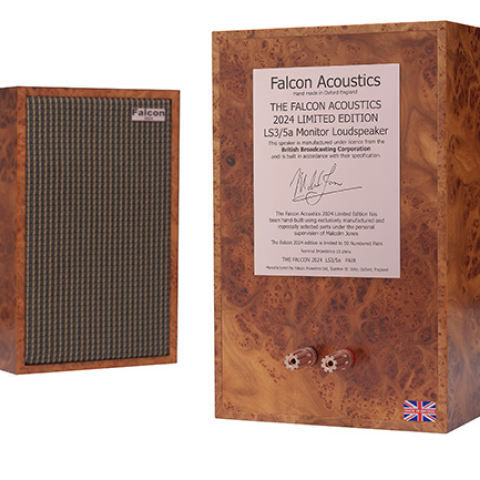
 Watching the Acelecs play the Strauss with such pleasurably detailed resolve, I thought I'd try a more difficult test. I selected my favorite bass-demo album, Bill Frisell with Dave Holland and Elvin Jones (16/44.1 FLAC ECM/Qobuz), and was surprised by the amount of 50Hz–100Hz energy these 6" drivers were putting into my room. With my Falcon LS3/5As, the bottom octaves of this album play muddy and IM-distorted. The GoldenEar BRX reach a half-octave lower but struggle to achieve undistorted clarity in the 50Hz region. The similar-sized but more expensive Acelecs delivered Dave Holland's bass with more clearly structured resolution than either of those other standmounts—but only after I inserted the foam port plugs I found in the box with the aluminum cones.
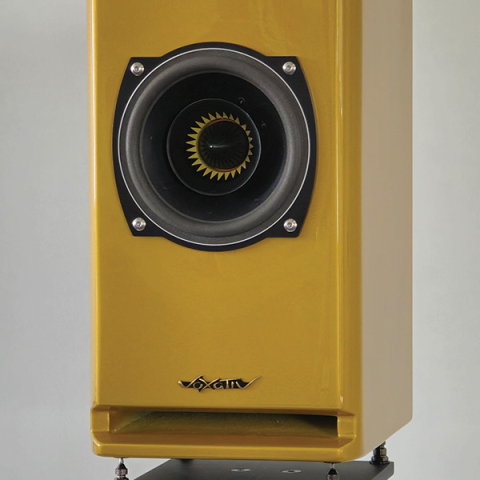
Raving about Acelec's transparency is like saying water is wet; the first sentence on Audio Art Cable's website extols this virtue: "The Model One is possibly the most transparent conventional loud speaker available today." I can't dispute that. After I set them up, it took me less than a minute to realize: These speakers are playing whatever signal they're fed, with vanishing levels of coloration. But many top-end speakers deliver vanishing levels of coloration. What these small, easy-to-drive monitors do that the majority of top-level speakers don't do is play all genres of music with equal facility and a goodly amount of fun. Acelec's Model Ones play small (power- and energy-wise) but image big: Their clear, expansive soundstage was mesmerizing; it kept my focus on whatever music it was presenting.
Footnote 1: The TAD CE1TXes are not piled in my hall.