As We See It

Sort By:  Post Date TitlePublish Date

The Kids Are Alright

It's one of audiophiledom's eternal questions: What can we do to draw more music lovers into the audiophile fold?

Of the proposals bandied about on audio forums, two seem predominant: a) sell stuff more people can afford, and b) sit your neighbor or the cable guy in front of your stereo, cross your fingers, and let 'er rip—the theory behind b) being that the experience will be so epic as to transform the reluctant participant into an audiophile butterfly. As if.
Why Argue?

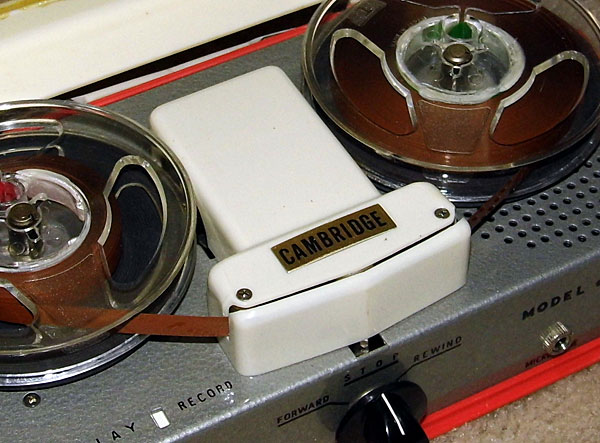
While we were preparing our list of specifications for our perfectionist's tape recorder discussed elsewhere in this issue, we suddenly came to a screeching halt at the spec which started "Scrape flutter less than . . ."

What, we wondered, was the scrape flutter percentage in a recorder in which scrape flutter is audible? Would it be 0.5%? Or 1%? Or even 5%? We perused the readily available literature, and were informed that "scrape flutter is caused by the tape's tendency to move past the heads in a series of tiny jerks in stead of in a smooth gliding motion." We were also told that scrape flutter is due to friction between the tape and the head surfaces, plus the slight elasticity of the tape that allows it to stretch slightly before being dragged along by another silly millimeter, and that it sounds like a rough edge riding on all signal frequencies between about 3kHz and 8kHz.

When Caruso Was King

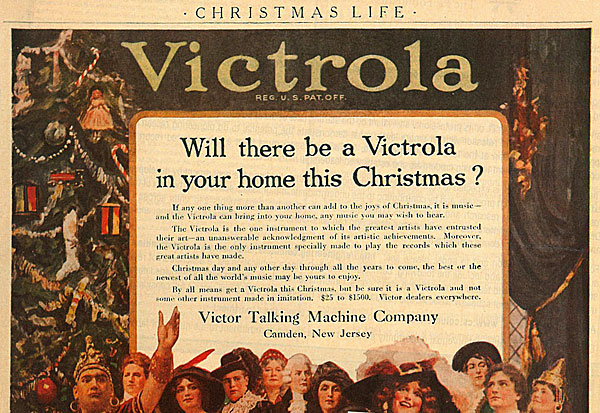
One of the benefits of belonging to the Institute of Electrical and Electronics Engineers (IEEE) is a subscription to their monthly magazine, IEEE Spectrum. Superbly written and edited, this journal keeps me up to date on emerging technology, and entertains me with things like reprints, on the final page, of vintage advertisements. Their January 2016 issue, for example, featured an ad from December 1920, promoting the Victor Talking Machine Company's Victrola: "By all means get a Victrola this Christmas, but be sure it is a Victrola and not some other instrument made in imitation. $25 to $1500. Victor dealers everywhere."

The Weakest Link

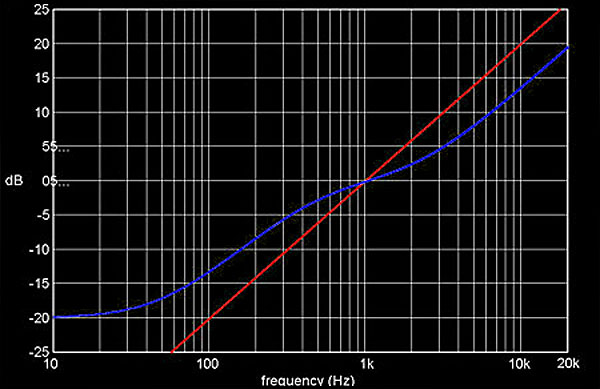
When the Record Industry Association of America adopted its standard disc playback equalization curve in 1954, hi-fi enthusiasts heaved a sigh of relief and bade fond farewell to years of confusion, doubt and virtual pandemonium. Before the RIAA curve there were six "standard" curves in use, and since nobody seemed to know who was using what, getting flat response from a disc was often more a matter of luck than anything else. The adoption of the RIAA standard playback curve heralded an end to all this.

Letter From Japan

How many advertisements for hi-fi or head-fi hardware do you see on your morning commute? Two? Three? If you live in Los Angeles, Sydney, or Paris, most likely it'll be zero.

Not so in Tokyo, where commuters, tourists, and shoppers moving through the Shinjuku or Shibuya subway stations will find it almost impossible to ignore Sony's latest advertising campaign, which colorfully announces a new range of affordable portable audio players (né Walkmans). Inside, banners suspended from the cars' ceilings promote Panasonic's latest headphones and shoebox-sized stereo system. Many of the bigger Japanese manufacturers treat audio gear as a mainstream concern.

To the Simple, Everything Appears Simple

My spirits sank as I read the comments on Stereophile's Facebook page. In the November issue, we had published reviews of UpTone Audio's USB Regen device by Kalman Rubinson, Michael Lavorgna, and myself. Michael and Kal had enthused about the positive effect the USB Regen had made, but I could detect no measurable difference. On Facebook, Dan Madden had written, "I think a device like this would need a blind listening test to verify that a listener could hear the difference in a statistically measurable way, in a very high percentage of times."

Too Good to Be True

Two letters from readers (see below) started us thinking again about something we've mulled at, off and on, for the past year or so: Does today's high-fidelity equipment, for all its vastly improved performance, actually sound that much better than the best of the early components?

Two More Channels?

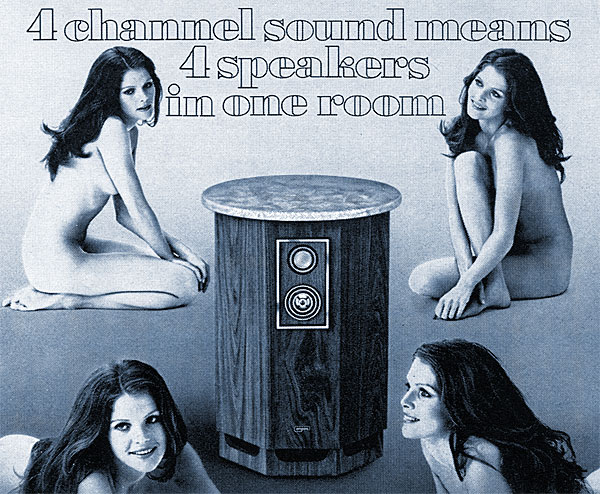
Four-channel stereo is here, but for how long? By the time this gets in print, it is extremely unlikely that any of our readers will have escaped being told that 4-channel stereo is here. "Two channels brought us direction," the announcements trumpet. "Now, four channels bring us dimension." Now, for the first time in the history of hi-fi, modern technology can bring us hall acoustics in stereo, to surround us with the sense of spaciousness that we hear in the concert hall.

We Don't Get No Respect

It never fails. Browse Stereophile's Facebook page, scroll through the comments to an article that refers to life as an audiophile, and splat—appearing like bird droppings on your glistening screen are anti-audiophile wisecracks pointing out exactly how far off the "normal" track our hobby has derailed. Occasionally, I catch myself in mid-sentence, already replying to one of these droppings, the gist of my intended message invariably being: "If you're an anti-audiophile, what are you doing using up what life you have left reading a webpage devoted to a hobby you don't get? Shouldn't you be hanging out with your own friends?" Then, realizing that I'm wasting my time.

A Measurement that Says Something

When we first heard rumors that Shure Brothers was about to unleash something called "trackability" on the audio world, our reaction was mainly one of indifference. We already had loudspeakers with listenability, tape recorders with portability, and amplifiers with stability and dependability. Trackability, we figured, was just another clever sales gimmick; a catchy word that the advertising department had thought up to describe what everyone wanted in a pickup.
Advertisement
Advertisement
Advertisement