Turntable Reviews

Sort By:  Post Date TitlePublish Date

Gramophone Dreams #14: Rega Planar 3

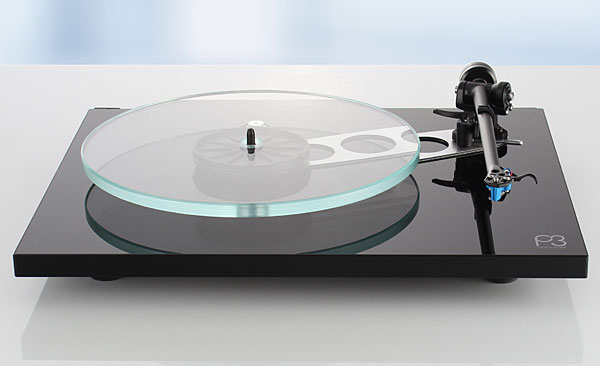
UK, 1976: Upon its release, Rega Research's original Planar 3 turntable became the poor man's Linn Sondek LP12. It opened a gateway of affordability to the exotic world of high-quality British record players. Forty years later, the new Planar 3 turntable and its "light and rigid" engineering aesthetic, as conceived by Rega founder Roy Gandy, still occupy an admirably working-class, pro-music position in an audio world increasingly populated by gold-plated tonearms and quarter-ton turntables.

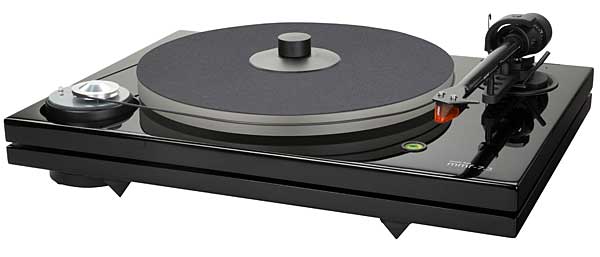
Music Hall Audio MMF-7.3 turntable

Stereophile and Music Hall Audio share a long mutual history. Like most relationships, it's had its ups and downs; unlike most relationships, this one is well documented—in retired writer Sam Tellig's much-loved "Audio Cheapskate" and "Sam's Space" columns, and Music Hall Audio proprietor Roy Hall's responses in "Manufacturers' Comments." I always found Sam and Roy's gentlemanly brawling to be good, clean, if occasionally uncomfortable fun—like the touchy rapport between a gregarious dog and a rascally cat forced to live under the same roof: A truce may have been called, but don't expect them to make nice.

Gramophone Dreams #11

Which record player has achieved international acclaim as a musical instrument in its own right?

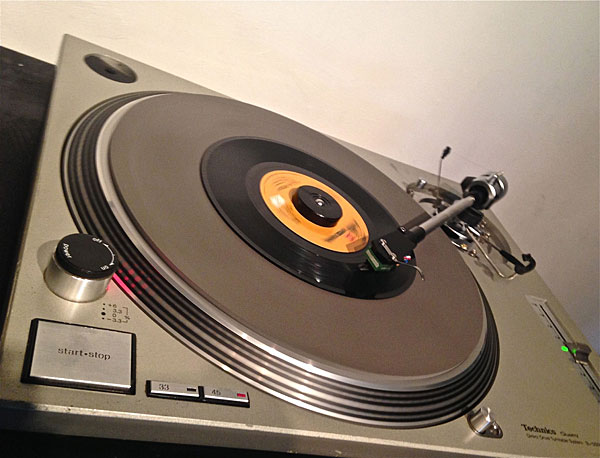
Which turntable is revered for its near-indestructible build quality?

Which disc spinner has played more records—and made more people drink, drug, dance, and make out—than any other?

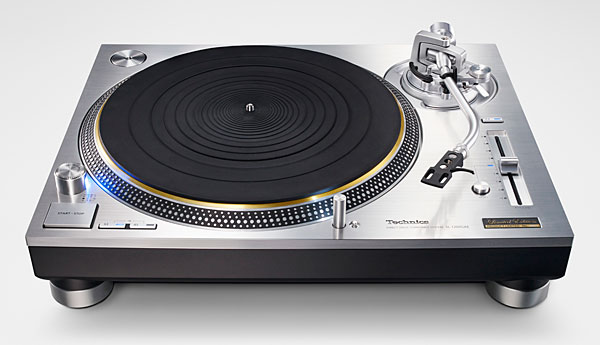
Which turntable has sold over three million units?

Hint: It is not made in the US, the UK, China, or Switzerland.

Gramophone Dreams #9

"Hail, Neophyte!"

That's what members of the Smoky Basement Secret Audio Society would exclaim in unison at the end of each ceremony admitting a new devotee. It was called the Smoky Basement Society not because everyone smoked (though they did), but because its members believed that whenever an audio designer finally got a design dialed in just right, he or she had metaphorically "let the smoke out." They exclaimed, "Hail, Neophyte!" because they believed that the most important aspect of being an audio engineer was to have a fully open "beginner's mind." In Zen practice, this is called Shoshin, or beginner's heart.

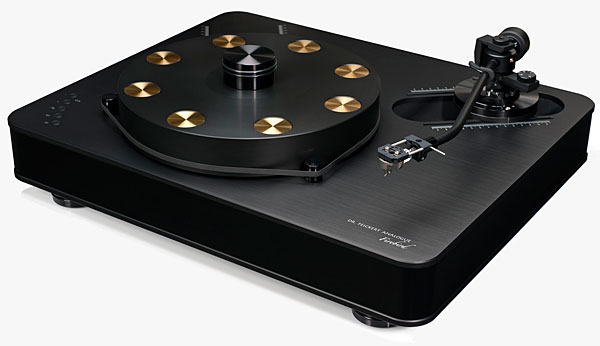
Dr. Feickert Analogue Firebird turntable

Dr. Feickert Analogue's top-of-the line turntable, the Firebird ($12,500), is a generously sized record player designed to easily accommodate two 12" tonearms. Its three brushless, three-phase DC motors, arranged around the platter in an equilateral triangle, are connected to a proprietary controller in a phase-locked loop (PLL); according to the Firebird's designer, Dr. Christian Feickert, a reference signal from just one of the motors drives all three—thus one motor is the master while the other two are slaves. (Man, today that is politically incorrect, however descriptively accurate.) Feickert says that the key to this drive system is the motor design, which was done in close consultation with its manufacturer, Pabst. The result is a feedback-based system in which the controller produces the very low jitter levels claimed by Feickert.

Gramophone Dreams #8

Everyone in the room can hear the difference when I swap one phono cartridge for another. Same thing happens with loudspeakers. This is because both of these magnet-based transducer technologies are electromechanical devices, traditionally made of paper, wood, iron, and copper. (Nowadays, polymers, aluminum, and carbon composites are more typical.) Both are motor-generator mechanisms that either convert mechanical energy into electrical energy (cartridges) or vice versa (speakers). As audio devices, they are spool-and-wire simple, but even tiny changes in the materials and/or how those materials are configured can cause easily audible differences in how they transmit or present recordings of music. Why? Because every gross fragment and subatomic particle of these electromechanical contraptions is moving and shaking—shaking everything from the tiny jumping electrons to the wood, metal, and/or plastic containers that fix and locate these motor generators in space.

Robert Deutsch Upgrades His Record Player

For some time now, I've been thinking that my record player was due for an upgrade. My Linn LP12 turntable and Ittok LVII tonearm are about 25 years old, and my AudioQuest AQ7000nsx cartridge is going on 15. During that time, my listening has become increasingly dominated by CDs, but I am not yet ready to give up on LPs. Updating my LP12—for which I have Linn's Lingo power supply but no other upgrades—would involve installing the Keel subchassis, for $3250—for which price I could get another maker's new, current-design turntable and still have the LP12 to sell. The Linn Ittok can't be upgraded, and its replacement, the Ekos SE, costs $4950—out of my range. AudioQuest no longer makes cartridges. Examining my AQ7000nsx's stylus under a microscope showed no visible wear, and there was no obvious audible problem that could be traced to the cartridge's suspension, but age must be having some sort of effect. Taking all these factors into account, I decided to replace my entire phono front end.

Oracle Delphi Mk.VI Second Generation turntable

The stats are impressive: Quebec's Oracle Audio Technologies, formerly Trans Audio (footnote 1), has been in business for 37 years, during which they've sold nearly 11,000 Oracle Delphi turntables. That's not bad for a perfectionist turntable—and especially not bad for a perfectionist turntable whose first and most estimable competitor, the Linn Sondek LP12, was well established by the time of the Delphi's debut, in 1979.

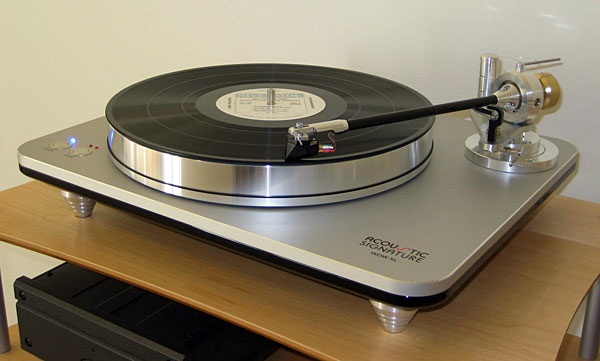
Acoustic Signature Triple X turntable & TA-1000 tonearm

In a bizarre but happy turn of events, recent consumer trends have given even the most socially awkward audiophile something to talk about at cocktail parties and family gatherings at which normal people predominate: the PonoPlayer and vinyl. These are hot topics; each is among the best-sounding music sources available, and both offer hope for our hobby, if not for music lovers in general. But vinyl has the advantage of appealing to a much wider range of budgets. LPs can be had from anywhere to "We'll pay you to haul these away" to "Your loan officer is on line one." Likewise, vinyl playback hardware is available in virtually every price range, from a second-hand Dual 1229 ($50 and up) to the highly praised Continuum Audio Labs Caliburn ($200,000 and down).

Analog Corner #233: Pear Audio Blue Kid Thomas turntable & Cornet 2 tonearm

Pear Audio Analogue's Peter Mezek can keep you up all night spinning fascinating turntable tales. Had my mind not been numbed by Sunday evening, October 12, the last day of the 2014 Rocky Mountain Audio Fest, I might have insisted that he do just that.

Over dinner that evening he regaled Pear Audio's North American importer, Michael Vamos of Audio Skies, and me with turntable stories dating back to the late 1970s and the Linn Sondek LP12, which, until the early '80s, he distributed in Czechoslovakia. In the mid-'80s, Mezek was involved in the development and distribution of the Rational Audio turntable, designed for Mezek by Jirí Janda (pronounced Yeerzhee Yahnda), who died in 2000. For those of you old enough to remember, Janda, a founder of NAD, designed that company's 5120 turntable; among other features, it had a flat, flexible, plug-in tonearm that you could easily swap out, much as you can with VPI's current models.

Advertisement
Advertisement
Advertisement