Turntable Reviews

Sort By:  Post Date TitlePublish Date

Linn Sondek LP12 turntable & Klyde phono cartridge

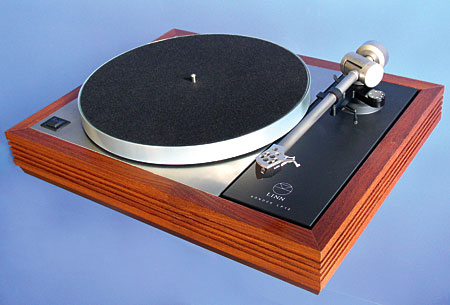
If you asked me to name a single specific high-end audio component that could make or break a system, I'd name the Linn LP12 turntable. Of all the thousands of hi-fi products I've heard over the years, not a one of 'em—not a speaker, amplifier, or digital processor—has been able to draw me into the music, no matter what the associated componentry, like the LP12. I've heard the most highly regarded speakers/amps/processors fall flat in certain situations due to a lack of synergy with their surrounding systems, but I've never heard an LP12-based system that didn't put a smile on my face and make me green with envy.

Bauer Audio dps turntable

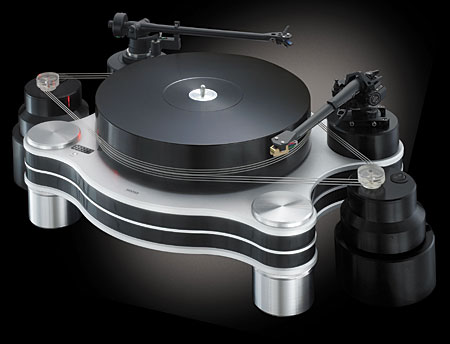
Although LPs remain, for me, the high-end medium of choice, I'm not terribly interested in today's high-end record players. Most of them, from the 1980s through the present, have been soulless, uninspired, me-too products that utterly fail to communicate the presence, momentum, and punch of recorded music. And in certain ways—expense, complexity, size, cosmetics—some have been, quite simply, ridiculous.

Pro-Ject Debut III record player

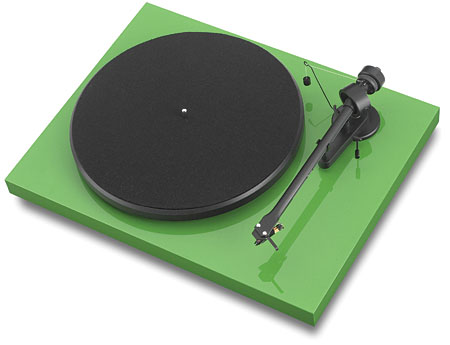
In the January 2010 issue of Stereophile I gushed">http://www.stereophile.com/integratedamps/marantz_pm5003_integrated_amp… effusively about the $450 Marantz PM5003 integrated amplifier. Not only was I impressed with the sound, build quality, and features of this very affordable component, but, intrigued by how it might be combined with other gear to build a complete entry-level system for about a thousand bucks, I began to ponder other entry-level components that might nicely complement it. My goal here, of course, is to inspire a new generation of young audiophiles. I felt a turntable would be a good place to start.

SME Model 20/12 turntable & 312S tonearm

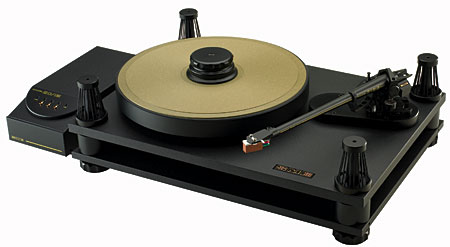
Much has happened in the analog world since I reviewedhttp://www.stereophile.com/analogsourcereviews/796">reviewed; SME's flagship Model 30/2 turntable for the March 2003 Stereophile (footnote 1). Back then, spending $25,000 on a turntable (without tonearm) was an odd extravagance intended only for those seriously committed to the format, and who already owned large LP collections. Although new LPs were being pressed in growing numbers, the resurgence of vinyl was still spotty, and the long-term prognosis for the old medium remained in question.

VPI HW-19 turntable

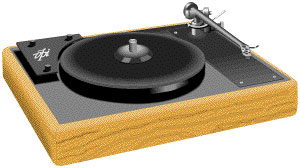
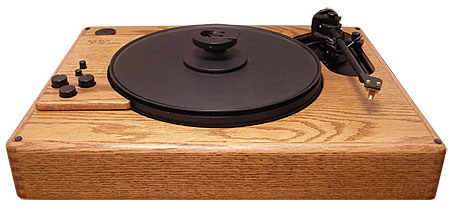
There is something refreshingly no-nonsense about the design and construction of this turntable. It looks as if someone just said, Okay, this, that, and the other thing need to be done. Let's do it. And then they did it. In appearance at least, it is about as simple a design as you're likely to find. What sets it apart from other simple designs is that this one is built like a battleship! Everything is heavy-duty (notto mention heavy), from the 10-lb, lead-laminated aluminum platter to the ¼"steel-reinforced subchassis.

SOTA Star Sapphire turntable

The SOTA Sapphire was the first, and the most successful in terms of sales, of the new generation of high-end American turntables. As such, the SOTA can be viewed as leading this country's resurge ence of interest in high-quality turntable production. At the time of the SOTA's introduction in 1981, it was the only high-end turntable manufactured in the US. Since then American-made turntables have appeared from the likes of AR, Mapleknoll, Sonographe, and VPI.

Oracle Delphi turntable

The Oracle Delphi Mk.II ($1250) is both a turntable and work of art. It is a visually stunning product, retaining a level of styling that, in my view, has never been equalled by any other audio component. It also adds enough sonic improvements to the original Delphi that it ranks close to the VPI HW-19, and is superior, in naturalness of sound quality, to the SOTA Star Sapphire.

Rega P3-24, RB301, & Elys 2 turntable, tonearm, & phono cartridge

It's now been eight years since a Rega P3 turntable passed through my listening room. While the new P3-24 superficially resembles the P3 (and virtually every other Rega 'table), the company has made some significant changes, including upgrading to the high-quality, low-voltage (24V), electronically adjusted motor used in the more expensive P5, P7, and P9. As in those models, an electronic circuit trims the phase angle of the P3-24's motor coils, thus substantially reducing motor vibrations. In 1998, during a factory tour, a Rega engineer demonstrated the circuit's effectiveness to me. As he adjusted the circuit board's pot, vibrations from the motor dramatically decreased, until it was difficult to tell if the motor was spinning or not. Back then, this "hand-trimmed" motor technology was available only in the P9. The P3-24 uses a less sophisticated version of the same basic idea.
Advertisement
Advertisement
Advertisement