Tube Preamp Reviews

Sort By:  Post Date TitlePublish Date

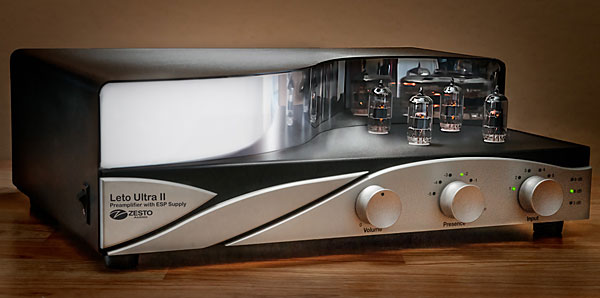
Zesto Leto Ultra II line preamplifier

What sort of audiophile are you?

I think of myself as a critical listener, perhaps a purist, definitely an enthusiast, of music and audio, who enjoys both the journey and the nuts and bolts. I like my hi-fi direct, simple, and personal. Also, I guess I'm a little bit old-school: tube-driven amplifiers with point-to-point wiring; vinyl, preferably early pressings; spun with belt-drive or idler-drive turntables. I listen to digital audio, too—and when I do, I prefer nonoversampling DACs. I like high-efficiency, high-sensitivity floorstanding loudspeakers and prefer them horn-loaded.

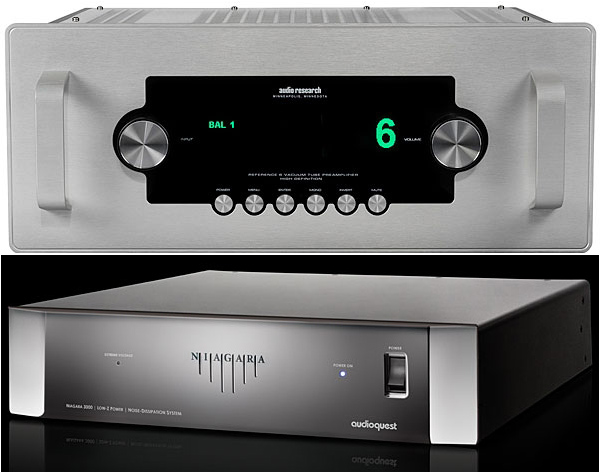
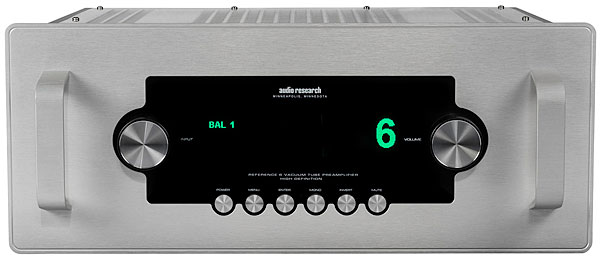
Audio Research Reference 6SE line preamplifier

"As long as you're happy."

That's the line long uttered by the most dreaded members of my family, and their friends, whenever they tried to pry into my personal affairs. Often the last word, "happy," was uttered with a downward cadence and accompanied by a shrug.

Then came the kicker. "You are happy, aren't you?" said with eyes boring into my soul. "Well, as long as you're happy."

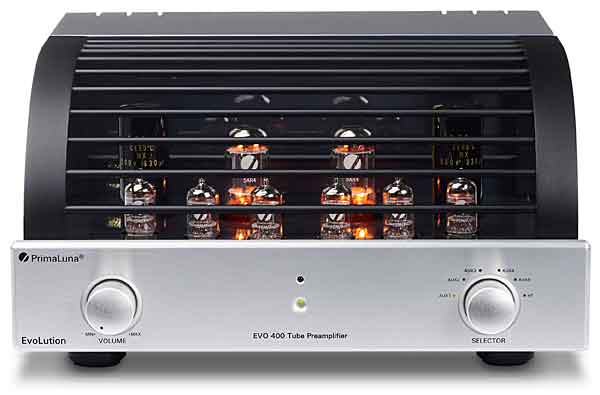
PrimaLuna EVO 400 preamplifier

I am an artist-painter and an audiophile. When I listen to recorded music, I sit in the sweet spot and stare at the empty space between the speakers. And while I listen, I survey and critique the soundfield, as if it were an unfinished landscape painting in my studio.

As I observe the soundstage and the apparitions of musicians within, I notice the dimensions of the recording venue (and/or microphone placement), as well as the physical energy of the entire vibrating illusion.

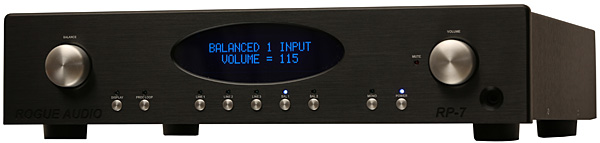
Rogue Audio RP-7 line preamplifier

You know I'm a lucky guy. I maintain two separate audio reviewing systems.

The core component of my beloved, daily-driver desktop system is a Mytek Brooklyn DAC-preamp-headphone amp. Through this system I play high-resolution files and Internet sources (Tidal, Qobuz, Netflix, and YouTube). One of the Brooklyn's two line-level inputs delivers NPR news and baseball from my Kenwood KT-990D FM/AM tuner. I mostly use this system with headphones, but currently, the Brooklyn's line-out feeds a pair of Bel Canto Design's compact e.One REF600M monoblocks driving the shelf-mounted Dynaudio Excite X14 speakers I use to play movies and videos.

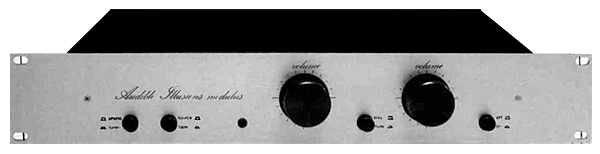
Audible Illusions Modulus preamplifier

Once upon a time, all audio equipment used vacuum tubes. In recent years, however, tubes have become the exclusive province of super high-end audio. It is more expensive to accomplish any particular task with tubes than with transistors, and few manufacturers (with the exception of Conrad-Johnson) seemed willing until now to refine their techniques and pare back their budgets to make tube components more affordable.

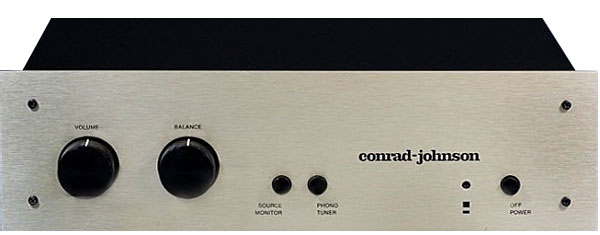
Conrad-Johnson PV-4 preamplifier

In appearance Conrad-Johnson's PV4 is distinctly plain: a basic black and silver box with a few simple knobs and buttons. The controls are logically laid out, clearly labeled, and work properly. The two channels track well through the volume control, maintaining balance; pushbuttons and control knobs have a smooth, solid feel (except for the noises audible through the system when switching inputs). Don't forget the turn-on and turn-off thumps mentioned above; the PV4 is the only one of the preamps I review in this issue—the others are the Audible Illusions Modulus ($450) and the Counterpoint SA-7 ($595)—that lacks a mute switch.

Counterpoint SA-7 preamplifier

In appearance the Counterpoint SA-7 tube preamplifier is quite attractive, possessing the thin, low-profile look currently in vogue. There is a mute switch which (if you remember to use it) protects your amplifier from the preamp's turn-on and turn-off thumps. Unfortunately, the volume control on my unit didn't track accurately, and it was necessary to adjust balance with each change in volume. One unusual feature: the balance control allows very fine gradations in balance adjustment (a large movement of the control results in a small change in balance).

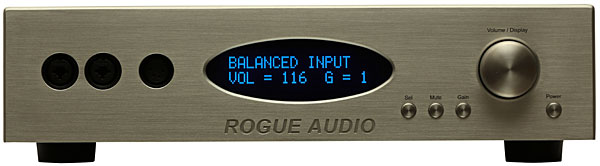
Rogue Audio RH-5 preamplifier-headphone amplifier

Every day in my bunker, I use one of a few high-quality headphone amplifiers to double as a line-level preamplifier-controller and operate as the quality-assurance reference for my ongoing audio experiments. I must choose this component carefully, because it determines the upper limit of my system's ability to reveal any subtle differences among components under review.

TARA Labs Space & Time Passage preamplifier

Better known for their speaker cables and interconnects, The Absolute Reference Audio Labs (TARA Labs) has quietly branched out into electronics and loudspeakers. Their Passage is a line-level–only preamp. I actually favor such a modular approach to preamp design. Standing as we are at the dawn of the digital audio age, the breakup of the traditional preamp into separate phono and line-level stages represents a more flexible, cost-effective design approach.
Advertisement
Advertisement
Advertisement