Tube Power Amp Reviews

Sort By:  Post Date TitlePublish Date

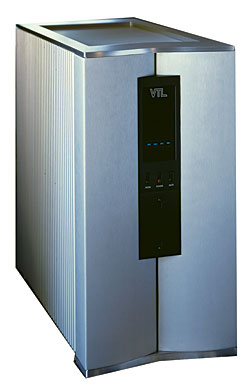
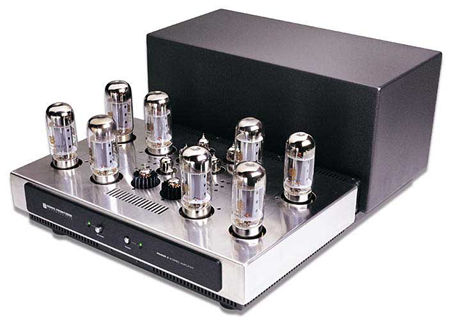
VTL S-400 Reference power amplifier

When I reviewedhttp://www.stereophile.com/tubepoweramps/152">reviewed; VTL's MB-750 monoblock amplifier in the December 1997 Stereophile (Vol.20 No.12), it was a transitional time for the company. Luke">http://www.stereophile.com/interviews/153">Luke Manley had recently taken it over, and he and his wife and partner, Bea Lam, were aggressively retooling. They introduced new business systems, including rigorous inventory and quality control; rebuilt VTL's dealer network around top-rank dealers; and systematically upgraded the products themselves to improve their consistency, reliability, manufacturability, and performance. VTL's goal, Luke explained to me at the time, was to build amplifiers that competed with the very best, and to "make the tubes invisible to the customer."

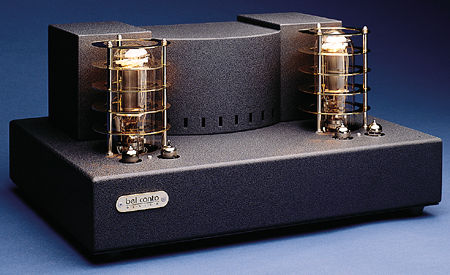
Bel Canto SET 80 monoblock power amplifier

Although I retain a firm hold on the established audio world, and recognize and value all that it has achieved, I feel inexorably driven to make some space in my life for single-ended amplifiers—more especially, those that eschew negative feedback (footnote 1). A classic if costly example of the art is the Cary">http://www.stereophile.com/tubepoweramps/740">Cary CAD-805C, which, to my ears, has earned the right to teach audiophiles what negative feedback really sounds like, and what damage it can do to the musical message when poorly handled. This shouldn't be taken as an out-of-hand dismissal of those many great pieces of electronics and amplification that use negative feedback—it is simply an acknowledgment, or even an assertion that negative feedback generates a sound of its own.

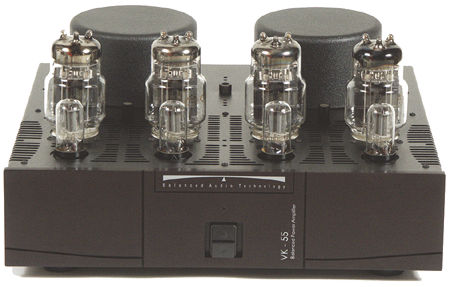
Balanced Audio Technology VK-3iX preamplifier & & VK-55 power amplifier

It's been 10 years since Balanced Audio Technology (BAT) introduced their first products: the VK-5 line-stage preamplifier and the VK-60 power amplifier. (I reviewed">http://www.stereophile.com/tubepoweramps/766">reviewed both in the December 1995 Stereophile, Vol.18 No.12.) The success of these and other BAT products has allowed designer Victor">http://www.stereophile.com/interviews/767">Victor Khomenko (the "VK" of the model designations) and partner Steve Bednarski to quit their day jobs at Hewlett-Packard; they were joined by Geoff Poor as a partner to handle the sales end of the enterprise. BAT's current lineup includes several preamps, phono stages, a CD player, and tube as well as solid-state amplifiers. The top of BAT's preamp range is the VK-51SEhttp://www.stereophile.com/tubepreamps/1103bat">VK-51SE;, which costs $9000; their top tube power amp is the VK-150SE">http://www.stereophile.com/tubepoweramps/536">VK-150SE monoblock ($17,000/pair); if you want their best phono stage, the VK-P10http://www.stereophile.com/phonopreamps/871">VK-P10; will set you back $8000.

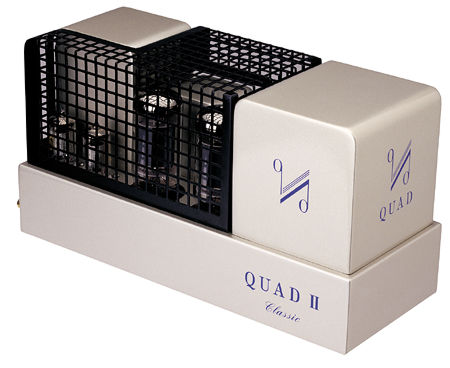
Quad II Classic monoblock power amplifier

"The realistic reproduction of orchestral music in an average room requires peak power capabilities of the order of 15 to 20W when the electro-acoustic transducer is a baffle-loaded moving-coil loudspeaker of normal efficiency."
Peter">http://www.stereophile.com/news/121503walker/index.html">Peter Walker and D.T.N. Williamson, writing in the Journal of the Audio Engineering Society in 1954

Cary CAD-1610-SE monoblock power amplifier

At the last few audio shows, whenever I heard a pair of the big Cary CAD-1610-SEs, I fair licked my chops. The two-tiered monoblock looked positively stunning in black and polished aluminum, exotic tubes bristling from the top "floor" of its two-story edifice. The Cary always induced pelvic tilt in me—you know, when your lizard brain takes over and tube lust is in the air.

Graaf GM 200 OTL power amplifier

I'm always eager to fulfill my prime Stereophile directive: "To go where no audiophile has gone before," as JA often quips. As it happens, I've long suffered an itch to audition OTL (output-transformer–less) amplifiers, wondering how eliminating the output transformer might affect the sound. Enter the Graaf GM 200, with nothing but wire between its power tubes and the crossover.

Mesa Engineering Baron power amplifier

Some audiophiles tend to get a mite sniffy around those of us who have expensive tastes and limited budgets. I've always been willing to spend the price of a new car on a set of speakers, but I never had the cash or credit. The sonic virtues of hefty, high-powered Krells and wondrous, single-ended tube designs always enchanted me, but when you're raising a family you make do. Through my experiences in a high-end audio establishment I learned the metaphysics of mixing and matching as befits my lowly caste, and I gradually developed sophisticated reference points, so that as the years swept by I managed to inch my way up the aural food chain.

Audio Research Reference 1 preamplifier & VT200 power amplifier

They say you never forget your first time. For me, it was an Audio Research SP-6B that had been heavily modified by Analogique in NYC—which meant, among other things, that yellow capacitors shunted other yellow capacitors all the way up to the top plate. That first taste of the High End—prior to that, you might say my face had been pressed against the window—was definitely love at first listen. That SP-6B was warm yet detailed, and I ended up building a system around it that at least one friend described as a huge musical wet kiss.

Advertisement
Advertisement
Advertisement