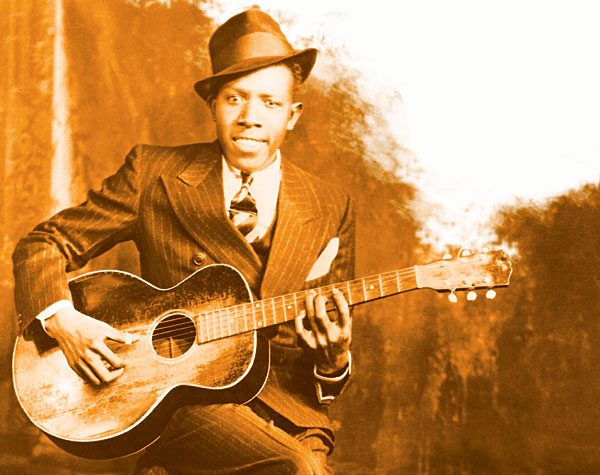
"Sometimes I can evoke the breathless rush of feeling that I experienced the first time that I ever really heard Robert Johnson's music. Sometimes a note will suggest just a hint of the realms of emotion that opened up to me in that moment, the sense of utter wonder, the shattering revelation."Peter Guralnick, from
Searching for Robert Johnson (New York: Dutton Obelisk, 1989)
It's an experience that all true blues fans need to savor. Fly into Memphis, drive south on US 61, into Coahoma County, Mississippi, down to the Delta, down to Robert Johnson country. There, on one of those steamy nights when the moon is full and fog, or maybe restless spirits, rise from the cotton fields, you can drive down to his two graves, in two churchyards nearly within sight of each other. You can sit in the dark and listen to the trains that were his constant mode of transportation. And on the way back to Clarksdale, the Delta burgh where Bessie Smith passed, you can go down to the crossroads and judge for yourself. Romantics say you can feel, smell, and even hear Robert Johnson's music, if not his desperate deal, still hanging in the humid Mississippi air.



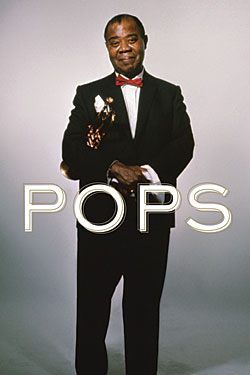 Pops: A Life of Louis Armstrong, by Terry Teachout (Houghton Mifflin Harcourt, 2009): 475pp. Hardcover, $30; paperback, $16.95.
If you plan to read just one book about Louis Armstrong, whose virtuosic cornet solos pushed jazz past rudimentary ensemble playing and launched his phenomenal career as an instrumentalist and singer, make it Pops. Teachout built it on brickwork laid by authors who preceded him, so you'll benefit from their research, as well as from narrative on 650 previously private reels of tape that Armstrong recorded and archived. Moreover, Teachout is a musician and music critic who offers opinions on his subject's discography.
Few people seem to realize that Armstrong (19011971) called himself LOU-iss. "All White Folks call me Louie," he once noted, and in some instances that may have been patronizing. In others, it was surely an instinctive response to the man's infectious warmth and informality.
Pops: A Life of Louis Armstrong, by Terry Teachout (Houghton Mifflin Harcourt, 2009): 475pp. Hardcover, $30; paperback, $16.95.
If you plan to read just one book about Louis Armstrong, whose virtuosic cornet solos pushed jazz past rudimentary ensemble playing and launched his phenomenal career as an instrumentalist and singer, make it Pops. Teachout built it on brickwork laid by authors who preceded him, so you'll benefit from their research, as well as from narrative on 650 previously private reels of tape that Armstrong recorded and archived. Moreover, Teachout is a musician and music critic who offers opinions on his subject's discography.
Few people seem to realize that Armstrong (19011971) called himself LOU-iss. "All White Folks call me Louie," he once noted, and in some instances that may have been patronizing. In others, it was surely an instinctive response to the man's infectious warmth and informality.
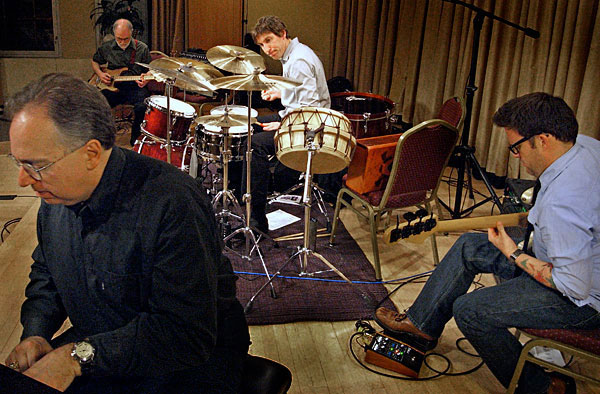
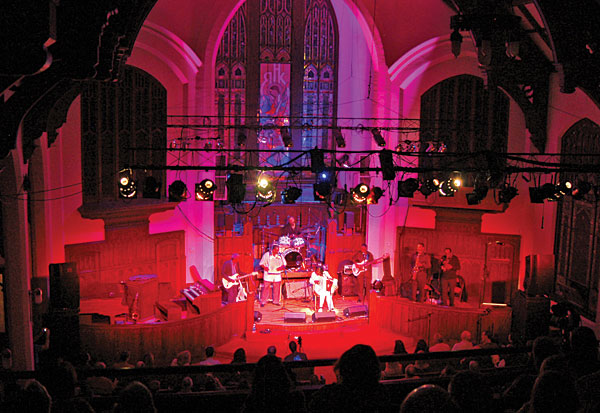
 The question kept running through my head as I marveled at the breadth and maturity of Attention Screen's remarkable improvisations during a pre-concert sound check in the Piano Salon of Yamaha Artist Services, Inc. (YASI), at 689 Fifth Avenue, in the heart of Manhattan.
Attention Screen impressed even more at the public concert the following night, April 24, 2010. As the band members engaged in one improvisational miracle after another, fearlessly exploring new territory, the beauty and inventiveness of their playing astounded me.
The question kept running through my head as I marveled at the breadth and maturity of Attention Screen's remarkable improvisations during a pre-concert sound check in the Piano Salon of Yamaha Artist Services, Inc. (YASI), at 689 Fifth Avenue, in the heart of Manhattan.
Attention Screen impressed even more at the public concert the following night, April 24, 2010. As the band members engaged in one improvisational miracle after another, fearlessly exploring new territory, the beauty and inventiveness of their playing astounded me.
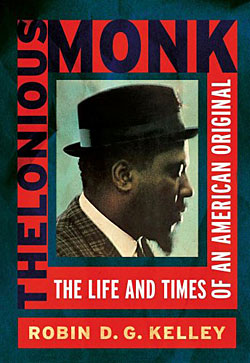 Thelonious Monk: The Life and Times of an American Original
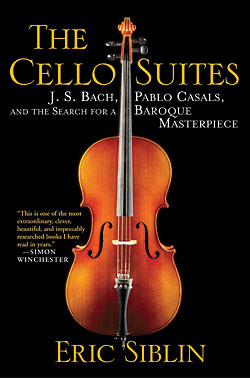 The Cello Suites: J.S. Bach, Pablo Casals, and the Search for a Baroque Masterpiece, by Eric Siblin (New York: Atlantic Monthly Press, 2009); hardcover, 318 pp. $24.
In his lifetime, J.S. Bach (16851750) was an obscure figure. He never lived in a major city, he didn't work in the musical formoperathat in his era could propel a composer to stardom, and his style seemed antiquated to many. Bach saw a mere nine of his compositions published; when his consummate masterwork, The Art of the Fugue, appeared the year after he died, it sold just 30 copies.
Eric Siblin includes these and countless other facts in The Cello Suites, a book that will fascinate anyone who loves Bach's music. He notes, for instance, that Bach's four musical sons kept his work in circulation, that Mozart was mightily impressed by a motet he heard at a Leipzig church, and that the 12-year-old Beethoven raised some eyebrows when he performed The Well-Tempered Clavier in Vienna.
The Cello Suites: J.S. Bach, Pablo Casals, and the Search for a Baroque Masterpiece, by Eric Siblin (New York: Atlantic Monthly Press, 2009); hardcover, 318 pp. $24.
In his lifetime, J.S. Bach (16851750) was an obscure figure. He never lived in a major city, he didn't work in the musical formoperathat in his era could propel a composer to stardom, and his style seemed antiquated to many. Bach saw a mere nine of his compositions published; when his consummate masterwork, The Art of the Fugue, appeared the year after he died, it sold just 30 copies.
Eric Siblin includes these and countless other facts in The Cello Suites, a book that will fascinate anyone who loves Bach's music. He notes, for instance, that Bach's four musical sons kept his work in circulation, that Mozart was mightily impressed by a motet he heard at a Leipzig church, and that the 12-year-old Beethoven raised some eyebrows when he performed The Well-Tempered Clavier in Vienna.