Integrated Amp Reviews

Sort By:  Post Date TitlePublish Date

Listening #7

In my">http://www.stereophile.com//artdudleylistening/801/">my column for Stereophile's March issue, I criticized a handful of records for combining very good sound with very bad music. A few readers expressed dismay, wondering what gave me the right to call music good or bad, especially since virtually all music is loved by someone (its mother?). But as far as I know, the magazine received a total of zero letters wondering what gave me the right to call sound good or bad. Hmmm.

Perreaux R200i integrated amplifier

Does the modern audiophile want a sleek, compact, powerful, remote-controlled, microprocessor-driven, two-channel integrated amplifier? Perreaux Industries, based in New Zealand, thinks so. They've designed all that, plus good looks and impressive build quality, into the R200i. Despite its relatively small size—4.1" tall by 16.9" wide by 13.4" deep—the R200i packs a punch. It's rated at 200Wpc into 8 ohms and 360Wpc into 4 ohms, yet it weighs just a fraction under 30 lbs.

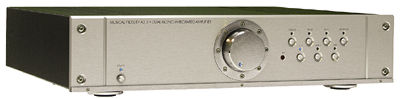
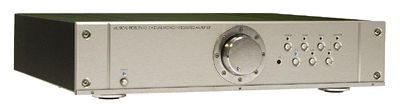
Musical Fidelity A3.2 integrated amplifier

It was 20 years ago today that Sgt. Michaelson taught the band to play. I was living in London when Antony Michaelson launched Musical Fidelity in an attempt to make a major statement in the area of affordable, high-quality, high-value electronics. Other Brits at the time were doing the same—companies such as Creek, A&R Cambridge (now Arcam), and DNM began to compete for the destitute audiophile's dollar.

Simaudio Moon i-5 integrated amplifier

With this review I conclude an audiophile's progression through the price/performance ratios of three very musical solid-state integrated amplifiers: the NAD C370 ($699, reviewed in January 2002), the Arcam">http://www.stereophile.com//amplificationreviews/516/">Arcam DiVA A85 ($1499, February 2002), and now the Simaudio Moon i-5 ($2595). In the process I was fascinated to hear how each amp recommended itself to its targeted price point. Likewise, it was most instructive to hear how they spread their compromises around. With a rough doubling of suggested retail price from the NAD to the Arcam, there was a degree of sonic refinement introduced. However, the leap in improved sound from the Arcam to the Simaudio was more significant. And in quantifying the benefits another $1000 worth of enhancements can confer, I discovered what constitute real high-end bona fides.

Arcam DiVA A85 integrated amplifier

Although audiophiles may muster little enthusiasm for the home-theater-driven audio marketplace of the 21st century, its prerequisites have inspired manufacturers to cram as wide a range of flexible programming features into as highly resolved a set of performance packages as possible. Thus we're now witnessing a new generation of exceptionally musical electronics with high-end performance targeted at two-channel enthusiasts, but all primped and prepped for integration into an expanded audio-video rig.

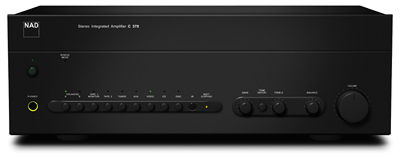
NAD C370 integrated amplifier

NAD has been out there on the leading edge of entry-level high-end sound long enough that some audiophiles reckon they invented the category. Sure, we should give serious props to the likes of Creek, Rotel, Musical Fidelity, Arcam, Denon, and Parasound, all of which have made significant contributions to the musical aspirations of budget-conscious pilgrims. But I continue to harbor warm feelings about my last extended visit with an NAD component: the inexpensive yet supremely musical L40 CD Receiver, which I reviewed in the June 2000 Stereophile.

Creek 5350SE integrated amplifier

Creek Audio founder/designer/co-owner Michael Creek is a quiet, friendly, unassuming man. Unlike some ego-driven electronics designers who tout their products very loudly from their pulpits, Michael Creek has been quietly designing high-quality, musical, and affordable integrated amps in black-metal boxes for nearly 20 years. His target market is the passionate music-lover who wants something a notch above an entry-level NAD or Rotel receiver, but whose bank manager would frown on splurging on electronic separates.

VTL IT-85 integrated amplifier

Having evaluated any number of integrated amplifiers in the past year or so, I've repeatedly been impressed by the ways in which designers build versatility and sonic distinction into their single-box designs. In matching those that sounded and measured the best—such as the tubed E.A.R. V20 (October 1999) and the solid-state Magnum">http://www.stereophile.com//amplificationreviews/329/">Magnum Dynalab MD 208 receiver (January 2001)—with appropriate speakers and source components, I was able to attain high-resolution musicality with a minimum of fuss. Crave high-end sound but require even less complexity? You could dispense with interconnects altogether by integrating a high-quality CD player into a remote-controlled receiver, as Linn has with the diminutive Classikhttp://www.stereophile.com//digitalsourcereviews/307/">Classik; that I reviewed last November.

Advertisement
Advertisement
Advertisement