Floor Loudspeaker Reviews

Sort By:  Post Date TitlePublish Date

Q Acoustics Concept 50 loudspeaker

Given how crowded the loudspeaker manufacturing space has always been, I am always surprised when a new brand not only springs into being but does so with new speakers that sound and measure well. Take the UK's Q Acoustics, for example. The company didn't exist before 2006 and didn't have a presence in the US until 2018.

Monitor Audio Studio 20 loudspeaker

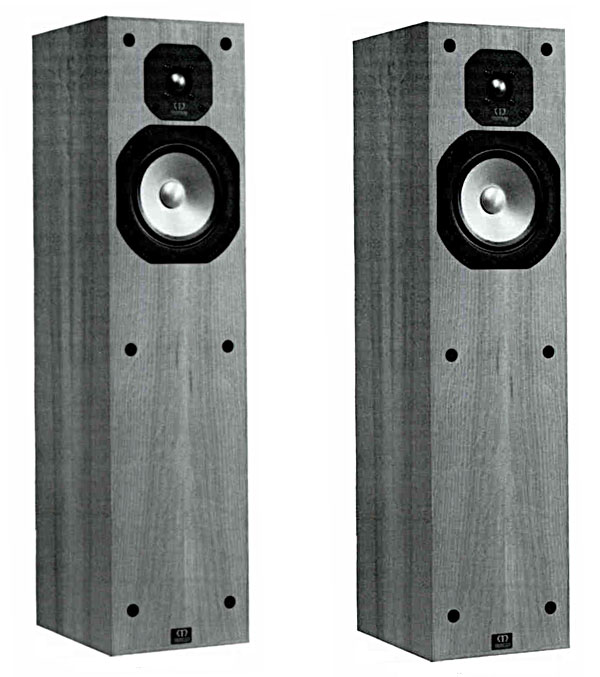
A review of the Monitor Audio Studio 20 loudspeaker is a study in contrasts. Compared with most other loudspeakers in the $4500/pair range, this 6.5" two-way from England is a mere pup. Perhaps this observation was sparked by the fact that I'd just finished reviewing the similarly priced Snell Type B, a huge, six-driver, four-way system. The two loudspeakers couldn't be more different, both in physical characteristics and sound.

JansZen Valentina P8 loudspeaker

Although I retired as Stereophile's editor-in-chief at the end of March 2019, I still have an ongoing connection with the magazine. As well as contributing reviews and measuring the audio products that are being reviewed, I prepare the magazine's content for republishing on its website. So when JansZen Audio's David Janszen contacted me about reviewing his Valentina P8 loudspeaker, I looked through my back issues to find reviews of JansZen speakers that could be posted.

Chario Aviator Amelia loudspeaker

Great hi-fi can give you goosebumps. And it relates to another source of horripilation: live music, and its recordings. I've also always been a live music junkie—ever since I was a kid.

I was fortunate to have grown up attending the Cincinnati Symphony Orchestra and Cincinnati Pops Orchestra's "LolliPops" children's concerts. I'd seen some tepid live acts as a kid (ie, Donny and Marie). But nothing prepared me for my first rock concert. It, um, rocked my world.

KLH Model Twelve loudspeaker

The idea of a loudspeaker system whose frequency response could be tailored to suit room acoustics and/or personal taste is one that has always appealed to the high-fidelity perfectionist. Ideally, such a loudspeaker would allow you to raise or lower the level of any part of the audio spectrum to correct for, say, a sharp 370Hz room resonance or a mild absorptive condition that weakens, say, the 800Hz–3kHz range. Obviously, though, this kind of flexibility would require an infinite number of bandpass networks, each with its own volume control—which is an obvious impracticality.

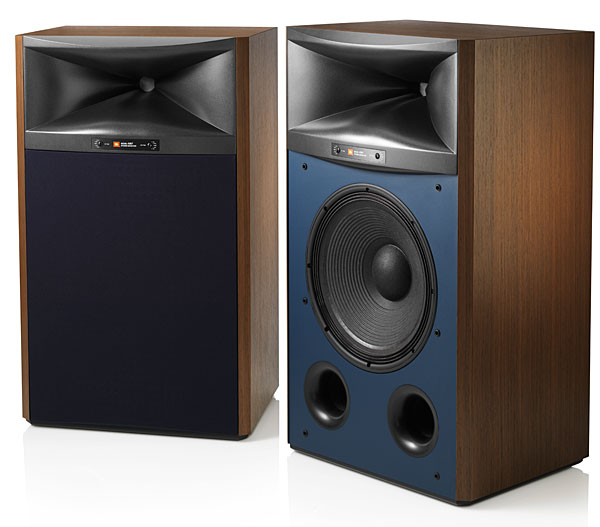
JBL 4367 Studio Monitor loudspeaker

One day in the mid-1990s, my friend J and I sat sprawled on the carpeted floor of a hi-fi shop in lower Manhattan, playing records. J, who was employed there as a salesperson, had dimmed the lights and locked the door of the listening room behind us to make sure we wouldn't be disturbed by actual customers. Earlier, he had lugged in a pair of homemade speakers that an elderly woman brought to the store, hoping to sell some of her late husband's gear.

Janszen Z-600, Z-900, & Z-960 loudspeakers

The Z-600 is the latest of the "console" (as opposed to "bookshelf") systems made by Neshaminy Corp., and using Janszen electrostatic tweeters (footnote 1) and a Neshaminy-designed 11" woofer. The nominal crossover frequency is 1500Hz, with a broad overlap between the woofer's top and the low end of the paralleled tweeters. Tweeter level is not adjustable (footnote 2).

Monitor Audio Silver 500 7G loudspeaker

When I learned that I was to review the new seventh generation of Monitor Audio's Silver 500 loudspeaker ($3200/pair), descendants of the original Silver-series products launched in 1999, I thought back on what I knew about the company and then refreshed my memory. Monitor Audio was founded, in 1972, in Teversham, England, a town bordered by farmland located some three miles from the epicenter of its more famous neighbor, Cambridge.

Orpheus 808 loudspeaker

So far, as part of my quest to find good affordable box loudspeakers, I have reviewed 20 models, in the August, October, and November 1987, and January and February 1988 issues of Stereophile (Vol.10 Nos.5, 7, & 8, Vol.11 Nos.1 & 2). Nearly all affordable loudspeakers have to be used with a pair of stands: as these have an important influence on the integrity of the sound and tend to cost upward of $100 a pair for good models, this makes such speakers less of a bargain. This month, therefore, I review loudspeakers designed from the outset to be floor-standing: three from the USA—DCM's Time Frame TF1000, the planar-magnetic Magnepan MG2.5/R, and the Orpheus 808—and one from Sweden, the Rauna Balder. The prices are pretty closely grouped, with the DCM being the least expensive, at a hair under $1100/pair.

Bowers & Wilkins Diamond Series 804 D4 loudspeaker

The boxes sit there in our storage unit, opposite the 20 banker's boxes that hold 33 years' worth of product-measurement workbooks. The two large boxes are for the Bowers & Wilkins Matrix 801s my wife owned when we got married in 1987 (footnote 1). The four smaller boxes are for the B&W John Bowers Silver Signatures and their stands, which I purchased after reviewing them in June 1994. Both pairs of speakers gave superb sound quality back in the day, but now they sit there in the storage unit, their boxes giving me recriminatory looks when I visit.
Advertisement
Advertisement
Advertisement