Floor Loudspeaker Reviews

Sort By:  Post Date TitlePublish Date

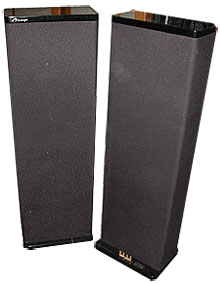
Mirage M-3 loudspeaker

It may surprise some readers to learn that all of the contributors to Stereophile do not get the chance to hear, at our leisure and in familiar circumstances, everything that passes through the magazine's portals. Not that we wouldn't like to, but there just isn't time. Nor are the logistics always right. I was therefore probably as intrigued as the average reader by LA's glowing">http://www.stereophile.com/floorloudspeakers/689mirage">glowing report on the $5000/pair Mirage M-1 in the June 1989 issue. The M-1s had been on the market long enough for me to have heard them on several occasions, of course, but generally at shows and not under the best of conditions. I did get to hear them briefly at LA's later that same summer, but the hustle and bustle of a Stereophile Writers' Conference party isn't the optimum place for value judgments.

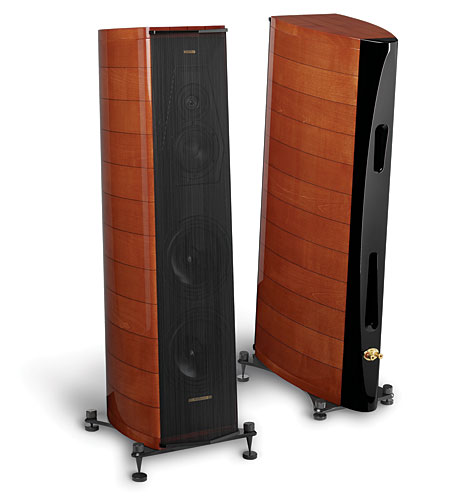
Sonus Faber Amati Homage anniversario loudspeaker

Back in the day, one of the first reviews to be posted in our free online archives at www.stereophile.com was Michael Fremer's June 1999 report on the Sonus">http://www.stereophile.com/floorloudspeakers/139">Sonus Faber Amati Homage loudspeaker. The Amati was the second in the Italian manufacturer's top range, the Homage line, which is dedicated to the master makers of stringed instruments of 17th-century Cremona. The first was the Guarneri Homage (reviewed">http://www.stereophile.com/standloudspeakers/487">reviewed by Martin Colloms in July 1994), while the third was the Stradivari Homage (reviewed">http://www.stereophile.com/floorloudspeakers/105sonus">reviewed by MF in January 2005). Mikey was so impressed by the Amati that he purchased the review samples and used them as his reference for almost three years.

Mirage M-7si loudspeaker

Audiophiles have long had a love-hate relationship with dipolar loudspeakers. These devices are nearly always a pain to position properly, they tend to dominate a room, and more often than not they're fussy about amplification. But when it all comes together, the best of them can make magic.

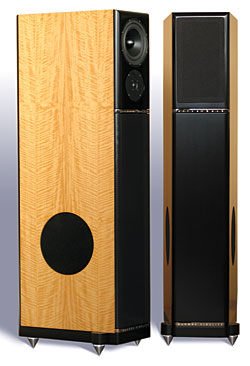
DeVore Fidelity Silverback Reference loudspeaker

It was my hunt for new and interesting-looking turntables at the 2004 Consumer Electronics Show that introduced me to the loudspeakers from DeVore Fidelity. In the Glass Amplifier room I spied a Teres turntable with a Darth Vader-ish look and sat down to listen. From a pair of nondescript, two-way, floorstanding speakers so small they were almost lost in the room, came surprisingly present, full-bodied, and notably coherent music. Their sound so far exceeded my low expectations that I exclaimed, "What are those?! Whoever designed them sure knows what he's doing!"

KLH Model Nine loudspeaker

Editor's Note: Although this product has been available for several years, it is being reviewed in considerable detail because it is a strong contender for the title of "Best Available Loudspeaker System, Regardless of Cost," and because we plan to review some of the other contenders for the same title within the next few issues. We feel that since all of these systems represent a considerable outlay of money, prospective buyers should have a thorough understanding of the merits and demerits of each system, so they will know what to expect from them in the way of performyince capabilities and operational requirements.

Mirage OM-6 loudspeaker

The concept of a loudspeaker with its own built-in amplification is an idea whose time should long since have come. Technically it makes a lot of sense, and in some parts of the world—not to mention professional circles—it's quite popular. But commercially, the idea has never really taken off in this country. And while the loudspeaker manufacturer should be in a better position to make the best amplifier choice, American audiophiles seem wedded to the idea of making their own amplifier/loudspeaker match.

Advertisement
Advertisement