Floor Loudspeaker Reviews

Sort By:  Post Date TitlePublish Date

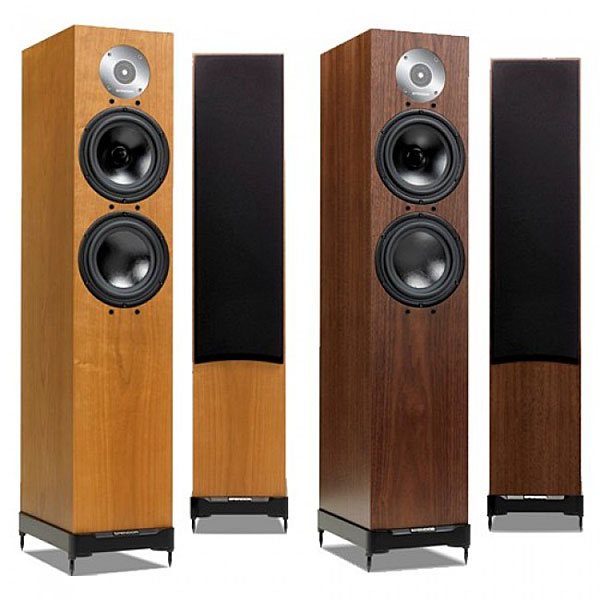
Monitor Audio Silver 8 loudspeaker

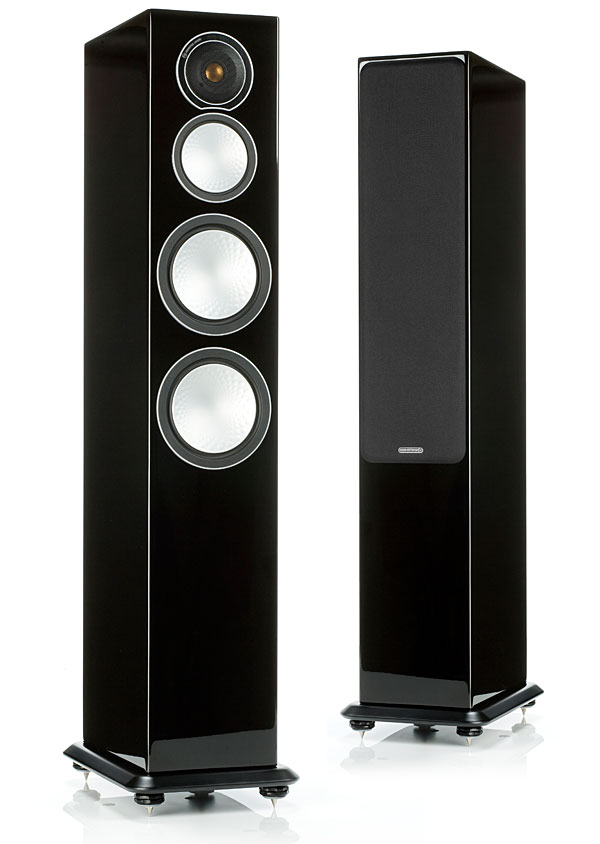
I remember reading about Monitor Audio speakers as I pored over British audio mags in the 1970s, before the economy was globalized. They were among the many worthy UK brands whose cachet was amplified by their unavailability in the US. This venerable brand has survived and flourished, while many others from the 1970s have disappeared, or become mere labels under the aegis of multinational corporations. The reasons for this success seem to be that Monitor has evolved their metal-cone driver technology, kept the focus on their core market, and continued to provide high-quality construction and finishes. So I was not surprised to read, at the back of the Silver 8's multi-language owner's manual, that the speaker was "Designed and Engineered in the United Kingdom, made in China."

Vienna Acoustics Beethoven Baby Grand Symphony Edition loudspeaker

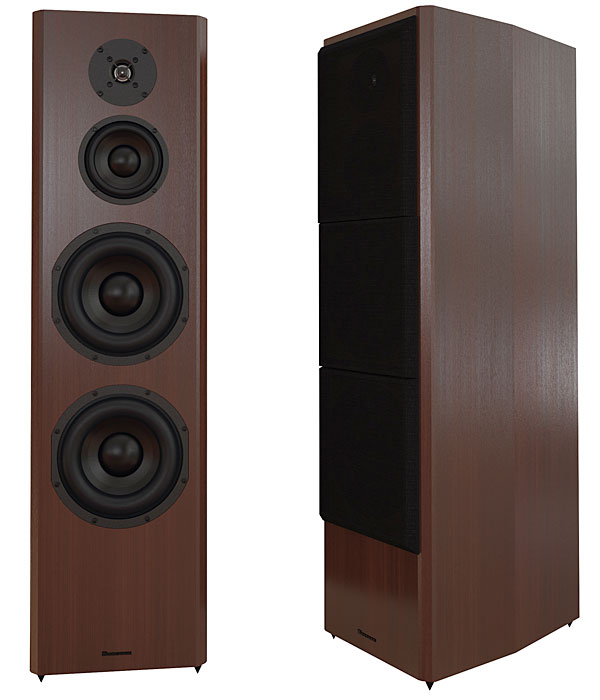
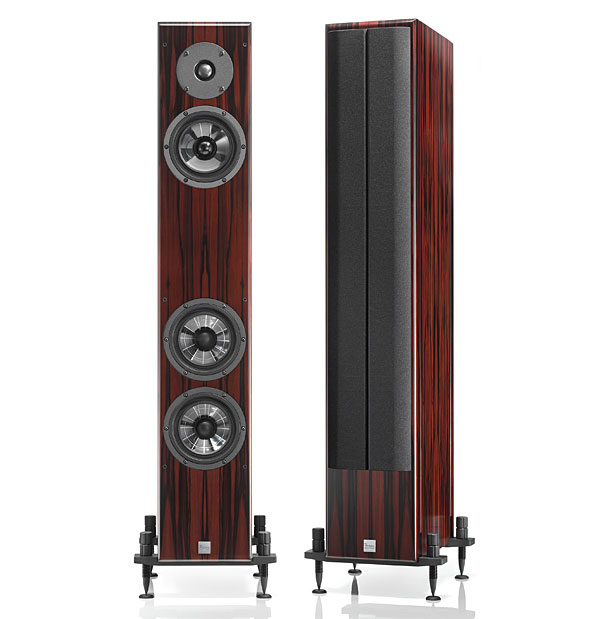
I went to Vienna. It was and is a beautiful city, with much of its late 19th- and early 20th-century character still intact. And while there will always be other claimants to the honor, it's arguably still the classical-music center of the planet. I managed to score standing room for a performance of Puccini's Turandot at the Vienna State Opera (as I recall, standing room at the time was the equivalent of about $1 US). Act 1 was so rough that it evoked catcalls from the unforgiving Viennese audience, but after that, things settled in nicely.

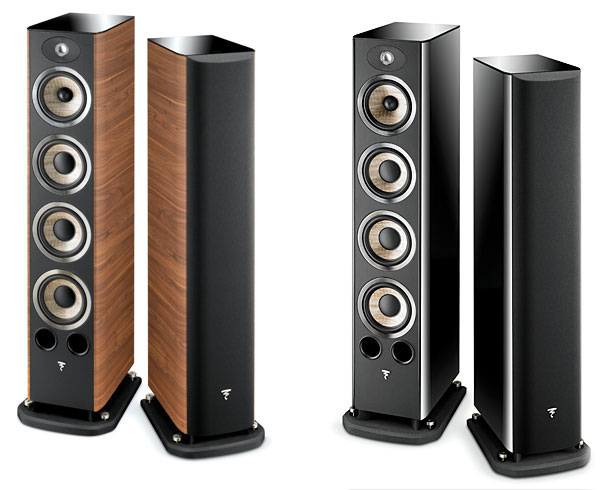
Focal Aria 936 loudspeaker

Founded in 1979 by Jacques Mahul, Focal—formerly known as JMlab and as Focal-JMlab—is one of audio's success stories. Beginning with a single speaker model produced in a small workshop in Saint Etienne, France, the company is still headquartered there, but has expanded to employ over 250 workers, making products exported to over 160 countries. All Focal products are engineered in France; only a few lower-priced multimedia models and headphones are assembled in the Far East.

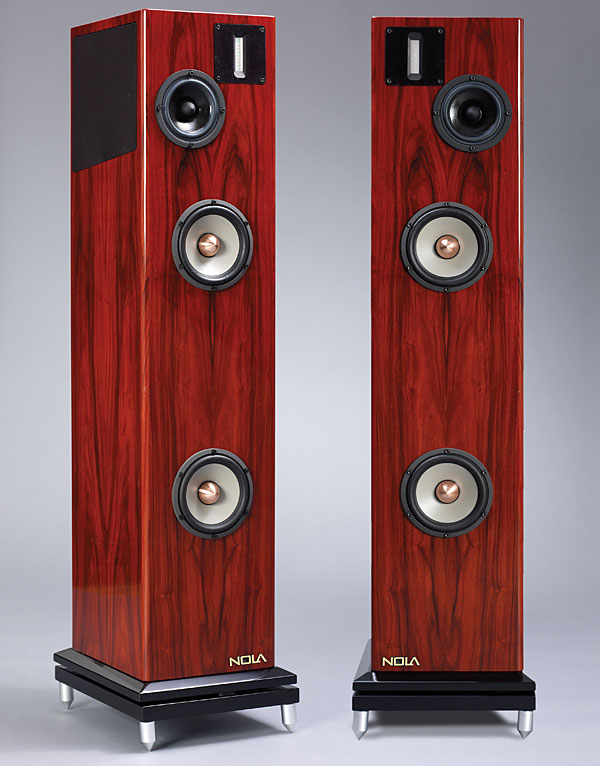
Nola Metro Grand Reference Gold loudspeaker

For a reviewer, deciding which products to write about is a tricky business. You want to do a professional job of evaluation, but you also want to be able to wrest maximum enjoyment from your music while you do so. Attending audio shows is where reviewers perform sonic triage, weeding out the products that aren't ready for prime time, and making a note of those they wish to invite home after the show.

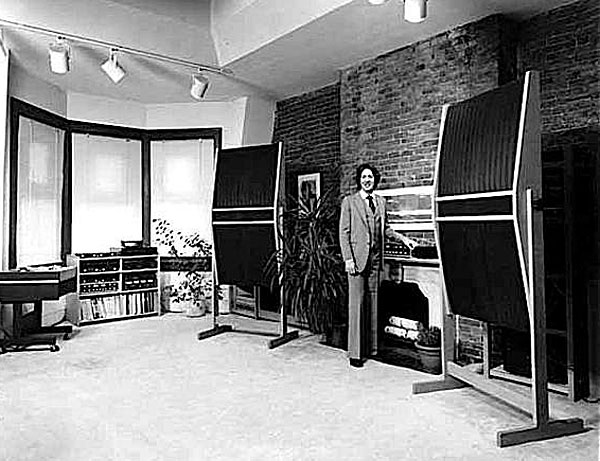
Mark Levinson HQD loudspeaker system

We wrote a long, rather unkind report on the HQD, pointing out that, if that was typical of the way it was supposed to sound (And why not, after Mr. Levinson had installed and tweaked it?), then it had to be the most expensive bomb ever to be made available for civilian use. Mr. Levinson responded with a phone call during which he:

1) Told us we had not heard it at its best, but refused to address himself to our specific criticisms;

2) Claimed that many practicing professional musicians felt the HQD to be "extremely realistic";

3) Informed us that, since he sold very few HQD systems and would soon be discontinuing them anyway because Quad had ceased making those speakers, the "sensible" thing to do would be to kill the report; and

4) Mentioned, just in passing of course, that he was currently writing a feature article for Time on the subject of "underground" audio magazines.

Acoustat Spectra 1100 loudspeaker

666acoustat1100.jpgAcoustat Model Twos have been my reference loudspeakers for almost five years. I remember, on first hearing them in a high-end store in Illinois, how they let the music through in a way new and important to me. I knew I must own them! They seemed, despite their imposing appearance, to step aside when the music came on. The effect was akin to having a door opened onto the performance. One became privy to intimate details captured in recordings which are rarely heard outside the concert hall. Not veils, but flannel sheets were lifted from the sound! If one fussed around enough with placement, the Twos truly disappeared into the soundfield—music came from in front of, to the sides of, between, and behind them as if they weren't there. Focusing them like a fine camera lens on the listening chair created a "sweet spot" which, when I sat therein, raised within me a sense of awe usually associated with things magical. You knew when you entered this space, for it was different from that surrounding it. The musical presentation assumed an almost holographic palpability.
Wilson Audio Modular Monitor (WAMM) loudpeaker system

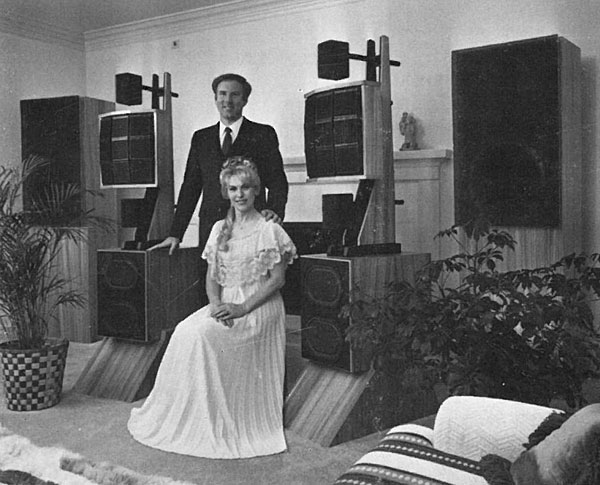
No, we made no typos in the specifications sidebar. The weight of the Wilson Audio Modular Monitor (WAMM) speaker system is enough to make you consult a structural engineer before dropping it on your living room floor—fragile, 300-year old New England frame houses are probably out. And the recent price increase from $32,000 to $35,000 is enough by itself to buy a pair of Quad ESL-63s—which is not a bad speaker system. The WAMM represents an all-out assault on both the state of the art in speaker systems and on the limits to which wealthy audiophiles will go in order to have the best.

KEF R700 loudspeaker

In the late 1980s, KEF, then as now a leader in bringing new technology to loudspeaker design, developed a unique coincident driver that positioned the tweeter in the throat of the midrange/woofer cone. In a flash of inspiration, they dubbed it the Uni-Q, and the driver immediately not only found its way into the company's more upscale speaker designs, but also became a key element in a major European research project on room acoustics. That study's results appear to have been inconclusive, but the Uni-Q lives on as the defining element of KEF loudspeakers.

Triangle Signature Delta loudspeaker

The French do things differently. I first heard Triangle loudspeakers at the 1981 Festival du Son, in Paris. That was, of course, after I had obtained admission to the show, in a nonintuitive process in which members of the press obtained their credentials at a booth inside the show. But my experience of the Triangle speaker, a small, three-way floorstander, was positive: It sounded clean and uncolored, and nothing like the BBC-inspired speakers I preferred at that time. The Triangle wasn't as neutral as the English norm, but there was something appealing about its sound—something that, I later learned, Stereophile's founder, J. Gordon Holt, referred to as jump factor.
Advertisement
Advertisement