Digital Processor Reviews

Sort By:  Post Date TitlePublish Date

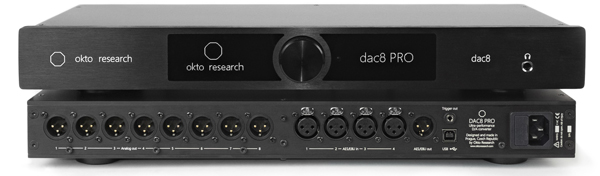
Okto Research dac8 PRO D/A processor

For a couple of years, I have been following Prague-based Okto Research. At first, Pavel Krasensky, the founder and hardware developer, offered audio design ideas and DIY modules that I found tantalizing. For example, there was a dandy-looking ESS 9038Pro Sabre–based output module and some appealing power supply modules—but to use those, the buyer had to manage inputs and integration on their own.

Then, finally, last year, Krasensky released the dac8 PRO, an 8-channel D/A processor with USB input and output, 8 channels of AES/EBU input, and 8 channels of balanced (XLR) analog output as well as a headphone output.

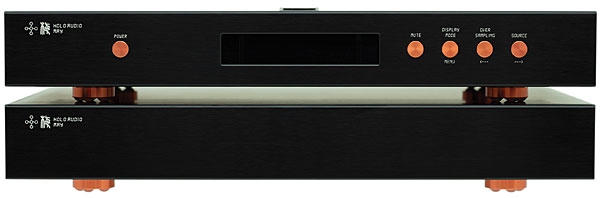
HoloAudio May (Level 3) D/A processor

The email from Herb Reichert was intriguing. "I am, with great difficulty writing about HoloAudio's new two-chassis May DAC," he wrote. "It is death quiet and very natural. It makes every recording sound non-digital."

Once Herb had finished writing his review of the HoloAudio for the August issue's Gramophone Dreams column, I sped to his Bed-Stuy bothy and grabbed the May DAC, both to get it on my test bench and to take a listen for myself.

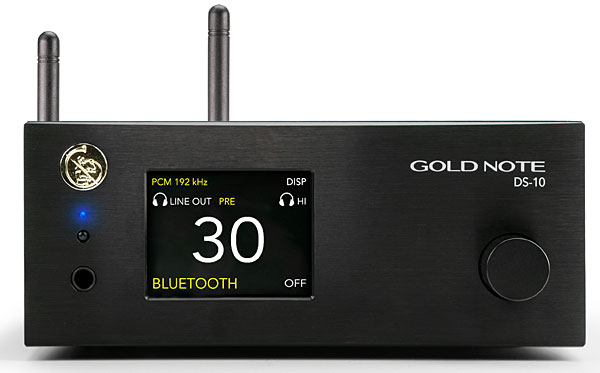
Gold Note DS-10 D/A processor

I felt like I'd just been offered a choice of 31 flavors of Baskin-Robbins ice cream topped with up to 57 varieties of Heinz ketchup, 57 condiments, and 47 brands of coddled cream. My head began to spin, my stomach churned, and my mouth grew very dry as I read that Gold Note's DS-10 ($2995) was a "chameleon DAC" with 192 setup options that enable it to "completely blend in with different music genres, giving the listener the opportunity to adapt the behavior of the unit to the music playing, to one's stereo system and, most of all, to the listener's taste."

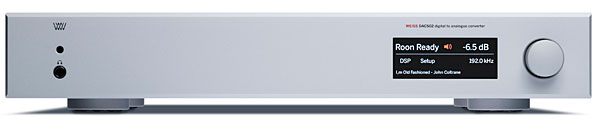
Weiss Engineering DAC502 D/A processor

Hi-fi system resolution has long been the cause of heated arguments. But when it comes to converting digital data to an analog signal, there can be no argument. Data go in at one end of a DAC and an analog signal comes out of the other end, with a noise floor directly rated to the combination of the converter's digital and analog resolution. Ever since I started measuring digital products for Stereophile, I have been expressing a D/A processor's effective resolution in terms of the equivalent number of bits.

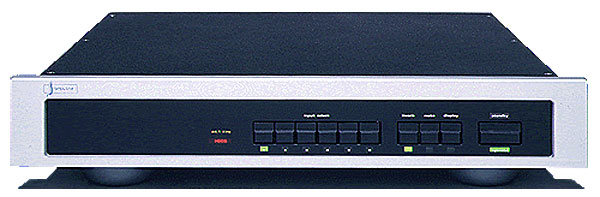
Spectral SDR-2000 Professional D/A processor

Spectral is a bit of an enigma in the high-end audio world. Although nearly 20 years old and one of the founders of the American high-end audio industry, Spectral isn't a name that comes quickly to mind when considering the best of the best in high-end.

Spectral's low profile is of their own choosing. They advertise very little, their products are demonstrated in a small number of stores, they almost never send products to magazines for review, and they are very quiet about their accomplishments.

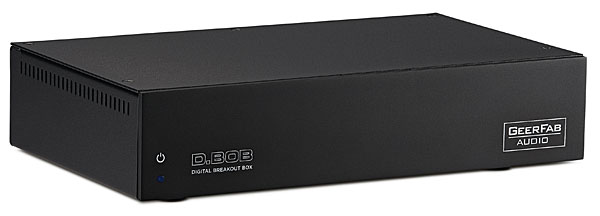
GeerFab Audio D.BOB digital breakout box

This unique device is a solution to a problem that previously couldn't be solved.

There are, of course, any number of little boxes that can extract audio from the HDMI video bitstream; they began to appear on the market to fill a need for a way to route audio from a player's HDMI output In the recent past, you could buy a good-quality—even audiophile-grade—universal player and listen to SACDs via its good-sounding analog outputs. But good-sounding universal players are becoming scarce.

Chord Electronics Hugo M Scaler upsampling digital processor

The idea of using digital signal processing (DSP) to convert digital audio data sampled at 44.1kHz or 48kHz to a higher sample rate is not new. I first heard the beneficial effects of upsampling at Stereophile's 1998 hi-fi show in Los Angeles, where a pro-audio dCS 972 digital-to-digital processor was being used to convert 16-bit/44.1kHz CD data to a 24/192 datastream.

Métronome Technologie AQWO SACD/CD transport and D/A processor

In an era when polar opposites compete as absolutes, it can be a challenge to acknowledge the different and equally valid ways in which audiophiles approach musical truth. But the reality is that our perceptions of how reproduced music should sound are determined, to a large extent, by how we approach the live experience.
Advertisement
Advertisement
Advertisement