Digital Processor Reviews

Sort By:  Post Date TitlePublish Date

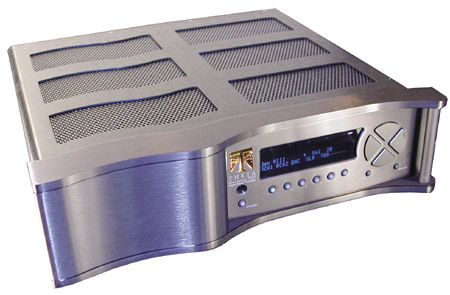
Theta Digital Generation VIII D/A converter

We audiophiles are ever hopeful that, however satisfying our present equipment and setup, we can achieve even greater enjoyment with a tweak or an upgrade. And we never stop: It was only 16 years (and three turntables) ago that I bought what I declared would be my last turntable, and there's no doubt that this "dead" format has improved substantially since then. Now, even as we make another (but less paradigm-shifting) format transition, from CD to SACD and DVD-Audio, new two-channel DACs continue to appear that show us how far we still are from wresting all the music from the original "Red Book" 16-bit CD format. I reviewed the wonderful Weiss">http://www.stereophile.com/digitalsourcereviews/781">Weiss Medea DAC in February 2003, and there are still on my auditioning rack are two more Swiss DACs that might redefine the category: the Orpheus 1 and the Nagra DAP.

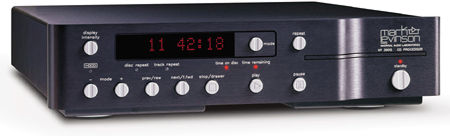
Mark Levinson No.390S CD Processor

It was 20 years ago that I appeared on one of the UK's equivalents of NBC's Today show to comment on the launch of CD. I wanted to talk about digital technology, but my host was more interested in the medium's lack of surface noise, which he demonstrated by showing that a disc smeared with butter and marmalade—this was breakfast television, remember—would play without skipping. (Actually, it wouldn't play; after the jammy CD was loaded, the program cut to a pretaped segment in which the player had a pristine disc inside it.)

47 Laboratory 4715 D/A processor & 4716 CD transport

Back in 1984, when I still had all my hair and began listening to digital audio (wait a minute...), I was disappointed with the compact disc. Most of that disappointment came from the format's musical performance, which was poor, but a portion of my dismay came from realizing that my days as a hands-on hobbyist were numbered: I was used to selecting and setting up my own turntable, tonearm, and cartridge, but a CD player defied such involvement. Plugging it in and playing it were all that I or most anyone else could do.

MSB Platinum Link Plus D/A processor

I have a warm spot in my heart for MSB's approach to product development. They come from a tweaker heritage and still practice the art: MSB will happily install a 24-bit/192kHz upsampler in your CD player, a 5.1-channel input in your DPL amp or receiver, and true 24/96 outputs in your DVD player. Their standalone products, starting with the original Link DAC, are designed from the start to include space for later additions and enhancements.

Weiss Medea D/A processor

Some people believe that high-end audio is mostly fluff whose cost, compared to standard professional studio electronics, is not justifiable. Moreover, they argue, if the music has been piped through any number of studio devices before it gets to your home, you can't expect to get more out of it than the studio devices will pass. Just as the argument is made about the final 6' of power cord, how can one Over-The-Top device make up for the foibles of those that precede it?

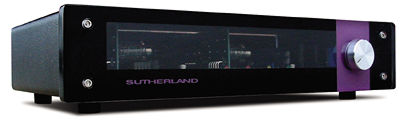
Sutherland Engineering 12dAX7 USB DAC/preamplifier

Computers and vacuum tubes go together like Trent Lott and flyaway hair, right? The last time filaments glowed in computers was during the 1960s, when a computer was a building. I remember laughing at the ponytailed computer-science dweebs back then, who spent their college days playing nursemaid to a football field's worth of electronics capable of little more than adding two plus two. Chained to a computer half the day, as most of us now are, guess who had the last laugh?

Chord Electronics DAC64 D/A processor

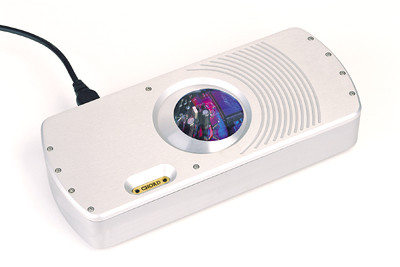
Such is the pace of development in digital technology these days that it is hard not to become convinced that digital playback is a solved problem. The measured performance aberrations are so low in absolute level—and, more important, so low compared with the typical threshold of human hearing—that it is difficult to see why digital components should sound different from one another.

Boulder 1012 D/A preamplifier

The Boulder 1012's is a line-level preamplifier and DAC in one box. Its design and build qualities are icons to elegant engineering know-how. No screws show on the rectangular box of large but not massive proportions, for example, which is all done up in matte aluminum and set off with a few highly polished stainless-steel buttons. The chassis construction uses tongue-and-groove techniques. The sides of the 1012 benefit from styling cues found on Boulder's newer amplifiers. As you can see from the photograph, the look is both elegant and hi-tech in a way very few other manufacturers manage.

Advertisement
Advertisement
Advertisement