Analog Corner

Sort By:  Post Date TitlePublish Date

Analog Corner #229: Three Expensive Phono Preamplifiers, Phasemation, PBN, Qualia

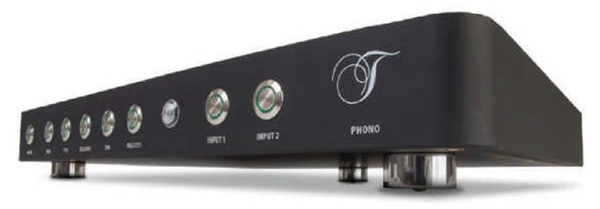
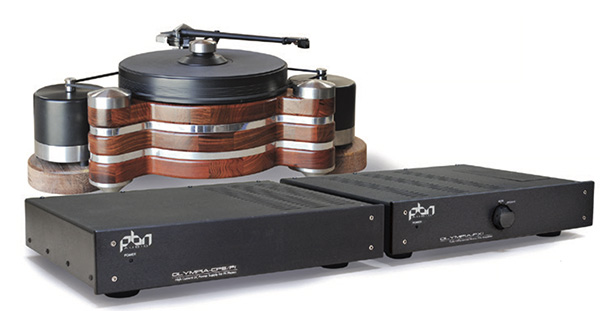
Other than being well built and high priced ($15,000, $22,000, $60,000), these three phono preamps have very little in common, in design or in sound. One has vacuum tubes, including a direct-heated 5U4G rectifier tube (the Phasemation). Two are solid-state (the PBN and Qualia). Two feature separate chassis for the left and right channels (the Qualia and Phasemation). All three have outboard power supplies. Two come from Japan (the Qualia and Phasemation), one is made in the US (PBN). All three are elegantly built, inside and out. Two are physically attractive, one is lab-grade butt ugly. One has a host of convenience features, including various equalization curves and three inputs (Phasemation). One offers no adjustability whatsoever (Qualia). One has two gain settings and multiple loading options (PBN). Two are designed to be used only with moving-coil cartridges, while the third (Phasemation) can also accommodate moving-magnets. One is fully balanced and dual- differential (PBN), two are not.

Analog Corner #232: HiFiction Simplicity II tonearm, Miyajima Labs Madake phono cartridge, Rogers High Fidelity PA-1A phono preamplifier

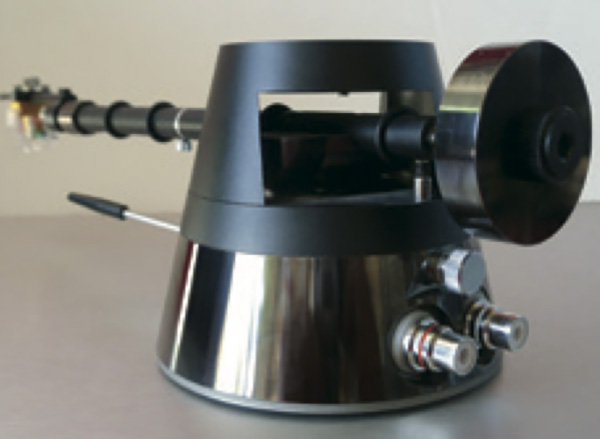
In my January 2014 column, I reviewed HiFiction's Thales TTT-Compact turntable and Simplicity tangential-tracking pivoted tonearm, an intriguing combo from Micha Huber, a talented Swiss watchmaker turned turntable designer.

The TTT-Compact's particulars, including its battery-powered motor and exceptional ease of setup, are described in detail in that review, which includes a link to a useful animation that shows how the design, as Huber says, "reduces the perfectly tangential tracking to pivot points, while the pick-up cartridge is taken and aligned on the Thales' Circle."

Suffice it to say that while the HiFiction tonearm is named Simplicity, its design is anything but.

Analog Corner #234: Do You Believe in Magic?

When a magician pulls a quarter from someone's ear or saws a woman in half, I believe in magic. I know it's an illusion—not real—but that doesn't mean that magic isn't real.

What's real is that the magician's illusion is believable because your eyes see it and, until sometime later—even if only a fraction of a second—your brain doesn't argue. The best your brain can do is tell you, "Yes, you saw that, but you know it didn't happen."

Funny, then, how anti-audiophiles always claim that the ear is more easy to fool than the eye. Yet books have been devoted to cataloguing optical illusions. Do you believe that a railroad track's two rails meet at the horizon? Sure looks like it! The brain and ear are easily fooled, yet our very survival depends on their reliability. And the survival of an audio reviewer's credibility depends on his ability to be fooled as rarely as possible.

Analog Corner #235: Kiseki & Lamm

At the 2011 Consumer Electronics Show, Herman van den Dungen handed me a surprise: a brand new Kiseki Blue cartridge manufactured from new-old-stock parts. It wasn't mine to take home—only to look at, to prove it was real.

Herman van den Dungen may not be a household name even for audiophiles, but his products are: his PrimaLuna electronics are exported from the Netherlands to the US and distributed by tube connoisseur and collector Kevin Deal for PrimaLuna USA.

In the 1980s, Kiseki was legendary among audiophiles, even if their cartridges' prices were beyond the reach of most. But the brand's history is less well known—and younger analog devotees may not have heard of Kiseki at all.

Analog Corner #236: The Moving-Coil/Moving-Magnet Divide

Forty years ago, moving-coil cartridges were exotic. Now they're mainstream. The main advantage of MCs is obvious: rather than the system used in moving-magnet cartridges, in which relatively heavy magnets attached to the stylus's cantilever are moved past a stationary coil-and-armory assembly to create the electrical signal, moving coils, as the name implies, move the relatively lightweight coil and armature past the magnets. The lower the cantilever assembly's moving mass, the lower the system's response time. The lower the response time, the faster and more detailed the reproduction of the music. And MCs' electrical characteristics mean that they have greater bandwidth.

Analog Corner #237: Ortofon MC A95 phono cartridge, Brinkmann Audio Spyder turntable and 12.1 tonearm

It's difficult to believe that more than five years have passed since Ortofon introduced its ground-breaking MC A90 moving-coil cartridge ($4200 when last available). The limited-edition MC A90, with its radically shaped body made of powdered stainless steel Selective Laser Melting (SLM), celebrated Ortofon's 90th year in business. The MC A95 ($6500), celebrating their 95th year, retains the A90's seductive shape, but the new body is built of powdered titanium, and thus is even more effectively self-damped.

Analog Corner #238: A Tale of Two Cartridges from Ikeda and Ortofon

But first, the blowback I expected following my February 2014 column on Synergistic Research's Uniform Energy Field Technology room treatments never arrived—in fact, quite the opposite. My own positive experience of the UEF devices was confirmed by e-mails from readers who'd already used them, and from those who'd taken up Synergistic's offer of a money-back guarantee. Skeptics will charge that what I and these readers heard is evidence of confirmation bias, but people say this about any positive remarks made about audio components priced above $500.

Analog Corner #240: Sperling-Audio L-1 turntable and TA-1 tonearm

Photo: Echopark

With its swept-wing shape and platter-forward design, Sperling-Audio's L-1 turntable ($35,950, without tonearm) stands out in a crowd. This high-mass design from Germany is the result of a collaboration between Ansgar Sperling and Michael Bönninghoff, two fiftysomething engineers who began working together in recording studio construction.

Both also bring to the L-1's design and construction years of experience in signal processing. For years, Bönninghoff was the chief developer at Brauner microphones, and today is the technical director of the German pro-audio company S.E.A. Sperling worked in radio and signal processing, and has a strong interest in tubed electronics.

Analog Corner #242: Cornering the Vinyl Scoffers; Fuuga & Air Tight Phono Cartridges

The "Meet the Editors" panel at T.H.E. Show Newport Beach 2015. (L–R): Robert Harley, Chris Connaker, John Darko, Michael Fremer, David W. Robinson.

Add to the deniers of the Holocaust and Climate Change those who say that the vinyl resurgence isn't happening.

Seriously, the pushback was bound to happen, and the bigger this so-called "hipster fad" gets, the more the scoffers sweat. In 2014, according to my sources—representatives of the world's largest pressing plants—more than 73,985,000 LPs were pressed. That's correct: almost 74 million LPs. Taking into consideration such things as multi-LP boxed sets like The Beatles in Mono (which might be counted as a single record in terms of sales), defective discs rejected by consumers or retailers, and unsold records, of which there surely are many in the pipeline, we could cut the number in half—and still have around 35 million. That's more than a 40% increase worldwide over 2013.

Analog Corner #243: TechDAS Air Force Two turntable, Graham Phantom Elite tonearm

How big is the performance gap between TechDAS's new Air Force Two ($52,000) and original Air Force One ($105,000) turntables? How do you halve the price without also sacrificing the build quality and features of the flagship model that defines the brand? Even $52,000 is more than most people pay for an automobile, not to mention a turntable. Still, TechDAS's assertion on their website that the price of their new model price is "reasonably improved" over the old strikes me as an understatement.
Advertisement
Advertisement
Advertisement