LATEST ADDITIONS

SOL Republic Tracks

This story originally appeared at InnerFidelity.com

The Little Monster himself, Keven Lee (son of Head Monster Noel Lee), jumped out on his own to start a new low-cost headphone company: SOL Republic. Their first headphone, the Tracks is a bit of a mixed bag, but quite interesting nonetheless.

Let's have a look and listen...

Continue Reading »

The Sonos SUB: Sexy, Smart, and Fun

The Sonos SUB seems a no-brainer for those who have already purchased Sonos systems and who need, or merely want, the extra bass power. But, because it is so beautiful and so easy to use, it will likely also appeal to anyone who appreciates smart technology and high-quality sound. I have no use for it at all, and I still want it.
Continue Reading »

May 2012 Record Reviews: Streamed Selections

Stereophile is not all about reviewing hi-fi, and thanks to our all-knowing and thrill-seeking Music Editor, Robert Baird, we cover exciting new releases in each monthly issue for you to consider on your hi-fi escapades. In this post, I listen to all records we reviewed available on streaming services MOG and Spotify from our May 2012 issue, provide my own two-cents, and link to the playlists from the two services. With a premium account, one can stream at 320kbps Ogg Vorbis files from Spotify, and MOG users can stream 320kbps MP3s for free!

******

Links:
The MOG May 2012 Playlist: Inflections

The Spotify May 2012 Playlist: What is a Song?

The May 2012 Playlists were a tough one to make at first. I was having technical difficulties with MOG. Whenever I paused Carolin Widmann and Alexander Longquich’s Schubert performances, the playback buffering would freeze and restart from the beginning of the album. MOG resolved this issue internally, as it was not happening the next day, but it was nevertheless frustrating. I could not get up to pee without having to restart the Rondo in B Minor, D. 895, Op. 70. First-world problems.

Continue Reading »

The Greatness of Baritone Dietrich Fischer-Dieskau

If any single voice was synonymous with the flowering of the LP era, it was that of German baritone Dietrich Fischer-Dieskau. The great artist's death at his home in Bavaria on Friday, May 18, 10 days short of his 87th birthday, sets the final seal on an age in which art song, oratorio, and opera received equal respect from record companies and the listening public.

Equally adept at all three disciplines, Fischer-Dieskau became perhaps the most recorded baritone in history. There was a period in which nary a month went by without another LP from Fischer-Dieskau on which he sang either solo or in ensemble. Even today, when so many recordings have gone out of print, and large number of LPs have never been remastered for CD, arkivmusic.com lists no less than 490 titles that include Fischer-Dieskau's voice. The most recent release, a four-SACD remastered compilation of some of the monaural Schubert lieder (art song) recordings he made with pianists Gerald Moore and Karl Engel early in his career, became available on the website on May 8. Its 39 performances are but a fraction of the Schubert recordings he made in his five decades before the microphone.

Continue Reading »

Music in the Round #54

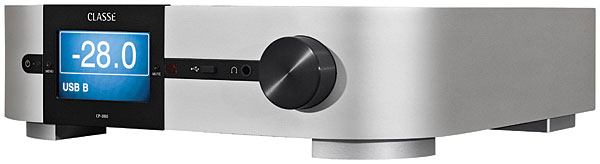
Bryston describes its SP-3 ($9500) as comprising a true analog preamp plus a full-featured multichannel digital audio processor, and claims that none of those functions compromises any of the others. That statement is a slight modification of the sentence that began my September 2006 review of the SP-3's predecessor, the SP2. It is indicative of the enduring philosophy of the manufacturer that, in the more than five years since, Bryston has worked to create a new pre-pro that fully reflects new developments in audio and video but without compromising analogquality. Audio is extracted from an input HDMI signal for processing while the video signal is routed, unprocessed, to the two HDMI outputs. Digital audio of all formats, including high-definition audio codecs, are supported, and stereo and multichannel analog inputs are handled by discrete class-A circuitry. Completely separate power supplies support the analog and digital functions, and the internal construction is highly modular, to ease future updating of the SP-3 to keep pace with evolving technology.
Continue Reading »

Brinkmann Balance turntable

Everyone's got their prejudices, and mine are against turntables with box-like plinths and big slabs of undamped acrylic. I have no problem with either in models that cost a few grand or less, but once you get into high-priced terrain, less plinth and less acrylic usually yields better performance. Generally, though, all a plinth gets you is a vibrating surface to transmit or store and release energy. Who needs that? If your high-performance 'table has a plinth, you need to heroically damp it the way SME does in its Model 30, and the way Rockport did in its System III Sirius.
Continue Reading »

The Entry Level #17

The Milty Zerostat: Sold for prevention of disease. And other things.

Before dropping the needle onto Christine's copy of Sold for Prevention of Disease Only, I shot the record a few times with the Milty Zerostat 3 ($100), a blue, gun-shaped gadget that helps eliminate static. Squeezing the Zerostat's thin black trigger releases positive ions; relaxing the trigger produces negative ions. A complete squeeze cycle results in a neutral static condition—one perfectly in balance, neither too heavy nor too light—and my LPs play quietly. This step in my LP-playing routine grew out of necessity and has become a habit. The process is especially important in the cold winter months, when the air in my small apartment is dry, and debris stubbornly clings to my LPs and my cartridge's stylus.

Continue Reading »

Recording of December 1987: Marsalis Standard Time, Vol.1

Wynton Marsalis: Marsalis Standard Time, Vol.1
Wynton Marsalis, trumpet; Marcus Roberts, piano; Robert Leslie Hurst III, bass; Jeff Watts, drums
CBS CK 40461 (CD), FC 40461 (LP). Tim Geelan, eng.; Steve Epstein, prod. DDD. TT: 62:54

When someone has garnered as much hoopla as has Wynton Marsalis over the last five years, it becomes harder and harder for a critic to believe that the hype continues to be justified. Nor does winning Grammys in the jazz and classical categories help the situation's believability. Worse, Marsalis's own bristly demeanor and portentious pronouncements on the state of jazz—see "Book Reviews" elsewhere in this issue—make it all the more important that he put his money where his mouthpiece is. (As Miles Davis, never known as the soul of tact himself, groused a while back when leaving a Grammy Award ceremony at which Marsalis had held forth: "Who asked him?")

Continue Reading »
Advertisement
Advertisement
Advertisement