Mapping Music
So string theory <I>is</I> good for something?


So string theory <I>is</I> good for something?
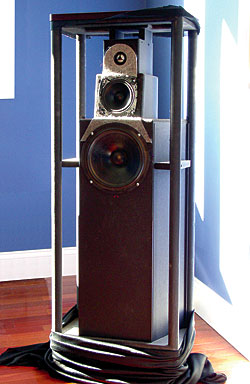
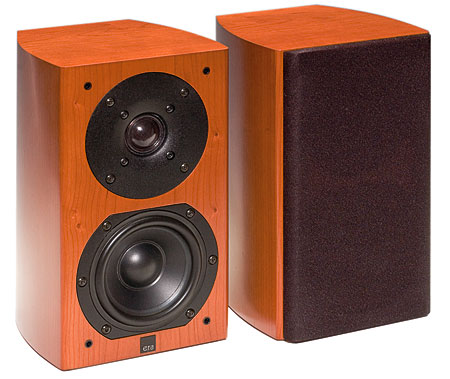
There are three requirements: You must invent a very good loudspeaker that sells for between $1000 and $2000/pair. You have to make enough of them, over a long enough time, to achieve a certain level of brand recognition and market penetration. And you must create a dealer network of reasonable size, with an emphasis on well-promoted specialty shops.
The first time I attended the Las Vegas Consumer Electronics Show, in January 1986, I didn't get there until the second day of the Show. Still, by the beginning of the fourth and final day I'd managed to visit every high-end audio exhibit, and still had time to go back for seconds to the rooms that had sounded the best. Twenty years later, CES has grown so much that it's impossible for a single writer to visit even a quarter of the exhibits in which he might be interested. And even with the sort of <A HREF="http://blog.stereophile.com/ces2007/">team reporting</A> <I>Stereophile</I> now practices, covering the Show has become an exercise in applied logistics for the busy journalist: "Should I wait for the free shuttle bus? Should I get a taxi—though I might get caught in Las Vegas's increasing traffic jams, or even just get stuck at the city's interminable traffic lights? Or should I take the new monorail—though that goes nowhere near the hotel in which [<I>insert name of hot company</I>] is demming its products?"
Tony, a mechanic friend of mine, once ran down for me his "national characteristics" theory of automobile engineering. Germans, he said, love precision engineering but don't take repair into account, so their engines are always placed in wells so perfectly proportioned that skinned knuckles are inevitable. British cars, he said, are marketed to a nation of tinkerers, hence the existence of dual carburetors. And Italian cars? "Well, let's just say they all resemble espresso makers." <I>He</I> said it—and he <I>was</I> the proverbial Fiat mechanic named Tony.
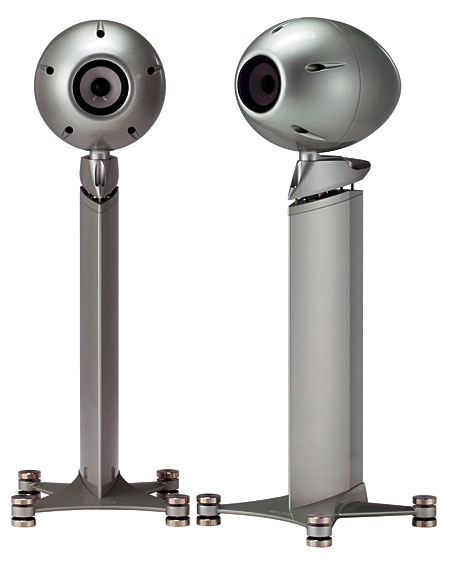
All right, it's time for a pop quiz in Loudspeaker Design 101. Answer the following, and justify your answer.
Let's forget about buying re-releases or back-filling an artist's catalog for a moment, what is the <I>primary</I> way you discover brand-new music to buy?
Back in 1992, <I>Stereophile</I> got into the business of concert promotion when it booked Canadian pianist Robert Silverman for two evenings of recitals in order to record his performances for a live double CD, <A HREF="http://www.stereophile.com/musicrecordings/315"><I>Concert</I></A> (STPH005-2). We don't believe in rushing to repeat a success, so 15 years later, on February 10, we're promoting another concert, this time featuring <A HREF="http://www.myspace.com/attentionscreen">Attention Screen</A>, the quartet led by <I>Stereophile</I> reviewer and jazz pianist Bob Reina.
Harmonia Mundi, one of the world's leading independent classical music labels, has finally taken the downloading plunge. In an agreement with the Independent Online Distribution Alliance (IODA), the world's largest distributor of digital music content, announced on January 24 at the annual music conference of the Marche International De l'Edition Musicale (MIDEM) in Cannes, Harmonia Mundi will make available its entire catalogue of early music and contemporary recordings to hundreds of digital music outlets around the world. IODA will also handle digital distribution of HM's catalogue within France, where Harmonia Mundi is headquartered. A separate agreement with Apple's iTunes makes all Harmonia Mundi titles available on that site as well. Also available are the classical, world, and jazz titles from the more than 30 independent labels that Harmonia Mundi distributes in many parts of the world.
Out of all the audiophile phrases, none stirs the hearts of music lovers like "true to the master tape"—not even "the absolute sound" of the original instruments, which even audio idealists realize is simply too much to demand. But true to the sound of the recorded master tape, now surely that's a goal within reach.
PS Audio's Paul McGowan is a man with a mission: He wants to teach audiophiles about AC power, from the creation of the universe to its final destination in our contemporary electronics components. Toward that end, McGowan wrote, produced, and narrated a one-hour documentary DVD called <I>From Coal to Coltrane</I>, which provides a lively look at a subject many of us take for granted.