LATEST ADDITIONS

Book Review: Kill 'Em and Leave: Searching for the Real James Brown

Kill 'Em and Leave: Searching for the Real James Brown and the American Soul
by James McBride. Spiegel & Grau, 2016. Hardbound, 232 pp., $28. Also available as paperback, eBook, and audiobook.

Comparing James McBride's search for James Brown with the quest depicted in the classic John Ford film The Searchers reveals some dramatic changes in American racial attitudes over the years, along with some consistencies. Ford's film begins in post–Civil War Texas; its white protagonist, a former Confederate soldier named Ethan Edwards (John Wayne), spends most of the film hunting for the Comanches who've kidnapped his niece. To Edwards, such captives are tainted—"they ain't white," he rails—and he intends to kill the girl when he finds her.

Continue Reading »

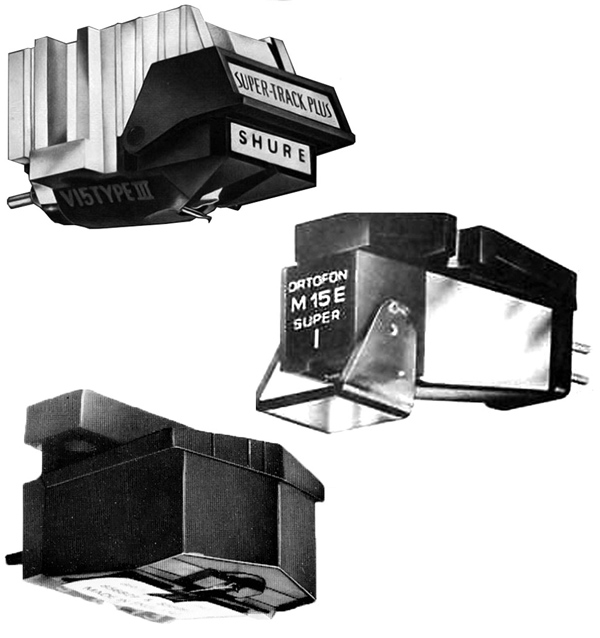
Shure M75E phono cartridge

This is one of Shure's new generation of pickups with "trackability" that grew out of research on the Type II V-15 pickup.

At first glance, the V-15-II and the M75E are physically identical. They're the same size, the same shape, and almost the same weight (the M75E weighs 0.8 grams less); and both of them have the same neat little hinged cover that flips down to protect the stylus when the pickup's not in use.

Continue Reading »

Katz's Corner Episode 16: The Smoking Gun

This story originally appeared at InnerFidelity.com

After those episodes, conspiracy theories have abounded: Did somehow my brainwaves have managed to influence five strong-minded individuals in my direction. Was it valid for Bob to use different amplifiers for the two headphones? And why did Bob and Tyll's findings on the Utopia and LCD-4 differ so much?

Let's find out!

Continue Reading »

David Chesky's Dazzling, Dancing Spanish Poems

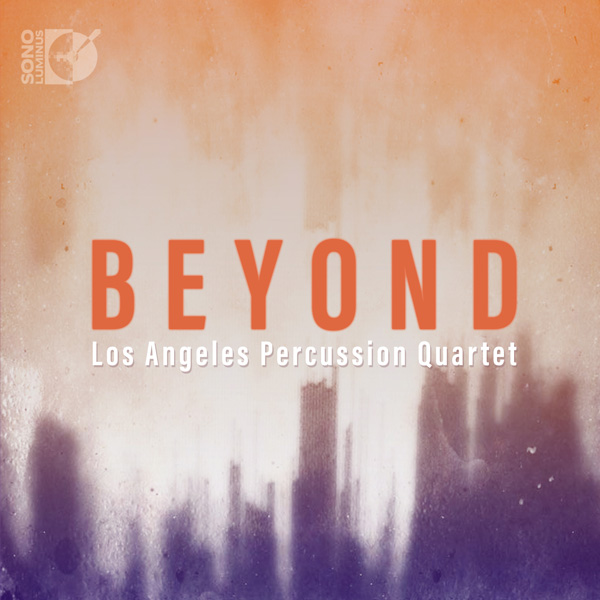
David Chesky's The Spanish Poems packs a lot of infectious, dance-like energy into a three-song, 24/48 (or 16/44.1) download. Available at a price commensurate with its 21:28 length, the short cycle sets "The Girl from Guatemala" by José Marti (1853–1895), Sonnet No.5 by Garcilaso De la Vega (1501–1536), and "The Romance of Love" by an unknown author. All dance away in a catchy style that makes ample use of bells, triangle, and other high-pitched percussion instruments.
Continue Reading »

Jason's Discoveries at AXPONA's End

The most astounding and baffling system I encountered at AXPONA—I'm not sure which of those descriptors should come first—was in the Raidho/Aavik room, which used Ansuz cabling to join Danish-made Raidho Acoustics D-1.1 Black speakers ($23,000/pair) with sister-company Aavik Acoustics' C-300 control amplifier (preamp) with two phono stages ($42,000) and brand new M-300 300W class-A mono power amplifier ($48,000). At first, I was completely wowed by the sound…
Continue Reading »

Wilson Audio Specialties Alexx loudspeaker

Having discontinued the MAXX3 loudspeaker ($68,000/pair in 2009, when I reviewed it), Wilson Audio needed to plug the resulting gaping hole between the Alexia ($48,500/pair) and the Alexandria XLF ($210,000/pair). Company founder Dave Wilson was busy with the limited-edition WAMM Master Chronosonic loudspeaker ($685,000/pair), so son Darryl Wilson set about creating a speaker with a retail price of about $100,000/pair. The result, the Alexx, finally came in at $109,000/pair.
Continue Reading »

Music in the Round #84: Multichannel MQA

Several years ago, at a Consumer Electronics Show, Bob Stuart, then with Meridian Audio, took John Atkinson and me into a private room to demonstrate something new. He played individual tracks of mostly familiar recordings, twice each: first, straight from the commercial release, and then again, this time after processing with technology he was still developing. The differences were subtle, but usually we favored the second version. It was all very hush-hush, and despite our requests for technical information, Stuart spoke of his new process only in terms of results—as a way to recover the original sound at the microphone by knowing and compensating for the transfer functions of that mike and the analog-to-digital converter originally used, as well as of the digital-to-analog converter used in playback. The process had no name, and there was no timetable for its commercial launch.
Continue Reading »
Advertisement
Advertisement
Advertisement