The HiFiMAN HM-801 portable music player:
Big is the new small
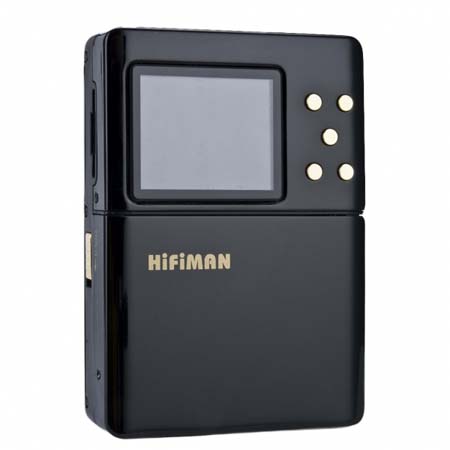
<i>Photo: HeadRoom.</i>


<i>Photo: HeadRoom.</i>
Someone, I forget who it was, once wrote a perceptive essay on how in any field of human endeavor, apparent perfection is attained only when that field is in the process of being superseded. The Palace at Versailles was built when the power of the French monarchy was well into decline; Wagner's "music of the future" was in fact the end of a particular line of development; the nuvistor was developed almost simultaneously with the silicon transistor which would render tubes almost obsolete; and six years after the commercial introduction of Compact Disc, with record shops increasingly filling up with silver discs, to the detriment of black, turntables exist which render LP playback pretty much on a level with CD technically (many audiophiles, of course, feel that the LP has <I>always</I> been musically ahead).
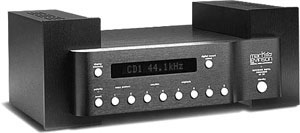
The arrival of the <A HREF="http://www.stereophile.com/digitalprocessors/mark_levinson_no30_referen… Levinson No.30</A> digital processor more than 2½ years ago marked a turning point in digital-audio reproduction. Although the No.30's $13,950 price tag put it out of reach of all but a few audiophiles, its stunning performance suggested that much more musical information was encoded on our CDs, waiting to be recovered by better digital processors. Further, it was inevitable that this level of performance would become less expensive over time. I was more excited by the No.30 than I've been over any other audio product. In fact, its musical performance was so spectacular that it alone occupied the Class A category in <I>Stereophile</I>'s "Recommended Components."
I like reviewing loudspeakers. The more you become familiar with the art, the greater the sense of anticipation as you open up a pair of cartons. A visual inspection of the speaker always reveals a challenging mixture of the familiar and the new. The size of the cabinet is always the first clue—has sensitivity been a design priority or was low-frequency extension uppermost in the designer's thoughts? You espy a known drive-unit—has this tweeter's propensity for upper-presence sizzle been tamed? You find a reflex port on the rear panel—has the temptation to go for a "commercial," under-damped bass alignment been successfully resisted? You spot factors which intuitively seem wrong for precise stereo—a wide baffle lacking any kind of absorbent covering for diffraction control; a grille frame which puts acoustic obstacles in the way of the wavefront emerging from the tweeter.
John Zorn’s rep as the angry bad boy of the downtown avant-garde has always been a bit of a caricature. His music has long stressed wit and beauty as much as squeals and hollers. But in the last few years, he’s tapped into a buoyant, almost gentle lyricism while still sounding distinctively Zorn.
Money can't always buy love, but it is often thought it can buy audio happiness. Or can it? What is the least amount you have spent on an audio component that produced music that made you happy?
<A HREF="http://blog.stereophile.com/ces2009/now_thats_what_i_call_music">James Bongiorno</A>, the engineer behind the Sumo Andromeda, has enjoyed a long and colorful career as an audio amplifier designer. He has cast himself at times as an <I>enfant terrible</I>, exploding at audio critics and running scandalous advertisements (footnote 1). His best-known amplifier is the Ampzilla, produced by Great American Sound, but he also designed the Dyna 400. Currently Jim is living on a boat and serving as part-time consultant to the Sumo Company.
According to a recent Consumer Electronics Association's (CEA) <A HREF="http://www.ce.org/Press/CurrentNews/press_release_detail.asp?id=11935">… release</A>, "CE Industry to Surpass $174 billion in 2010, Reach Record High by 2011," sales forecasts are far more optimistic than had been expected. While the figures aren't easily translatable to the high-end market (which the CEA identifies as "high-performance audio"), some consumer-electronic (CE) trends give cause for qualified optimism, and provide clues as to which products may prove most profitable for manufacturers and dealers.